


The mechanism of inorganic carbon sink in the stabilization process of Zn2+ contaminated red clay in karst area
-
摘要: 岩溶区高镁地质背景赋予其天然无机碳汇潜力,但长期铅锌矿采选导致的Zn2+污染严重削弱该功能,且传统固化/稳定化(S/S)技术高碳排放、长期稳定性差,难以实现低碳环保的目标。本研究提出采用活性MgO强化CO2无机碳汇固稳技术治理岩溶区Zn2+污染红黏土,系统考察了Zn2+污染浓度、活性MgO掺量及反应时间对Zn2+固稳效果的影响,并通过BCR顺序提取、XRD和SEM揭示固稳机制。结果表明:提高活性MgO掺量并优化反应时间可显著降低游离态Zn2+含量,促进其向残渣态转化。水合碳酸镁(HMCs)为主要碳汇产物,通过活性MgO与CO2反应实现高效CO2矿化封存,同时对Zn2+产生包裹吸附及胶结填充作用,形成稳定碳酸盐矿物结构,实现Zn2+固稳与人工无机碳汇的协同。本研究揭示了该技术在岩溶区Zn2+污染红黏土固稳中的微观机制,为岩溶地区重金属污染治理与实现碳中和目标提供了新路径。Abstract:
The karst area exhibits both ecological vulnerability and hydrogeological complexity. The unique carbonate landform and the high-permeability underground runoff characteristics make pollutants spread rapidly. Long-term lead-zinc mining and processing have led to continuous accumulation of soil heavy metal pollution in karst areas, especially severe Zn2+ accumulation in red clay, which destroys soil structure and significantly weakens the potential of natural inorganic carbon sinks in the region. At the same time, it causes compound soil-groundwater pollution, surface subsidence, and other geological disasters. Traditional solidification/stabilization (S/S) technology mainly relies on materials such as cement and lime. Although it can reduce the leaching risk of heavy metals to some extent, it still has problems such as high carbon emissions, poor long-term stability, and a long construction period. It is difficult to achieve the goal of low carbon and environmental protection. It cannot meet the needs of green restoration in the complex karst environment. To address the above problems, this study proposes an active MgO-enhanced CO2 inorganic carbon sink stabilization technology as a green, low-carbon remediation approach. This technology mainly uses low-temperature-prepared active MgO as a curing material to generate hydrated magnesium carbonate (HMCs) through an inorganic carbon sink reaction in a CO2 environment, thereby stabilizing heavy metals and advancing the development of artificial inorganic carbon sinks. Compared with traditional high-temperature calcined MgO, active MgO has the advantages of a large specific surface area, high reactivity, and low energy consumption, and can be better utilized in the geological background of high magnesium in karst areas. In this study, the typical Zn2+-contaminated red clay in a karst area was taken as the research object. The effects of Zn2+ pollution concentration, active MgO content, and reaction time on Zn2+ stabilization were systematically investigated. The morphological transformation of Zn2+ was analyzed using the BCR sequential extraction method; phase identification was performed by X-ray diffraction (XRD); and the morphology of the reaction products and the evolution of soil microstructure were observed by scanning electron microscopy (SEM) to reveal the stabilization mechanism. The results show that increasing the content of active MgO and optimizing the reaction time can increase the sample's resistivity, significantly reduce the free Zn2+ content, and promote its conversion to a residual state. A large amount of hydrated magnesium carbonate (HMCs), such as hydromagnesite, spherulite, and trihydrate magnesite, is generated as the main carbon sink products. High-efficiency CO2 mineralization and storage can be achieved by reacting active MgO with CO2. At the same time, the adsorption and cementation of Zn2+ can form a stable carbonate mineral structure, and the coordination of Zn2+ stabilization and an artificial inorganic carbon sink can be achieved. Unlike the high carbon-emission characteristics of traditional solidification/stabilization (S/S) technology, this study focuses on the key constraint posed by a high-magnesium geological background in a karst area. It extends the active MgO-enhanced CO2 inorganic carbon sink technology to the remediation of Zn2+ contaminated red clay. Through systematic research, the mechanism of action of hydrated magnesium carbonate (HMCs) in mediating heavy metal stabilization at the micro level is clarified, providing a new theoretical explanation and technical path for the green, low-carbon treatment of heavy metal pollution in karst areas and the realization of carbon neutrality goals. In addition to discussing the variation in the influence of different factors on the stabilization effect and carbon sink mechanism, this study also guides engineering restoration of complex geological environments in karst areas. The technology offers fast reaction speed, excellent stabilization, significant environmental benefits, and strong carbon-sink potential. It shows broad application prospects for addressing heavy metal pollution in karst areas, reducing geological disasters, and advancing carbon neutrality. The active MgO-enhanced CO2 inorganic carbon sequestration stabilization technology proposed in this study has significant green and low-carbon advantages. The current research is mainly based on laboratory experiments. In the future, it is necessary to further conduct relevant model tests or on-site long-term monitoring to comprehensively evaluate the long-term stability, ion migration laws, and actual CO2 sequestration efficiency of the technology, thereby promoting its practical application in the remediation of contaminated sites in karst areas. In summary, this study demonstrates significant potential for sustainable and ecological restoration of the fragile karst ecosystem through the active MgO-enhanced CO2 inorganic carbon sink stabilization technology, providing new ideas and methods for low-carbon, efficient restoration of Zn2+ contamination in karst areas. It has important scientific significance and engineering value in promoting the coordinated development of heavy metal pollution control and artificial carbon sinks. -
Key words:
- Karst area /
- Inorganic carbon sink /
- Red clay /
- Zn2+ contaminated soil /
- Stabilization mechanism
-
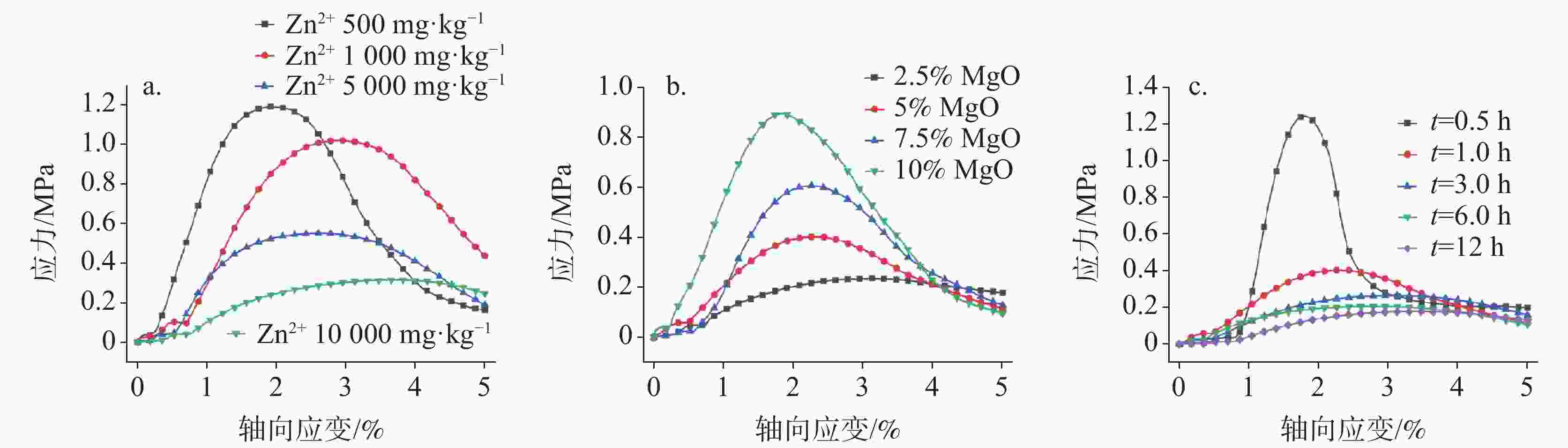
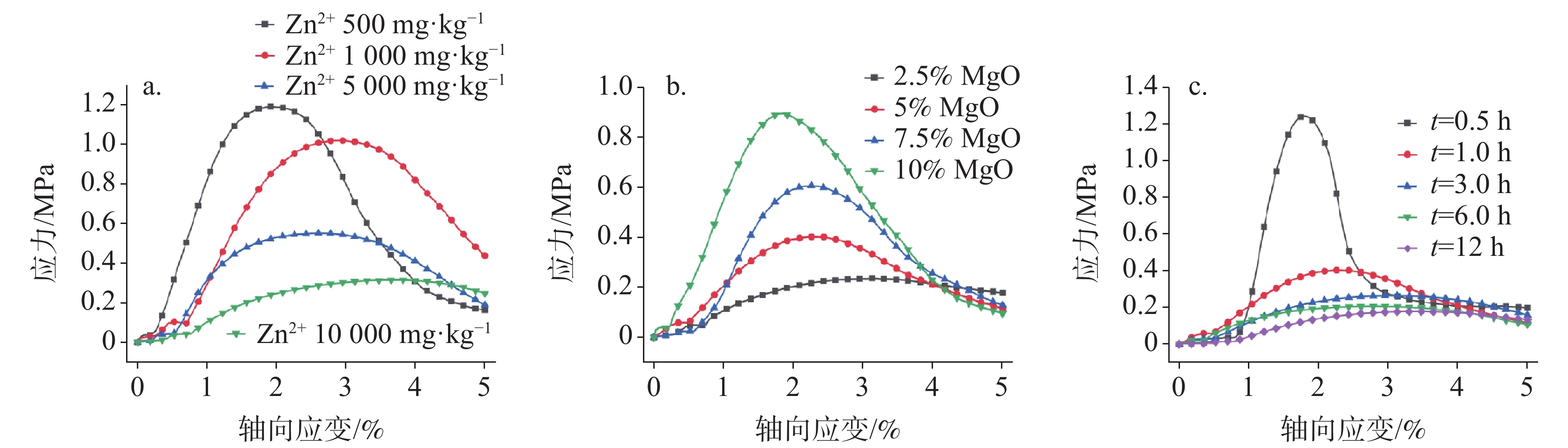
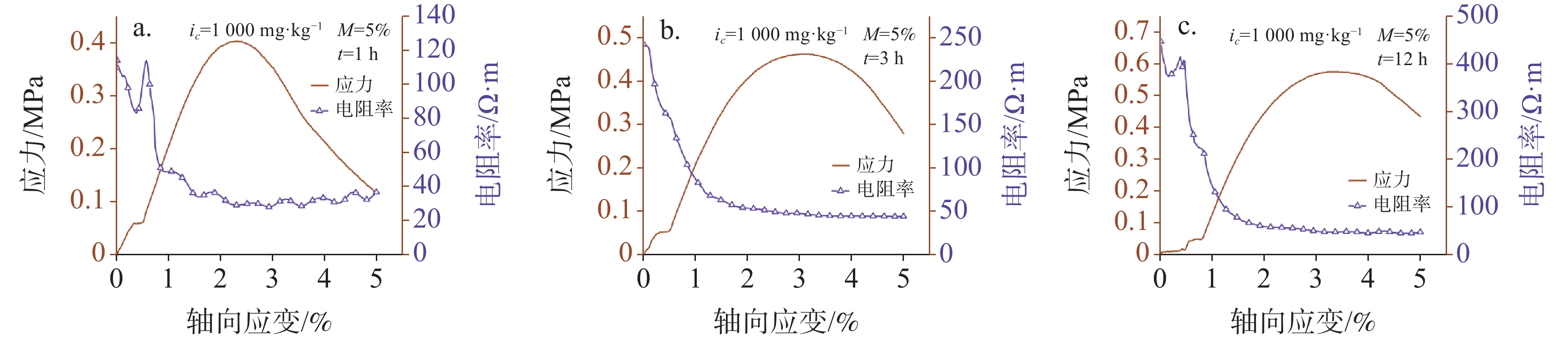
图 2 不同变量对固稳污染红黏土的应力-应变曲线
Figure 2. Stress-strain curves of different variables on stabilized contaminated red clay
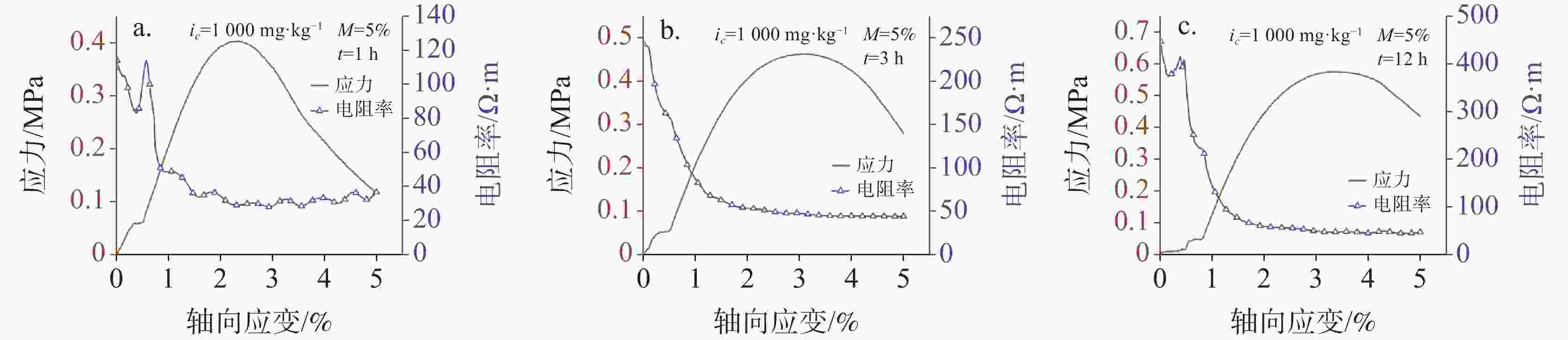
图 3 活性MgO强化CO2无机碳汇固化Zn2+污染土电阻率随应变变化规律
Figure 3. The variation of resistivity of Zn2+ contaminated soil solidified by CO2 inorganic carbon sink enhanced by active MgO with strain
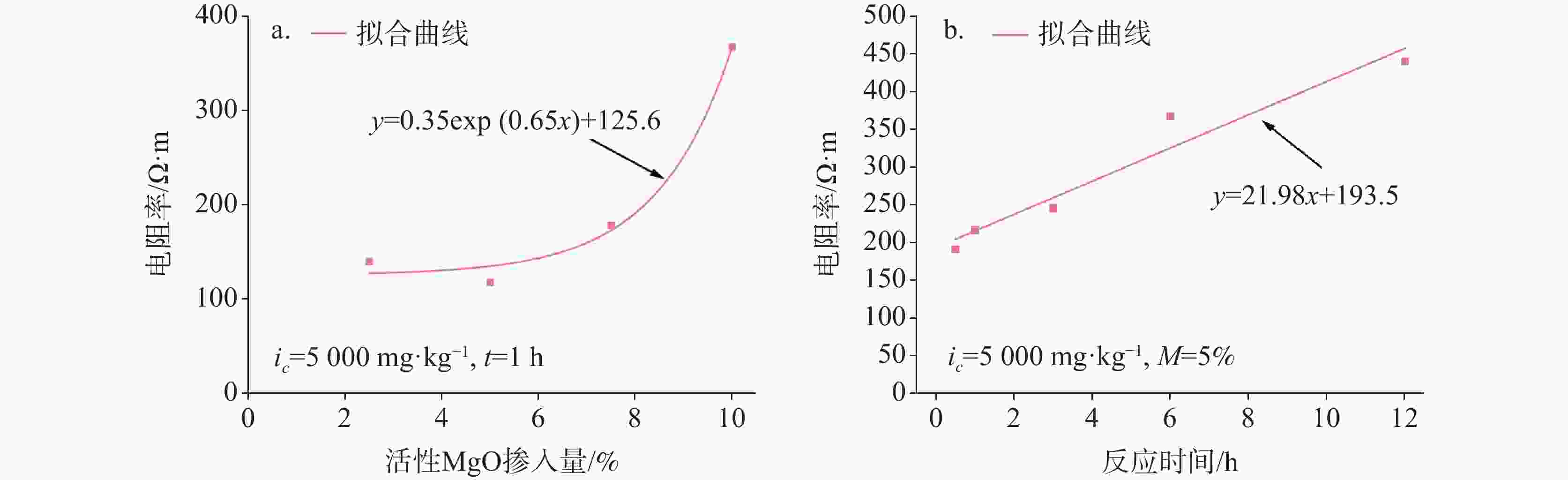
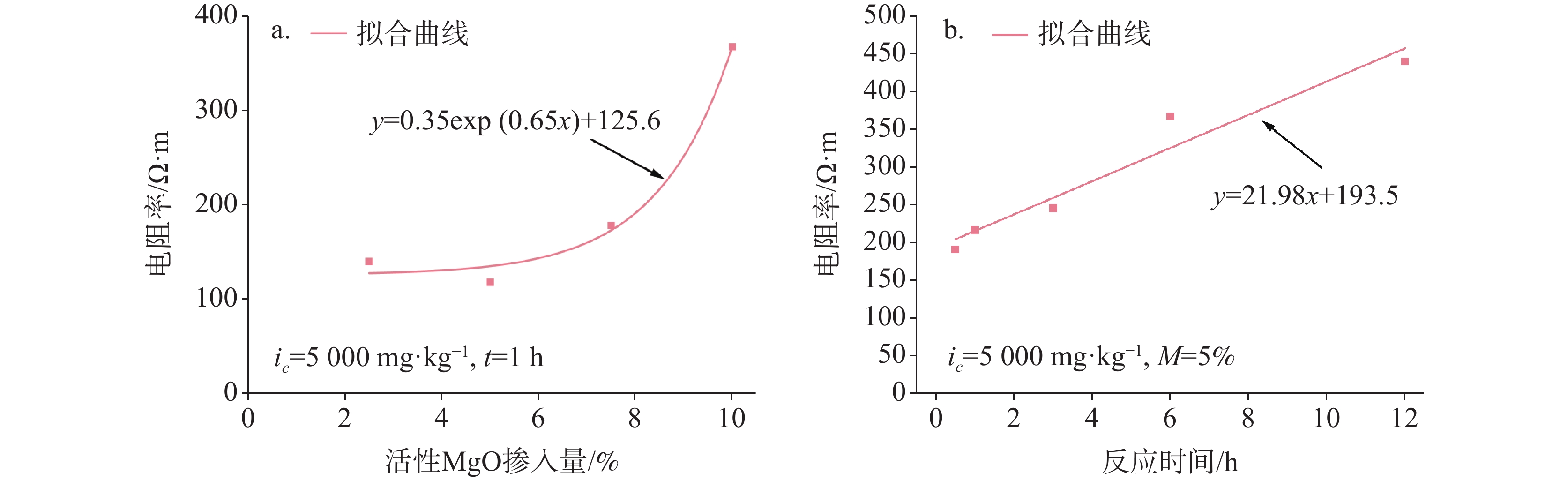
图 4 活性MgO强化CO2无机碳汇固化Zn2+污染土的电阻率与活性MgO掺量和反应时间拟合曲线
Figure 4. Fitting curves of resistivity of Zn2+ contaminated soil solidified by CO2 inorganic carbon sink enhanced by reactive MgO with reactive MgO content and reaction time
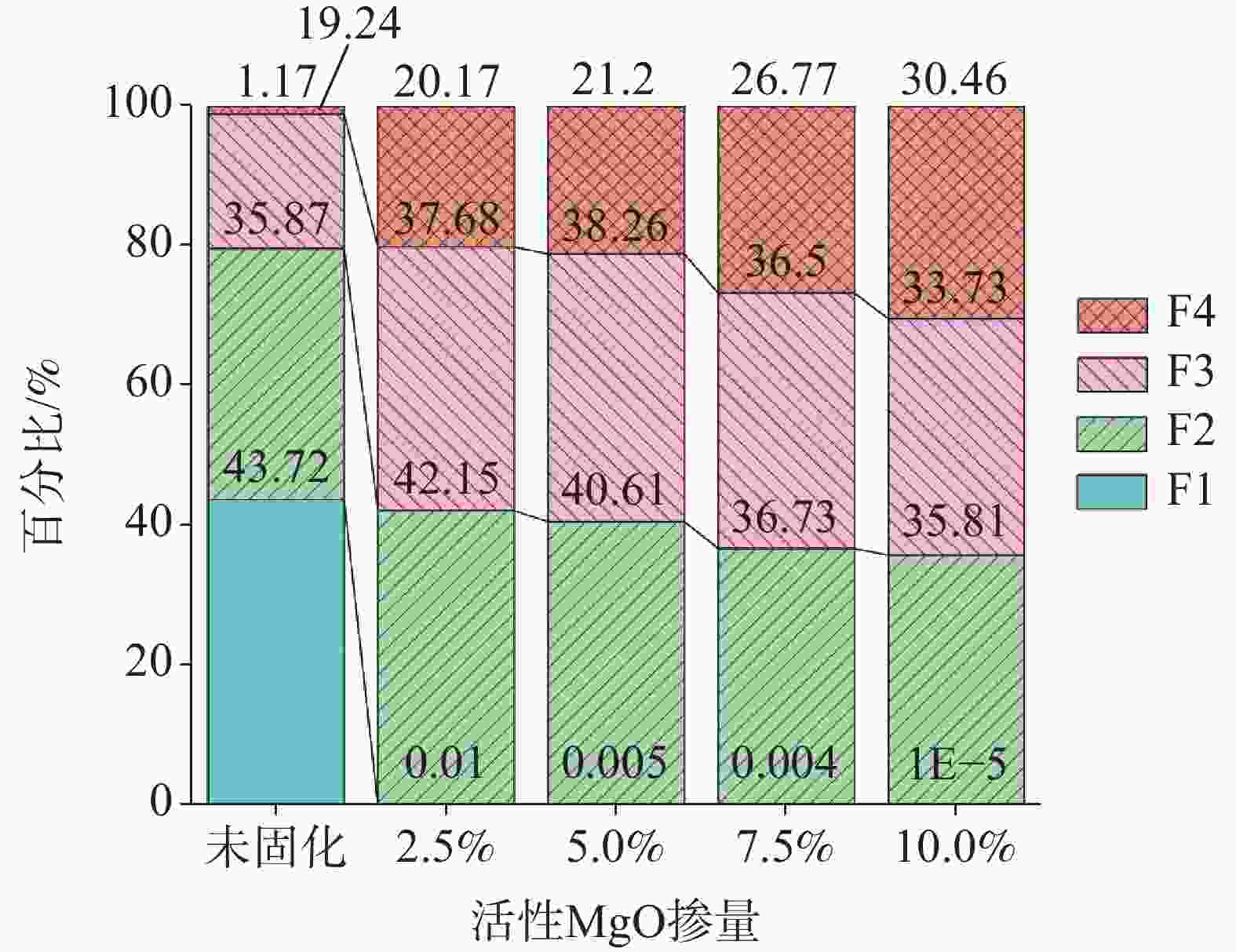
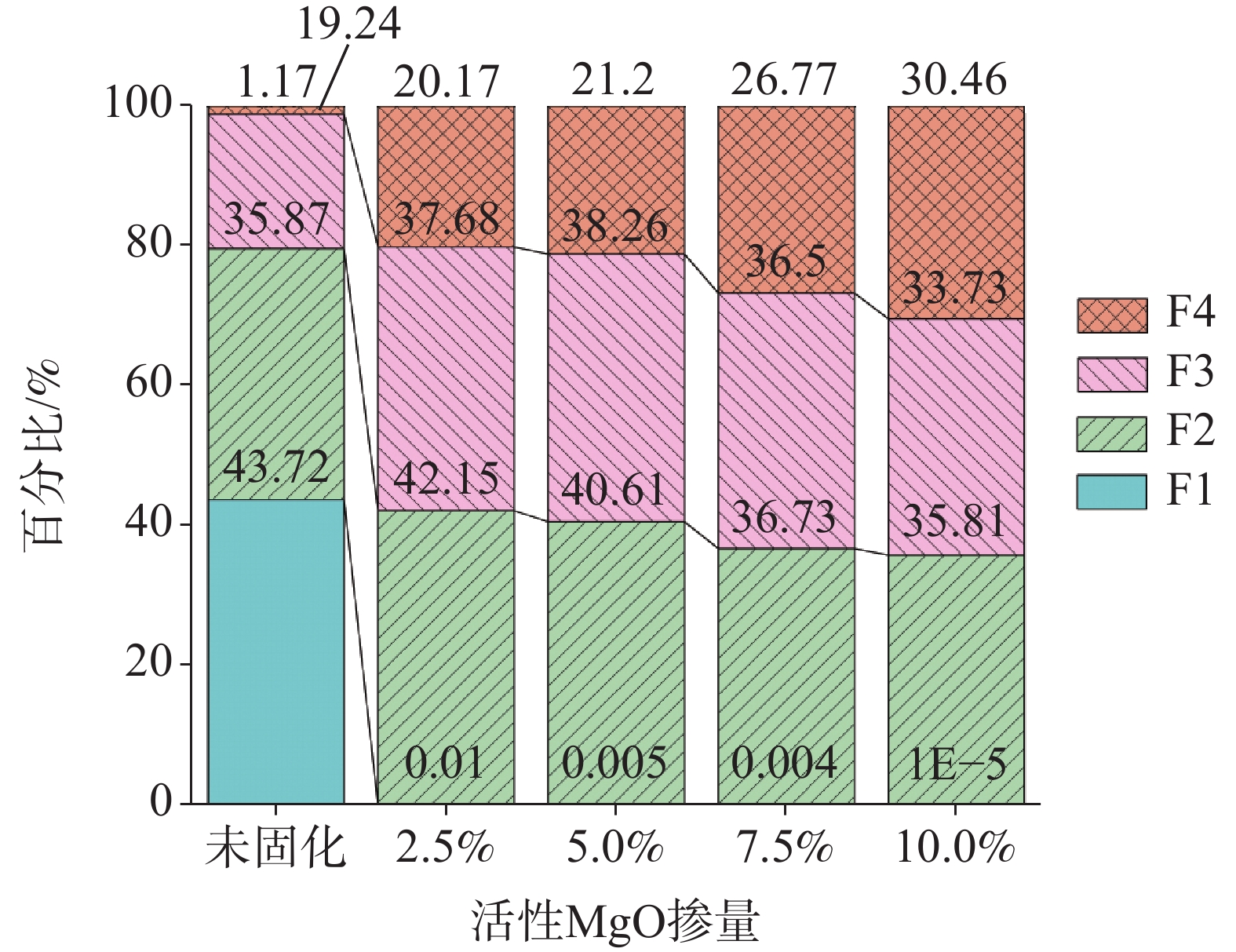
图 5 活性MgO强化CO2无机碳汇固稳Zn2+形态分布
Figure 5. Distribution of heavy metal species in CO2 inorganic carbon sequestration enhanced by active MgO
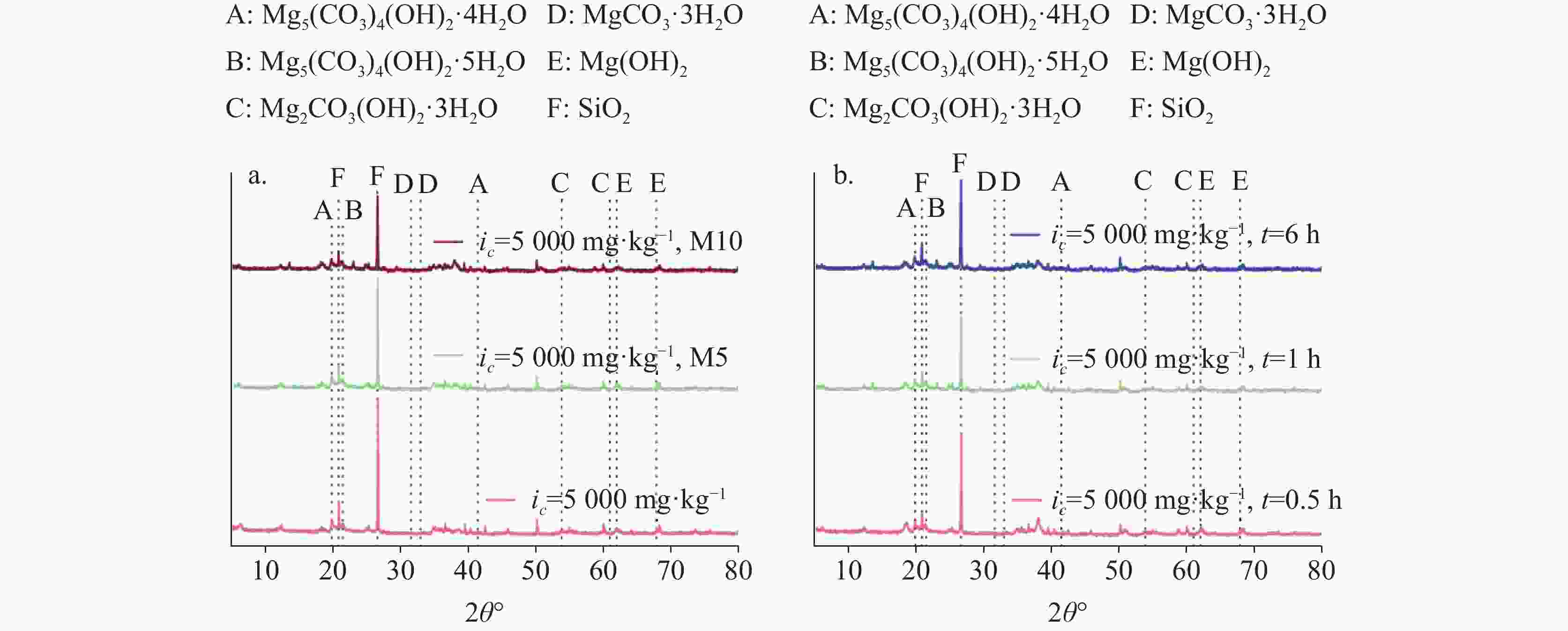
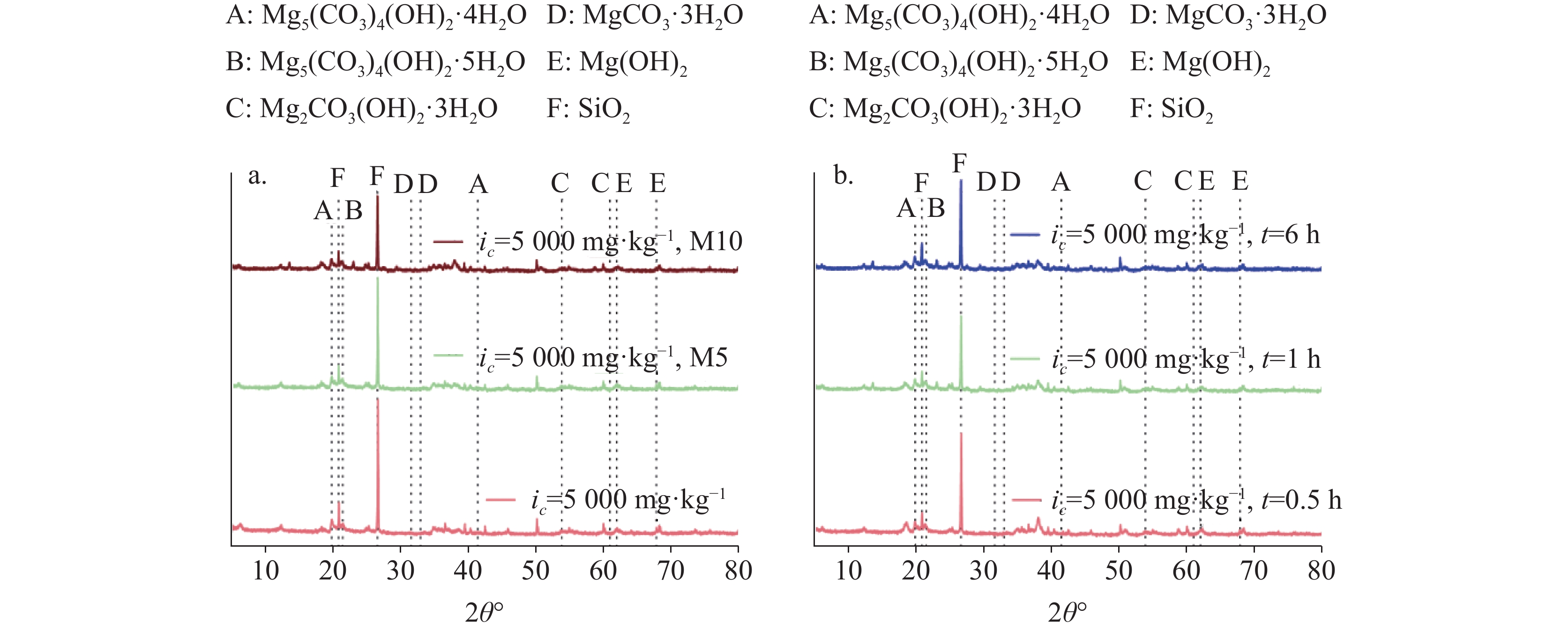
图 6 不同活性MgO掺量(a)以及不同反应时间(b)Zn2+污染土XRD图谱
Figure 6. XRD patterns of Zn2+ contaminated soil with different active MgO content ( a ) and different reaction time ( b )
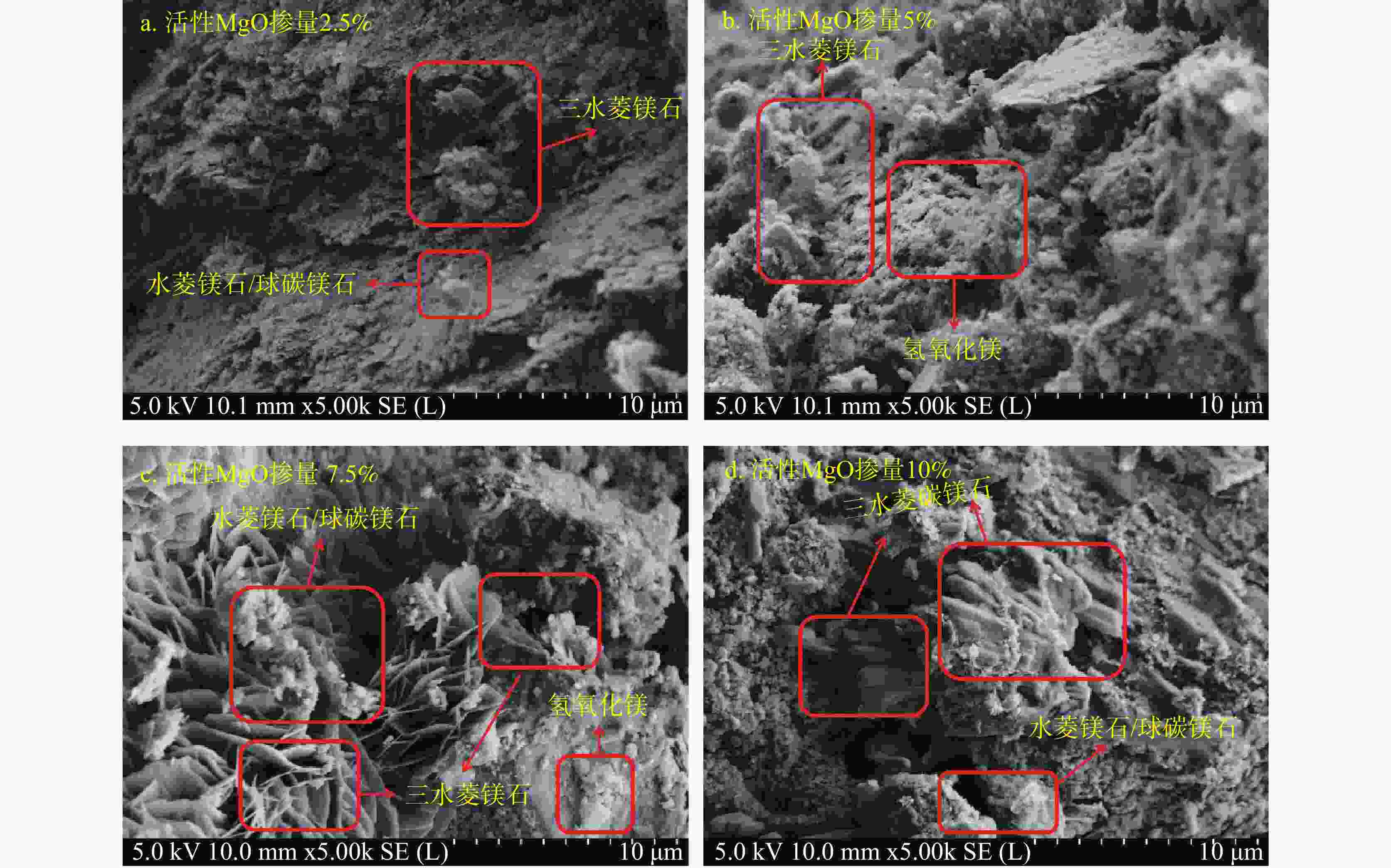
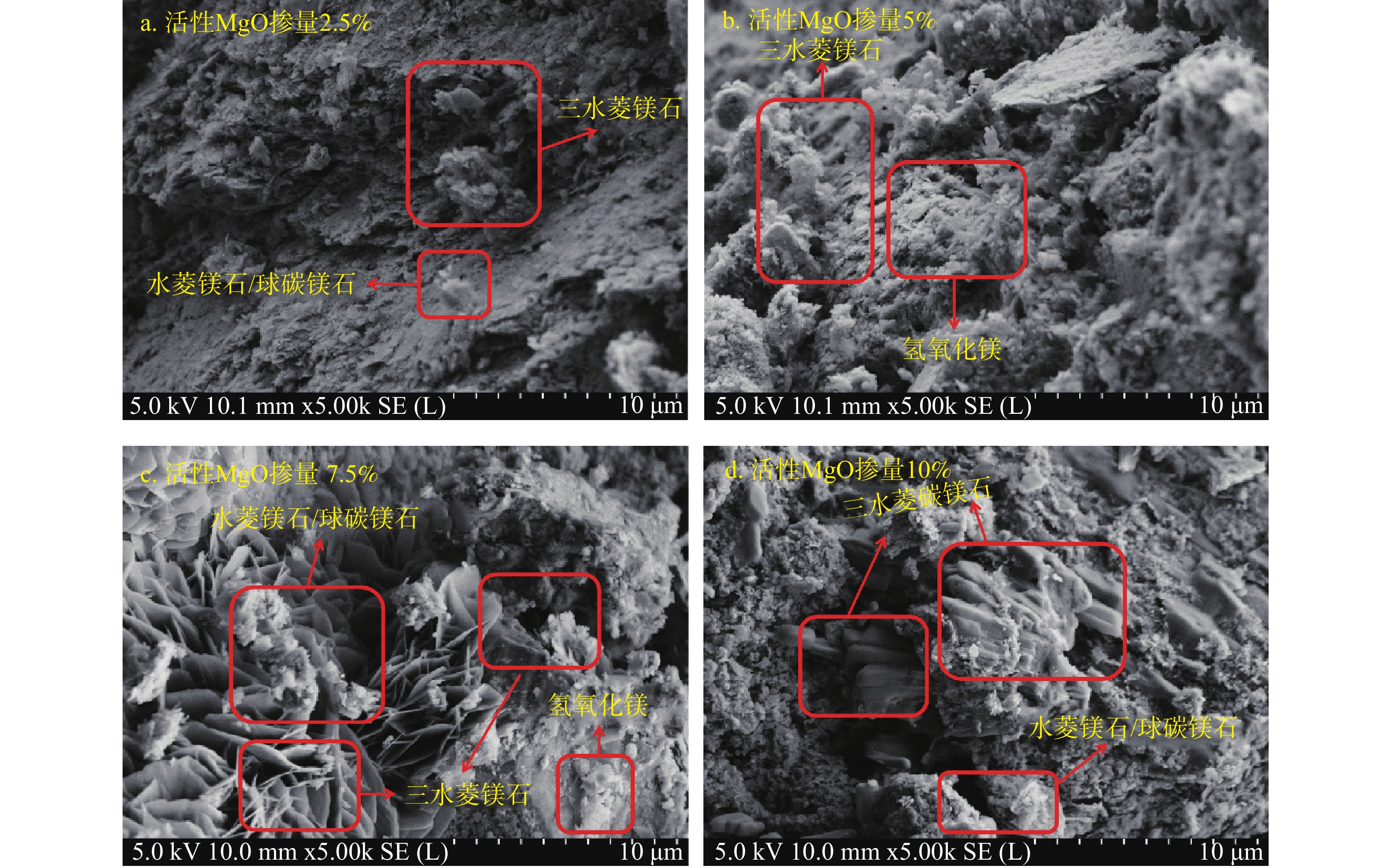
图 7 不同活性MgO掺量下固化Zn2+污染土的SEM图
Figure 7. SEM images of solidified Zn2+ contaminated soil with different active MgO content
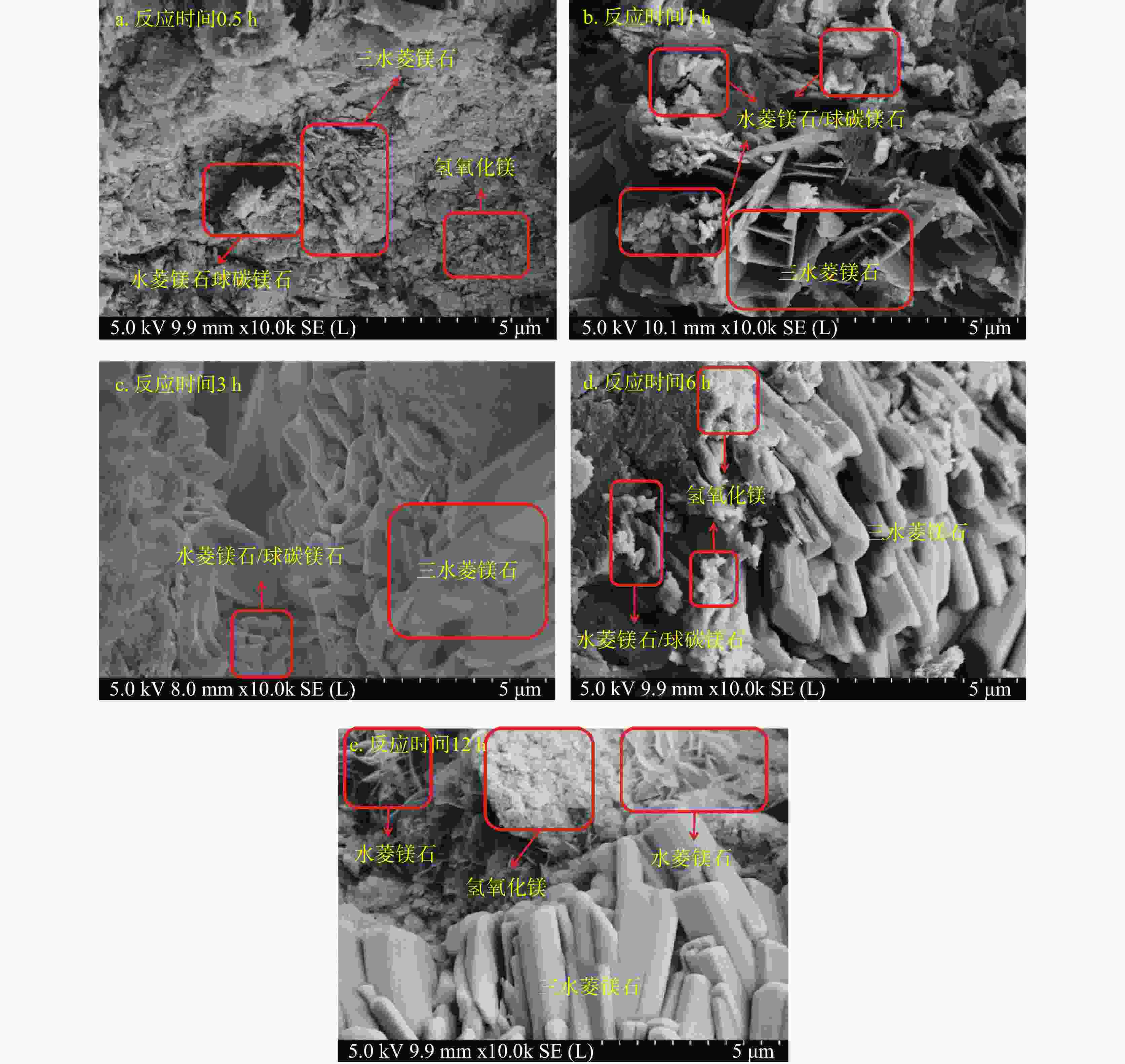
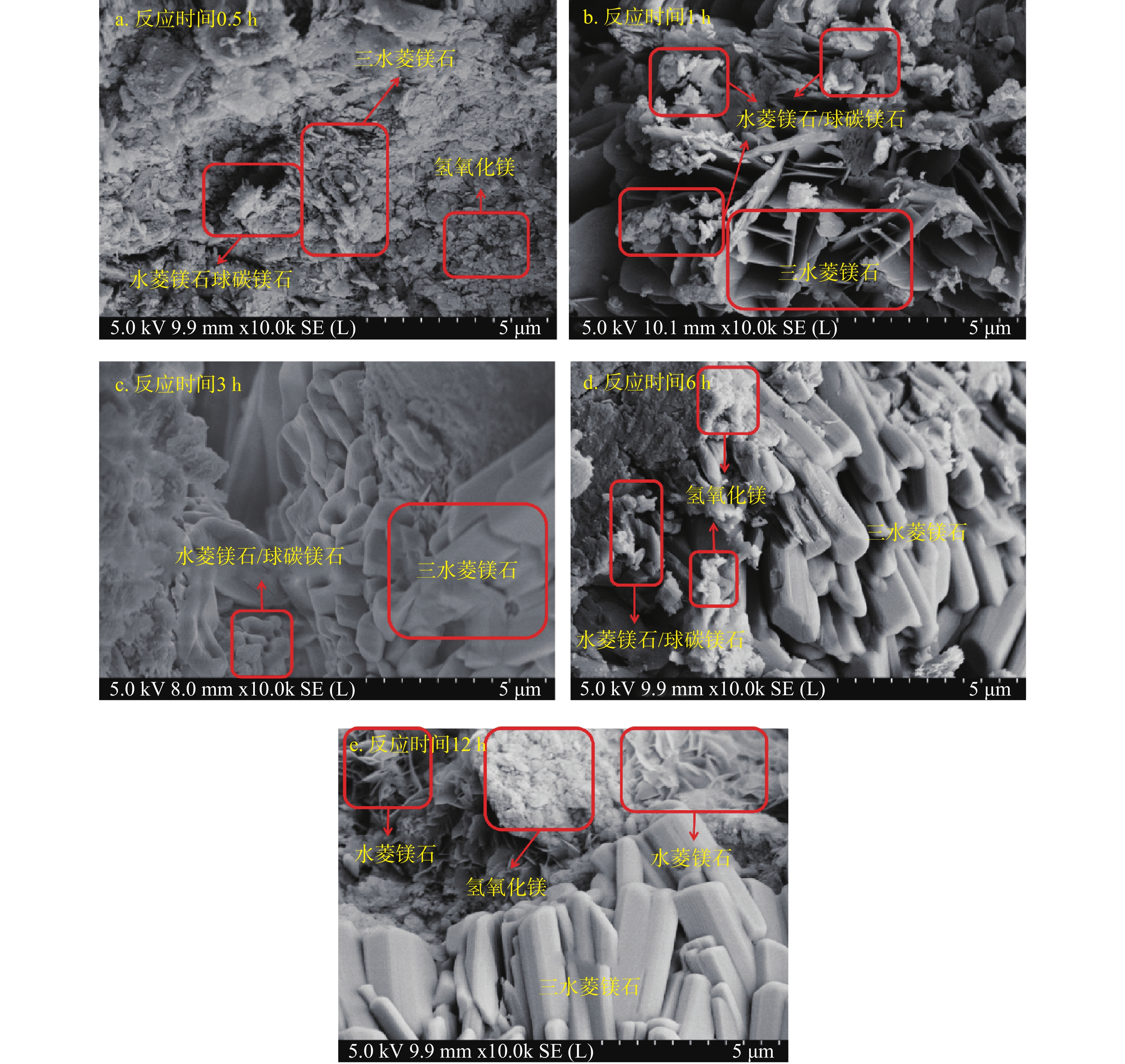
图 8 不同反应时间下活性MgO强化CO2无机碳汇固稳Zn2+污染土的SEM图
Figure 8. SEM images of active MgO reinforced CO2 inorganic carbon sequestration and stabilized Zn2+ contaminated soil under different reaction time
表 1 红黏土的基本物性指标
Table 1. Basic physical properties of red clay
最优含水率
ω/%最大干密度
ρd/g∙cm−3比重GS 液限
WL/%塑限
WP/%塑性指数
IP30.00 1.49 2.73 57.95 31.22 26.73  下载: 导出CSV
表 2 六水合硝酸锌(Zn(NO3)2 ∙6H2O)(分析纯)技术条件表(单位:%)
Table 2. Technical conditions of zinc nitrate hexahydrate (Zn(NO3)2·6H2O) (analytically pure) ( unit : % )
化合物 [Zn(NO3)2 6H2O] pH值 水不
溶物氯化物
(Cl−)硫酸根
(${\rm{SO}}_4^{2-}$)铁
(Fe3+)铅
(Pb2+)硫化铵
不沉淀物含量 ≥99.0 ≥3.5 0.005 0.001 0.002 0.0003 0.005 0.10 (注:pH值是在溶解度为50 g/L,温度25 ℃下测定的)
下载: 导出CSV
表 3 活性MgO化学组成表(%)
Table 3. Active MgO chemical composition table (%)
成分 K2O MgO MnO Na2O P2O5 Al2O3 CaO Fe2O3 SiO2 其他 含量 — 93.20 0.02 0.23 0.08 0.16 1.80 0.04 0.61 2.5
下载: 导出CSV
表 4 活性MgO强化无机碳汇固化Zn2+污染土试验方案
Table 4. Experimental scheme of solidified Zn2+ contaminated soil by active MgO enhanced inorganic carbon sink
Zn2+浓度ic/% 活性MgO掺量M/% 碳化时间t/h 试验内容 500 mg∙kg−1 2.5 0.5 无侧限抗压强度- 1000 mg∙kg−15 1 电阻率测试 5000 mg∙kg−17.5 3 BCR测试 10000 mg∙kg−110 6 XRD测试 12 SEM测试
下载: 导出CSV
-
[1] 蒋忠诚, 章程, 罗为群, 肖琼, 吴泽燕. 我国岩溶地区碳汇研究进展与展望[J]. 中国岩溶, 2022, 41(3): 345-355.Jiang Zhongcheng, Zhang Cheng, Luo Weiqun, Xiao Qiong, Wu Zeyan, Research progress and prospect of carbon sink in karst region of China[J]. Carsologica Sinica, 2022, 41(3): 345-355. [2] Zhang Jieru, Yang Pingheng, Groves Chirs, Luo Xiaohui, Wang Yuyang. Influence of geological structure on the physicochemical properties and occurrence of middle-deep groundwater in Chongqing, Southwest China[J]. Journal of Hydrology, 2022, 610: 127782. doi: 10.1016/j.jhydrol.2022.127782 [3] 姬之皓, 陈世万, 吴佼基, 余会云, 吴攀, 马蓝建. 岩溶区地下水污染水力通道注浆封堵现场试验研究[J]. 中国岩溶, 2025, 44(6): 1158-1172. doi: 10.11932/karst2025y021Ji Zhihao, Chen Shiwan, Wu Jiaoji, Yu Huiyun, Wu Pan, Ma Lanjian. Field experiment on hydraulic channel sealing via grouting to prevent groundwater pollution in karst region[J]. Carsologica Sinica, 2025, 44(6): 1158-1172. doi: 10.11932/karst2025y021 [4] 梁建宏, 崔旭东, 文来艳, 刘鼎, 伊晨旭, 黄可尊, 王俊. 桂林典型岩溶区和非岩溶区土壤剖面钙镁形态迁移对比[J]. 中国岩溶, 2022, 41(2): 220-227. doi: 10.11932/karst20220204Liang Jianhong, Cui Xudong, Wen Laiyan, Liu Ding, Yi Chenxu, Huang Kezun, Wang Jun. Comparison of soil calcium and magnesium fractions transport inclassic karst and non-karst region, Guilin[J]. Carsologica Sinica, 2022, 41(2): 220-227. doi: 10.11932/karst20220204 [5] 汤颖颖, 吴秀芹. 广西岩溶碳汇对气候变化和石漠化治理措施的响应[J]. 北京大学学报(自然科学版), 2023, 59(2): 189-196.Tang Yingying, Wu Xiuqin. Response of Karst Carbon Sink to Climate Change and Rocky Desertification Control Measures in Guangxi Zhuang Autonomous Region[J]. Acta Scientiarum Naturalium Universitatis Pekinensis, 2023, 59(2): 189-196. [6] 张结, 袁周伟, 张林, 袁甲, 邵明玉, 石亮星, 吕杰杰, 靳孟贵. 中国北方典型岩溶河流硝酸盐来源解析及H2SO4和HNO3对流域岩石风化碳汇的影响[J/OL]. 生态学报, 2026, (6): 1-17.Zhang Jie, Yuan Zhouwei, Zhang Lin, Yuan Jia, Shao Mingyu, Shi Liangxiang, Lu Jiejie, Jin Menggui. Identification of nitrate sources and effects of H2SO4, and HNO3 on carbonate weathering carbon sinks in typical karst rivers in northern China[J/OL]. Acta Ecologica Sinica. 2026, (6): 1-17. [7] 段承龙, 贺毓桓, 刘鹏, 曾根, 张灵嘉, 袁红, 盛浩. 湖南酸性岩溶耕地土壤对外源钙碳添加的响应[J]. 水土保持研究, 2026, 33(3): 229-238. doi: 10.13869/j.cnki.rswc.2026.03.041Duan Chenglong, He Yuhuan, Liu Peng, Zeng Gen, Zhang Lingjia, Yuan Hong, Sheng Hao. Response of acidic karst farmland soil in Hunan to exogenous calcium and carbon addition[J]. Research of Soil and Water Conservation, 2026, 33(3): 229-238. doi: 10.13869/j.cnki.rswc.2026.03.041 [8] Hao Haiyang, Hao Xuanxuan, Wu Pan, Li Xuexian, Han Zhiwei, Cao Xingxing, Yang bing, Zhang Ruixue, Zhang Kaifeng, Chen Manzhi, Zhang Shihong. Different hydrogeological characteristics of springs associated with abandoned coal mines in well-developed karst area[J]. Journal of Hydrology, 2025, 653: 132683. doi: 10.1016/j.jhydrol.2025.132683 [9] 蒲俊兵. 岩溶地下水系统的碳循环[J]. 地学前缘, 2026, 33(1): 369-383.Pu Junbing. Carbon cycling in the karst groundwater system[J]. Earth Science Frontiers, 2026, 33(1): 369-383. [10] 戴明宏, 张军以, 王腊春, 苏维词, 李阳兵. 岩溶地区土地利用/覆被变化的水文效应研究进展[J]. 生态科学, 2015, 34(3): 189-196. doi: 10.14108/j.cnki.1008-8873.2015.03.030Dai Minghong, Zhang Junyi, Wang Lachun, Su Weici, Li Yangbing. A review on impacts of land use/land cover change on water resources inkarst areas[J]. Ecological Science, 2015, 34(3): 189-196. doi: 10.14108/j.cnki.1008-8873.2015.03.030 [11] 凌胜华, 杨洋, 刘希军, 罗桥花, 罗雄壮, 邝吉鸿. 桂东南岩溶区耕地土壤重金属源解析及生态风险评价[J]. 地球与环境, 2026, 54(1): 58-70. doi: 10.3724/EE.1672-9250.2026.54.007Ling Shenghua, Yang Yang, Liu Xijun, Luo Qiaohua, Luo Xiongzhuang, Kuang Jihong. Source Apportionment and Ecological Risk of Heavy Metals in Cultivated Soils in Karst Area of Southeastern Guangxi[J]. Earth and Environment, 2026, 54(1): 58-70. doi: 10.3724/EE.1672-9250.2026.54.007 [12] 蒋忠诚. 广西岩溶及其生态环境领域近十年来的主要研究进展[J]. 南方国土资源, 2004(11): 19-22. doi: 10.3969/j.issn.1672-321X.2004.11.006Jiang Zhongcheng. The main research progress of karst and its ecological environment in Guangxi in recent ten years[J]. NANFANG ZIRAN ZIYUAN, 2004(11): 19-22. doi: 10.3969/j.issn.1672-321X.2004.11.006 [13] 张连凯, 覃小群, 黄奇波, 刘朋雨, 单晓静. 岩溶区矿山污染地下水的水生植物修复初步研究[J]. 中国岩溶, 2017, 36(5): 743-750.Zhang Liankai, Qin Xiaoqun, Huang Qibo, Liu Pengyu, Shan Xiaojing. Aquatic plants bioremediation to groundwater contaminated by mines in karst areas[J]. Carsologica Sinica, 2017, 36(5): 743-750. [14] 林协昌, 杨苹, 乐文彩. 重金属污染土壤修复技术及其修复实践[J]. 中国高新科技, 2025(18): 152-154. doi: 10.13535/j.cnki.10-1507/n.2025.18.49Lin Xiechang, Yang Ping, Le Wencai. Remediation Technology and Practice for Heavy Metal Contaminated Soil[J]. China High and New Technology, 2025(18): 152-154. doi: 10.13535/j.cnki.10-1507/n.2025.18.49 [15] Wang X, Xue Y. Preparation and Immobilization Mechanism of Red Mud/Steel Slag-Based Geopolymers for Solidifying/Stabilizing Pb-Contaminated Soil[J]. Materials, 2024, 17(13): 3353. doi: 10.3390/ma17133353 [16] 廖红为, 马俊飞, 黄奇波, 李滕芳, 吴华英, 邹昌霈, 刘朋雨. 岩溶区矿山修复新思路: 人与自然和谐发展[J]. 中国矿业, 2025, 34(S2): 843-846. doi: 10.12075/j.issn.1004-4051.20251556Liao Hongwei, Ma Junfei, Huang Qibo, Li Tengfang, Wu Huaying, Zou Changpei, Liu Pengyu. New approach to mine restoration in karst regions: harmonious development of man and nature[J]. China Mining Magazine, 2025, 34(S2): 843-846. doi: 10.12075/j.issn.1004-4051.20251556 [17] Ban Rulong, Zha Fusheng, Kang Bo, Wu Shan, Song Yu, Chen Hongbin. Mechanisms of enhancing MgO for stabilization/solidification of Pb-contaminated red clay through CO2 sequestration[J]. Journal of Environmental Management, 2024, 366: 121810. doi: 10.1016/j.jenvman.2024.121810 [18] Wang Dongxing, Zhu Jiaye, He Fujin. CO2 carbonation-induced improvement in strength and microstructure of reactive MgO-CaO-fly ash-solidified soils[J]. Construction and Building Materials, 2019, 229: 116914. doi: 10.1016/j.conbuildmat.2019.116914 [19] Bai Limei, Ma Yuxin, Zhao Wenqing, Deng Yufen, Li Shaoying. Optimization and mechanism in preparing active magnesium oxide from magnesite[J]. Journal of Thermal Analysis and Calorimetry, 2017, 129: 1103-1109. doi: 10.1007/s10973-017-6278-4 [20] Zhang Liqing Li Bo, Wei Yongguang, Xu Haoyuan. Efficient removal of Cr (VI) using recycled MgO from laterite nickel ore by fly ash doping[J]. Separation and Purification Technology, 2025, 354: 128788. doi: 10.1016/j.seppur.2024.128788 [21] Zha Fusheng, Chen Shaogeng, Kang Bo, Xu long, Shen Yinbin, Wang Runkai. Synergistic solidification of lead-contaminated soil by magnesium oxide and microorganisms[J]. Chemosphere, 2022, 308: 136422. doi: 10.1016/j.chemosphere.2022.136422 [22] Estabragh A R, Khajepour H, Javadi A A, Amini M. Effect of forced carbonation on the behaviour of a magnesia-stabilised clay soil[J]. International Journal of Pavement Engineering, 2022, 23(5): 1691-1705. doi: 10.1080/10298436.2020.1821023 [23] 赵桂清, 张吉禄, 周小涵, 刘新荣, 刘馨琳, 郭宏青. 岩溶区桥桩承载特性及溶洞变形机理研究[J]. 中国岩溶, 2024, 43(5): 1133-1143.Zhao Guiqing, Zhang Jilu, Zhou Xiaohan, Liu Xinlin, Guo Hongqing. Study on bearing characteristics of bridge piles and deformation mechanisms of karst caves in karst area[J]. Carsologica Sinica, 2024, 43(5): 1133-1143. [24] 姚克追, 黄继有, 许模, 文振兴, 卢丹美, 覃常, 康小兵. 广西马山县溶蚀平原区岩溶塌陷分布规律及形成机制[J]. 中国岩溶, 2025, 44(1): 159-169+198. doi: 10.11932/karst20250111Yao Kezhui, Huang Jiyou, Xu Mo, Wen Zhenxing, Lu Danmei, Qin Chang, Kang Xiaobing. Distribution law and formation mechanism of karst collapses in karst plains of Mashan county, Guangxi[J]. Carsologica Sinica, 2025, 44(1): 159-169+198. doi: 10.11932/karst20250111 [25] 宋宇, 成继春, 陈玉玲, 李嘉琦, 刘伟. MICP协同氧化镁固化Zn2+污染红黏土的效果试验研究[J]. 土木与环境工程学报(中英文), 2026, 1-12.Song Yu, Cheng Jichun, Chen Yuling, Li Jiaqi, Liu Wei. Experimental study on the effect of MICP synergistic magnesiumoxide on the solidification of Zn2+ contaminated red clay[J]. Journal of Civil and Environmental Engineering, 2026, 1-12. [26] 中华人民共和国水利部. 《土工试验方法标准》(GB/ T50123-2019)[S], 北京: 中国计划出版社, 2019.Ministry of Water Resources of the People 's Republic of China. ‘Geotechnical engineering test method and criterion’ (GB/ T50123-2019) [S]. Beijing: China Plan Publishing House, 2019. [27] Mulligan C N, Yong R N, Gibbs B F. Remediation technologies for metal-contaminated soils and groundwater: an evaluation[J]. Engineering Geology, 2001, 60(1-4): 193-207. doi: 10.1016/S0013-7952(00)00101-0 [28] 刘松玉, 蔡光华, 杜广印, 王亮. 活性氧化镁碳化搅拌桩模型试验研究[J]. 岩土工程学报, 2017, 39(S2): 136-139.Liu Songyu, Cai Guanghua, Du Guang-yin, Wang Liang. Model tests on carbonated reactive MgO mixing piles[J]. Chinese Journal of Geotechnical Engineering, 2017, 39(S2): 136-139. [29] 宋宇, 刘伟, 杨承琨, 江嘉辉, 陈凯斌, 张建伟, 郑俊杰. 水泥、石灰固化Zn2+污染土的力学特性及微观机制研究[J]. 水利水电技术(中英文), 2025, 56(9): 236-247. doi: 10.13928/j.cnki.wrahe.2025.09.018Song Yu, Liu Wei, Yang Chengkun, Jiang Jiahui, Cheng Kaibin, Zhang Jianwei, Zheng Junjie. Mechanical properties and microscopic mechanisms of Zn2+-contaminated soil stabilized by cement and lime[J]. Water Resources and Hydropower Engineering, 2025, 56(9): 236-247. doi: 10.13928/j.cnki.wrahe.2025.09.018 [30] Yi Yaolin, Lu Kaiwen, Liu Songyu, Al-Tabbaa A. Property changes of reactive magnesia−stabilized soil subjected to forced carbonation[J]. Canadian Geotechnical Journal, 2015, 53(2): 314-325. doi: 10.1139/cgj-2015-0135 [31] 刘松玉, 李晨. 氧化镁活性对碳化固化效果影响研究[J]. 岩土工程学报, 2015, 37(1): 148-155.Liu Songyu, Li Cheng. Influence of Mg O activity on stabilization efficiency of carbonated mixing method[J]. Chinese Journal of Geotechnical Engineering, 2015, 37(1): 148-155. [32] Chen Kaibin, Song Yu, Chen Yu, Lai Yewei, Kong Zhilin. Strength and leaching characteristics of lead-zinc contaminated red clay stabilized by CO2-enhanced active MgO carbonation[J]. Journal of Environmental Chemical Engineering, 2026, 14(1): 120967. doi: 10.1016/j.jece.2025.120967 [33] 刘松玉, 曹菁菁, 蔡光华. 活性氧化镁碳化固化粉质黏土微观机制[J]. 岩土力学, 2018, 39(5): 1543-1552+1563.Liu Songyu, Cao Jingjing, Cai Guanghua. Microstructural mechanism of reactive magnesia carbonatedand stabilized silty clays[J]. Rock and Soil Mechanics, 2018, 39(5): 1543-1552+1563. [34] Ban Rulong, Chen Xuejun, Yang Xin, Wang Jianqiang, Pan Zongyuan, Song Yu. Strength and electrical resistivity characteristic of carbonating reactive MgO-mixed red clay under different water contents[J]. Arabian Journal of Geosciences, 2022, 15(7): 657. doi: 10.1007/s12517-022-09937-z [35] Cai G H, Du Y J, Liu S Y, Singh D N. Physical properties, electrical resistivity, and strength characteristics of carbonated silty soil admixed with reactive magnesia[J]. Canadian Geotechnical Journal, 2015, 52(11): 1699-1713. doi: 10.1139/cgj-2015-0053 [36] Wen Jia, Yi Yuanjie, Zeng Guangming. Effects of modified zeolite on the removal and stabilization of heavy metals in contaminated lake sediment using BCR sequential extraction[J]. Journal of Environmental Management, 2016, 178: 63-69. doi: 10.1016/j.jenvman.2016.04.046 [37] 蔡光华, 刘松玉, 曹菁菁. 活性氧化镁碳化加固粉土微观机理研究[J]. 土木工程学报, 2017, 50(5): 105-113+128. doi: 10.15951/j.tmgcxb.2017.05.012Cai Guanghua, Liu Songyu, Cao Jingjing. Research on micro-mechanism of carbonated reactive Mg O-stabilized silt[J]. China Civil Engineering Journal, 2017, 50(5): 105-113+128. doi: 10.15951/j.tmgcxb.2017.05.012 [38] Yang Yang, Ruan Shaoqin, Wu Shifan, Chu Jian, Unluer Cise, Liu Hanlong, Cheng Liang. Biocarbonation of reactive magnesia for soil improvement[J]. Acta Geotechnica, 2020, 16(4): 1-13. doi: 10.1007/s11440-020-01093-6 [39] Ruan S, Unluer C. Influence of mix design on the carbonation, mechanical properties and microstructure of reactive MgO cement-based concrete[J]. Cement and Concrete Composites, 2017, 80: 104-114. doi: 10.1016/j.cemconcomp.2017.03.004 -

 点击查看大图
计量
- 文章访问数: 8
- HTML浏览量: 1
- PDF下载量: 0
- 被引次数: 0
