


Physical Model Test Study on Karst Collapse under Cyclic Negative Pressure
-
摘要: 本文通过物理模型试验,研究了循环水位波动下单一黏土盖层的负压吸蚀致塌过程,重点揭示了水位波动循环次数及单次循环中负压作用时长对土体累积破坏过程的影响。试验通过控制注水阀门开度调节水位上升速率,从而设定三种不同的单次负压作用时长,并监测试验过程中塌陷发展、土体位移及孔隙水压力、土压力和气压的变化。结果表明:循环负压作用下盖层破坏具有典型累积损伤特征,变形发展、孔压消散、土压增长和气压衰减在裂缝萌生—扩展阶段表现出协同演化;单次有效负压作用时长会改变土体的损伤破坏过程,长时长工况变形破坏较早、破坏范围相对集中,短时长工况损伤发展滞后但在多次循环后出现了较大的累积位移与塌陷范围。基于三组工况的初步拟合显示,临界塌陷循环次数与单次负压作用时长呈负幂次相关(R2=0.955),但还需通过更多不同负压作用时长工况进一步验证。研究揭示了循环负压作用下盖层土体损伤累积的演化过程,可为岩溶区周期抽排水诱发塌陷风险评估提供理论依据。Abstract: Karst collapse ranks among the most pervasive geological hazards in carbonate-bearing regions worldwide, posing a formidable threat to urban infrastructure and the safety of local residents. In southwest China, periodic groundwater level fluctuations triggered by mine dewatering, urban groundwater exploitation, and reservoir operation have been identified as the dominant triggering factor for karst collapse. Among various collapse-inducing mechanisms, negative pressure suction erosion occurring at the soil-rock interface during water level drawdown is widely acknowledged as a critical driver of rapid instability and failure in clay overburdens. Previous studies have predominantly focused on the collapse process induced by a single episode of water level drawdown, elucidating the fundamental laws governing seepage deformation and mechanical instability of soil layers under hydraulic loading. Nevertheless, in practical engineering contexts, groundwater levels typically undergo recurrent cyclic fluctuations rather than unidirectional monotonic changes. The resultant cyclic negative pressure action induces progressive cumulative damage to the overburden soil, an evolutionary process that cannot be accurately characterized by results from conventional single-cycle tests. In particular, the duration of effective negative pressure within a single fluctuation cycle, governed by the rates of water level rise and fall, represents a key factor shaping the evolution of cumulative soil damage and the final collapse morphology. To date, no quantitative relationship has been established between negative pressure duration, cycle number, and critical collapse conditions, which impedes precise risk assessment of collapse under long-term periodic water level variations. To address this research gap, this paper presents physical model experiments to investigate the cumulative damage and collapse process of a homogeneous clay overburden under cyclic water level fluctuations, with particular emphasis on quantifying the influence of single-cycle negative pressure duration on the evolutionary trajectory of soil failure.The experiments were performed using a self-developed karst collapse model test system consisting of a transparent plexiglass model box, a karst cavity simulation unit, a circulating water level control system, and a multi-parameter monitoring subsystem. The test soil was typical red clay collected from a karst collapse-prone area in Guizhou Province. A uniform overburden was fabricated by layer-by-layer compaction, with the initial dry density and moisture content strictly controlled. Three test scenarios were designed by adjusting the opening of the water injection valve to regulate the water level rise rate, corresponding to three distinct durations of effective negative pressure per cycle. Each cycle comprised a rapid water level drawdown phase and a gradual water level recovery phase, with the fluctuation amplitude maintained consistent across all scenarios. Throughout the tests, high-definition cameras were deployed to continuously record the initiation, propagation, and final morphology of surface cracks. Meanwhile, multiple embedded sensors monitored vertical soil displacement, pore water pressure, earth pressure, and air pressure at the soil-rock interface at a constant sampling frequency to ensure data synchronization.The experimental results demonstrate that overburden failure under cyclic negative pressure exhibits pronounced cumulative damage characteristics, and the failure process can be divided into four distinct stages: negative pressure accumulation, soil damage progression, crack propagation, and collapse occurrence. In the initial stage, the soil undergoes slight vertical compression under repeated hydraulic loading, with negligible surface deformation, while pore water pressure and earth pressure remain generally stable. As the number of cycles increases, tensile cracks first emerge on the surface above the cavity edge and propagate progressively in both vertical and horizontal directions. During this stage, the surface deformation rate increases markedly; pore water pressure dissipates rapidly with crack generation; vertical earth pressure at the overburden base gradually rises due to stress redistribution; and the negative air pressure within the cavity attenuates continuously as air infiltrates through the cracks. These coupled variations collectively reflect the progressive deterioration of the soil structure.Comparative analysis reveals that the duration of single effective negative pressure fundamentally alters the cumulative damage rate and the ultimate failure mode of the overburden. Under the long-duration scenario, sustained high-intensity negative pressure generates greater seepage gradients and tensile stresses within the soil matrix, leading to earlier crack initiation, faster propagation rates, and critical collapse occurring at a smaller number of cycles. The resulting collapse pit is relatively deep with a concentrated failure zone. Under the short-duration scenario, the intensity of negative pressure per cycle is comparatively low, so the initiation of visible cracks and the onset of rapid deformation are significantly delayed. Nevertheless, the subtle damage induced by each cycle accumulates continuously over repeated fluctuations, giving rise to wider lateral crack expansion and larger cumulative vertical displacement prior to final collapse, and ultimately forming a shallower collapse pit with a broader influence range. Nonlinear fitting indicates that the critical number of cycles to collapse decreases with increasing single negative pressure duration in a negative power-law fashion (R2 = 0.955). Nevertheless, this empirical relationship requires further validation across a wider spectrum of test conditions.From a mechanistic perspective, the cumulative damage under cyclic negative pressure is essentially a fatigue failure process induced by hydromechanical coupling. Each cycle of negative pressure action induces irreversible microcrack generation and particle rearrangement within the soil; the superposition and accumulation of micro-damage ultimately result in macrocrack coalescence and overall instability and collapse of the overburden. This study preliminarily elucidates the complete evolutionary process of damage accumulation in clay overburdens under cyclic negative pressure and quantifies the influence law of single negative pressure duration on critical collapse conditions. The findings can provide theoretical support for risk assessment and early warning of karst collapse triggered by periodic pumping and drainage in karst regions.
-
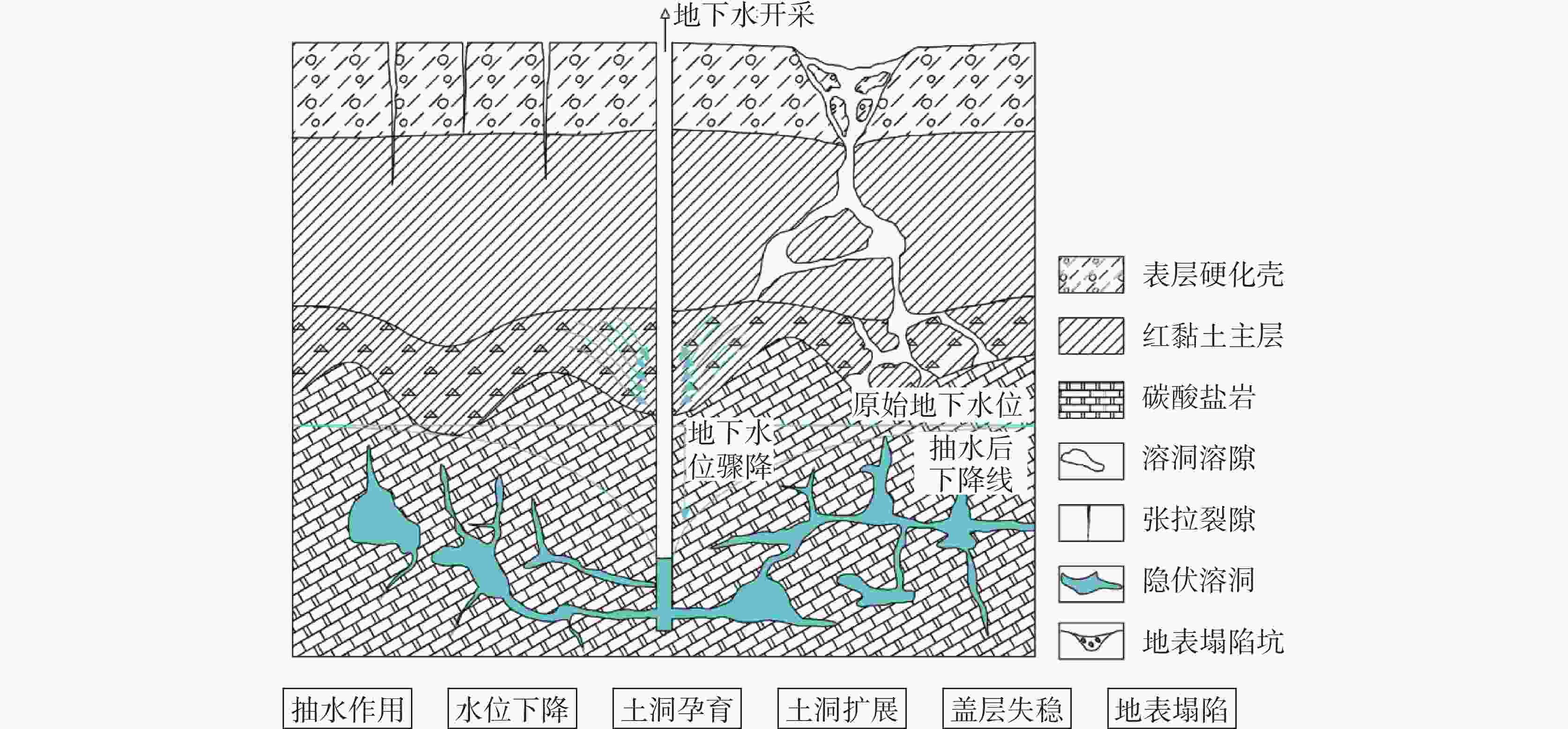
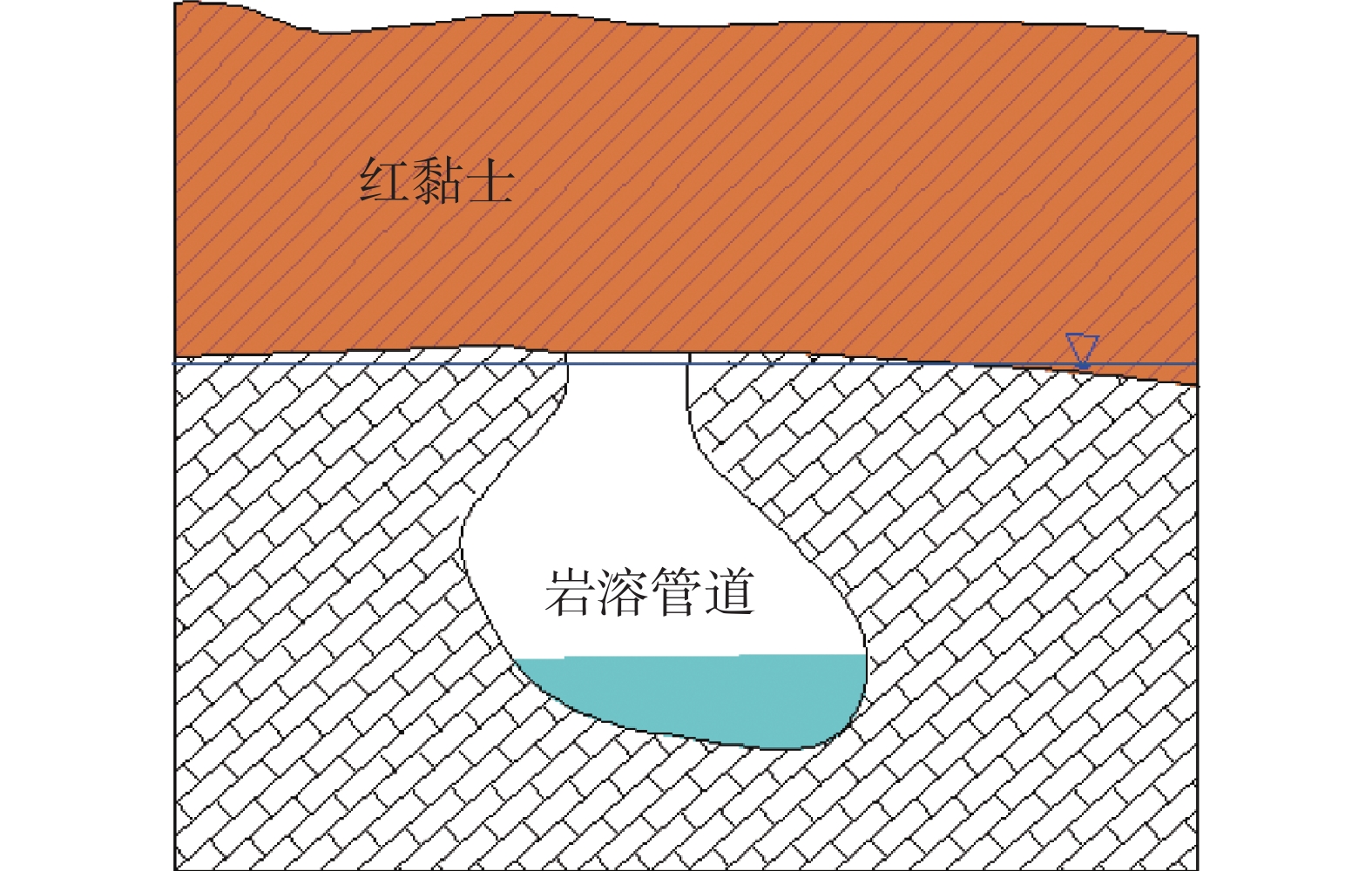
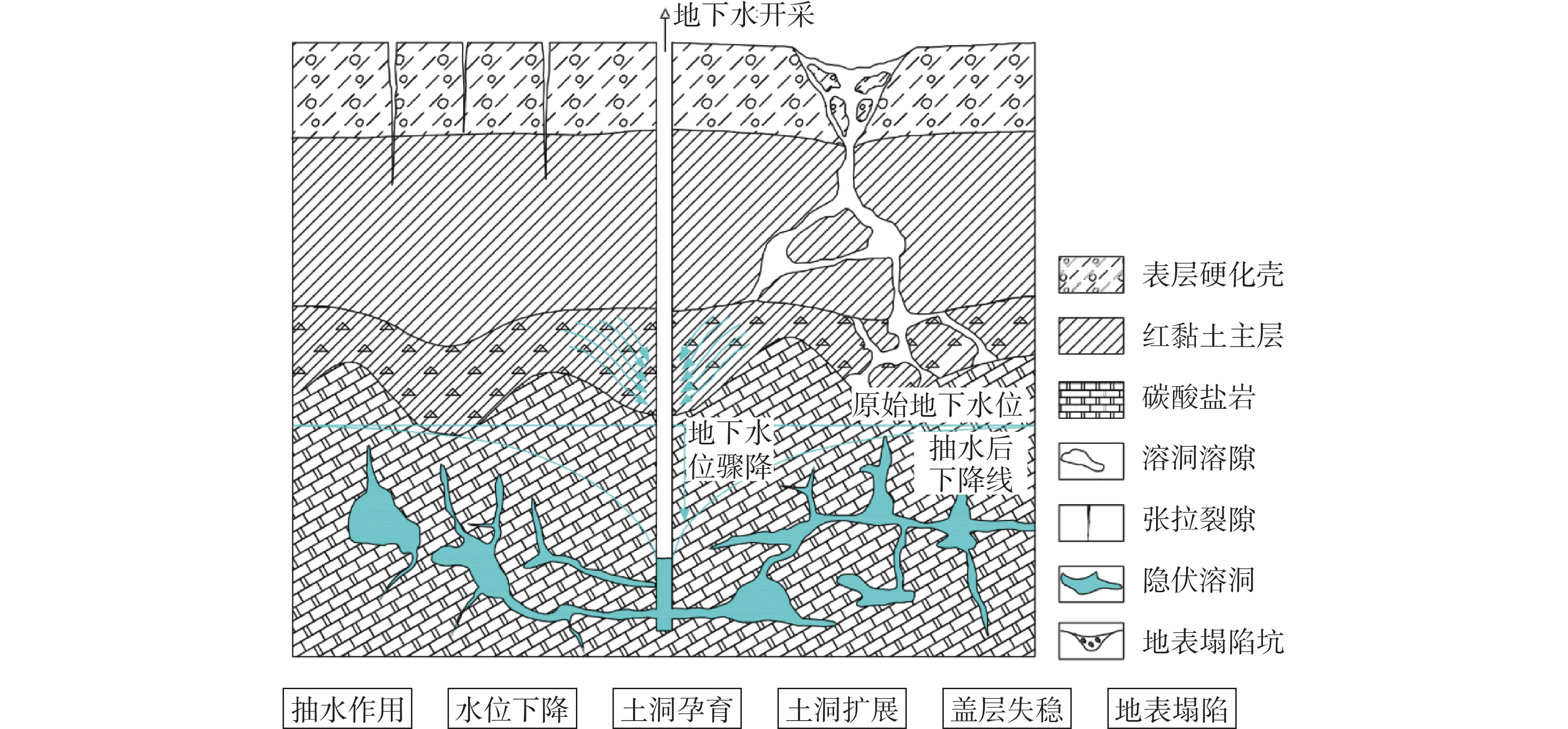
图 1 贵州典型红黏土盖层抽水致塌概化图
Figure 1. Conceptual geological model of karst collapse evolution induced by groundwater pumping in red clay caprocks in Guizhou
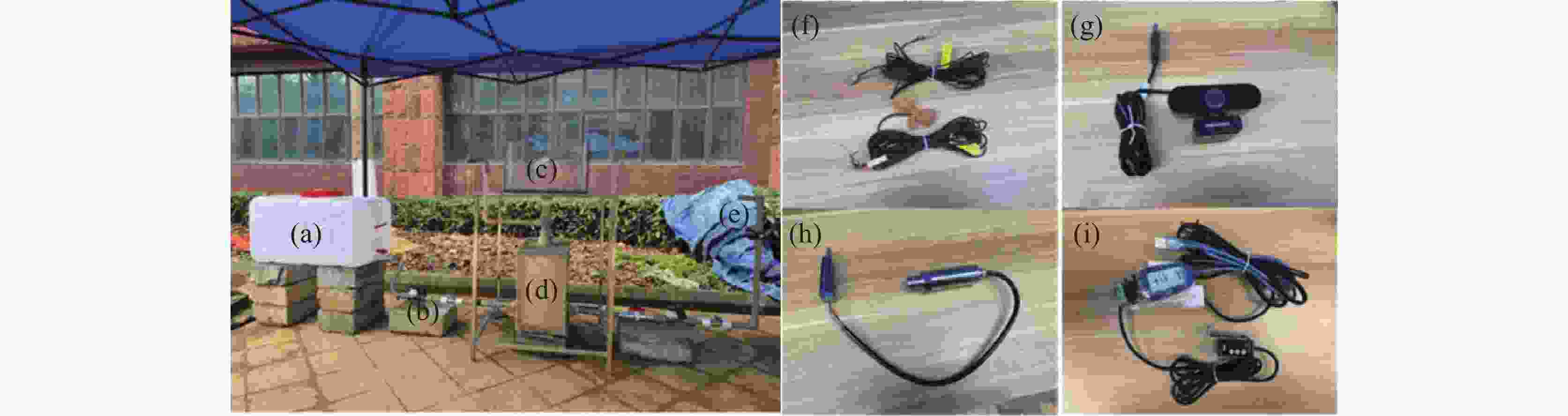
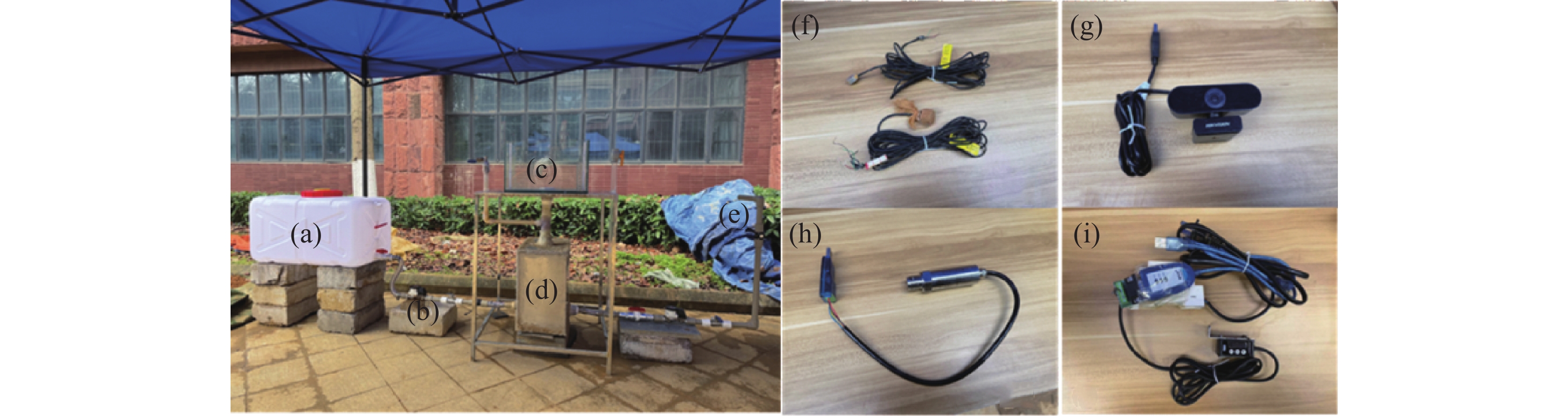
图 3 模型试验装置及监测设备示意图
(a) 蓄水箱;(b) 进水口;(c) 试验土箱;(d) 模拟岩溶空腔;(e) 排水口;(f) 孔压、土压传感器;(g) 摄像头;(h) 气压变送器;(i) 激光位移
Figure 3. Schematic diagram of the model test setup and monitoring equipment

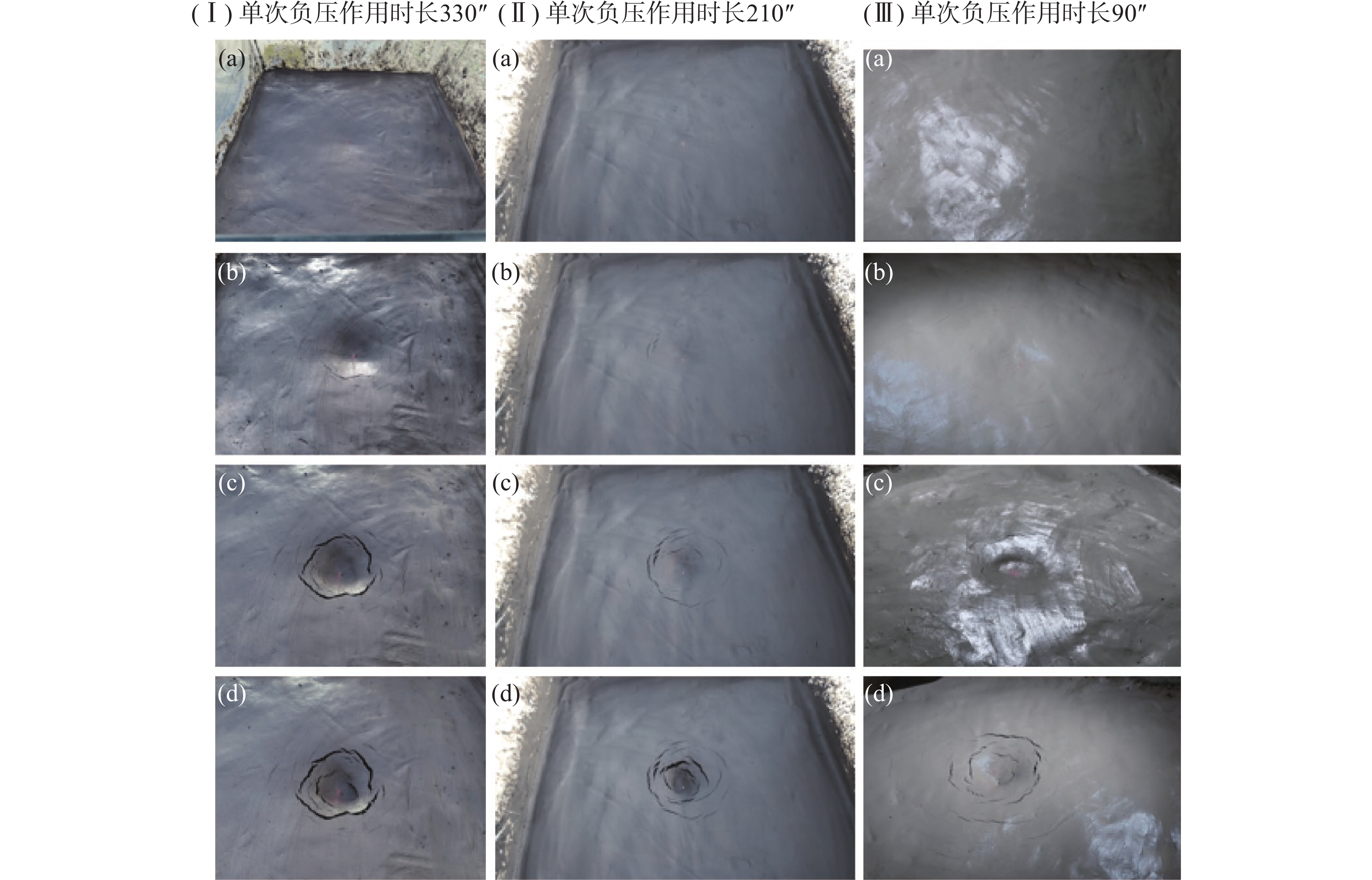
图 5 不同单次负压作用时长下最终塌陷图
(a) 单次负压作用时长330″ (b) 单次负压作用时长210″ (c) 单次负压作用时长90″
Figure 5. Final collapse patterns under different durations of negative pressure
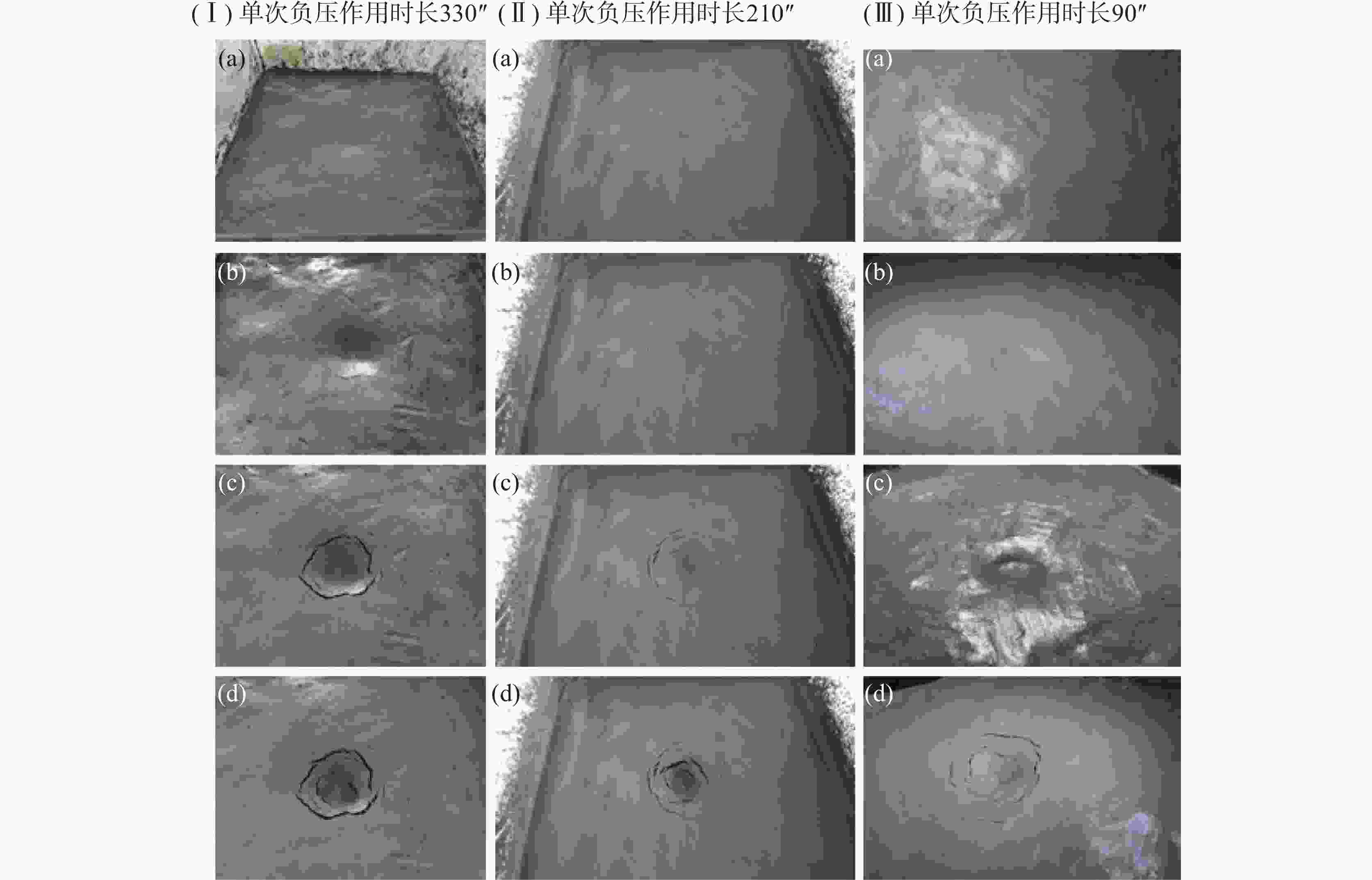
图 6 不同单次负压作用时长下盖层土体变形破坏过程
(a) 土体初始状态 (b) 裂缝出现 (c) 裂缝扩展 (d) 塌陷发生
Figure 6. Deformation and failure process of overburden soil under different single-cycle suction durations
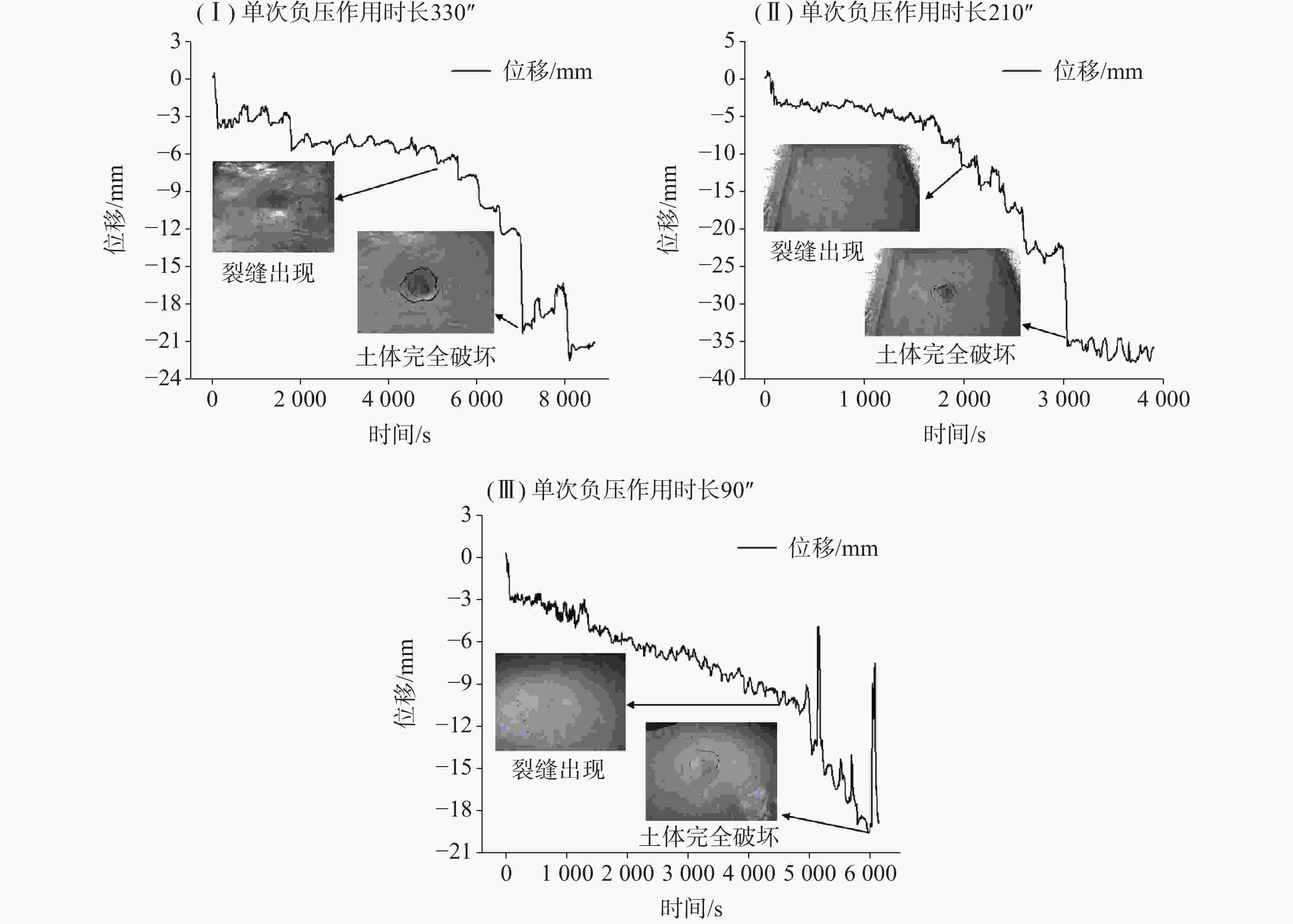
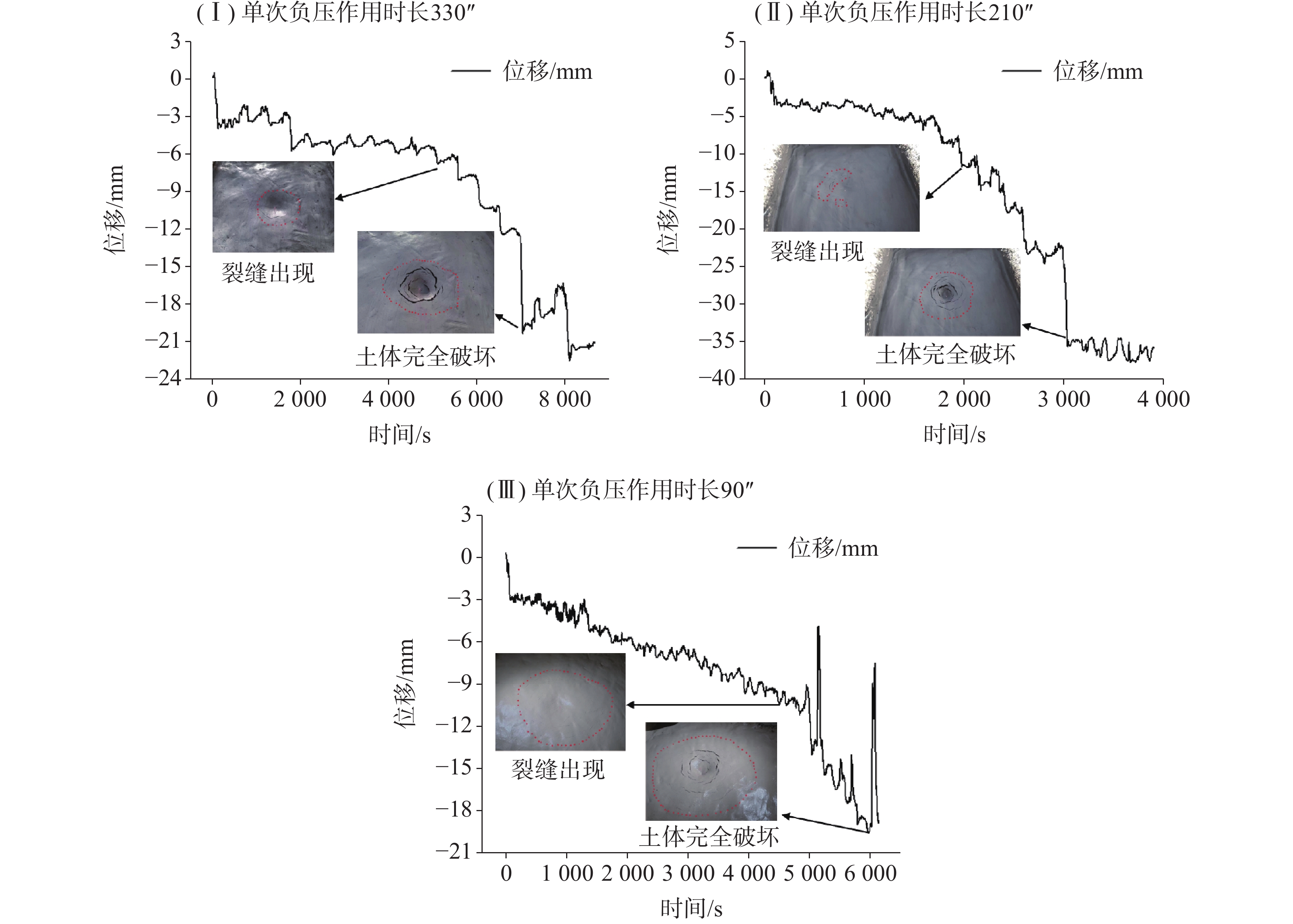
图 7 不同单次负压作用时长下覆盖层土体位移变化过程
Figure 7. Displacement variation process of overburden soil under different single-cycle suction durations
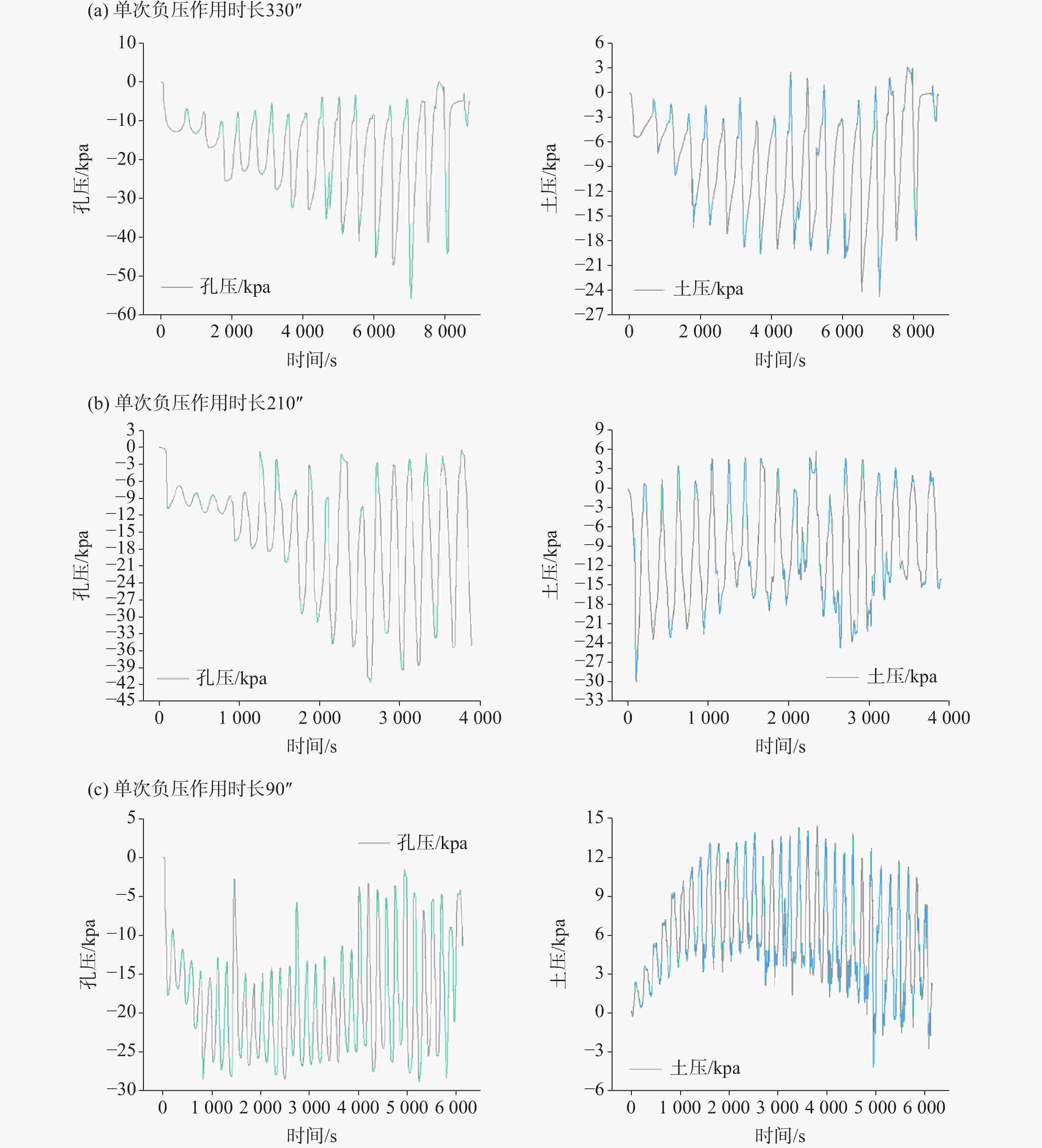
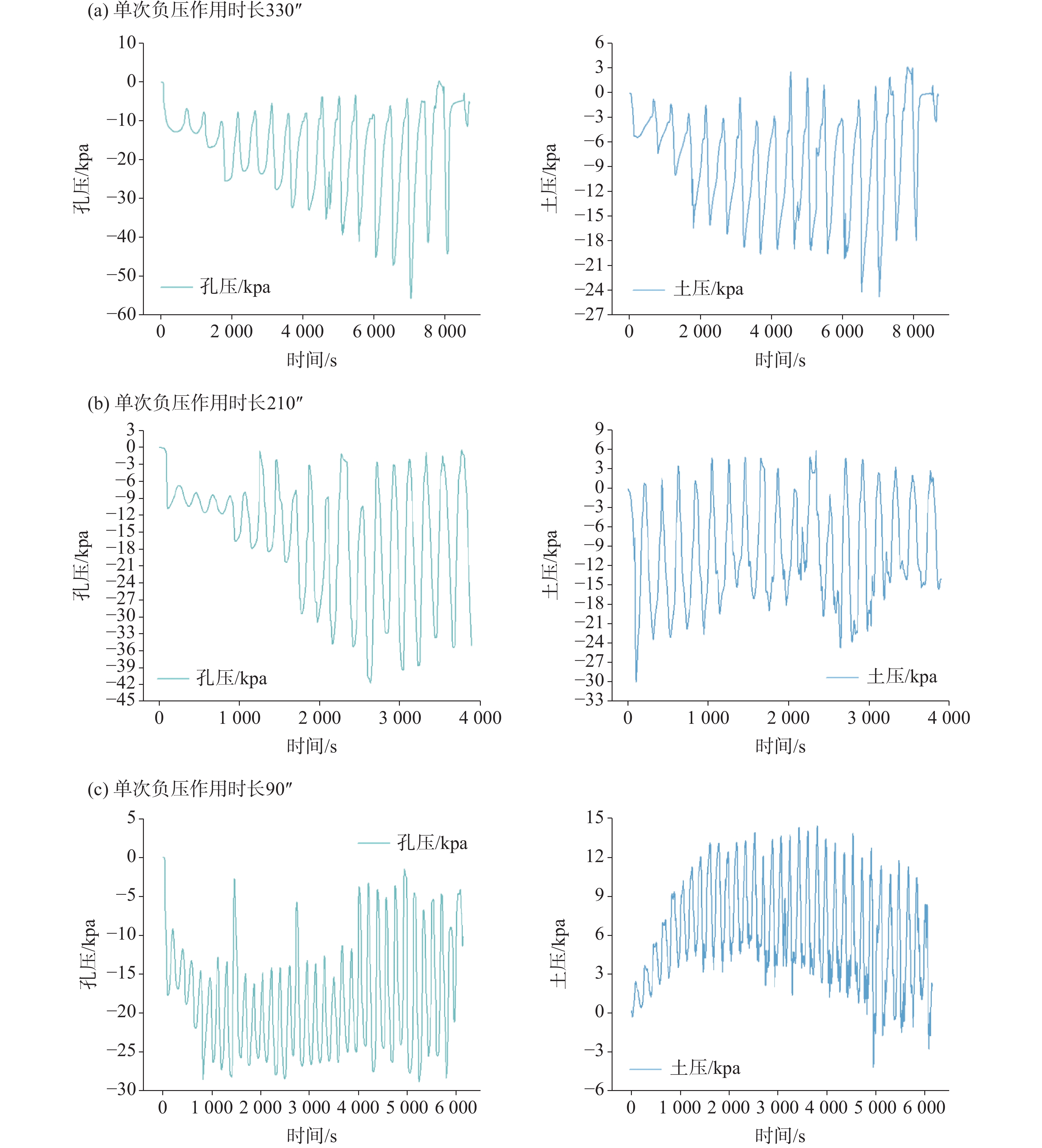
图 8 不同单次负压作用时长下孔隙水压力、土压变化过程
Figure 8. Variation process of pore water pressure and earth pressure under different single-cycle suction durations
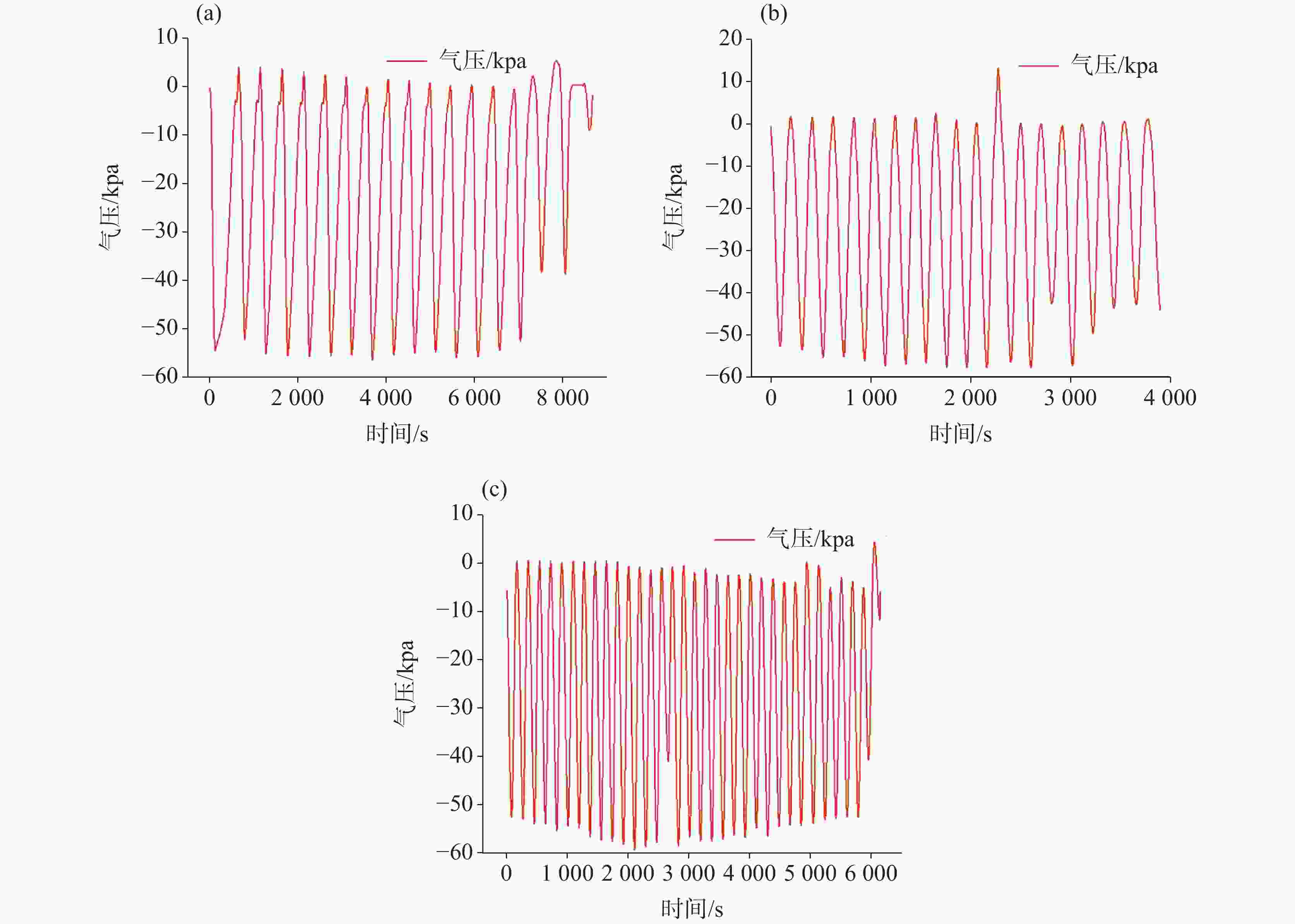
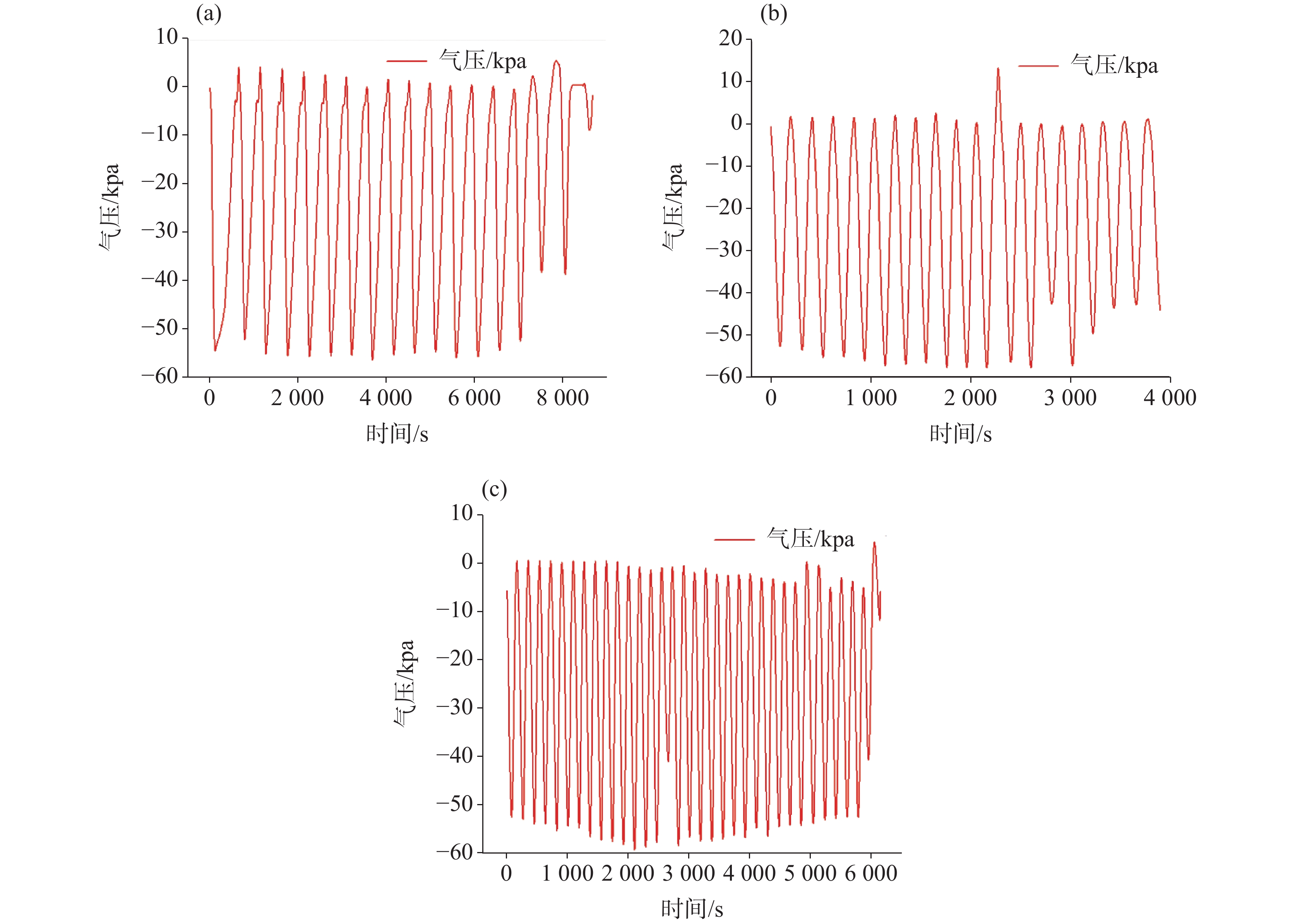
图 9 不同单次负压作用时长气压变化过程
(a) 单次负压作用时长330″ (b) 单次负压作用时长210″ (c) 单次负压作用时长90″
Figure 9. Variation process of air pressure under different single-cycle suction durations
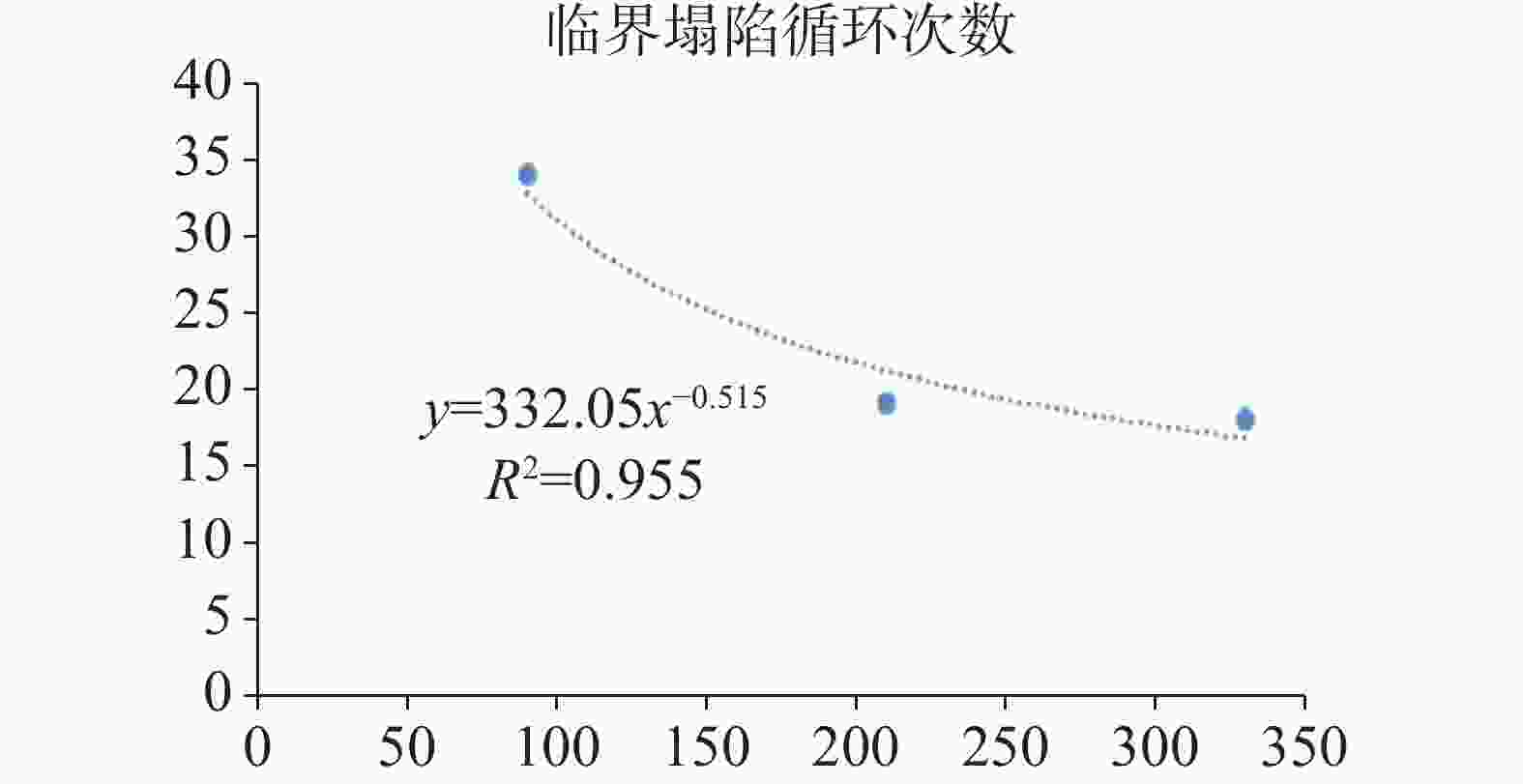
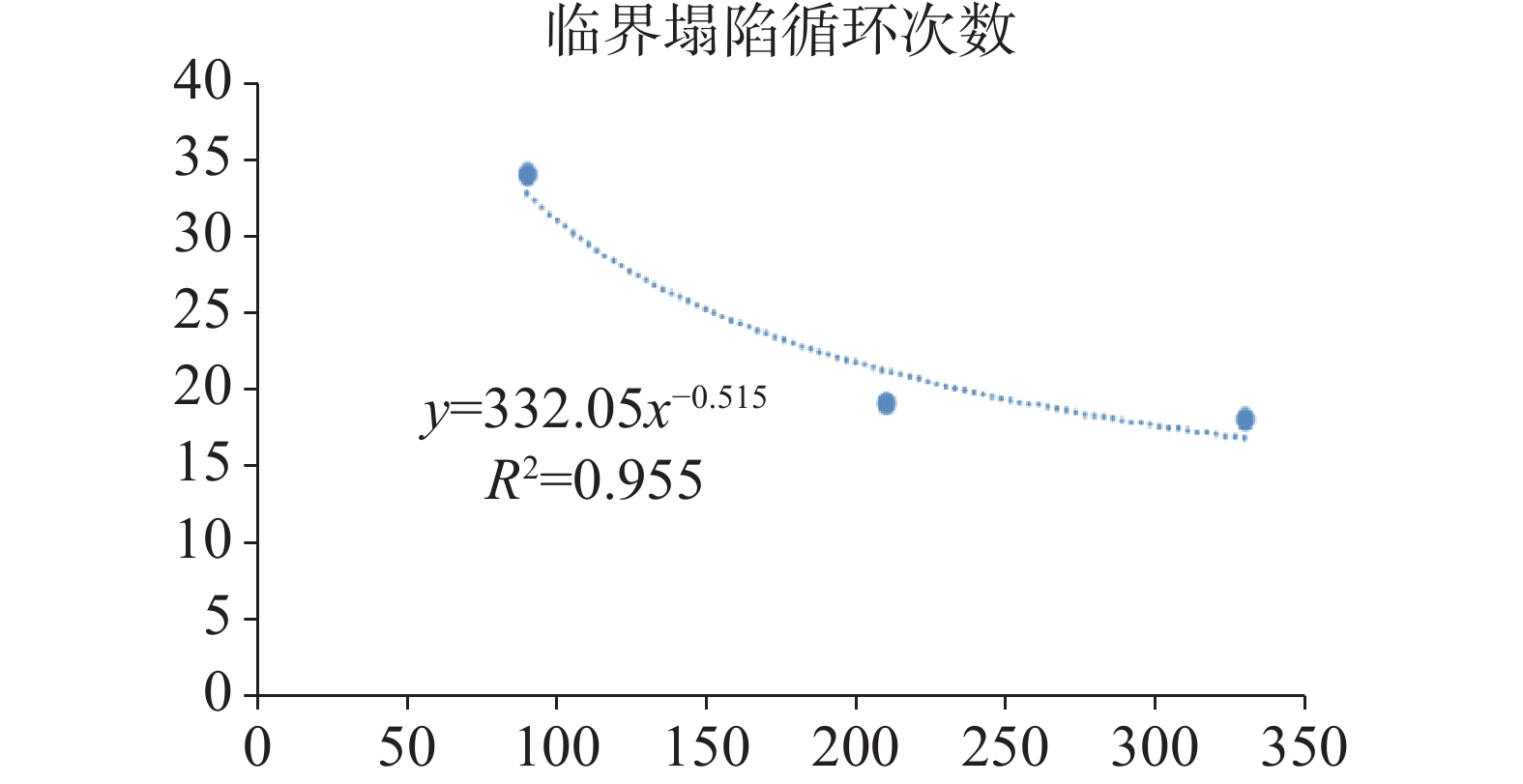
图 10 负压作用时长与临界塌陷循环次数拟合曲线
Figure 10. Regressioncurve between negative pressure duration and critical number of collapse cycles
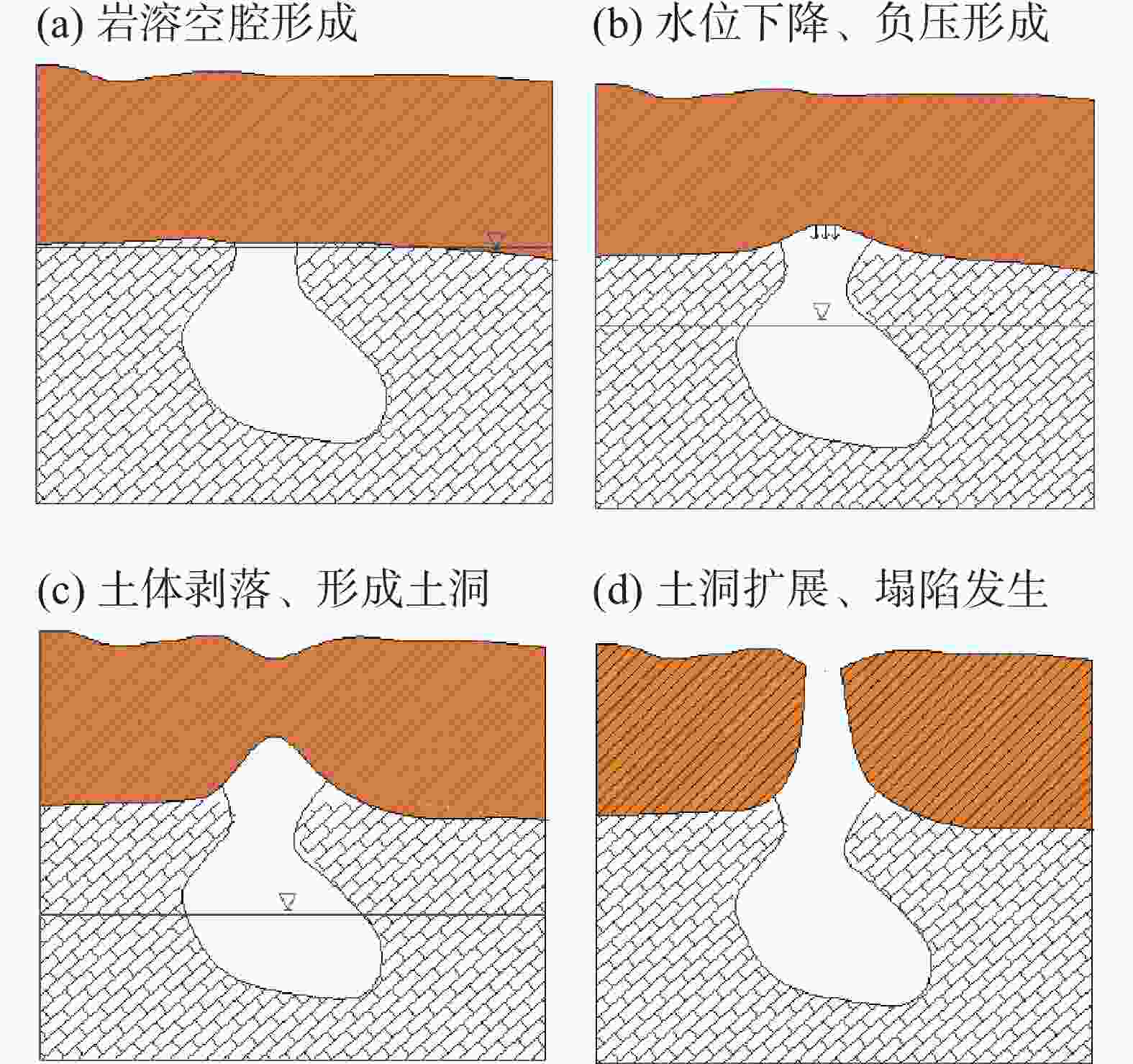
图 11 真空吸蚀致塌过程图
Figure 11. Diagram of the collapse process caused by vacuum suction erosion
表 1 模型 - 原型参数相似转换准则表
Table 1. Similarity transformation criteria for model-prototype parameters
参数类型 物理量 模型尺度 工程原型尺度 转换公式 转换依据 几何参数 盖层厚度、水位降深、
岩溶开口尺寸cm m $ {L}_{1}=100\times {L}_{2} $ 几何比尺$ {C}_{L} $=100 时间参数 负压作用时长、抽水周期 s h $ {t}_{1}=\dfrac{100}{3600}\times {t}_{2} $ 时间比尺$ {C}_{t}=100 $ 应力参数 真空负压、土压力、孔隙水压力 kPa kPa 1∶1对应 土体重度不变,应力相似比$ {C}_{\sigma }=1 $ 强度参数 黏聚力、内摩擦角 kPa、° kPa、° 1∶1对应 物性参数相似比尺=1 循环参数 抽水循环次数 次 次 1∶1对应 单次循环对应工程单次抽水-回稳
完整周期(事件相似性) 下载: 导出CSV
表 2 试验监测设备参数表
Table 2. Parameters of test monitoring equipment
监测设备名称 量程 精度 土压力传感器 10 KPa 0.5%FS 孔隙水压力传感器 10 KPa 0.5%FS 气压变送器 ±100 KPa 0.1%FS 激光位移计 65-200 mm 0.1%FS
下载: 导出CSV
表 3 负压作用时长试验方案
Table 3. Testplan for the duration of negative pressure action
试验序号 盖层厚度/cm 水位降深/cm 负压作用时长/s 1 10 40 330 2 10 40 210 3 10 40 90
下载: 导出CSV
-
[1] 赵建峰. 荆河特大桥岩溶塌陷危险性分析[J]. 铁道工程学报, 2014(4): 88-92, 102. doi: 10.3969/j.issn.1006-2106.2014.04.017Zhao Jianfeng. Risk analysis of karst collapse in Jinghe Grand Bridge[J]. Journal of Railway Engineering Society, 2014(4): 88-92, 102. doi: 10.3969/j.issn.1006-2106.2014.04.017 [2] 刘建芳. 武汉轨道交通6号线工程岩溶发育特征及处理措施[J]. 城市轨道交通研究, 2018, 21(7): 134-137, 152. doi: 10.16037/j.1007-869x.2018.07.032Liu Jianfang. Karst development characteristics and treatment measures for Wuhan Rail Transit Line 6 project[J]. Urban Mass Transit, 2018, 21(7): 134-137, 152. doi: 10.16037/j.1007-869x.2018.07.032 [3] 雷明堂, 蒋小珍. 岩溶塌陷研究现状、发展趋势及其支撑技术方法. 中国地质灾害与防治学报, 1998, 9(3): 1-6.Lei Mingtang, JiangXiaozhen. Research on the Present Situation and Developing Tendency of Karst Collapse and Techniques for Its Supporting[J]. the Chinese Journal of Geological Hazard and Control, 1998, 9(3): 1-6. [4] 张少波, 简文彬, 洪儒宝, 黄鹏, 陈鸿志, 刘奔. 水位波动条件下覆盖型岩溶塌陷试验研究[J]. 工程地质学报, 2019, 27(3): 659-667. doi: 10.13544/j.cnki.jeg.2018-275Zhang Shaobo, Jian Wenbin, Hong Rubao, Huang Peng, Chen Hongzhi, Liu Ben. Experimental study on collapse of covered karst under water-level fluctuation[J]. Journal of Engineering Geology, 2019, 27(3): 659-667. doi: 10.13544/j.cnki.jeg.2018-275 [5] 陈标典, 李喜, 熊启华, 李彧磊, 涂婧, 刘鹏瑞, 叶疆. 武汉纸坊-庙山老黏土区岩溶地面塌陷形成演化与监测[J]. 中国岩溶, 2023, 42(2): 361-369. doi: 10.11932/karst20230207Chen Biaodian, Li Xi, Xiong Qihua, Li Yulei, Tu Jing, Liu Pengrui, Ye Jiang. Formation and monitoring of karst ground collapse in the Zhifang-Miaoshan old clay area, Wuhan[J]. Carsologica Sinica, 2023, 42(2): 361-369. doi: 10.11932/karst20230207 [6] 陈学军, 薛明明, 宋宇. 水位下降速率对岩溶土洞塌陷的影响分析[J]. 中国岩溶, 2024, 43(4): 922-936. doi: 10.11932/karst20240409Chen Xuejun, Xue Mingming, Song Yu. Influence of water level dropping rates on the collapse of karst soil caves[J]. Carsologica Sinica, 2024, 43(4): 922-936. doi: 10.11932/karst20240409 [7] 李京天, 朱凯, 肖先煊, 尹艳, 刘皓, 许模, 何志攀. 水位下降诱发覆盖型岩溶塌陷发育机理[J]. 中国岩溶, 2024, 43(2): 406-420. doi: 10.11932/karst2024y010Li Jingtian, Zhu Kai, Xiao Xianxuan, Yin Yan, Liu Hao, Xu Mo, He Zhipan. Development mechanism of covered karst collapses induced by groundwater drawdown[J]. Carsologica Sinica, 2024, 43(2): 406-420. doi: 10.11932/karst2024y010 [8] 王英, 肖先煊, 许模. 基于模型试验的阻-透型岩溶塌陷演化过程与机理研究[J]. 铁道科学与工程学报, 2024, 21(11): 4815-4826. doi: 10.19713/j.cnki.43-1423/u.T20240118Wang Ying, Xiao Xianxuan, Xu Mo. Evolution process and mechanism of barrier-permeable karst collapse based on model test[J]. Journal of Railway Science and Engineering, 2024, 21(11): 4815-4826. doi: 10.19713/j.cnki.43-1423/u.T20240118 [9] Tharp T M. Mechanics of upward propagation of cover-collapse sinkholes[J]. Engineering Geology, 1999, 52: 23-33. [10] Xiao X X, Xu M, Ding Q Z, Kang X B, Xia Q, Du F. Experimental study investigating deformation behavior in land overlying a karst cave caused by groundwater level changes[J]. Environmental Earth Sciences, 2018, 77(3): 64. [11] Xiao X X, Gutiérrez F, Guerrero J. The impact of groundwater drawdown and vacuum pressure on sinkhole development. Physical laboratory models[J]. Engineering Geology, 2020, 279: 105894. [12] Shi H, Li Q M, Zhang Q L, Yu Y Z, Xing Y J, Yu K. Mechanism of shallow soil cave–type karst collapse induced by water inrush in underground engineering construction[J]. Journal of Performance of Constructed Facilities, 2020, 34(1): 04019091. [13] 李瑞, 吴康, 雷昊, 韦权高, 梁燕菲. 贵州省丘陵山区耕地质量提升的路径与方法[J]. 中南农业科技, 2025, 46(11): 92-97.Li Rui, Wu Kang, Lei Hao, et al. Paths and methods for improving cultivated land quality in hilly and mountainous areas of Guizhou Province [J]. South-Central Agricultural Science and Technology, 2025, 46(11): 92-97. [14] 陈浩, 邓峰, 吴银亮. 贵州某公路隧道岩溶水文地质研究[J]. 路基工程, 2022(4): 184-189. doi: 10.13379/j.issn.1003-8825.202111079Chen Hao, Deng Feng, Wu Yinliang. Study on karst hydrogeology of a highway tunnel in Guizhou[J]. Subgrade Engineering, 2022(4): 184-189. doi: 10.13379/j.issn.1003-8825.202111079 [15] 汤云峰. 贵州贞丰岩鱼岩溶塌陷机理试验及数值模拟研究[D]. 贵阳, 贵州大学, 2025.Tang Yunfeng. Experimental investigation and numerical simulation of karst collapse mechanism in Yanyu, Zhenfeng, Guizhou Province [D]. Guiyang: Guizhou University, 2025. [16] 徐文. 贵州牛场岩溶地面塌陷的形成及其防治[J]. 中国岩溶, 1991, 10(3): 47-52.Xu Wen. Forming process and precaution of karst land collapse in Niuchang, Guizhou[J]. Carsologica Sinica, 1991, 10(3): 47-52. [17] 周骥, 杨根兰, 邓凯伦, 吕子明. 贵州福泉岩溶塌陷影响因素及形成机理分析[J]. 西部探矿工程, 2019, 31(2): 36-39.Zhou Ji, Yang Genlan, Deng Kailun, Lv Ziming. Analysis of influencing factors and formation mechanism of karst collapse in Fuquan, Guizhou Province[J]. West-China Exploration Engineering, 2019, 31(2): 36-39. [18] 杨洋, 曹兴民, 冯福, 丁坚平. 贵州岩鱼坡立谷岩溶塌陷机理分析[J]. 辽宁工程技术大学学报(自然科学版), 2016, 35(10): 1081-1084.Yang Yang, Cao Xingmin, FengFu, Ding Jianping. Mechanism analysis of karst collapse in Yanyu Polje, Guizhou Province[J]. Journal of Liaoning Technical University (Natural Science Edition), 2016, 35(10): 1081-1084. [19] 郭强. 遵义金塘谷地岩溶塌陷形成机理初步探讨[J]. 贵州地质, 1989(2): 163-171.Guo Qiang. Preliminary discussion on formation mechanism of karst collapse in Jintang Valley, Zunyi[J]. Guizhou Geology, 1989(2): 163-171. [20] 杨洋. 凤冈新建乡岩溶塌陷机理研究[D]. 贵阳, 贵州大学, 2016.Yang Yang. Study on mechanism of karst collapse in Xinjian Township, Fenggang [D]. Guiyang: Guizhou University, 2016. [21] 雷明堂, 蒋小珍, 李瑜, 周立新. 城市岩溶塌陷地质灾害风险评估: 以贵州六盘水市为例[J]. 中国地质灾害与防治学报, 2000, (4): 26-30+55. DOI: 10.16031/j.cnki.issn.1003-8035.2000.04.007.Lei Mingtang, Jiang Xiaozhen, Li Yu, Zhou Lixin. Risk assessment of karst collapse geological disasters in urban areas: A case study of Liupanshui City, Guizhou Province [J]. The Chinese Journal of Geological Hazard and Control, 2000, 11(4): 26-30, 55. [22] 邱兵, 肖尧, 王义喜. 桩孔内反复抽排地下水诱发地面塌陷成因分析及防治对策[J]. 四川地质学报, 2011, 31(3): 344-346+363.Qiu Bing, Xiao Yao, Wang Yixi. Genetic analysis and prevention-control countermeasures of ground collapse induced by repeated groundwater pumping and drainage in pile holes [J]. Acta Geologica Sichuan, 2011, 31(3): 344-346, 363. [23] 肖攀, 万军伟, 喻望. 贵州水城盆地岩溶地面塌陷成因分析及防治对策[J]. 桂林理工大学学报, 2015, 35(2): 263-268.Xiao Pan, Wan Junwei, Yu Wang. Genetic analysis and prevention-control countermeasures of karst ground collapse in Shuicheng Basin, Guizhou Province[J]. Journal of Guilin University of Technology, 2015, 35(2): 263-268. -


 点击查看大图
计量
- 文章访问数: 12
- HTML浏览量: 7
- PDF下载量: 0
- 被引次数: 0
