


Evolutionary Characteristics of Discharge and Water Quality of Karst Springs in Shanxi under the Influence of Natural and Human Activitie
-
摘要: 山西岩溶大泉不仅是我国北方地区重要的水资源载体,更是区域生态环境健康的指示器,掌握山西岩溶大泉流量与水质演变特征与驱动因素,对于北方岩溶大泉的保护和管理具有重要意义。本文以山西19处岩溶大泉为研究对象,定量解析了自然因素和人类活动对岩溶大泉流量衰减的贡献率,并探讨了岩溶大泉水质演变的地球化学机制。结果表明:山西岩溶大泉总流量呈阶段性衰减趋势,驱动因素由自然因素绝对主导逐渐转变为人类活动绝对主导。近40年山西岩溶大泉水质的演变趋势是Fe、Mn、Pb、F−和NH$_4^{+}$污染状况有所改善,而${\rm{SO}}_4^{2-}$、总硬度(TH)和总溶解固体(TDS)含量显著升高。采空区煤系地层中黄铁矿氧化产生的矿坑水或酸性煤矿“老窑水”,进而中和溶解奥陶系灰岩,是导致岩溶大泉${\rm{SO}}_4^{2-}$、TH和TDS含量显著升高的主导地球化学过程。Abstract: Shanxi Province hosts the most extensive karst terrain in northern China and exhibits the most representative semi-arid karst features in the region. Its 19 major karst springs serve as critical water resources for regional socio-economic development and ecological security. Based on long-term discharge records (1956−2024) and three-phase water quality data (1986−1987, 2000−2005, and 2020−2025), this study systematically investigates the evolution characteristics and driving mechanisms of spring discharge and water quality under the combined impacts of natural variability and anthropogenic activities. The results reveal that: (1) The evolution of spring discharge can be divided into four stages. During the baseline period (1956−1960), discharge was governed predominantly by natural factors. In 1961−1980, climatic change and human activities contributed 69.5% and 30.5% to flow attenuation, respectively, with natural forces still dominant. In 1981−2000, the contributions shifted to 36.5% (climate) and 63.5% (human activities), making anthropogenic factors the primary driver. In 2001−2024, the contribution rates became 12.0% and 88.0%, respectively, indicating that human activities became the overwhelmingly dominant factor. (2) Over the past four decades, water quality has displayed a divergent trend of "improvement in legacy contaminants versus emergence of new problems". Concentrations of Fe, Mn, Pb, F−, and NH$_4^{+}$ have generally decreased, whereas ${\rm{SO}}_4^{2-}$, total hardness (TH), and total dissolved solids (TDS) have increased significantly. The dominant geochemical process driving these increases is the neutralization-dissolution reaction between acid mine drainage (or "old mine water")—generated by oxidation of pyrite in coal-measure strata within goaf areas—and the underlying Ordovician carbonate rocks. (3) Discharge evolution is controlled by climate change, groundwater abstraction, coal mining, changes in infiltration conditions, and artificial recharge projects. Water quality evolution is jointly influenced by lithology and geological structure, climate variability, groundwater pumping, coal mining activities, contaminant inputs, and engineered remediation measures. The study concludes that long-term intensive overexploitation of groundwater and coal resources have induced irreversible structural modifications to the karst aquifer systems. Coupled with the hysteresis effect of pollutant release from abandoned mine water, the major karst springs of Shanxi still face considerable challenges. We recommend synergistic management strategies encompassing optimized allocation of karst water resources, strict regulation of mining-related drainage, comprehensive treatment of "old mine water", and consolidation of ecological restoration achievements, so as to provide scientific support for the protection and sustainable management of major karst springs in northern China.
-
Key words:
- Karst springs /
- Discharge /
- Water quality /
- Evolutionary characteristics /
- Driving factors
-
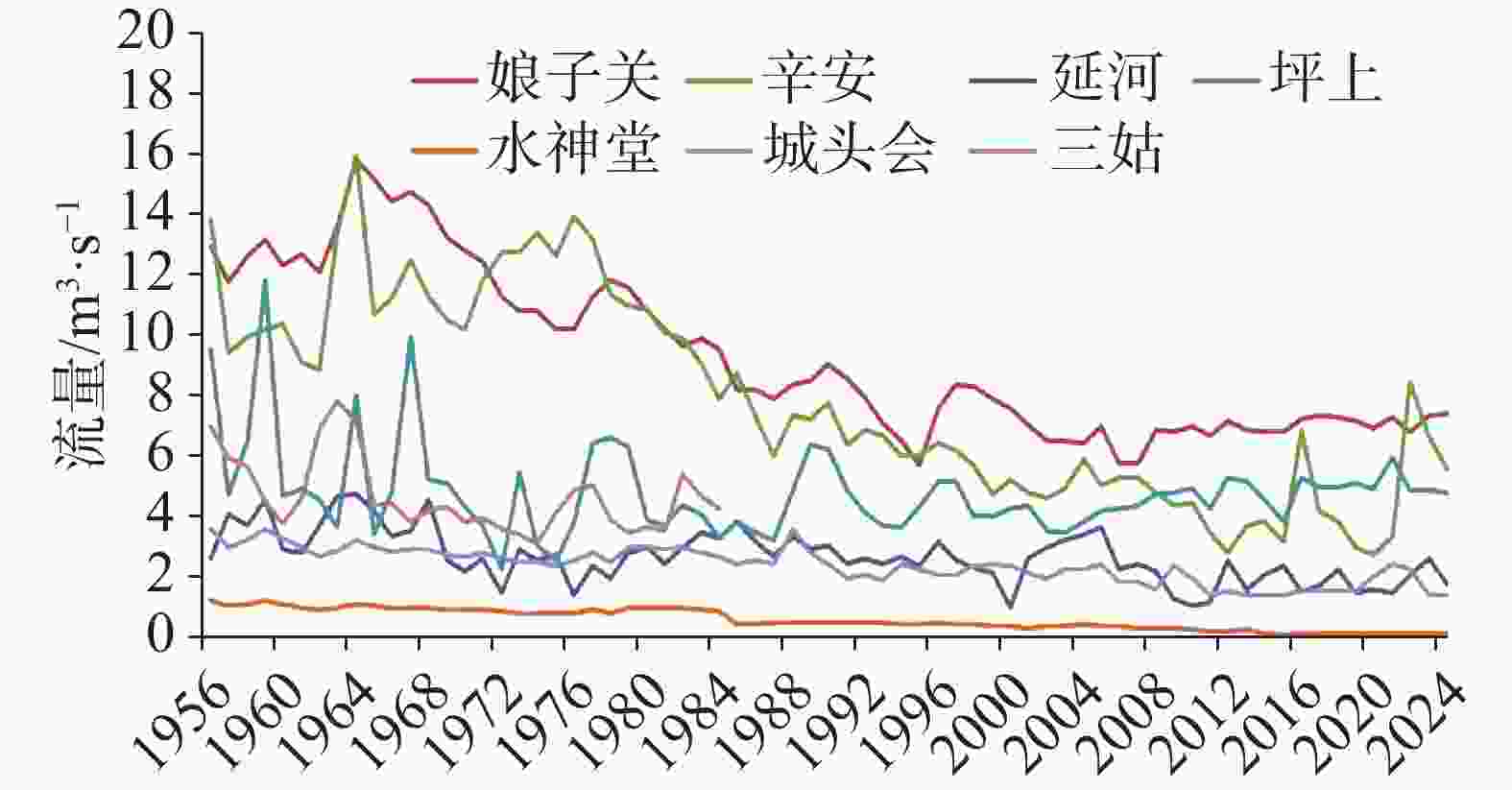
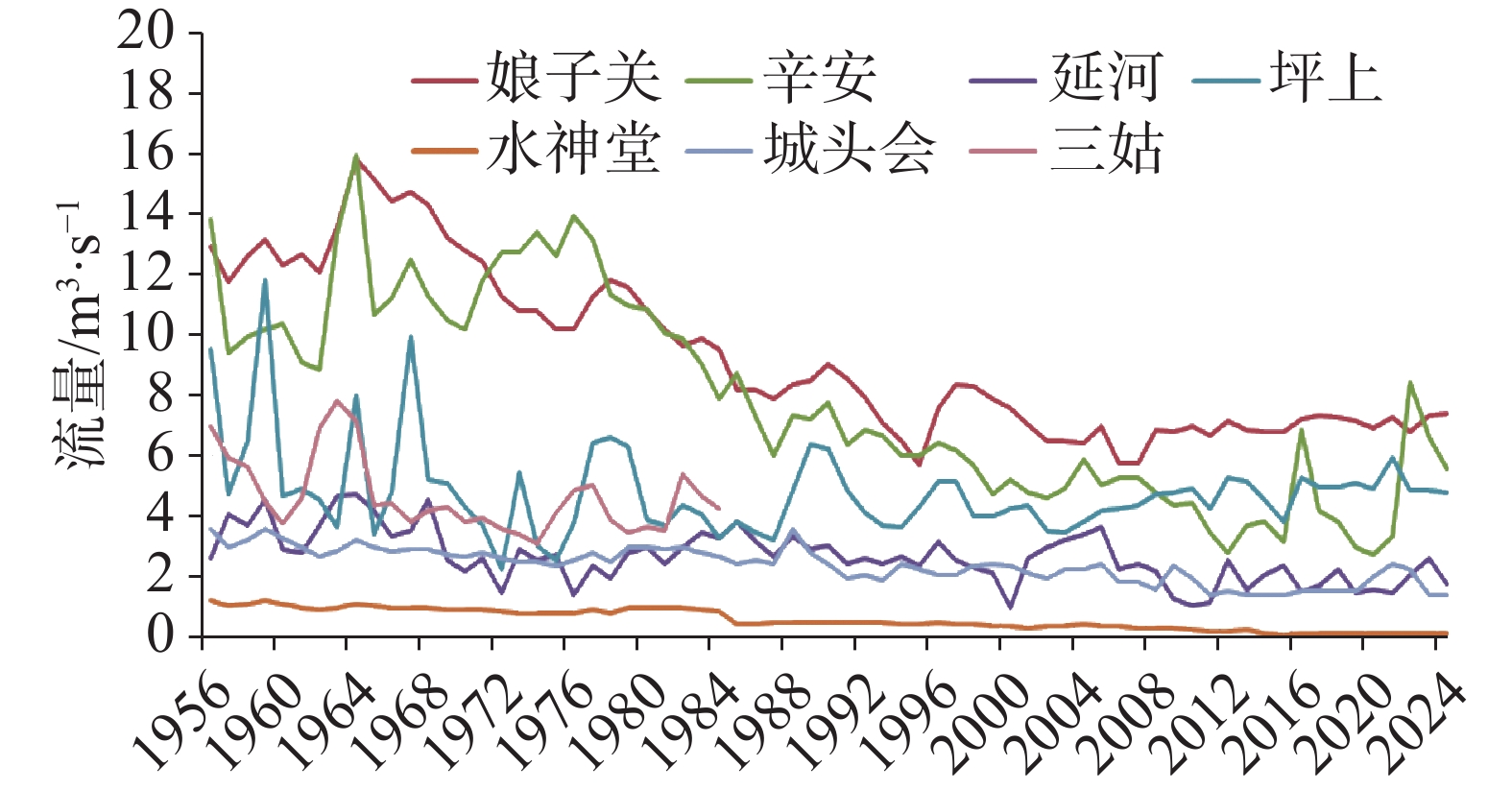
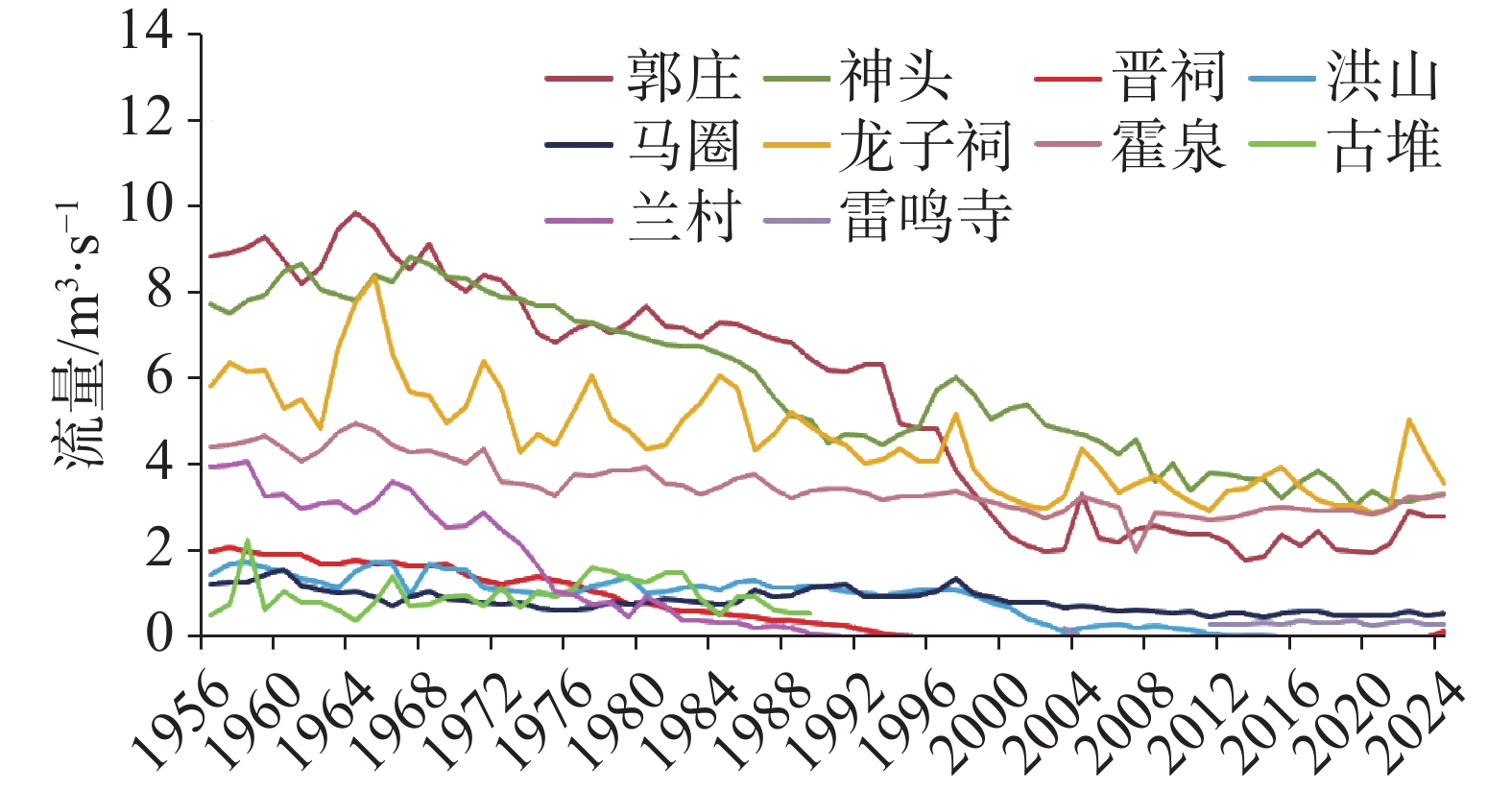
图 2 东部太行山东麓岩溶大泉流量动态曲线
Figure 2. Dynamic curves of discharge for major karst springs at the eastern foot of the Taihang Mountains
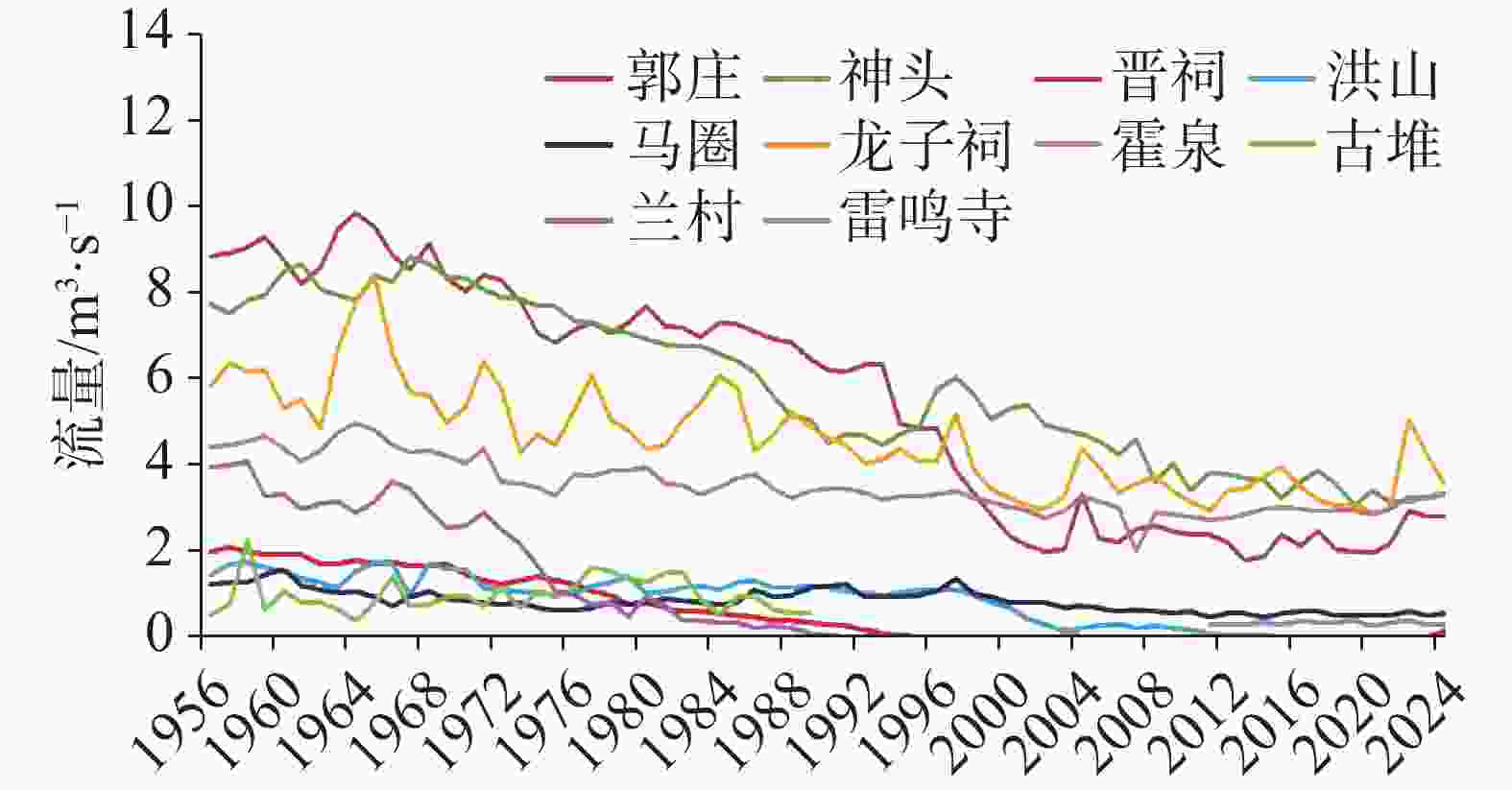
图 3 中部盆地边缘岩溶大泉流量动态曲线
Figure 3. Dynamic curves of discharge for major karst springs at the margins of central basins
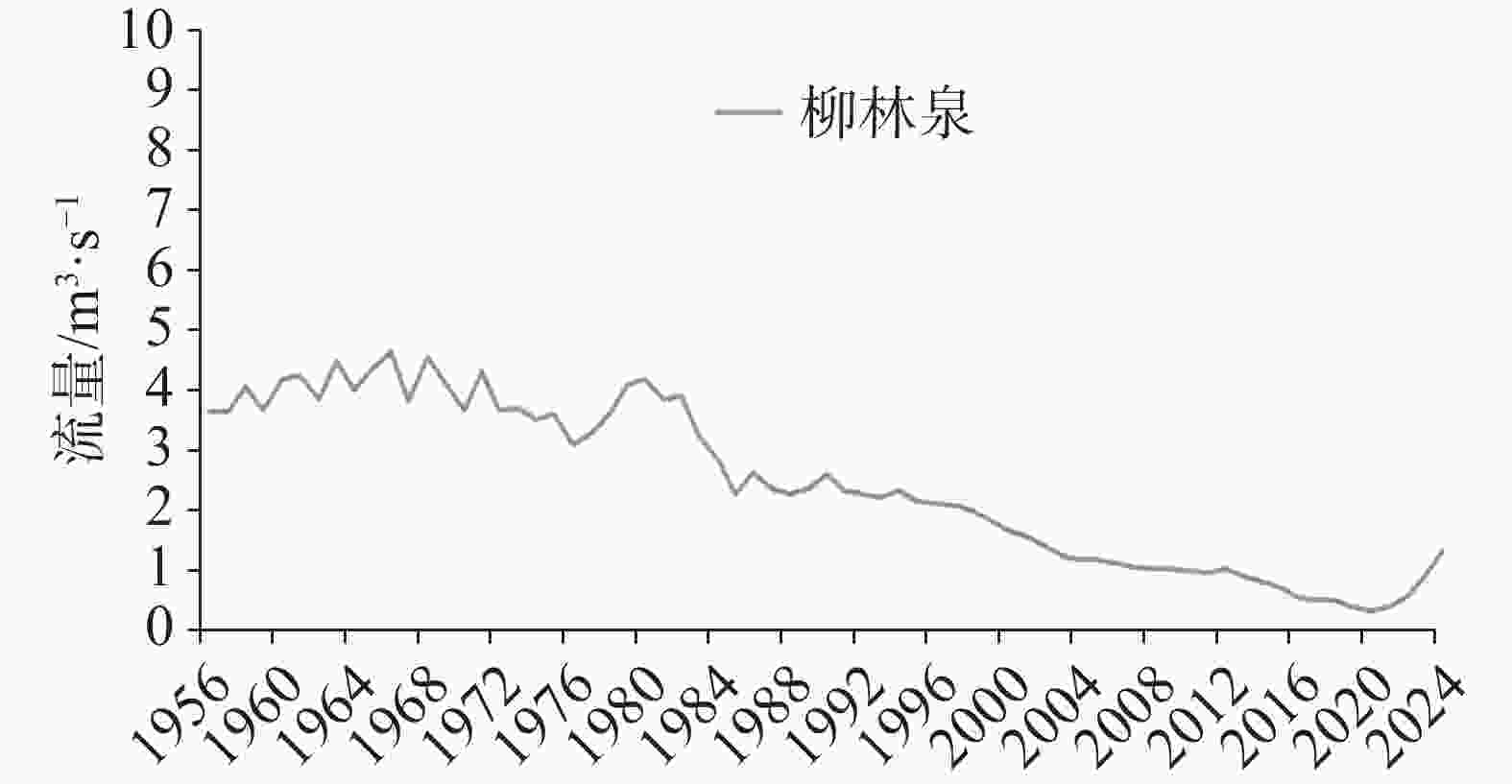
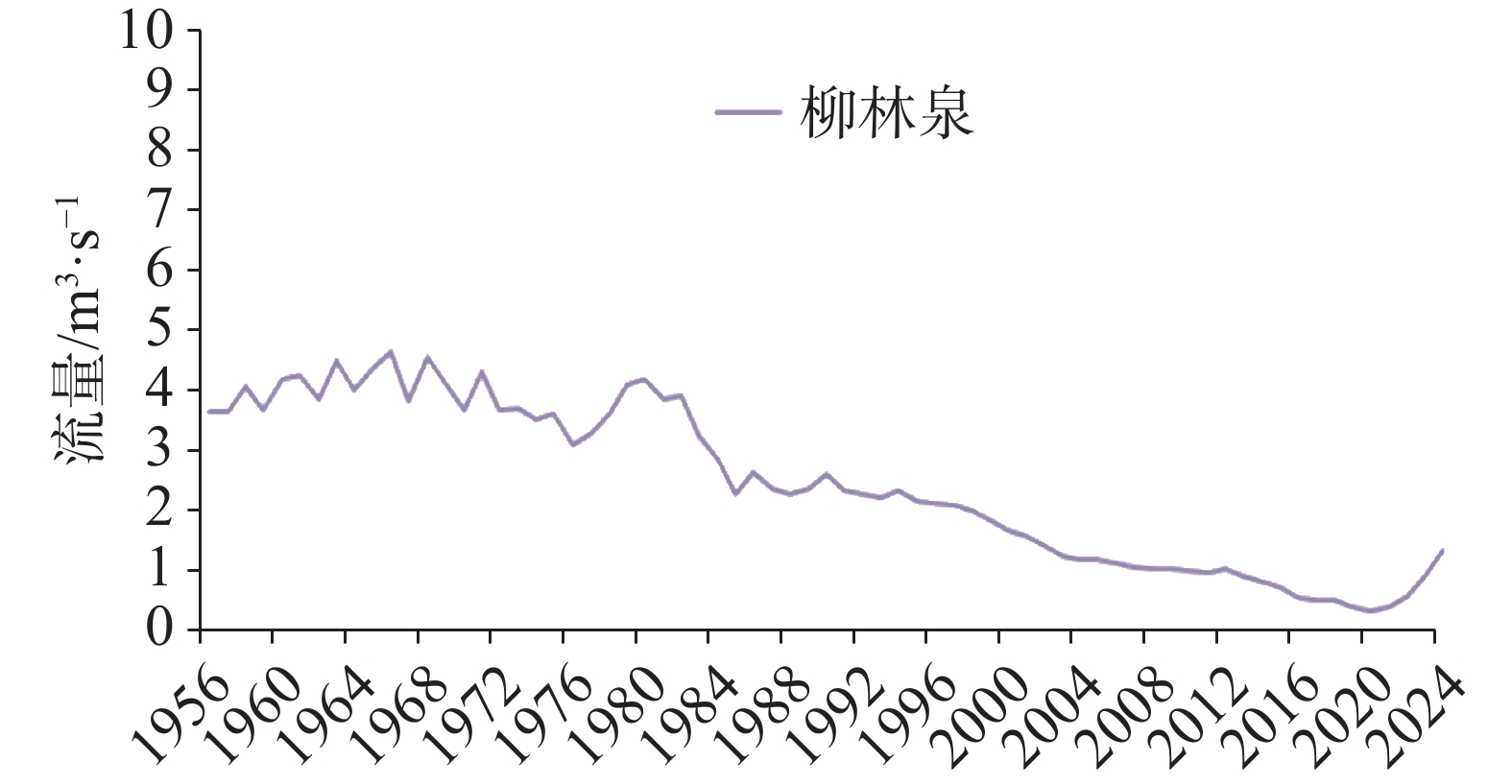
图 4 西部吕梁山西侧黄河沿岸岩溶大泉流量动态曲线
Figure 4. Dynamic curves of discharge for major karst springs along the Yellow River on the western side of the Lvliang Mountains
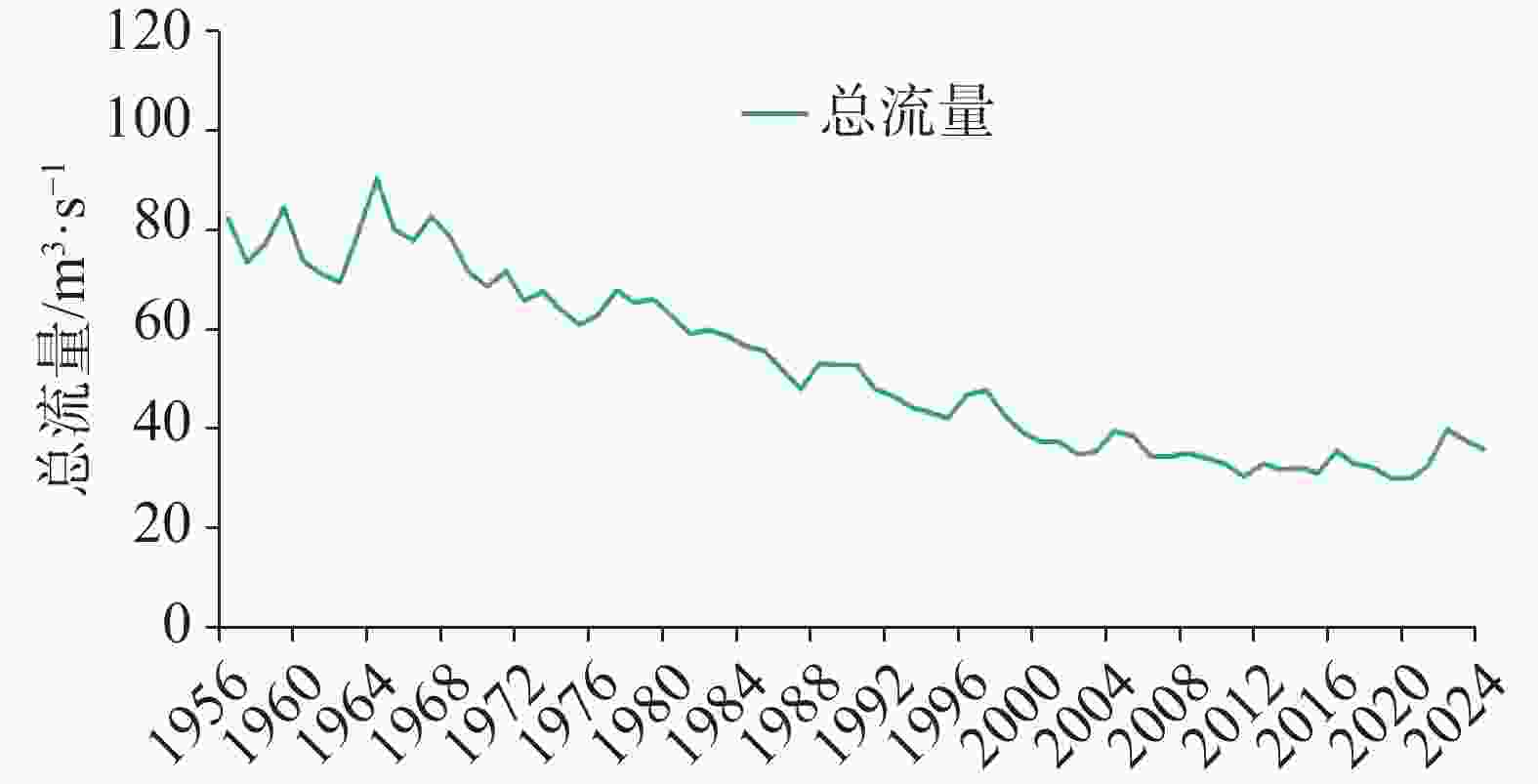
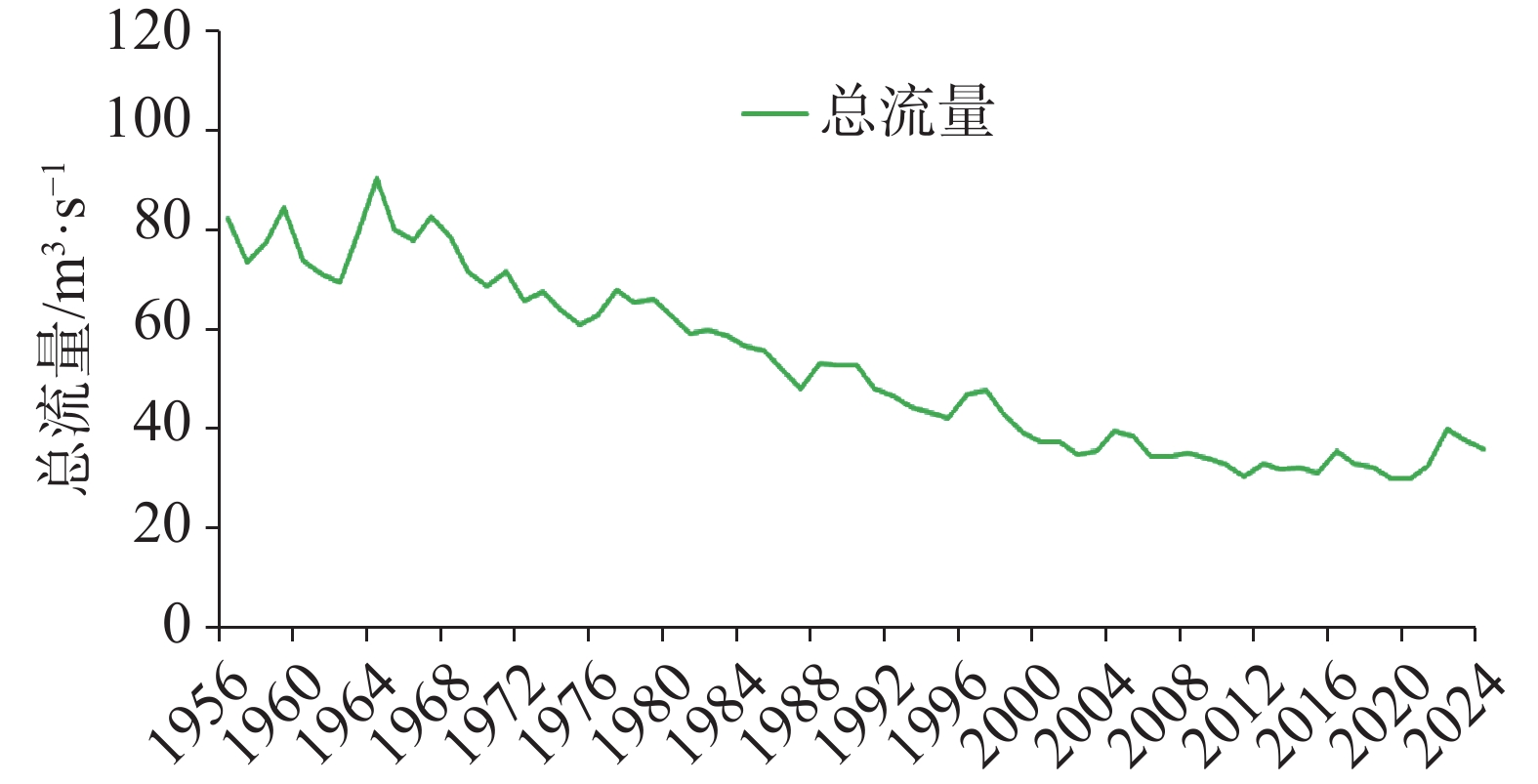
图 5 山西岩溶大泉总流量动态曲线
Figure 5. Dynamic curves of total discharge for major karst springs in Shanxi Province
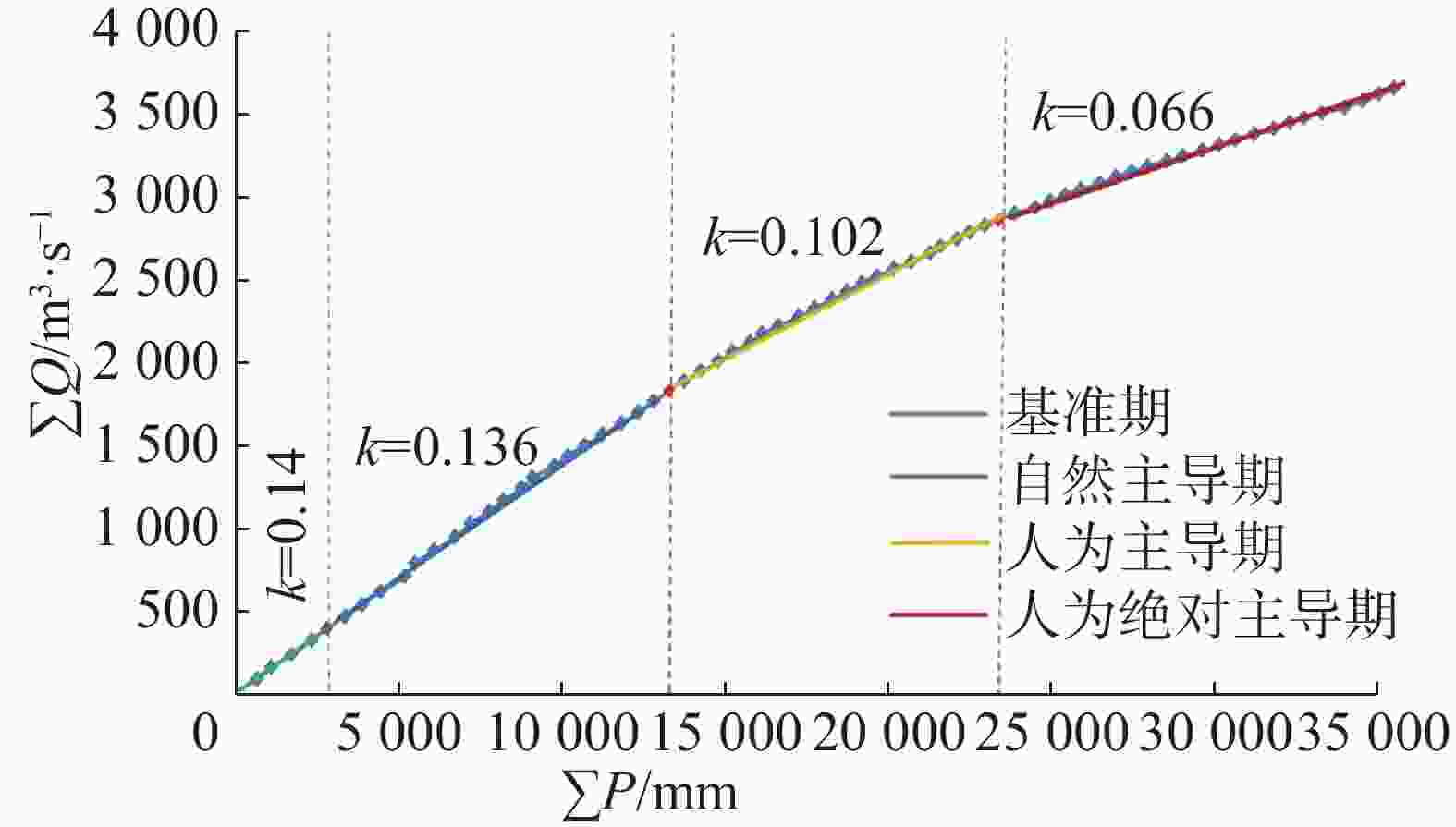
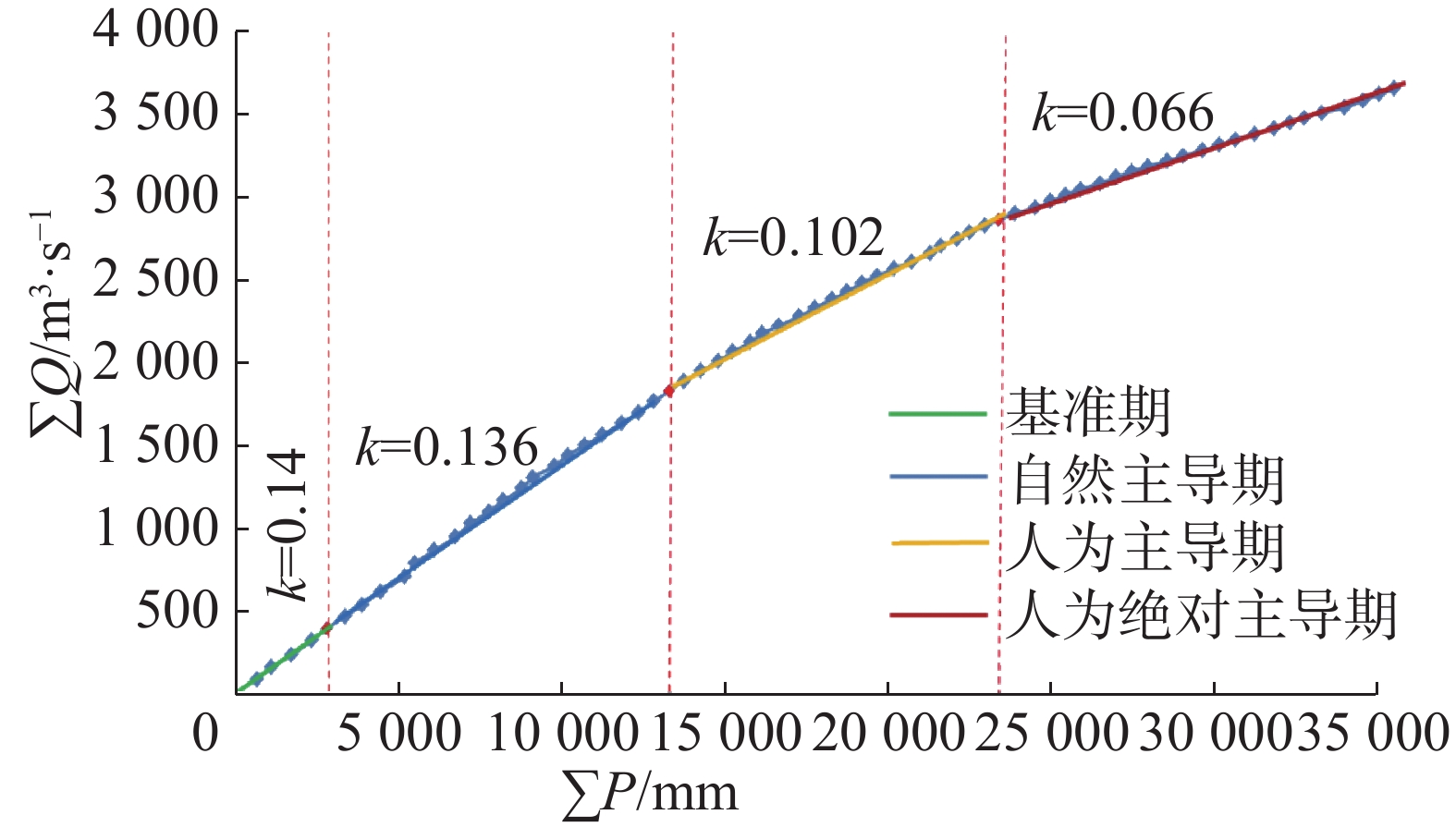
图 6 岩溶大泉降水-流量的双累积曲线图
Figure 6. Double-mass curve of precipitation and discharge for major karst springs
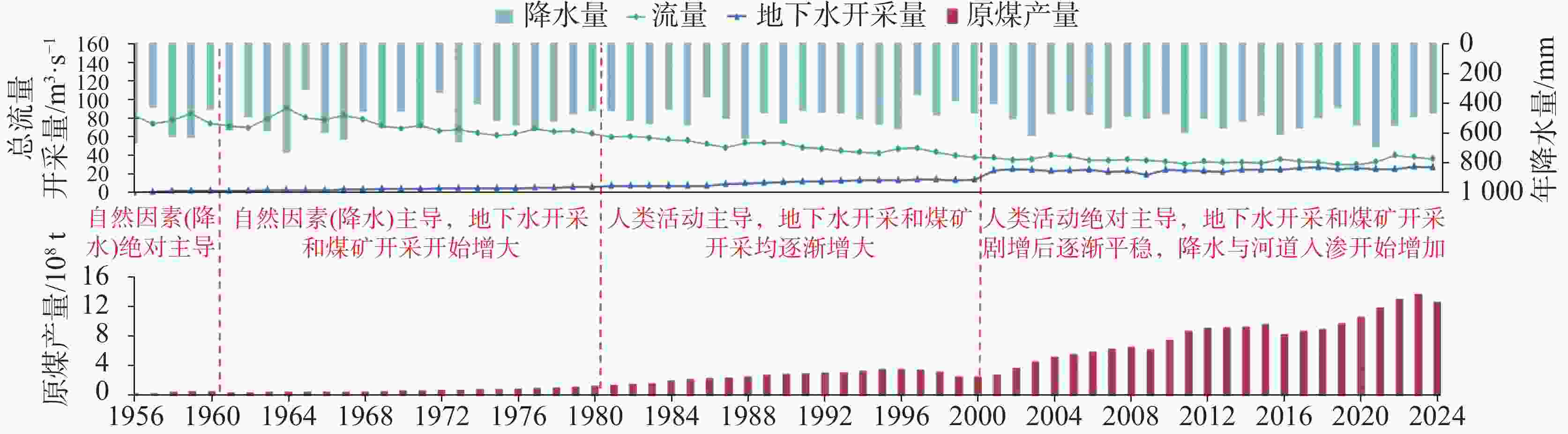
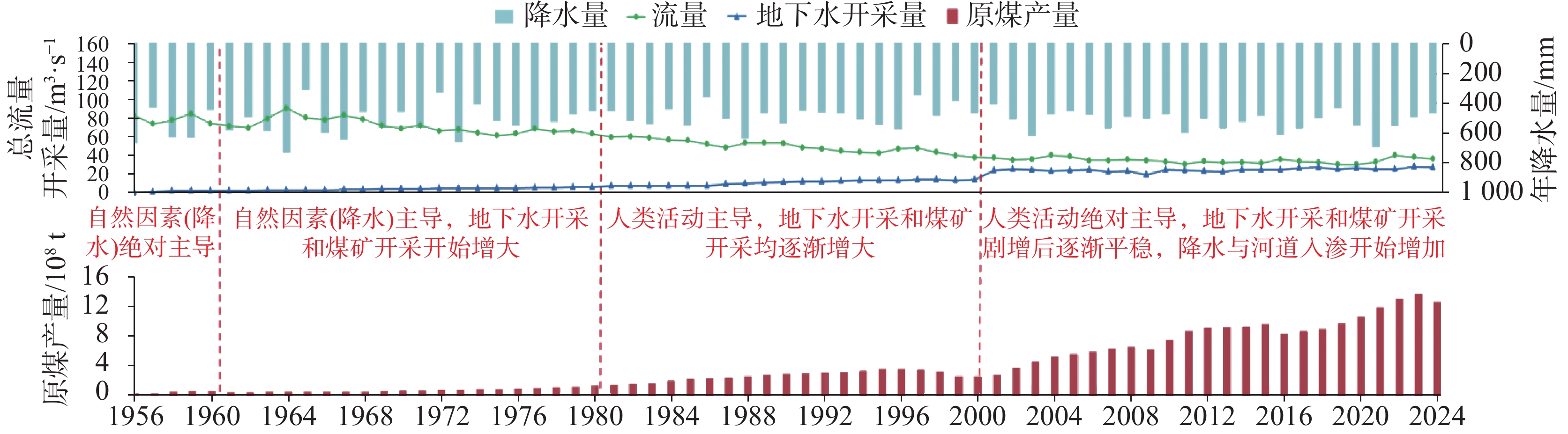
图 7 岩溶大泉降水量、总流量、地下水开采量和煤矿开采量动态变化图
Figure 7. Dynamic variations of precipitation, total discharge, groundwater abstraction, and coal production for major karst springs
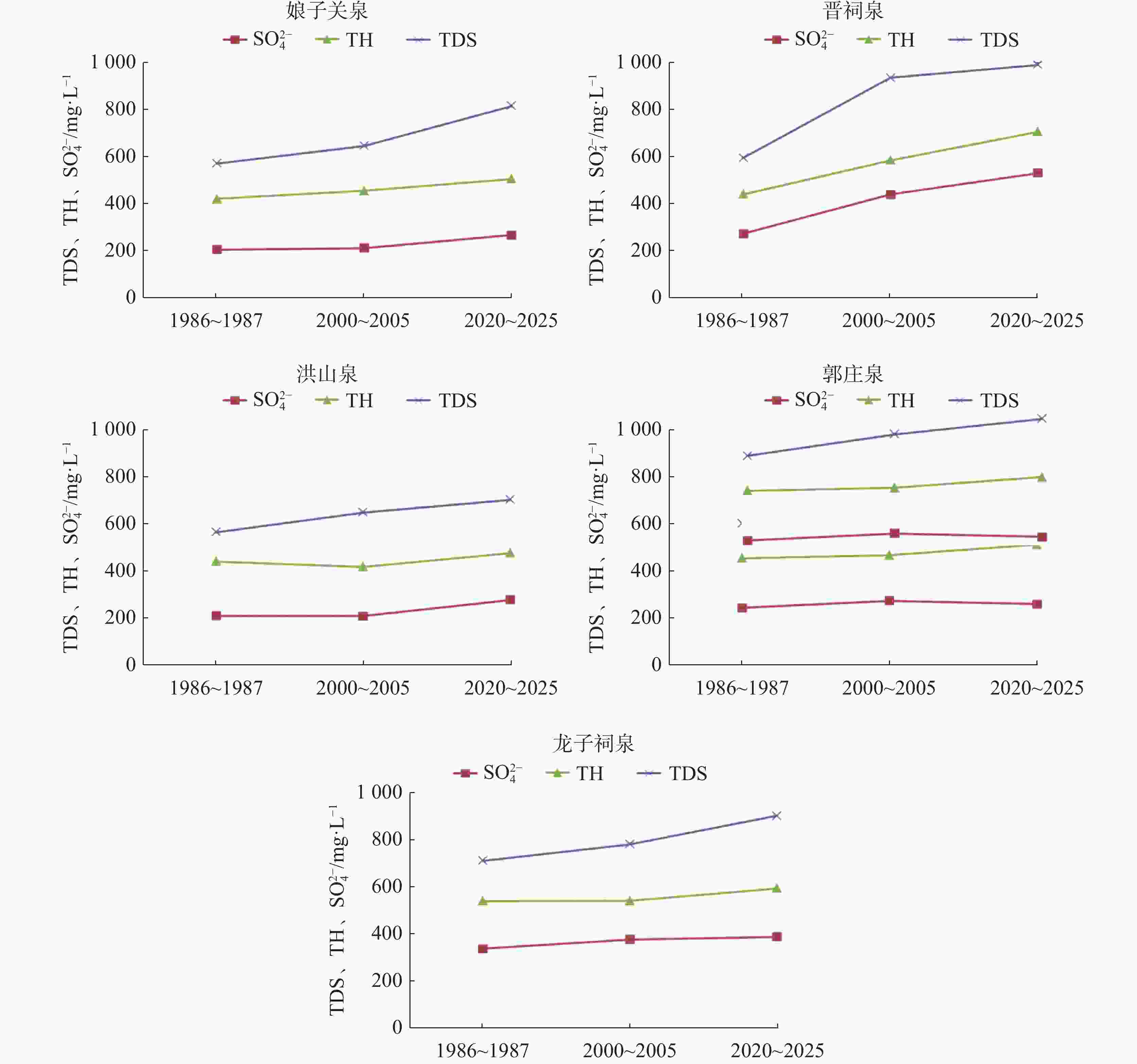
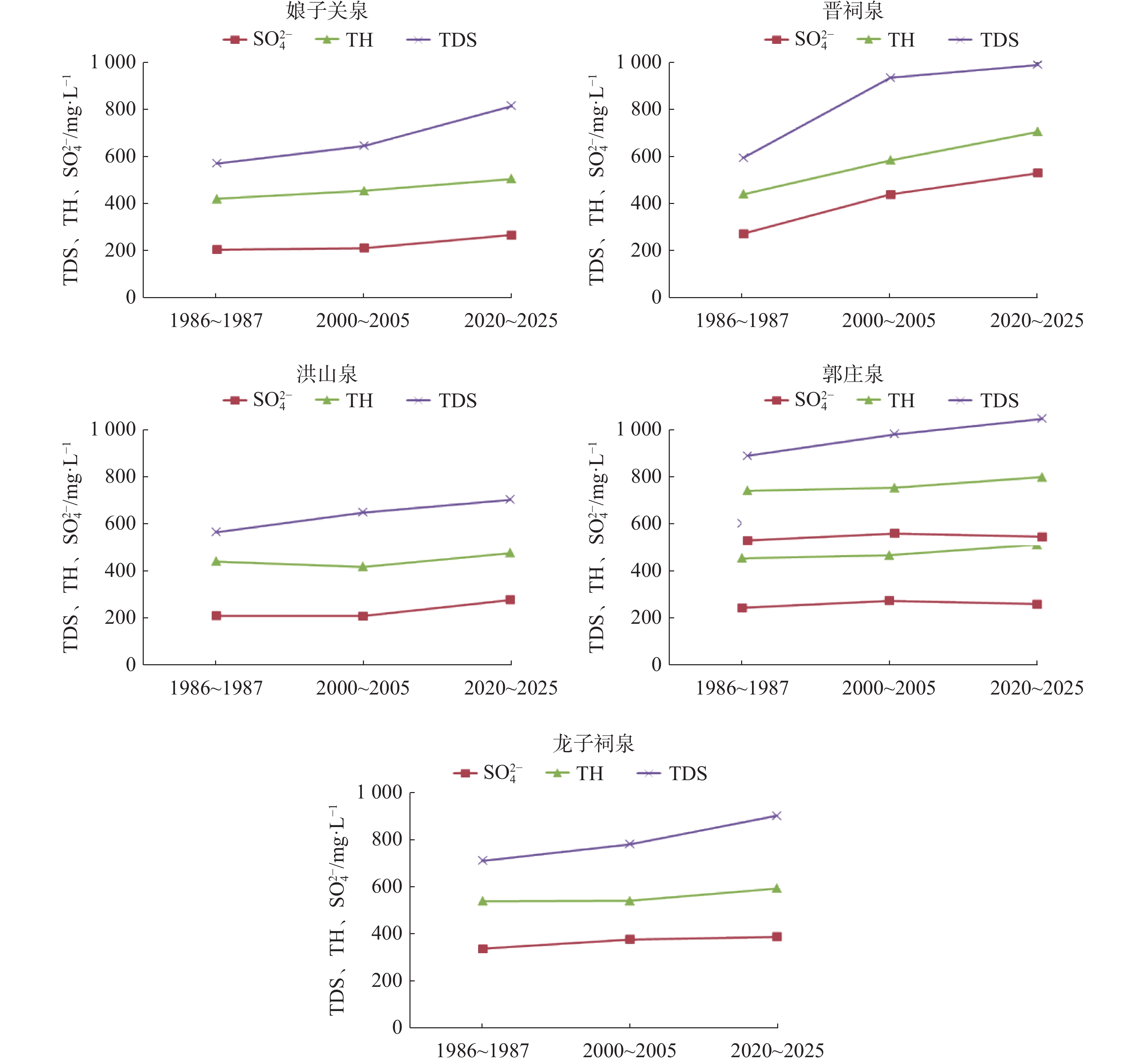
图 8 典型岩溶大泉${\rm{SO}}_4^{2-}$、TH和TDS含量的变化图
Figure 8. Variation curves of ${\rm{SO}}_4^{2-}$, TH and TDS concentrations in typical karst springs
表 1 不同阶段岩溶大泉流量衰减归因分析表
Table 1. Attribution analysis of karst spring discharge attenuation in different stages
阶段 时段/年 降雨量/ mm 岩溶大泉总流量/
(m3∙s−1)总流量衰减量/
(m3∙s−1)气候贡献
率/%人类活动贡
献率/%主导因素 I 1956—1960 560.63 78.72 − 自然因素绝对主导 II 1961—1980 525.21 71.57 −7.15 69.5% 30.5% 自然因素主导 III 1981—2000 484.99 49.64 −29.08 36.5% 63.5% 人类活动主导 IV 2001—2024 523.01 34.50 −44.22 12.0% 88.0% 人类活动绝对主导  下载: 导出CSV
表 2 山西岩溶大泉不同时期水质(TDS, TH)和超标项对比表 (单位:mg∙L−1)
Table 2. Comparison of water quality (TDS, TH) and non-compliant parameters of major karst springs in different periods (Units: mg∙L−1)
泉域 代表样 1986—1987年 2000—2005年 2020—2025年 TDS TH 超标项 TDS TH 超标项 TDS TH 超标项 娘子关泉域 五龙泉 571.18 421.63 Mn、Pb 646.00 456.00 TH 814.62 505.90 ${\rm{SO}}_4^{2-}$、TH 辛安泉域 南流泉 384.93 319.41 Fe、Pb 429.00 213.00 无 431.73 281.02 无 延河泉域 延河泉 401.69 326.46 Fe 646.00 388.00 无 649.75 404.46 无 三姑泉域 郭壁泉 309.81 273.40 Pb 399.00 301.00 无 572.22 357.97 无 坪上泉域 水泉湾泉 221.66 189.24 无 332.00 202.00 无 362.15 228.94 无 水神堂泉域 水神堂泉 293.44 238.29 无 319.00 243.00 无 381.42 162.98 无 城头会泉域 大沙湖泉 225.74 184.32 Fe 246.00 194.00 NH$_4^{+}$ 414.76 264.41 无 神头泉域 神头泉 349.78 252.49 无 294.00 243.00 无 455.11 262.70 无 马圈泉域 马圈泉 356.65 293.38 无 435.00 270.00 无 428.77 344.07 无 雷鸣寺泉域 雷鸣寺泉 316.00 231.23 无 389.00 246.00 无 385.50 249.95 无 兰村泉域 兰村水源地井 279.01 248.31 Pb 446.00 248.00 无 468.12 267.23 无 晋祠泉域 难老泉 598.19 443.63 ${\rm{SO}}_4^{2-}$、Pb 937.00 588.00 TH、${\rm{SO}}_4^{2-}$ 992.12 709.45 ${\rm{SO}}_4^{2-}$、TH、TDS 洪山泉域 泉口附近岩溶井 562.77 438.56 Pb 646.00 416.00 无 700.61 475.44 ${\rm{SO}}_4^{2-}$、TH 郭庄泉域 郭庄泉 598.66 450.58 TH 689.00 463.00 TH、${\rm{SO}}_4^{2-}$ 754.62 508.07 ${\rm{SO}}_4^{2-}$、TH 龙子祠泉域 龙子祠泉 709.99 538.76 TH、${\rm{SO}}_4^{2-}$、Pb 779.00 540.00 TH、${\rm{SO}}_4^{2-}$ 899.95 592.68 ${\rm{SO}}_4^{2-}$、TH 霍泉泉域 霍泉 438.36 367.54 Pb 458.00 321.00 无 487.43 319.32 无 古堆泉域 泉口附近岩溶井 790.27 435.54 ${\rm{SO}}_4^{2-}$、F−、Pb 787.00 427.00 ${\rm{SO}}_4^{2-}$、F− 634.12 273.39 无 柳林泉域 上青龙泉 449.35 295.99 Fe、Pb 451.00 265.00 无 603.32 294.53 无 天桥泉域 铁匠铺水源地井 395.79 282.07 Pb 342.00 254.00 Pb 426.20 229.88 无
下载: 导出CSV
表 3 山西岩溶大泉主要超标项主要来源及形成机制
Table 3. Primary sources and formation mechanisms of non-compliant parameters in major karst springs of Shanxi
超标项 主要来源 形成机制 ${\rm{SO}}_4^{2-}$ 自然地质背景(石膏)、矿坑水、煤矿“老窑水”、煤矸石、工业
污染①某些泉域奥陶系地层含石膏夹层,天然溶解产生大量${\rm{SO}}_4^{2-}$。
②黄铁矿氧化形成硫酸,不仅直接输入${\rm{SO}}_4^{2-}$,还溶蚀石膏。
③煤矸石在地表经雨水淋滤,形成富含${\rm{SO}}_4^{2-}$的酸性渗滤液入渗。
④SO2气体溶解于雨水通过入渗补给岩溶地下水。TH 自然地质背景(碳酸盐岩、石膏)、矿坑水、煤矿“老窑水” ①碳酸盐岩的溶解。
②矿坑水或酸性“老窑水”与碳酸盐岩发生中和反应,释放大量 Ca2+、Mg2+。
③石膏的溶解产生大量Ca2+。TDS 自然地质背景、矿坑水、煤矿
“老窑水”、生活污染、工业污染、农业污染①黄铁矿氧化形成硫酸,溶解大量矿物。
②矿坑排水导致区域水位下降,引发上覆高矿化度裂隙水倒灌。
③水岩作用时间延长导致离子富集。
④其他污染源的输入Fe、Mn、Pb 煤矸石、矿坑水、煤矿“老窑水”、工业污染 ①煤矸石在地表经雨水淋滤,形成富含Fe、Mn和Pb的酸性渗滤液入渗。
②煤层采空区围岩在酸性或氧化还原环境下含Fe、Mn和Pb矿物的溶解。
③工矿企业(冶炼)的废水废气沉降输入。F− 自然地质背景(含氟矿物)、工业污染 ①干旱区强蒸发浓缩及含氟矿物溶解。
②工矿污水渗漏以及废气沉降经降水入渗。NH$_4^{+}$ 农业污染、工业污染、生活
污染①农业氮肥的施用
②工矿废水的输入污染
③农村生活污水及垃圾渗滤液的输入污染。
下载: 导出CSV
-
[1] Rajmohan N, Elango L. Identification and evolution of hydrogeochemical processes in the groundwater environment in an area of the Palar and Cheyyar River Basins, Southern India[J]. Environmental Geology, 2004, 46(1): 47-61. doi: 10.1007/s00254-004-1012-5 [2] Sok C, Choup S. Climate change and groundwater resources in Cambodia[J]. Journal of groundwater science and engineering, 2017, 5(1): 31-43. doi: 10.26599/JGSE.2017.9280003 [3] Zhang Q Q, Miao L P, Wang H W, Hou J L, Li Y. How Rapid urbanization drives deteriorating groundwater quality in a provincial capital of China[J]. Polish Journal of Environmental Studies, 2020, 29(1): 441-450. [4] Zeinab Najafi, Gholam Hossein Karami, Haji Karimi, Karthikeyan Brindha. Introducing a new method for evaluation of karst springs discharge concerning human and natural factors[J]. Environmental Earth Sciences, 2023, 82(15): 374. doi: 10.1007/s12665-023-11048-1 [5] Vianney Sivelle, Hervé Jourde, Daniel Bittner, Naomi Mazzilli, Yves Tramblay. Assessment of the relative impacts of climate changes and anthropogenic forcing on spring discharge of a Mediterranean karst system [J]. Journal of Hydrology, 2021, 598: 126396 (1-17). [6] 邓安利, 王帅, 曹耀武, 王敏黛, 李洁祥, 郭清海. 洪山泉流量对气候变化和人类活动的响应[J]. 安全与环境工程, 2015, 22(2): 11-14.Deng Anli, Wang Shuai, Cao Yaowu, Wang Mindai, Li Jiexiang, Guo Qinghai. Response of Hongshan Spring discharge to climate change and human activities[J]. Safety and Environmental Engineering, 2015, 22(2): 11-14. [7] Slavec A, Glavan M. Evaluation of Agricultural Measures to Safeguard the Vulnerable Karst Groundwater Habitat of the Black Olm (Proteus anguinus parkelj) from Nitrate Pollution[J]. Sustainability, 2024, 16(24): 11309. doi: 10.3390/su162411309 [8] Julian Xanke, Anna Ender, Felix Grimmeisen, Nadine Goeppert, Nico Goldscheider. Hydrochemical evaluation of water resources and human impacts on an urban karst system, Jordan[J]. Hydrogeology Journal, 2020, 28: 2173-2186. doi: 10.1007/s10040-020-02174-2 [9] Jin J, Zhao Y P, Liu D, Chen Y F, Ding H J. Quantitative evaluation of the groundwater environment: A case study in Tongliao, China[J]. Human and Ecological Risk Assessment: An International Journal, 2020, 26(9): 2367-2389. doi: 10.1080/10807039.2020.1761245 [10] 梁永平, 申豪勇, 赵春红, 王志恒, 唐春雷, 赵一, 谢浩, 石维芝. 对中国北方岩溶水研究方向的思考与实践[J]. 中国岩溶, 2021, 40(3): 363-380. doi: 10.11932/karst2021y002Liang Yongping, Shen Haoyong, Zhao Chunhong, Wang Zhiheng, Tang Chunlei, Zhao Yi, Xie Hao, Shi Weizhi. Thinking and practice on the research direction of karst water in northern China[J]. Carsologica Sinica, 2021, 40(3): 363-380. doi: 10.11932/karst2021y002 [11] 梁永平, 王维泰, 赵春红, 王玮, 唐春雷. 中国北方岩溶水变化特征及其环境问题[J]. 中国岩溶, 2013, 32(1): 34-42. doi: 10.3969/j.issn.1001-4810.2013.01.006Liang Yongping, Wang Weitai, Zhao Chunhong, Wang Wei, Tang Chunlei. Variations of karst water and environmental problems in North China[J]. Carsologica Sinica, 2013, 32(1): 34-42. doi: 10.3969/j.issn.1001-4810.2013.01.006 [12] 徐永新, 张志祥, 张永波, 梁永平, 曹建华, 蒋忠诚. 山西岩溶泉研究进展与前瞻[J]. 太原理工大学学报, 2017, 48(3): 413-426.Xu Yongxin, Zhang Zhixiang, Zhang Yongbo, Liang Yongping, Cao Jianhua, Jiang Zhongcheng. Research Advance in Karst Springs of Shanxi Province[J]. Journal of Taiyuan University of Technology, 2017, 48(3): 413-426. [13] 陈媛媛, 张勇, 张晓静, 侯雪楠, 吕春娟, 张徐. 岩溶泉域水量衰减过程及驱动因素研究进展[J]. 山西水土保持科技, 2025(4): 7-12. doi: 10.3969/j.issn.1008-0120.2025.04.003Chen Yuanyuan, Zhang Yong, Zhang Xiaojing, Hou Xuenan, Lv Chunjuan, Zhang Xu. Advances in the study of water discharge recession and driving factors in karst spring domains[J]. Soil and Water Conservation Science and Technology in Shanxi, 2025(4): 7-12. doi: 10.3969/j.issn.1008-0120.2025.04.003 [14] 时坚, 王晶, 刘德深, 韩行瑞. 黄河中上游能源基地区岩溶大泉流量衰减原因、变化趋势及其防治对策[J]. 中国岩溶, 2006, 25(4): 330-334. doi: 10.3969/j.issn.1001-4810.2006.04.013Shi Jian, Wang Jing, Liu Deshen, Han Xingrui. Research on attenuation causes and change tendency of large karst springs in energy resource base on the middle and upper reaches of Yellow River[J]. Carsologica Sinica, 2006, 25(4): 330-334. doi: 10.3969/j.issn.1001-4810.2006.04.013 [15] 申豪勇, 李佳, 王志恒, 谢浩, 梁永平, Yongxin Xu, 韩双宝, 任建会, 潘尧云, 赵春红, 赵一. 黄河支流汾河流域水资源开发利用现状及生态环境问题[J]. 中国地质, 2022, 49(4): 1127-1138.Shen Haoyong, Li Jia, Wang Zhiheng, Xie Hao, Liang Yongping, Yongxin Xu, Han Shuangbao, Ren Jianhui, Pan Yaoyun, Zhao Chunhong, Zhao Yi. Water resources utilization and eco-environment problem of Fenhe River, branch of Yellow river[J]. Geology in China, 2022, 49(4): 1127-1138. [16] 王志恒, 梁永平, 史浙明, 申豪勇, 张松涛, 赵一, 谢浩, 赵春红, 唐春雷. 古堆-南梁泉域岩溶水环境问题现状与泉源区保护[J]. 地质科技通报, 2023, 42(5): 228-240.Wang Zhiheng, Liang Yongping, Shi Zheming, Shen Haoyong, Zhang Songtao, Zhao Yi, Xie Hao, Zhao Chunhong, Tang Chunlei. Current situation of karst groundwater environmental problems and spring source protection in the Gudui-Nanliang spring basin[J]. Bulletin of Geological Science and Technology, 2023, 42(5): 228-240. [17] 申豪勇, 梁永平, 赵春红, 唐春雷, 王志恒. 古堆泉岩溶地下水系统特征及系统圈划[J]. 吉林大学学报(地球科学版), 2020, 50(1): 217-225. doi: 10.13278/j.cnki.jjuese.20180281Shen Haoyong, Liang Yongping, Zhao Chunhong, Tang Chunlei, Wang Zhiheng. Hydro-Geological Characteristics and Demarcation of Gudui Spring Karst Groundwater System[J]. Journal of Jilin University(Earth Science Edition), 2020, 50(1): 217-225. doi: 10.13278/j.cnki.jjuese.20180281 [18] 吴涛. 郭庄泉流量衰减机理研究[J]. 地下水, 2020, 42(4): 58-60. doi: 10.19807/j.cnki.DXS.2020-04-020Wu Tao. Study on the attenuation mechanism of flow in guozhuang spring[J]. Ground Water, 2020, 42(4): 58-60. doi: 10.19807/j.cnki.DXS.2020-04-020 [19] 陈荦, 张幼宽, 朱敏. 辛安泉流量衰减成因分析[J]. 水资源保护, 2015, 31(3): 73-77. doi: 10.3880/j.issn.10046933.2015.03.014Chen Luo, Zhang Youkuan, Zhu Min. Analysis of cause of Xin’an spring flow attenuation[J]. Water Resources Protection, 2015, 31(3): 73-77. doi: 10.3880/j.issn.10046933.2015.03.014 [20] 晋华, 杨锁林, 郑秀清, 李慈君. 晋祠岩溶泉流量衰竭分析[J]. 太原理工大学学报, 2005, 36(4): 488-490. doi: 10.3969/j.issn.1007-9432.2005.04.032Jin Hua, Yang Suolin, Zheng Xiuqing, Li Cijun. Analysis of the reduction in flow from Jinci springs[J]. Journal of Taiyuan University of Technology, 2005, 36(4): 488-490. doi: 10.3969/j.issn.1007-9432.2005.04.032 [21] 唐春雷, 梁永平, 王维泰, 赵春红, 申豪勇. 龙子祠泉域岩溶水水化学-同位素特征[J]. 桂林理工大学学报, 2017, 37(1): 53-58. doi: 10.3969/j.issn.1674-9057.2017.01.007Tang Chunlei, Liang Yongping, Wang Weitai, Zhao Chunhong, Shen Haoyong. Hydrogeochemical and isotopic characteristics of the karst groundwater systems in Longzici spring basin[J]. Journal of Guilin University of Technology, 2017, 37(1): 53-58. doi: 10.3969/j.issn.1674-9057.2017.01.007 [22] 王焰新, 高旭波. 人类活动影响下娘子关岩溶水系统地球化学演化[J]. 中国岩溶, 2009(2): 103-112. doi: 10.3969/j.issn.1001-4810.2009.02.004Wang Yanxin, Gao Xubo. Geochemical evolution of the Niangziguan karst water system under the impact of human activities[J]. Carsologica Sinica, 2009(2): 103-112. doi: 10.3969/j.issn.1001-4810.2009.02.004 [23] 赵春红, 申豪勇, 卢海平, 王志恒, 梁永平, 唐春雷. 晋祠泉域岩溶地下水防污性能评价与水质保护区划分[J]. 中国岩溶, 2024, 43(4): 822-830. doi: 10.11932/karst2024y034Zhao Chunhong, Shen Haoyong, Lu Haiping, Wang Zhiheng, Liang Yongping, Tang Chunlei. Vulnerability assessment of karst groundwater in the Jinci spring area and the zoning of protected areas for water quality[J]. Carsologica Sinica, 2024, 43(4): 822-830. doi: 10.11932/karst2024y034 [24] 晋华, 郝晓燕, 杨瑞芳, 刘虎. 基于COP法的神头泉域岩溶含水层脆弱性评价[J]. 太原理工大学学报, 2014, 45(5): 669-673. doi: 10.3969/j.issn.1007-9432.2014.05.021Jin Hua, Hao Xiaoyan, Yang Ruifang, Liu Hu. Groundwater Vulnerability Evaluation in Karst Aqnifer of Shentou Spring Region Based on COP Method[J]. Journal of Taiyuan University of Technology, 2014, 45(5): 669-673. doi: 10.3969/j.issn.1007-9432.2014.05.021 [25] 梁永平, 王志恒, 赵春红. 山西晋祠泉域岩溶水系统与生态修复研究[M]. 北京: 科学出版社, 2024.Liang Yongping, Wang Zhiheng, Zhao Chunhong. Research on the Karst Water System and Ecological Restoration of the Jinci Spring Catchment in Shanxi Province [M]. Beijing: Science Press, 2024. [26] 张满荣. 长治市地下水超采治理工作[J]. 山西水利, 2021(8): 43-45.Zhang Manrong. Groundwater over-exploitation control in Changzhi city[J]. Shanxi Water Resources, 2021(8): 43-45. [27] 常建忠. 山西省岩溶大泉地下水超采治理保护措施与经验[J]. 山西水利, 2021(7): 43-45.Chang Jianzhong. Control of overdraft of karst spring groundwater in Shanxi Province: measures and experiences[J]. Shanxi Water Resources, 2021(7): 43-45. [28] 王志恒, 梁永平, 申豪勇, 赵春红, 唐春雷, 谢浩, 赵一. 自然与人类活动叠加影响下晋祠泉域岩溶地下水动态特征[J]. 吉林大学学报(地球科学版), 2021, 51(6): 1823-1837. doi: 10.13278/j.cnki.jjuese.20200204Wang Zhiheng, Liang Yongping, Shen Haoyong, Zhao Chunhong, Tang Chunlei, Xie Hao, Zhao Yi. Dynamic Characteristics of Karst Groundwater in Jinci Spring Under Superimposed Influence of Natural and Human Activities[J]. Journal of Jilin University: Earth Science Edition, 2021, 51(6): 1823-1837. doi: 10.13278/j.cnki.jjuese.20200204 [29] 李向全, 张春潮, 侯新伟. 采煤驱动下晋东大型煤炭基地地下水循环演变特征——以辛安泉域为例[J]. 煤炭学报, 2021, 46(9): 3015-3026. doi: 10.13225/j.cnki.jccs.2020.0778Li Xiangquan, Zhang Chunchao, Hou Xinwei. Characteristics of groundwater circulation and evolution in Jindong large coal base driven by coal mining: An example of Xin'an spring area[J]. Journal of China Coal Society, 2021, 46(9): 3015-3026. doi: 10.13225/j.cnki.jccs.2020.0778 [30] 郭芳芳. 晋祠泉水复流技术方案的分析与优化[D]. 北京: 中国地质大学(北京), 2018.Guo Fangfang. Analysis and optimization of the technical scheme of reflow of Jinci spring [D]. China University of Geosciences (Beijing), 2018. [31] SIKAZWE, K. The impact of climate and land use changes on karst groundwater quantity: A case study of karst springs in Shanxi province, China [D]. Beijing: China University of Geosciences (Wuhan), 2008. [32] 任焕莲. 辛安泉系统岩溶地下水降水补给滞后分析研究[J]. 地下水, 2007, 29(5): 59-63.Ren Huanlian. Time Lag of Rainfall Recharge to the Karst Groundwater in Xin'an Springs[J]. Groundwater, 2007, 29(5): 59-63. [33] 山西省水利厅, 中国地质科学院岩溶地质研究所, 山西省水资源管理委员会编著. 山西省岩溶泉域水资源保护[M]. 北京: 中国水利水电出版社, 2008.Department of Water Resources of Shanxi Province, Institute of Karst Geology of CAGS, & Shanxi Water Resources Management Committee. Water Resources Protection of Karst Spring Catchments in Shanxi Province [M]. Beijing: China Water & Power Press, 2008. [34] 张建龙. 保护岩溶大泉 守护生命资源[J]. 山西水利, 2025(2): 21-27. doi: 10.3969/j.issn.1004-7042.2025.02.021Zhang Jianlong. Protecting karst springs and safeguarding vital life resources[J]. Shanxi Water Resources, 2025(2): 21-27. doi: 10.3969/j.issn.1004-7042.2025.02.021 [35] 褚桂红. 洪山泉流量变化趋势及衰减成因分析[J]. 山西水利科技, 2017(4): 55-56+74. doi: 10.3969/j.issn.1006-8139.2017.04.020Chu Guihong. Analysis of flow variation trend and attenuation cause of Hongshan spring[J]. Shanxi Hydrotechnics, 2017(4): 55-56+74. doi: 10.3969/j.issn.1006-8139.2017.04.020 [36] 王焰新. 我国北方岩溶泉域生态修复策略研究: 以晋祠泉为例[J]. 中国岩溶, 2022, 41(3): 331-344. doi: 10.11932/karst20220301Wang Yanxin. Study on ecological restoration strategy of karst spring region in north China: Taking Jinci spring as an example[J]. Carsologica Sinica, 2022, 41(3): 331-344. doi: 10.11932/karst20220301 [37] Yin Z F, Jiang S H, Ren L L, Wang M H, Cui H, Zhang L M, Liu Y T. Evolutionary characteristics and attributions of ecological drought in river: A case study in the Yellow River Basin[J]. Journal of Hydrology: Regional Studies, 2025, 59: 102409. doi: 10.1016/j.ejrh.2025.102409 [38] 于苗, 邢立亭, 吴吉春, 侯玉松, 朱恒华, 彭玉明, 李罡. 基于时间序列分形的济南岩溶大泉动态研究[J]. 地质学报, 2020, 94(8): 2509-2519.Yu Miao, Xing Liting, Wu Jichun, Hou Yusong, Zhu Henghua, Peng Yuming, Li Gang. Study of large karst springs using the time series fractal method in Jinan[J]. Acta Geologica Sinica, 2020, 94(8): 2509-2519. [39] 陈荦, 张幼宽, 王长申. 基于时间序列分析的辛安泉流量变化研究[J]. 水文地质工程地质, 2012, 39(1): 19-23,41. doi: 10.16030/j.cnki.issn.1000-3665.2012.01.028Chen Luo, Zhang Youkuan, Wang Changshen. A study of evolution of the discharge of the Xin'an spring with time series analysis[J]. Hydrogeology & Engineering Geology, 2012, 39(1): 19-23,41. doi: 10.16030/j.cnki.issn.1000-3665.2012.01.028 [40] 王茂枚, 束龙仓, 季叶飞, 陶玉飞, 董贵明, 刘丽红. 济南岩溶泉水流量衰减原因分析及动态模拟[J]. 中国岩溶, 2008, 27(1): 19-23. doi: 10.3969/j.issn.1001-4810.2008.01.004Wang Maomei, Shu Longcang, Ji Yefei, Tao Yufei, Dong Guiming, Liu Lihong. Causes of spring's of flux attenuation and simulation of spring's regime: A case in Jinan karst spring area[J]. Carsologica Sinica, 2008, 27(1): 19-23. doi: 10.3969/j.issn.1001-4810.2008.01.004 [41] 时坚, 王晶, 刘德深, 韩行瑞. 山西岩溶泉域水污染现状、趋势与防治对策研究[J]. 中国岩溶, 2004(3): 53-58.Shi Jian, Wang Jing, Liu Deshen, Han Xingrui. Study on the pollution status, trend and protection measure of Shanxi karst springs[J]. Carsologica Sinica, 2004(3): 53-58. [42] 王凯. 晋祠泉域岩溶地下水水化学特征及水文地球化学模拟[D]. 太原: 太原理工大学, 2016.Wang Kai. Hydrochemical Characteristics and Hydrogeochemical Modeling of Karst Groundwater in Jinci Spring Catchment [D]. Taiyuan: Taiyuan University of Technology, 2016. [43] 臧红飞, 郑秀清, 张永波, 杨展. 柳林泉域岩溶水中 ${\rm{SO}}_4^{2-}$的来源探讨[J]. 水文地质工程地质, 2017, 44(1): 9-15.Zang Hongfei, Zheng Xiuqing, Zhang Yongbo, Yang Zhan. Source of ${\rm{SO}}_4^{2-}$ in karst groundwater in the Liulin spring area[J]. Hydrogeology and Engineering Geology, 2017, 44(1): 9-15. [44] 张芳齐. 龙祠水源地高浓度硫酸根离子来源分析[J]. 水资源开发与管理, 2023, 9(9): 42-46. doi: 10.16616/j.cnki.10-1326/TV.2023.09.08Zhang Fangqi. Source Analysis of High Concentrations of Sulfate Ions in Longci Watershed[J]. Water Resources Development and Management, 2023, 9(9): 42-46. doi: 10.16616/j.cnki.10-1326/TV.2023.09.08 [45] Jiacong Tian, Zhanjun Wang, Kyriaki Daskalopoulou, Maoliang Zhang, Yaoqiang Huo, Yingnan Cao, Jucai Yang, Wei Liu, Jianguo Liu, Sheng Xu. Hydrochemical characteristics, driving factors and health risk of fluoride in groundwater from the northwestern Ordos Basin, China[J]. Geoscience Frontiers, 2025, 16(5): 345-358. doi: 10.1016/j.gsf.2025.102123 [46] 张雪莲, 赵大伟. 山西省辛安泉域岩溶水动态变化特征及成因分析[J]. 水利水电快报, 2025, 46(4): 41-46.Zhang Xuelian, Zhao Dawei. Dynamic change characteristics and cause analysis of karst groundwater in the Xin'an Spring Catchment, Shanxi Province[J]. Express Water Resources & Hydropower Information, 2025, 46(4): 41-46. [47] Haiyang Hao, Xuanxuan Hao, Manzhi Chen, Xibin Li, Xingxing Cao, Xuefang Zha, Ruixue Zhang, Pan Wu, Xuexian Li, Qiang Li. Towards better understanding of intermittent pollution mechanism of seasonal karst spring by combining hydrogeology, hydrogeochemistry, and REEs indication[J]. Journal of Hydrology, 2025, 662: 133873. doi: 10.1016/j.jhydrol.2025.133873 [48] 赵春红, 梁永平, 王志恒, 唐春雷, 申豪勇. 山西省阳泉山底河流域煤矿“老窑水”动态特征、演化机理及对娘子关泉域的环境效应[J]. 中国地质, 2023, 50(5): 1471-1485.Zhao Chunhong, Liang Yongping, Wang Zhiheng, Tang Chunlei, Shen Haoyong. Dynamic characteristics and evolution mechanism of "goafwater" of coal mine in Shandi River Basin, Yangquan, Shanxi Province and its environmental effects on Niangziguan Spring Area [J]. Geology in China, 50(5): 1471-1485. [49] 唐春雷, 赵春红, 申豪勇, 梁永平, 王志恒. 娘子关泉群水化学特征及成因[J]. 环境科学, 2021, 42(3): 1416-1423. doi: 10.13227/j.hjkx.202007047Tang Chunlei, Zhao Chunhong, Shen Haoyong, Liang Yongping, Wang Zhiheng. Chemical Characteristics and Causes of Groups Water in Niangziguan Spring[J]. Environmental Science, 2021, 42(3): 1416-1423. doi: 10.13227/j.hjkx.202007047 [50] 赵春红, 梁永平, 卢海平, 唐春雷, 申豪勇, 王志恒. 娘子关泉域岩溶水 ${\rm{SO}}_4^{2-}$、δ34S特征及其环境意义[J]. 中国岩溶, 2019, 38(6): 867-875.Zhao Chunhong, Liang Yongping, Lu Haiping, Tang Chunlei, Shen Haoyong, Wang Zhiheng. Chemical characteristics and environmental significance of ${\rm{SO}}_4^{2-}$ and sulfur isotope in the karst watershed of the Niangziguan spring, Shanxi Province[J]. Carsologica Sinica, 2019, 38(6): 867-875. [51] 李丰军, 郑继东, 邓寅生, 汤友谊. 不同粒径煤矸石矿井填充环境影响的淋溶实验[J]. 河南理工大学学报(自然科学版), 2006, 25(2): 101-104. doi: 10.3969/j.issn.1673-9787.2006.02.004Li Fengjun, Zheng Jidong, Deng Yinsheng, Tang Youyi. Leaching Experiments with Gangue of different diameters simulating the environmental influence after filling-in coal mine[J]. Journal of Henan Polytechnic University (Natural Science), 2006, 25(2): 101-104. doi: 10.3969/j.issn.1673-9787.2006.02.004 [52] Semhi K, Suchet P A, Clauer N, Probst J L. Impact of nitrogen fertilizers on the natural weathering-erosion processes and fluvial transport in the Garonne basin[J]. Applied Geochemistry, 2000, 15(6): 865-874. doi: 10.1016/S0883-2927(99)00076-1 -

 点击查看大图
计量
- 文章访问数: 191
- HTML浏览量: 76
- PDF下载量: 50
- 被引次数: 0
