


Statistical analysis of karst spatial distribution characteristics in Guangzhou
-
摘要: 随着城市地下空间开发强度不断加大,岩溶地质问题已成为制约广州工程安全建设的重要因素。广花盆地作为广州市岩溶发育最典型的区域,其岩溶分布广泛、形态复杂、埋藏条件多变,对地基处理与风险控制提出更高要求。文章基于区域大量钻探数据,从岩面埋深、溶洞空间分布特征、水文地质条件、充填特征及岩溶发育强度等方面开展统计分析。结果表明:研究区以浅覆盖型岩溶为主,岩面埋深集中于10~70 m,平均值为29.8 m;溶洞高度范围以0.5~42.4 m居多,平均约为3.3 m,顶板厚度多在0.5~6.0m之间,平均值2.8 m,普遍存在“高洞–薄顶”结构;充填状态以半填充(54.1%)和无填充(32.2%)为主,充填物主要为软塑黏土(59.0%);线溶率和见洞率分别为24.6%与54.5%,岩溶发育程度整体偏高。Abstract:
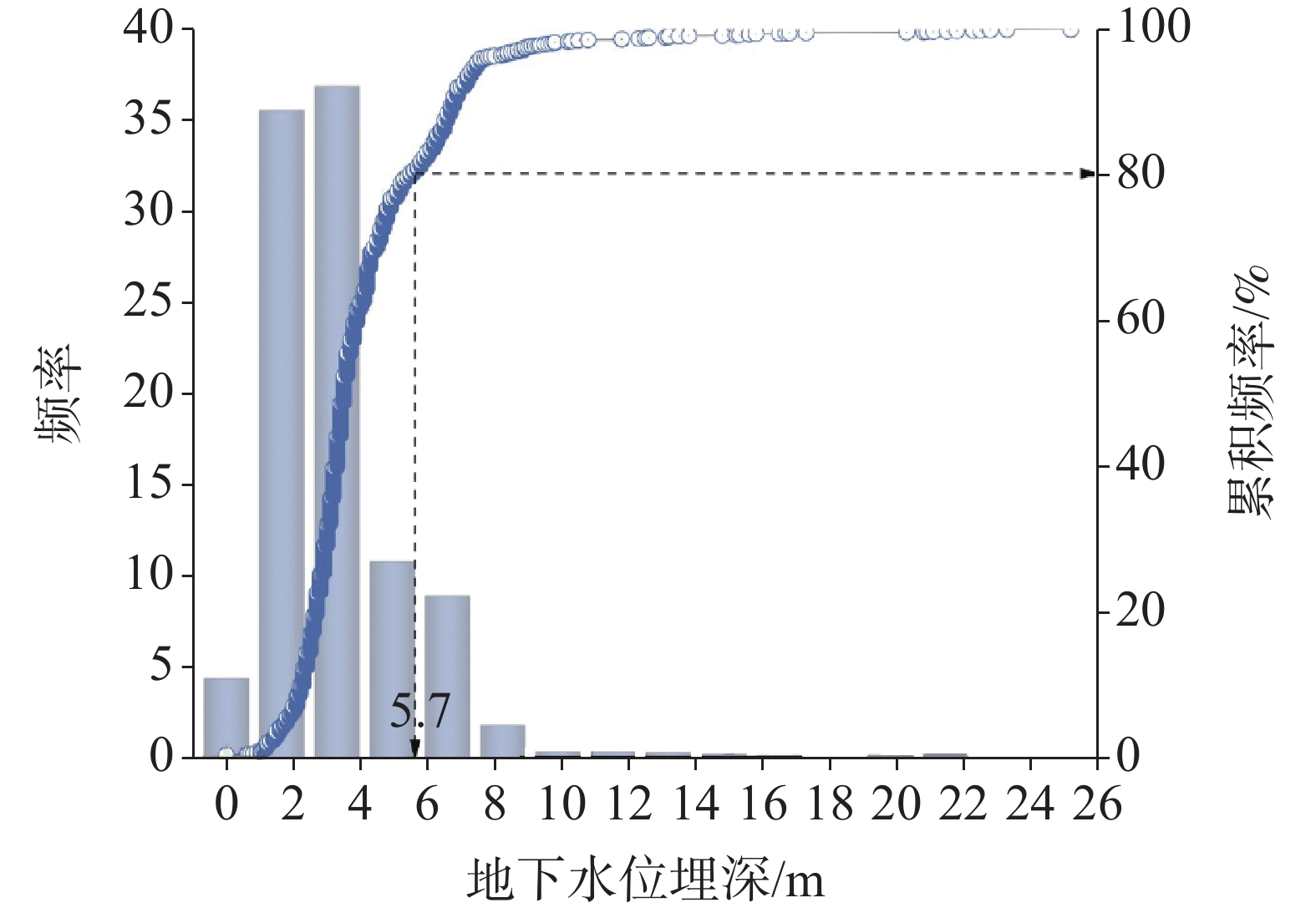
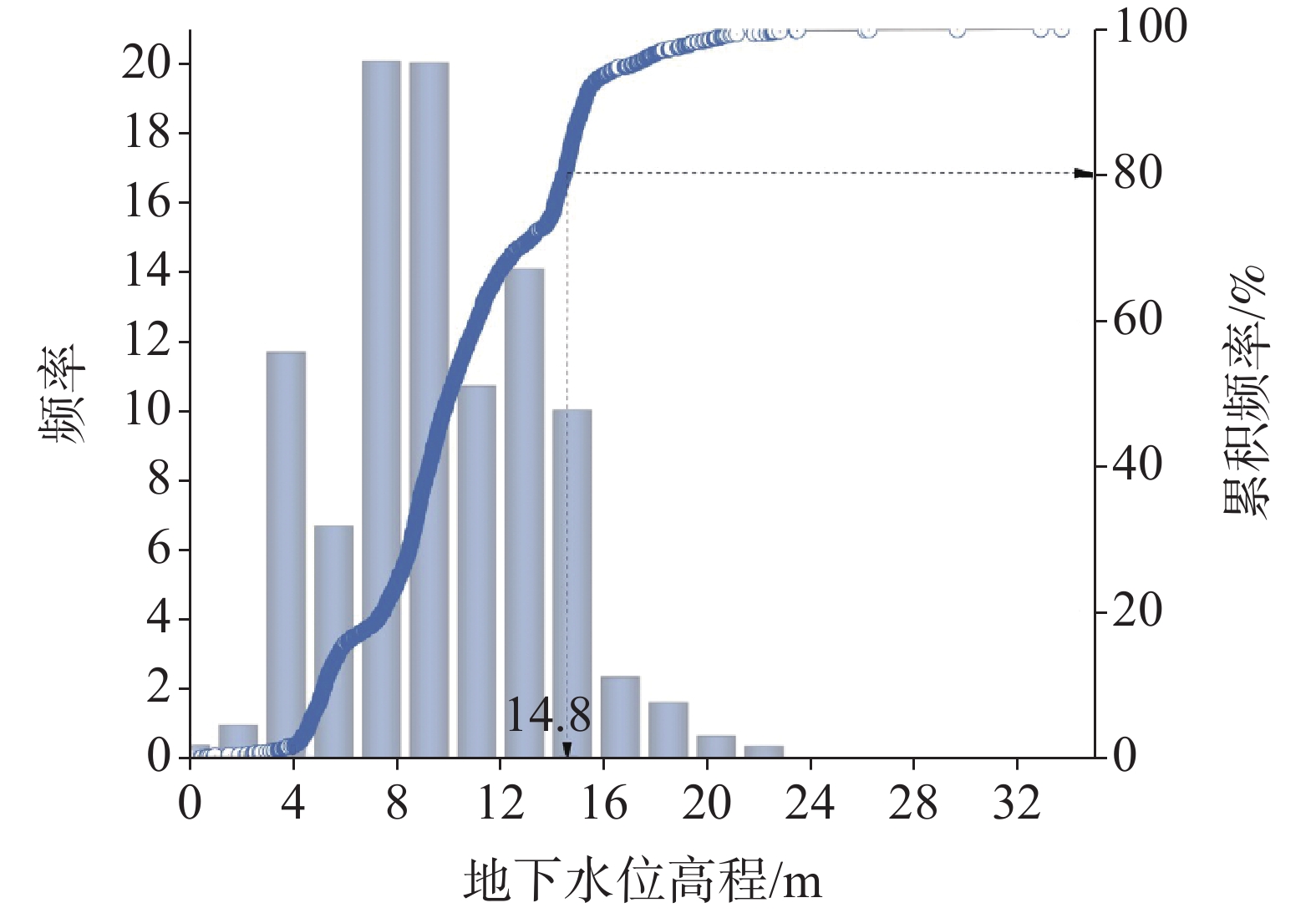
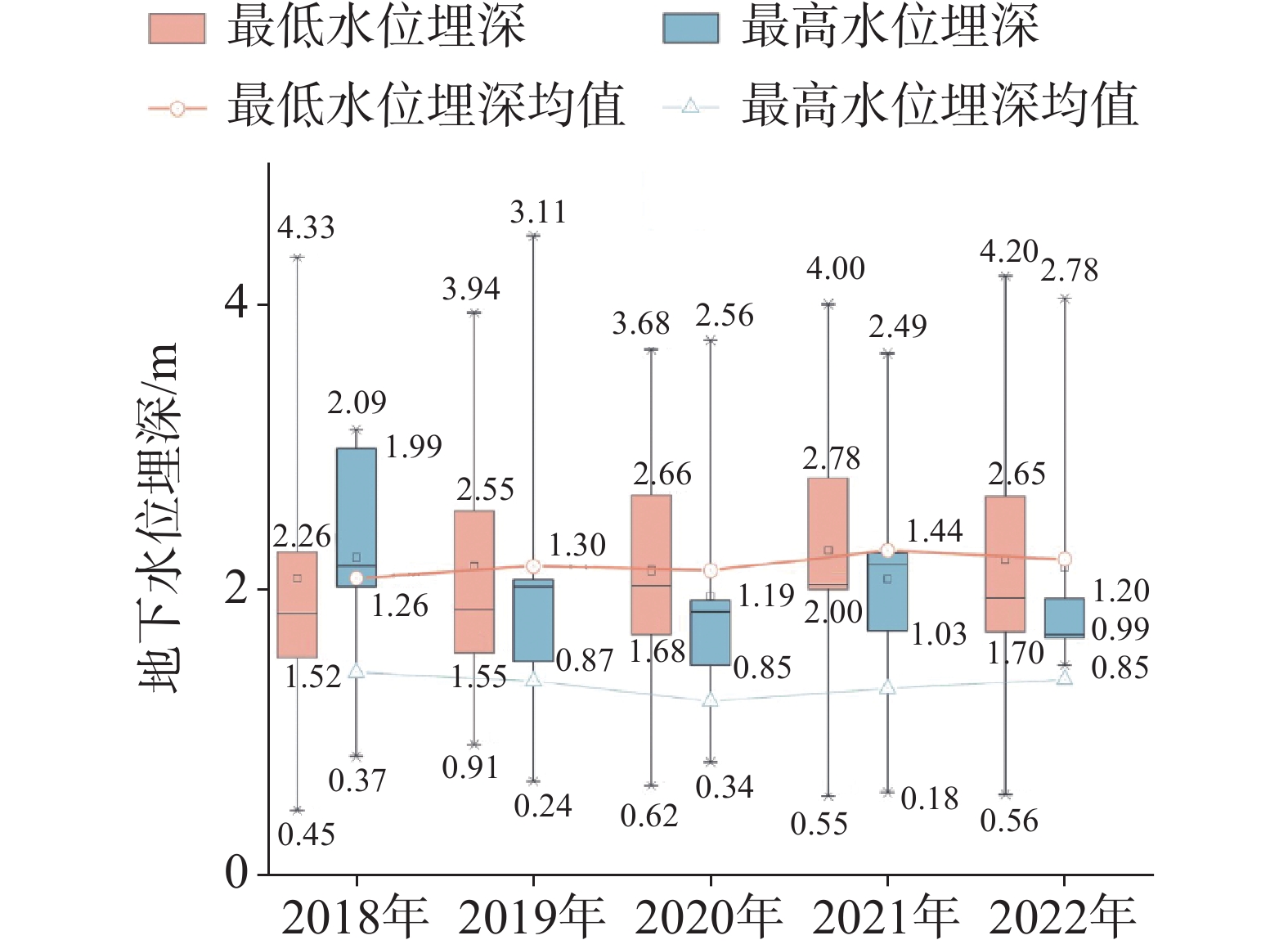
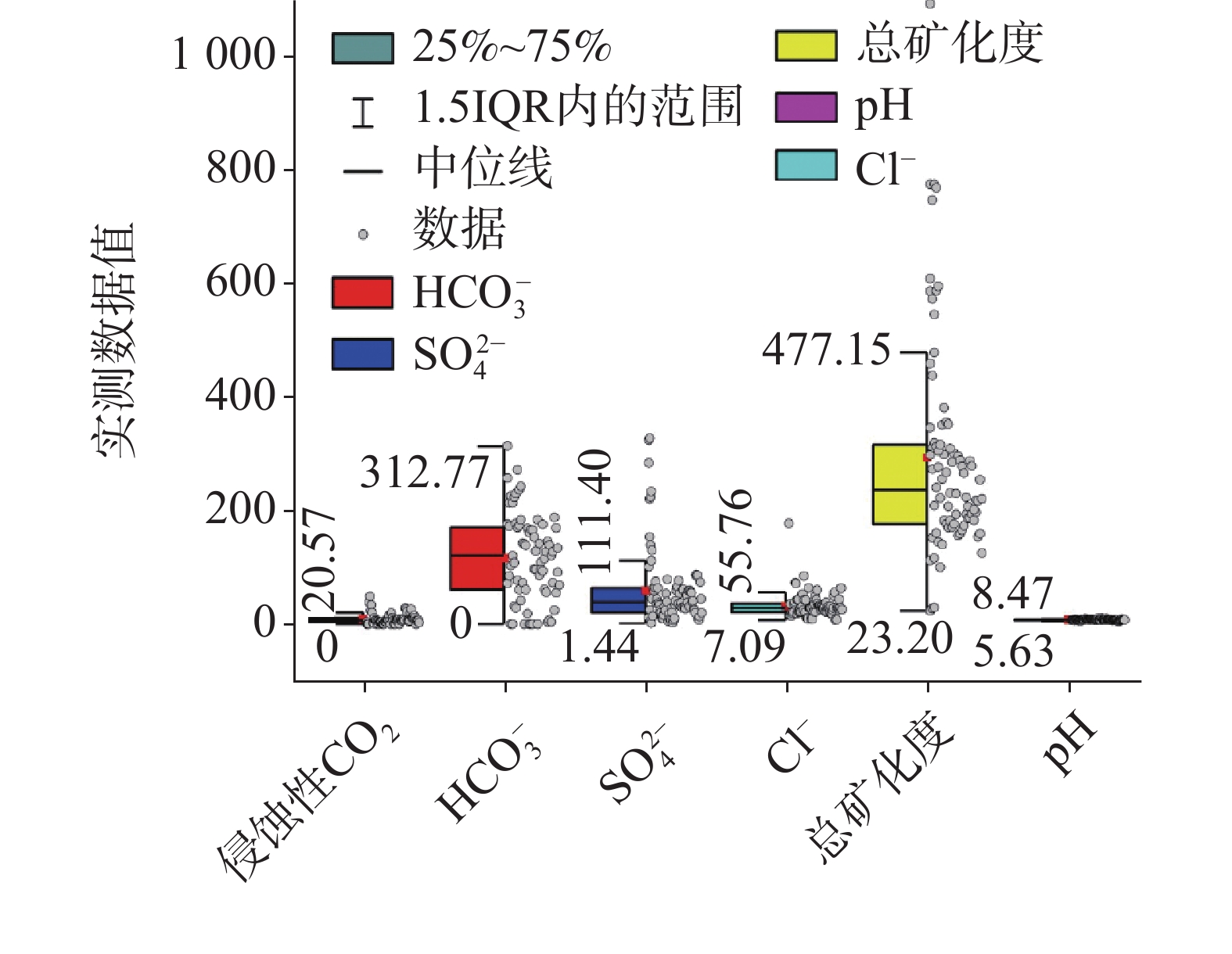
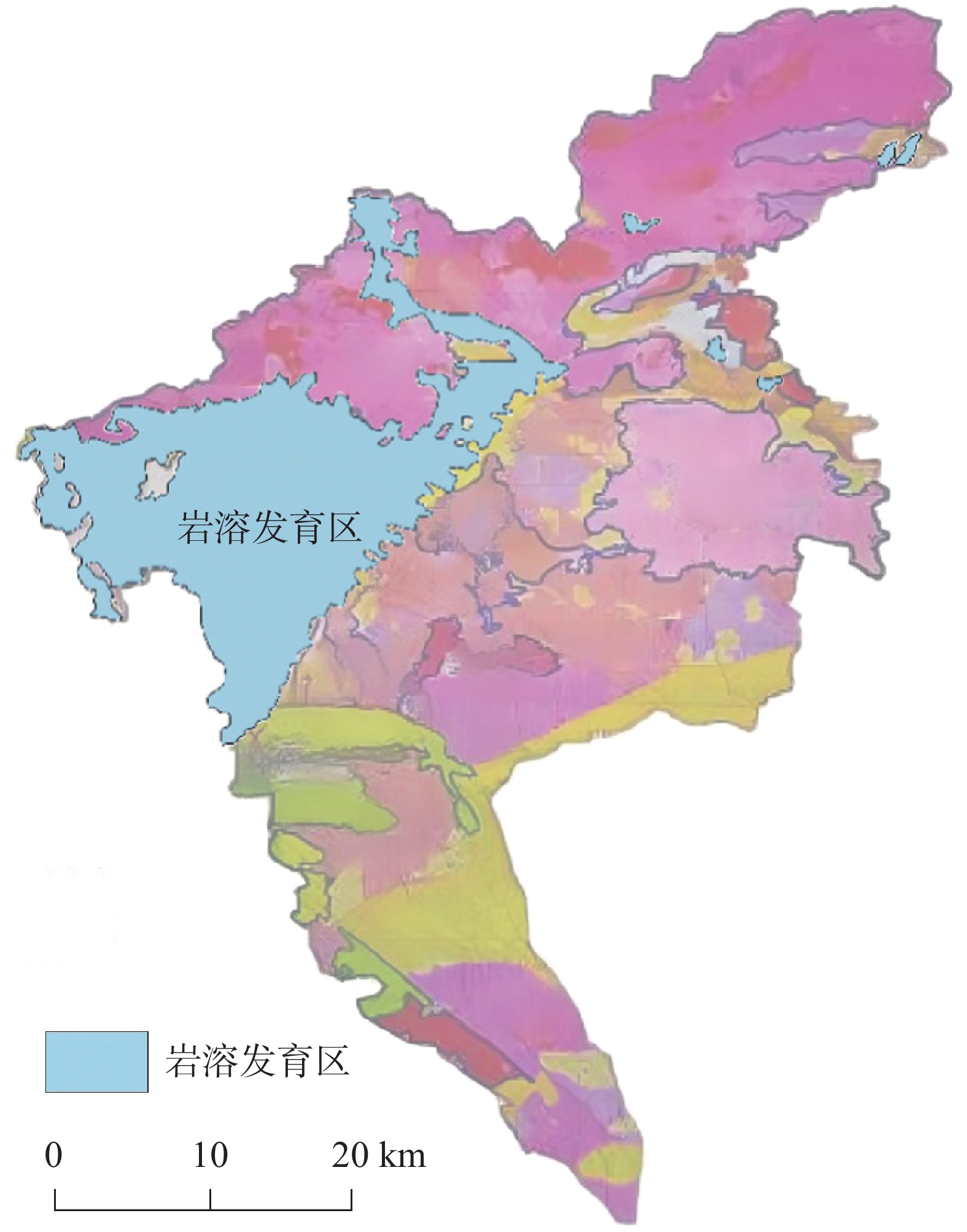
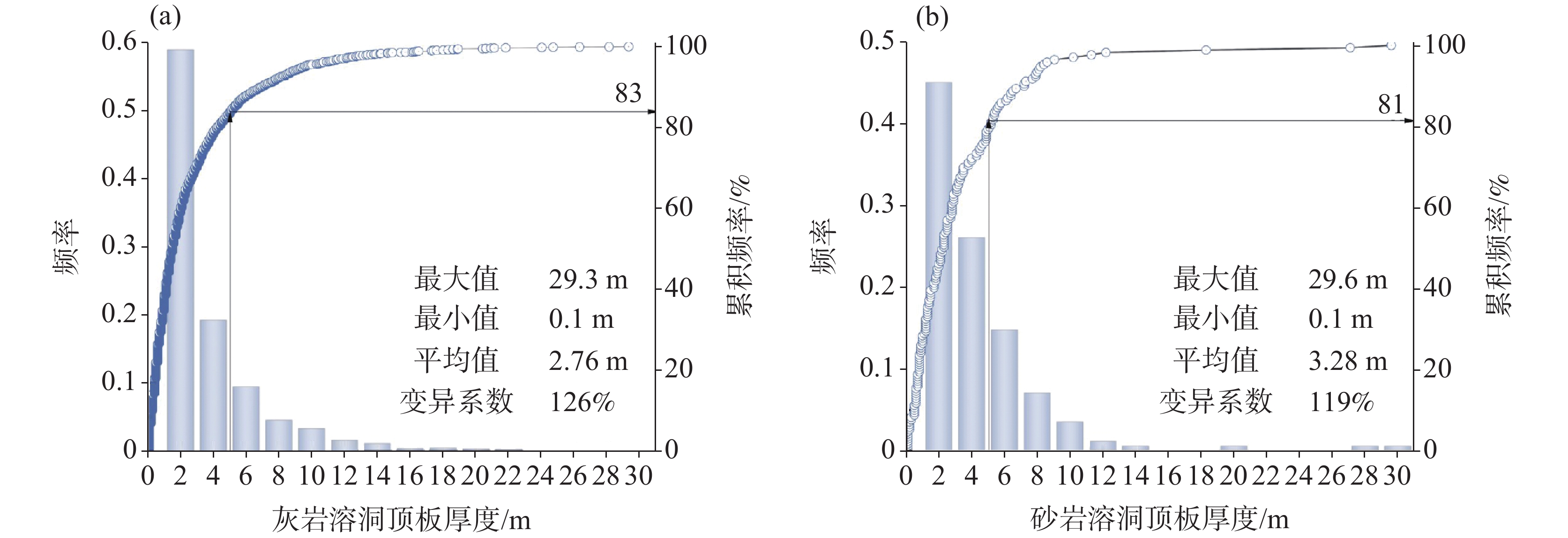
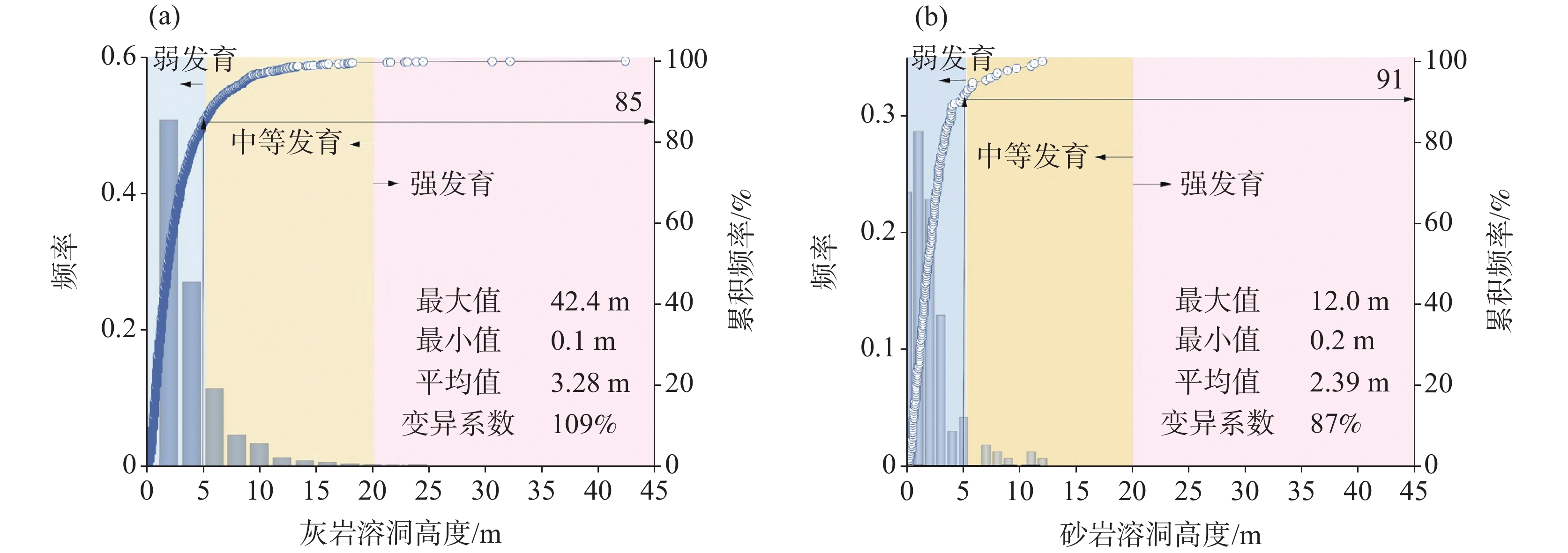
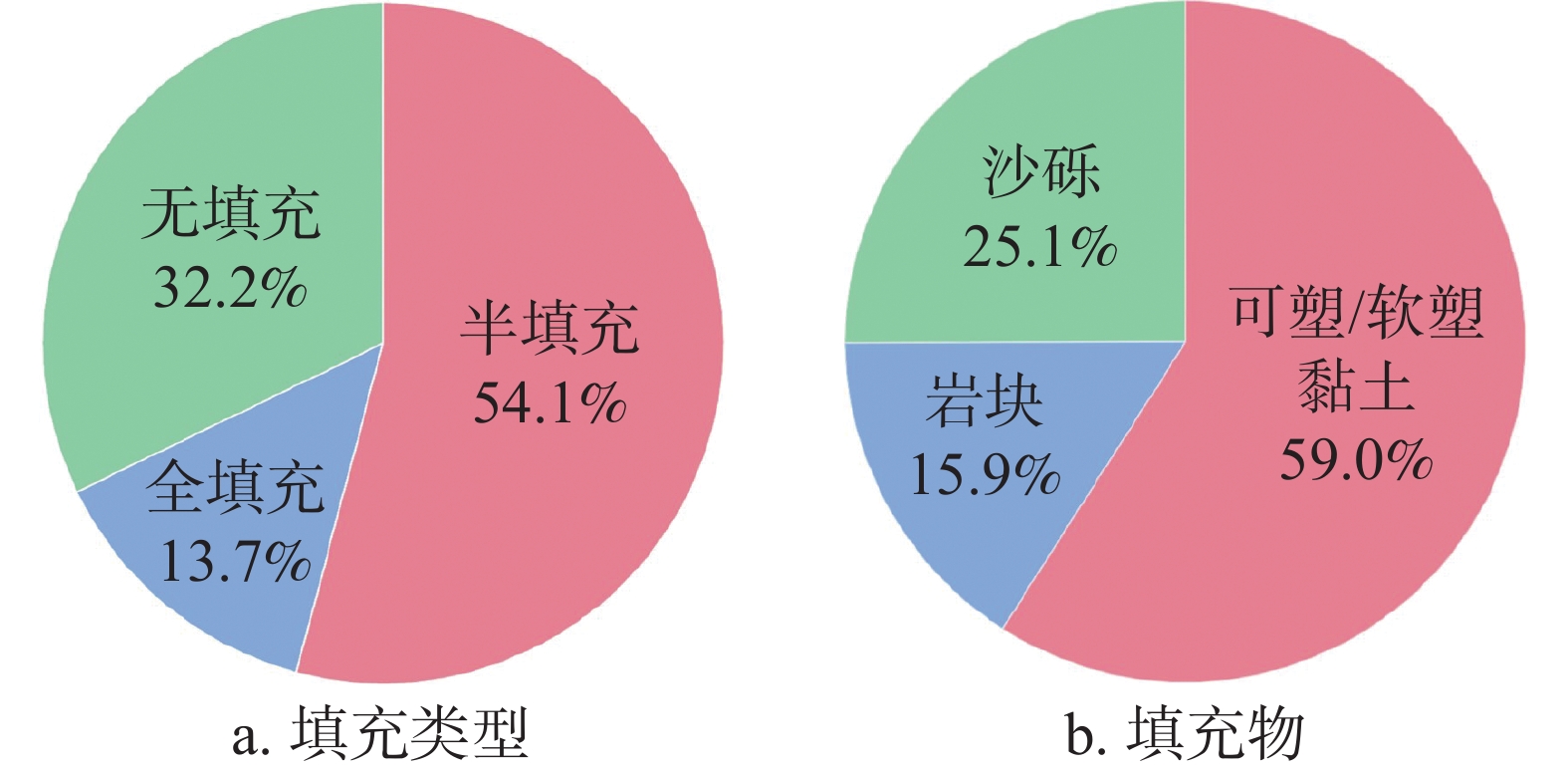
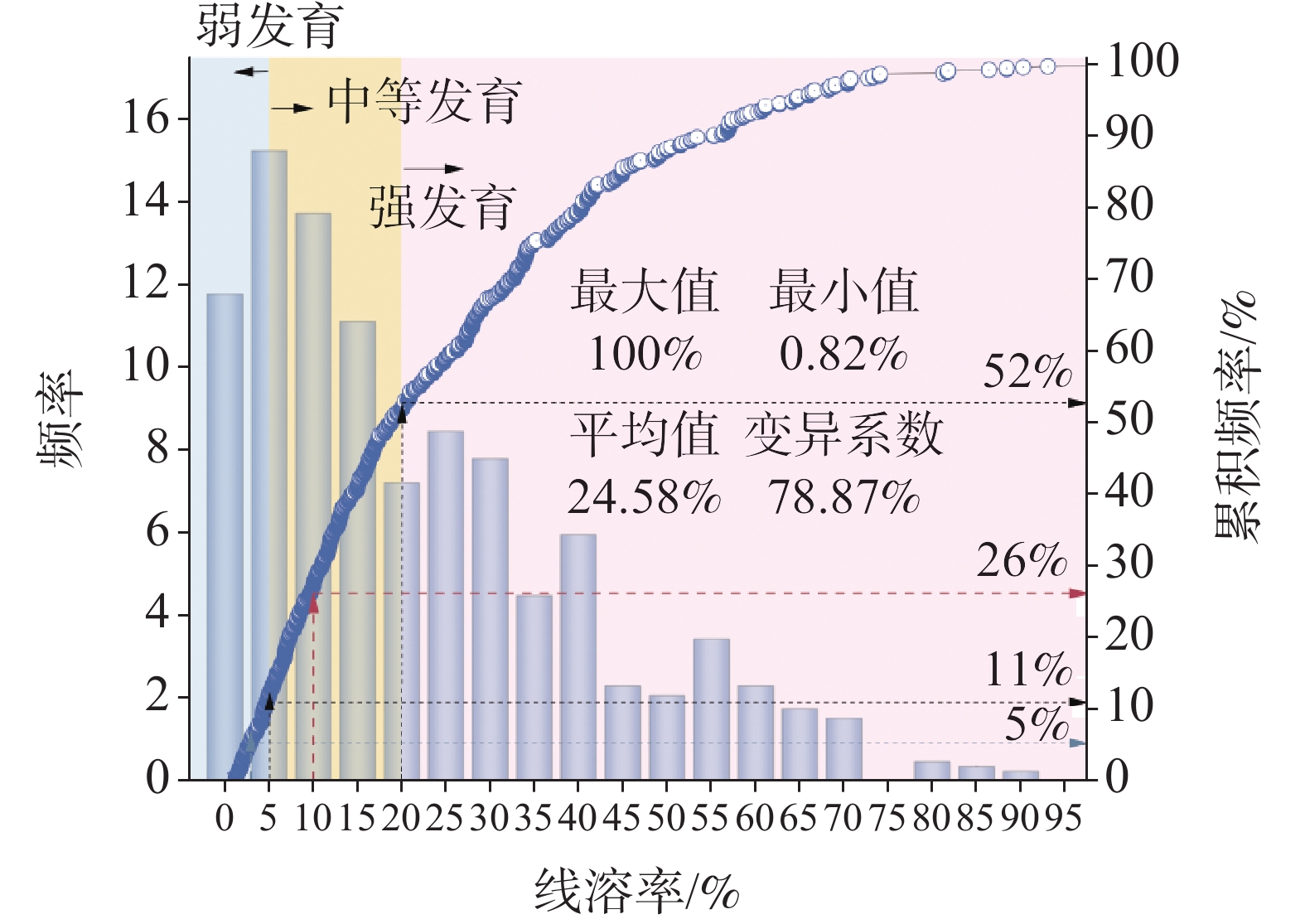
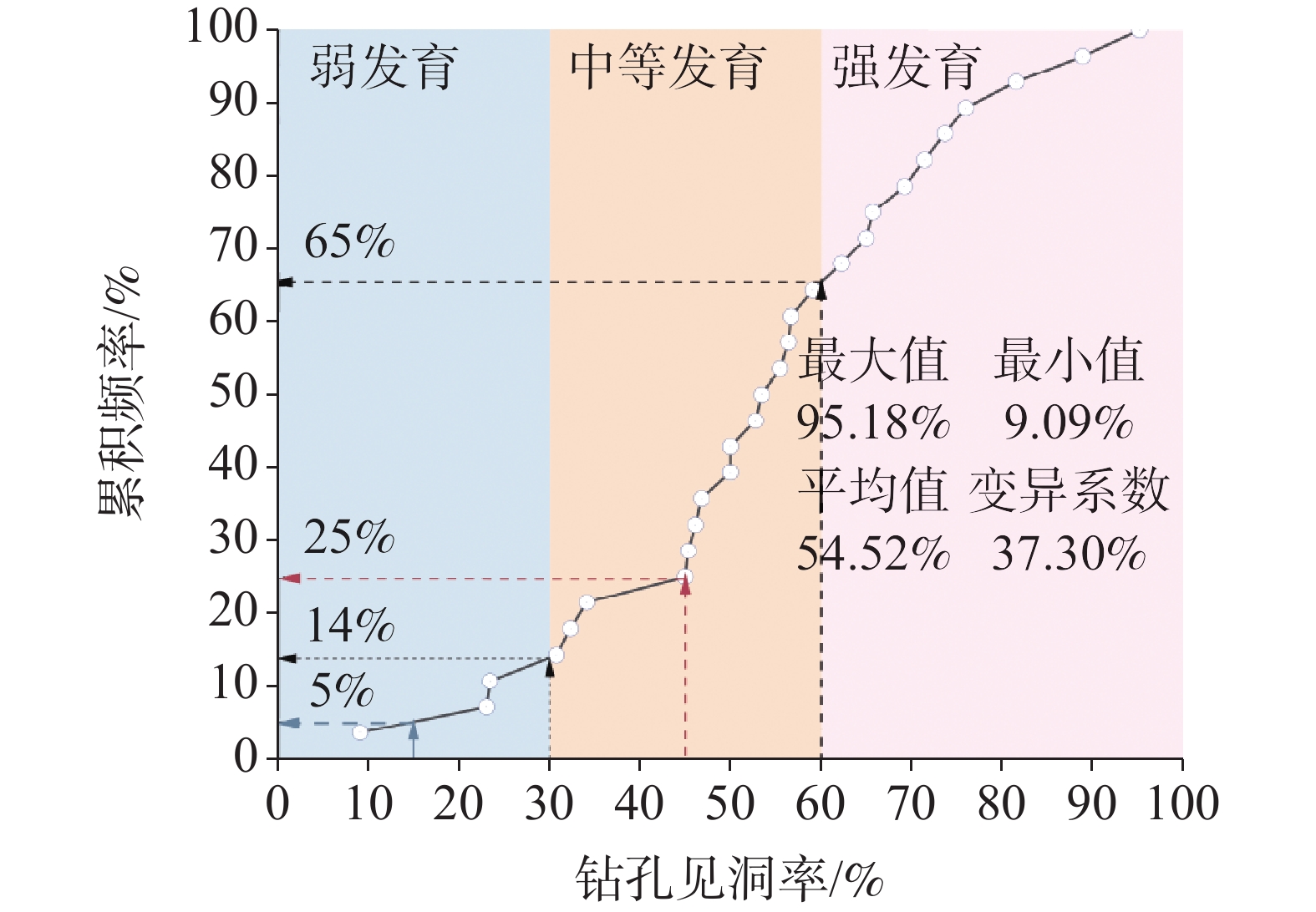
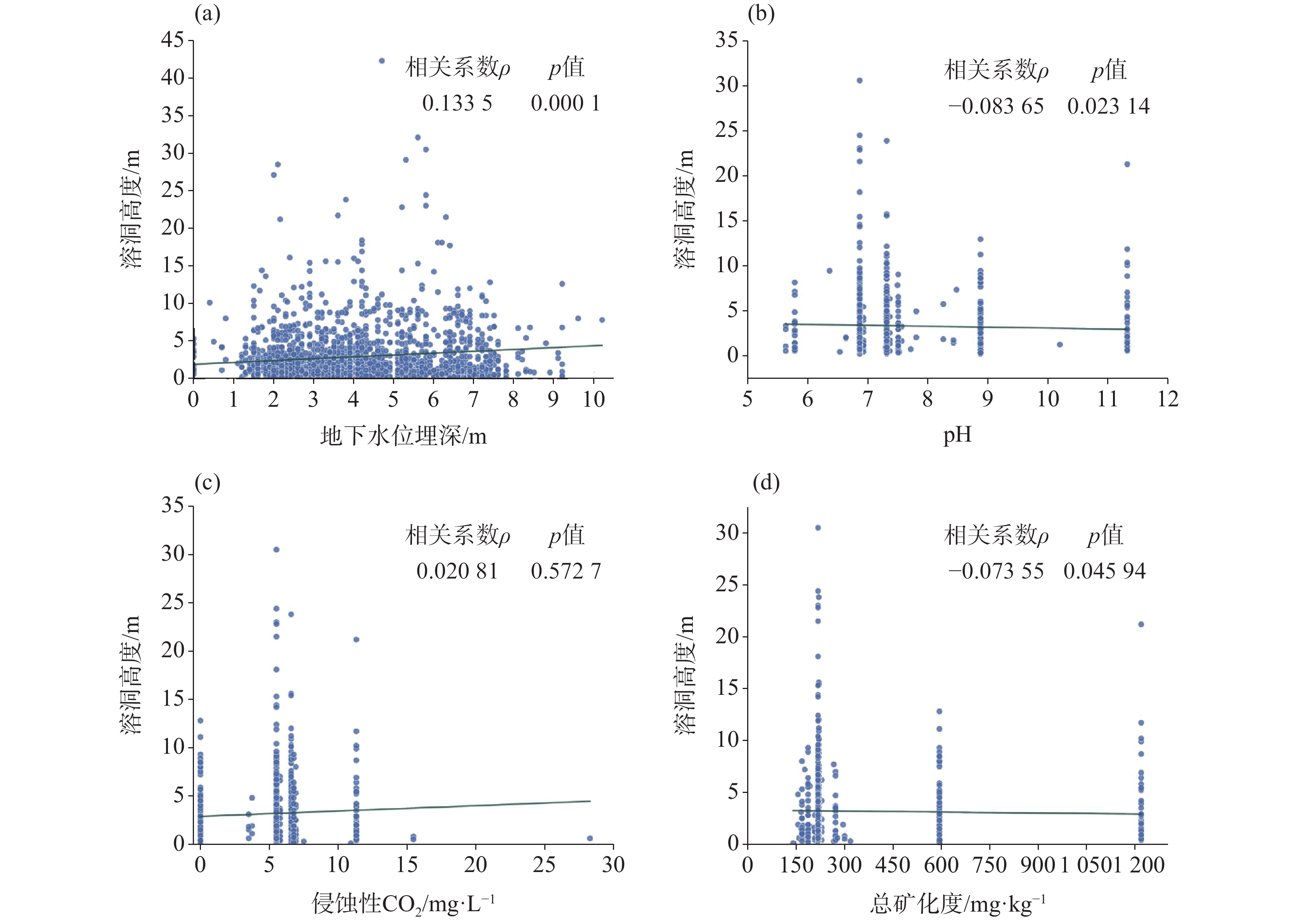
The Guanghua Basin, situated in the central-northern part of Guangzhou,China, serves as the primary study area due to its characteristic and highly concentrated karst geomorphology. The region features a complex topography that includes alluvial plains, gentle hilly terraces, and karst peak-cluster depressions, with elevations generally ranging from 5 to 150 m. Geologically, the area is characterized by a multi-layered stratigraphy. The foundational karst-prone strata primarily consist of Carboniferous and Permian carbonate rocks, notably the Hutian Formation (composed of thick-layered limestone and dolomitic limestone) and the Qixia Formation. These rock masses are extensively covered by Quaternary alluvial-diluvial deposits and Paleogene red beds. Subject to a subtropical monsoon climate with abundant, yet unevenly distributed annual rainfall ranging from 1,421 to 2,245 mm, the region maintains a shallow groundwater table. The hydrogeological network, strongly influenced by regional fault systems, creates a highly active hydrodynamic environment that continuously drives intense karstification processes along structural axes. Driven by rapid urbanization and land resource constraints in the Guangdong-Hong Kong-Macao Greater Bay Area, Guangzhou’s urban development is increasingly focused on the utilization of deep underground space. This involves the extensive construction of subway networks, comprehensive utility tunnels, and underground expressways. However, the complex karst geological conditions pose significant challenges to engineering safety. During underground tunnel excavations, active karst systems frequently trigger sudden water and mud inrushes or severe collapses that compromise structural integrity. For surface structures, foundations penetrating karst zones often encounter insufficient bearing capacity, uneven settlement, or pile suspension. Although various theoretical risk assessment models exist, their practical application is often severely limited by the lack of precise, localized spatial and statistical parameters regarding cave distribution and hydrogeological factors. Therefore, this study aims to systematically investigate the spatial distribution, morphological characteristics, filling status, and hydrogeological controlling factors of karst in this basin. The primary objective is to bridge this data gap and provide reliable, quantitative technical references for hazard identification, engineering site selection, and foundation treatment optimization in karst-prone urban environments. This study is based on a comprehensive and robust dataset compiled from 17 detailed geotechnical engineering investigation reports, covering 15 survey lines across the Baiyun, Huadu, and Tianhe districts. A total of 3,047 sets of borehole data were extracted and systematically categorized. The dataset includes 2,706 records of bedrock burial depth, 2,468 records of stable groundwater depth, and 2,291 records detailing karst cave roof depth, bottom depth, and vertical height. Statistical analyses were conducted to evaluate the spatial variability of both limestone and sandstone stratigraphy. Furthermore, the regional karst development intensity was quantitatively evaluated using the line karst rate and the borehole cave encounter rate. Finally, Pearson correlation analysis was employed to reveal quantitative relationships between spatial cave metrics (e.g., cave height, roof thickness) and various hydrogeological indicators, including groundwater depth, pH, aggressiveness of free CO2, and total mineralization. Statistical analysis reveals that the region is predominantly characterized by shallow-covered karst. The burial depth of limestone bedrock ranges from 9.3 to 69.3 m, with an average depth of 29.83 m, and approximately 56% of the samples have a burial depth less than 30 m. Similarly, sandstone burial depths average 28.75 m. Morphologically, the karst caves predominantly exhibit a “high-cave–thin-roof” structure. In limestone strata, cave heights reach a maximum of 42.4 m with an average height of 3.28 m, presenting a high coefficient of variation of 109%. Concurrently, the average roof thickness is remarkably thin at 2.76 m, with over 80% of roof thicknesses measuring less than 6 m. Regarding internal conditions, the caves demonstrate poor structural stability; 54.1% are semi-filled, and 32.2% are completely unfilled. The predominant filling material is soft, plastic clay, accounting for 59.0%, which is highly susceptible to erosion under engineering disturbances. The overall karst development intensity is evaluated as high, featuring an average line karst rate of 24.58%, with 48% of caves classified as strongly developed according to National Standards, and a high average borehole cave encounter rate of 54.52%. The groundwater environment exhibits an average stable depth of 4.13 m and an average pH of 7.21. Correlation analysis indicates a significant positive correlation between cave height and groundwater depth (correlation coefficient 0.1335, p=0.0001), alongside a weak negative correlation with groundwater pH and total mineralization, suggesting that deeper water tables and slightly acidic conditions significantly exacerbate vertical karstification. The concealed karst in the Guanghua Basin exhibits a distinctive pattern characterized by shallow coverage, high caves with dangerously thin roofs, semi-filled or unfilled states primarily composed of soft clay, reflecting a moderate to strong degree of development. The widespread “high-cave-thin-roof” structure poses severe risks of roof collapse and structural instability for both shallow foundations and deep underground excavations. Active groundwater hydrodynamics further exacerbate these risks by promoting continuous rock dissolution. Therefore, it is strongly recommended to conduct differential engineering site investigations and implement highly targeted foundation treatments. For high-risk caves with roof thicknesses under 3 m or heights exceeding 10 m, priority should be given to grouting reinforcement or the avoidance of pile foundation. Additionally, dynamic groundwater monitoring and advanced drainage designs must be integrated to ensure engineering safety and mitigate geological disasters in water-sensitive karst zones. -
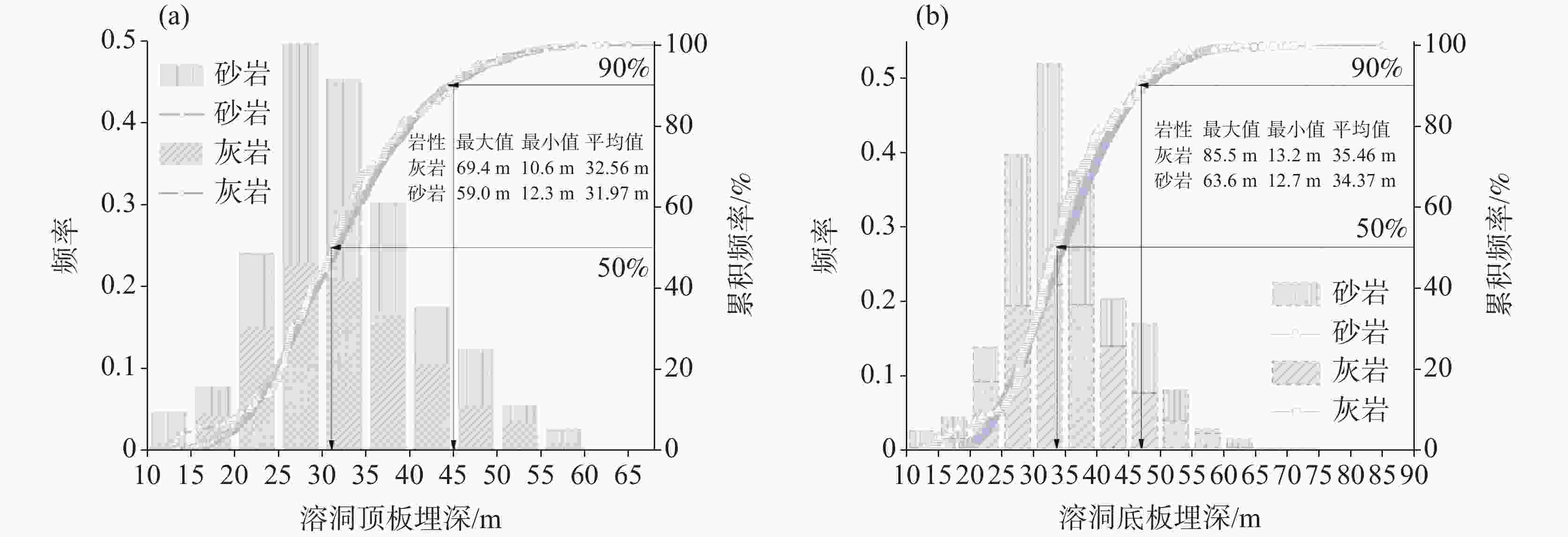
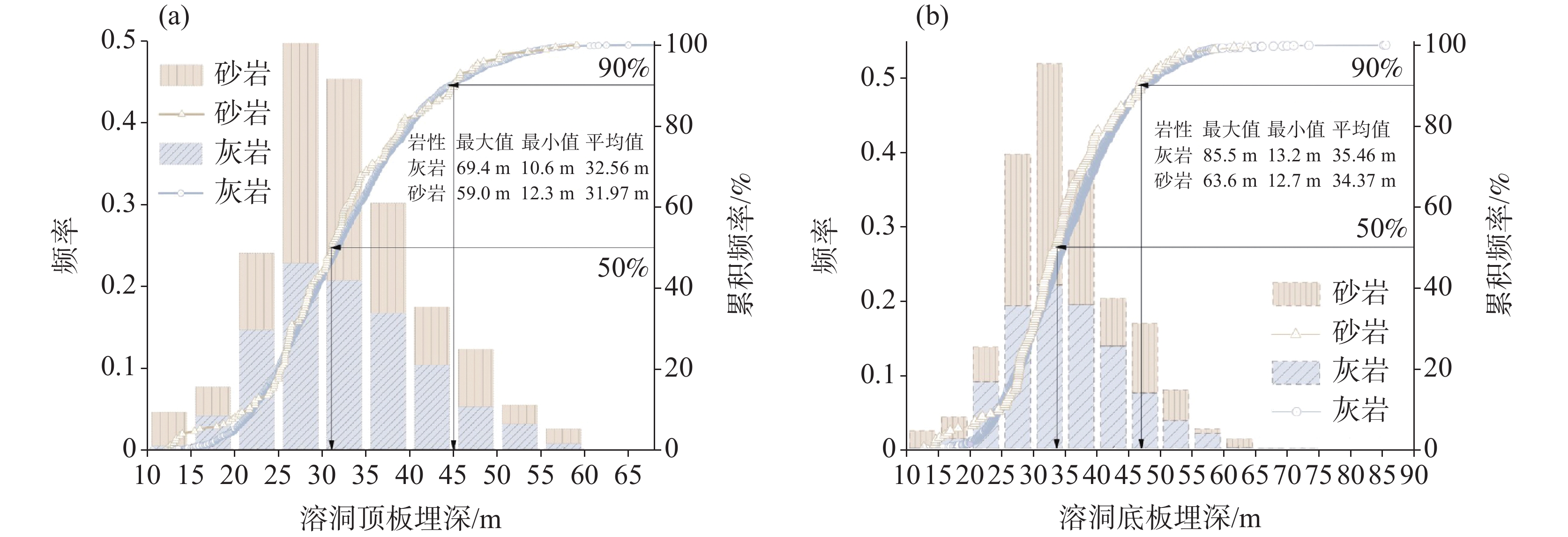
图 8 溶洞顶底板埋深统计图
Figure 8. Statistical diagram of the buried depth of the top and bottom plates of the cave
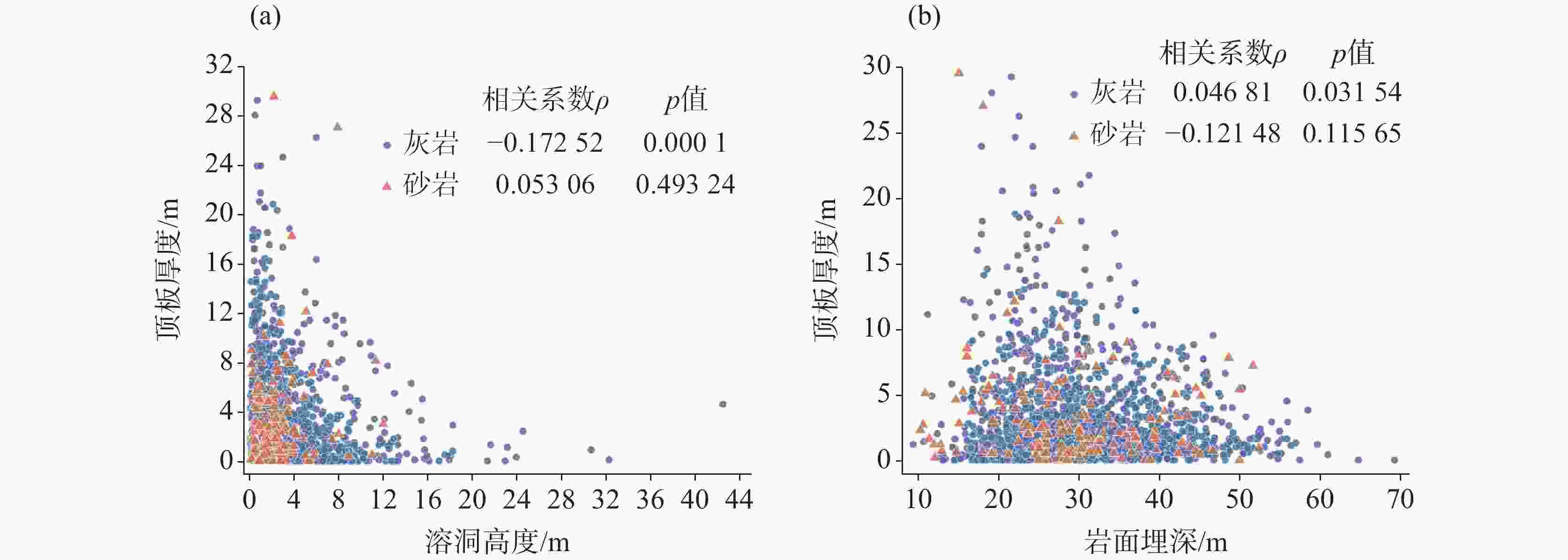
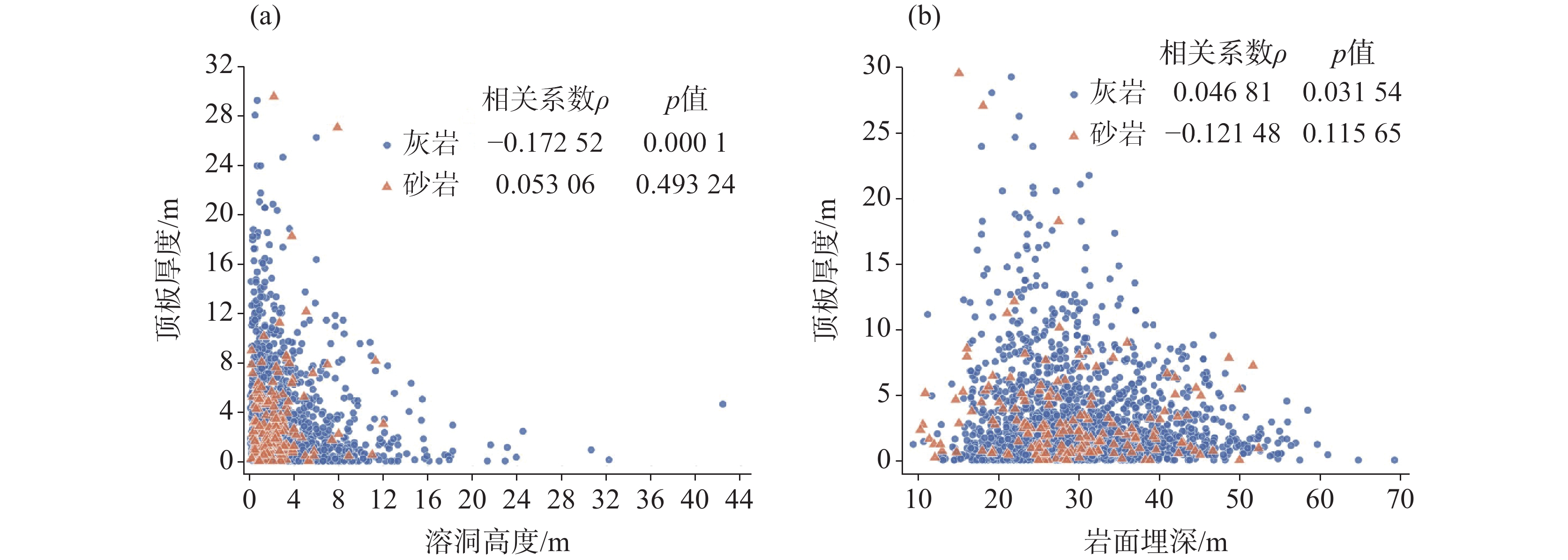
图 14 溶洞高度、岩面埋深与顶板厚度相关性分析
Figure 14. Correlation analysis of roof thickness between cave height and rock surface burial depth
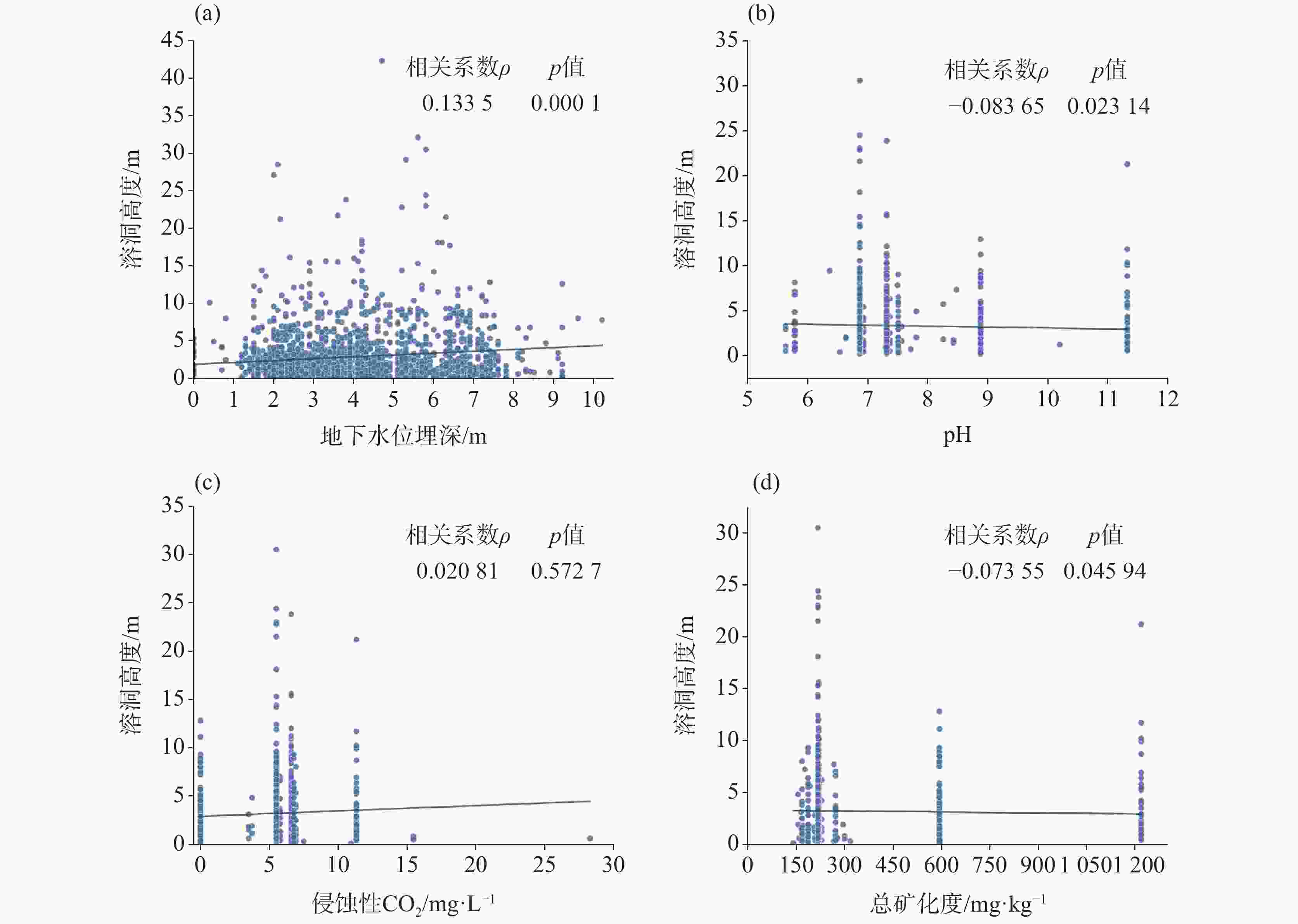
图 15 地下水溶蚀性指标与溶洞高度相关性分析
Figure 15. Correlation analysis between groundwater corrosivity index and cave height
表 1 数据类型、参数与数据量统计汇总
Table 1. Statistical summary of data types, parameters and data volumes
数据类型 指标 数据量(个或组) 地层岩性 岩性 3047 岩面埋深 2279 地下水 水位稳定埋深 2468 主要侵蚀性指标 400 溶洞 顶板埋深 2291 底板埋深 2291 洞高 2291 顶板厚度 2259 充填情况 292 充填物 1704 线溶率 1475 钻孔见洞率 28  下载: 导出CSV
表 2 地层岩性及地下水各类指标
Table 2. Stratigraphic lithology and groundwater type indicators
参数 地下水位稳定
埋深/m水位年变化
幅度/m侵蚀性 CO2/
(mg·L−1)HCO$_3^- $/
(mmol·L−1)SO$_4^{2-} $/
(mg·L−1)Cl−/
(mg·L−1)总矿化度 pH 最小值 0 0.29 0 0 1.44 7.09 23.20 4.65 最大值 25.2 3.61 48.81 312.77 326.73 177.00 1 090.00 10.56 平均值 4.13 1.74 8.66 116.42 58.98 31.99 292.03 7.21 变异系数 56.30% 53.00% 109.96% 65.68% 114.26% 69.58% 64.69% 14.41%
下载: 导出CSV
-
[1] 方舟, 何健, 张皇, 林逸风. 公共地下空间主导的地下空间精细化立体管控: 以广州市为例[J]. 城市发展研究, 2024, 31(5): 72-79. doi: 10.3969/j.issn.1006-3862.2024.05.019Fang Zhou, He Jian, Zhang Huang, Lin Yifeng. A study on the refined and stereoscopic control of underground space dominated by public underground space in the detailed planning stage: A case study of Guangzhou City[J]. Urban Development Studies, 2024, 31(5): 72-79. doi: 10.3969/j.issn.1006-3862.2024.05.019 [2] 崔庆龙, 沈水龙, 吴怀娜, 许烨霜. 广州岩溶地区深基坑开挖对周围环境影响的研究[J]. 岩土力学, 2015, 36(S1): 553-557.Cui Qinglong, Shen Shuilong, Wu Huaina, Xu Yeshuang. Field investigation of deep excavation of metro station on surrounding ground in karst region of Guangzhou [J]. Rock and Soil Mechanics, 2015, 36(S1): 553-557. [3] 蒙彦, 郑小战, 雷明堂, 李卓骏, 贾龙, 潘宗源. 珠三角地区岩溶分布特征及发育规律[J]. 中国岩溶, 2019, 38(5): 746-751.Meng Yan, Zheng Xiaozhan, Lei Mingtang, Li Zhuojun, Jia Long, Pan Zongyuan. Karst distribution and development in the Pearl River Delta [J]. Carsologica Sinica, 2019, 38(5): 746-751. [4] 周晓光. 黔张常铁路大堡梁隧道岩溶发育规律及控制因素分析[J]. 铁道工程学报, 2013(10): 16-21.Zhou Xiaoguang. Analysis of karst development regularities and control factors of Dabaoliang tunnel in Qianjiang-Zhangjiajie-Changde railway[J]. Journal of Railway Engineering Society, 2013(10): 16-21. [5] 赵瑞, 许模, 范辰辰, 王橚橦. 川南古叙地区岩溶发育特征及影响因素探讨 [J]. 水土保持研究, 2015, 22(2): 316-319 , 327.Zhao Rui, Xu Mo, Fan Chenchen, Wang Xiaotong. Discussion on the characteristics of karst development and influence factors in Gulin-Xuyong area of southern Sichuan [J]. Research of Soil and Water Conservation, 2015, 22(2): 316-319, 327. [6] 樊燏, 黄琨, 段慧毓, 林宇航, 罗明明, 万军伟, 温汉辉, 张龙轩. 粤西北连州盆地构造演化对岩溶作用及岩溶塌陷的控制[J]. 地质科技通报, 2024, 43(4): 273-290.Fan Yu, Huang Kun, Duan Huiyu, Lin Yuhang, Luo Mingming, Wan Junwei, Wen Hanhui, Zhang Longxuan. Control of tectonic evolution on karstification and karst collapse in the Lianzhou Basin, northwestern Guangdong Province[J]. Bulletin of Geological Science and Technology, 2024, 43(4): 273-290. [7] 王子洪, 付会彬, 马伟斌, 马超锋. 岩溶地区隧道突水机理及防治措施[J]. 铁道建筑, 2019, 59(6): 81-84.Wang Zihong, Fu Huibin, Ma Weibin, Ma Chaofeng. Water gushing mechanism and prevention measures of tunnel in karst area[J]. Railway Engineering, 2019, 59(6): 81-84. [8] Huang Fu, Zhao Lianheng, Ling Tonghua, Yang Xiaoli. Rock mass collapse mechanism of concealed karst cave beneath deep tunnel[J]. International Journal of Rock Mechanics and Mining Sciences, 2017, 91: 133-138. [9] 曾斌, 陈植华, 邵长杰, 彭丁茂. 基于地下水流系统理论的岩溶隧道涌突水来源及路径分析[J]. 地质科技通报, 2022, 41(1): 99-108.Zeng Bin, Chen Zhihua, Shao Changjie, Peng Dingmao. Analysis of source and path of water inrush in karst tunnel based on the theory of groundwater flow system[J]. Bulletin of Geological Science and Technology, 2022, 41(1): 99-108. [10] Yang Yubing, Chen Caiyuan, Liu Chao, Huang Longtian, Chen Wei, Lin Nengyou, Cui Jie, Xie Wandong. Performance of a deep excavation and the influence on adjacent piles: A case history in karst region covered by clay and sand[J]. Underground Space, 2023, 8: 45-60. doi: 10.1016/j.undsp.2022.03.004 [11] Liu Chenhui, Li Zhanzhong, Zhan Yequan, Zhang Xiaoyu, Meng Xu, Liu Chao. The role of karst distribution on the deformation characteristics of an excavation in sandy soils with support reinforcement [J]. Bulletin of Engineering Geology and the Environment, 2024, 83(5): 158. [12] 石立国, 刘俊, 罗丁, 王一凡, 肖博文, 湛楠. 喀斯特地貌特性地基基础综合处理技术[J]. 施工技术, 2017, 46(21): 75-80.Shi Liguo, Liu Jun, Luo Ding, Wang Yifang, Xiao Bowen, Zhan Nan. Comprehensive treatment technology of foundations in karst area[J]. Construction Technology, 2017, 46(21): 75-80. [13] 李乔楚, 陈军华. 岩溶区燃气管道致灾概率分析: 基于易损性–灾害系统集成视角[J]. 科学技术与工程, 2023, 23(33): 14471-14478.Li Qiaochu, Chen Junhua. Disaster-causing probability analysis of gas pipeline in karst area: Based on the integrated perspective of vulnerability theory and disaster system theory [J]. Science Technology and Engineering, 2023, 23(33): 14471-14478. [14] 胡亚波, 刘广润, 肖尚德, 张峰. 一种复合型岩溶地面塌陷的形成机理: 以武汉市烽火村塌陷为例[J]. 地质科技情报, 2007(1): 96-100.Hu Yabo, Liu Guangrun, Xiao Shangde, Zhang Feng. Mechanism of a compound karst surface collapse: A case study in Fenghuo village of Wuhan City[J]. Bulletin of Geological Science and Technology, 2007(1): 96-100. [15] 许光泉, 李浩, 杨婷婷, 张海涛, 贺彪. 安徽淮南矿区岩溶塌陷分布特征及成因模式[J]. 中国岩溶, 2025, 44(2): 316-327.Xu Guangquan, Li Hao, Yang Tingting, Zhang Haitao, He Biao. Distribution characteristics and genesis model of karst collapse in the Huainan area of Anhui Province[J]. Carsologica Sinica, 2025, 44(2): 316-327. [16] 宋词, 杨锐锋, 谢詹, 余姝萍, 王圣阳, 张云辉, 裴向军, 刘建明, 代劲松, 曾庆华. 川东向阳岩溶隧道水化学特征及成因机制研究[J]. 铁道工程学报, 2024, 41(2): 44-51.Song Ci, Yang Ruifeng, Xie Zhan, Yu Shuping, Wang Shengyang, Zhang Yunhui, Pei Xiangjun, Liu Jianming, Dai Jingsong, Zeng Qinghua. Hydrochemical appraisal and formation mechanism of Xiangyang karst tunnels in eastern Sichuan Province [J]. Journal of Railway Engineering Society, 2024, 41(2): 44-51. [17] 邵威猛, 牛永斌, 程梦园, 韩科龙, 孙凤余, 程怡高, 荆楚涵. 豫西北奥陶系马家沟组碳酸盐岩中裂缝–溶洞的发育特征及成因机制[J]. 现代地质, 2023, 37(5): 1306-1320.Shao Weimeng, Niu Yongbin, Cheng Mengyuan, Han Kelong, Sun Fengyu, Cheng Yigao, Jing Chuhan. Development characteristics of fracture-cave and their formation mechanism in carbonate rocks of ordovician Majiagou formation in northwestern Henan Province [J]. Geoscience, 2023, 37(5): 1306-1320. [18] 王喆. 岩溶地下水系统演化的数值模拟[J]. 地质科技情报, 2013, 32(4): 201-206.Wang Zhe. Numerical simulation of the karst groundwater system evolution[J]. Bulletin of Geological Science and Technology, 2013, 32(4): 201-206. [19] 王忠忠, 胡飞跃, 贾龙, 支兵发. 广州北部隐伏岩溶区地下水水化学特征及成因分析[J]. 中国岩溶, 2025, 44(2): 228-237.Wang Zhongzhong, Hu Feiyue, Jia Long, Zhi Bingfa. Analysis of hydrochemical characteristics and controlling factors of groundwater in the covered karst area of northern Guangzhou[J]. Carsologica Sinica, 2025, 44(2): 228-237. [20] 汤云峰, 刘宏, 向喜琼, 王文俊, 李麟玮. 循环抽水作用下阻水型岩溶塌陷机理试验研究 [J/OL]. 水利水电技术(中英文). https://link.cnki.net/urlid/10.1746.TV.20250425.1402.006Tang Yunfeng, Liu Hong, Xiong Xiqiong, Wang Wenjun, Li Linwei. Experimental study on collapse mechanism of water-blocking karst under the action of circulating pumping [J/OL]. Water Resources and Hydropower Engineering. https://link.cnki.net/urlid/10.1746.TV.20250425.1402.006 [21] 李京天, 朱凯, 肖先煊, 尹艳, 刘皓, 许模, 何志攀. 水位下降诱发覆盖型岩溶塌陷发育机理[J]. 中国岩溶, 2024, 43(2): 406-420.Li Jingtian, Zhu Kai, Xiao Xianxuan, Yin Yan, Liu Hao, Xu Mo, He Zhipan. Development mechanism of covered karst collapses induced by groundwater drawdown [J]. Carsologica Sinica, 2024, 43(2): 406-420. [22] 武亚遵, 万军伟, 林云, 蔡二贝. 基于岩溶演化模型的隧道突水危险性评价[J]. 地质科技情报, 2015, 34(5): 166-171, 179.Wu Yazun, Wan Junwei, Lin Yun, Cai Erbei. Risk evaluation of water inrush in karst tunnel based on karst evolution model [J]. Bulletin of Geological Science and Technology, 2015, 34(5): 166-171, 179. [23] Douchko Romanov, Georg Kaufmann, Djamil Al-Halbouni. Basic processes and factors determining the evolution of collapse sinkholes: A sensitivity study [J]. Engineering Geology, 2020, 270: 105589. [24] 任光雪. 无人机机载LiDAR技术在高速铁路岩溶灾害识别中的应用[J]. 铁道标准设计, 2026, 70(2): 70-75.Ren Guangxue. Application of unmanned aerial vehicle airborne LiDAR technology in karst disaster identification of high-speed railway[J]. Railway Standard Design, 2026, 70(2): 70-75. [25] 范克睿, 李貅, 李宁博, 刘征宇. 充填型岩溶突水突泥灾害源的核磁共振表征与泥水识别方法[J]. 中国公路学报, 2018, 31(10): 59-68.Fan Kerui, Li Xiu, Li Ningbo, Liu Zhengyu. Characterizing and identifying types of water and mud inrush utilizing magnetic resonance sounding for tunneling through karst areas with filling materials[J]. China Journal of Highway and Transport, 2018, 31(10): 59-68. [26] Nam B H, Kim Y J, Youn H. Identification and quantitative analysis of sinkhole contributing factors in Florida's Karst[J]. Engineering Geology, 2020, 271: 105610. [27] 潘宗源, 戴建玲, 文日海, 蒙彦, 蒋小珍, 马骁, 白冰, 吴远斌, 张心. 基于声发射技术的岩溶塌陷监测预警试验研究[J]. 中国岩溶, 2024, 43(5): 1166-1178.Pan Zongyuan, Dai Jianling, Wen Rihai, Meng Yan, Jiang Xiaozhen, Ma Xiao, Bai Bing, Wu Yuanbin, Zhang Xin. Experiment on monitoring and early warning of karst collapses based on acoustic emission technology[J]. Carsologica Sinica, 2024, 43(5): 1166-1178. [28] Méndez J N, Jin Q, Zhang X, González M, Kashif M, Boateng C D, Zambrano M. Rock type prediction and 3D modeling of clastic paleokarst fillings in deeply-buried carbonates using the Democratic Neural Networks Association technique[J]. Marine and Petroleum Geology, 2021, 127: 104987. [29] 彭绍勇, 冯世春, 徐晗. 基于区间数理论的岩溶隧道突水突泥灾害危险评估模型研究 [J]. 隧道建设(中英文), 2023, 43(增刊2): 100-106.Peng Shaoyong, Feng Shichun, Xu Han. Hazard assessment model for water and mud inrush in karst tunnel based on interval number theory [J]. Tunnel Construction, 2023, 43(S2): 100-106. [30] 卢薇, 易顺民. 广州市岩溶塌陷发育特征[J]. 华南地理学报, 2023, 1(3): 81-91.Lu Wei, Yi Shunmin. Research on development characteristics of karst collapse in Guangzhou City[J]. South China Geographical Journal, 2023, 1(3): 81-91. [31] 袁作春, 李磊. 广州白云区岩溶发育规律统计分析[J]. 城市建筑, 2024, 21(24): 137-141.Yuan Zuochun, Li Lei. Statistical analysis on the karst development patterns in Baiyun district, Guangzhou[J]. Urbanism and Architecture, 2024, 21(24): 137-141. [32] 柳柳, 王俊. 广花盆地东北部岩溶地质特征及对城际铁路隧道影响分析[J]. 铁道勘察, 2022, 48(4): 72-78.Liu Liu, Wang Jun. Characteristics of karst in the northeast Guanghua basin and analysis of its influence on intercity railway tunnels[J]. Railway Investigation and Surveying, 2022, 48(4): 72-78. [33] 许欣雨, 陈清华, 孙珂, 刘红英, 韩科龙. 断裂对石马山地区岩溶发育的控制[J]. 中国石油大学学报(自然科学版), 2022, 46(1): 1-12.Xu Xinyu, Chen Qinghua, Sun Ke, Liu Hongying, Han Kelong. Control of fault on karst development in Shimashan area[J]. Journal of China University of Petroleum(Edition of Natural Science), 2022, 46(1): 1-12. [34] 闫淼, 王钊. 广州南部区域地下水水位动态特征及水质动态评价[J]. 绿色科技, 2024, 26(10): 137-142.Yan Miao, Wang Zhao. Dynamic characteristics and water quality evaluation of groundwater level in the southern region of Guangzhou[J]. Journal of Green Science and Technology, 2024, 26(10): 137-142. [35] 化建新, 郑建国. 工程地质手册 [M]. 北京: 中国建筑工业出版社, 2018.Hua Jianxin, Zheng Jianguo. Engineering geology handbook [M]. Beijing: China Architecture & Building Press, 2018. [36] GB 50007—2011 建筑地基基础设计规范[S].GB 50007—2011 Code for design of building foundation [S]. [37] GB/T 51238—2018 岩溶地区建筑地基基础技术标准 [S].GB/T 51238—2018 Technical standard for building foundation in karst area [S]. [38] 刘动, 林沛元, 陈贤颖, 黄胜, 马保松. 深圳岩溶空间发育规律统计分析[J]. 岩土力学, 2022, 43(7): 1899-1912.Liu Dong, Lin Peiyuan, Chen Xianying, Huang Sheng, Ma Baosong. Statistical analysis of karst spatial distribution in Shenzhen[J]. Rock and Soil Mechanics, 2022, 43(7): 1899-1912. [39] DBJ/T 15-136—2018 岩溶地区建筑地基基础技术规范[S].DBJ/T 15-136—2018 Technical code for building foundation in karst area [S]. -

 点击查看大图
计量
- 文章访问数: 73
- HTML浏览量: 32
- PDF下载量: 9
- 被引次数: 0
