


Response of soil organic carbon mineralization to temperature and moisture changes across different karst ecosystems in Nonggang, Guangxi, China
-
摘要: 为探明广西喀斯特主要生态系统土壤有机碳(SOC)矿化对温度和水分变化的响应特征及其影响因素,文章以农田、草地、灌丛、次生林和原始林5种生态系统的土壤为研究对象,进行不同温度(20 ℃、25 ℃、30 ℃)和水分梯度(田间持水量的30%、50%、70%)的室内培养实验,分析SOC矿化变化特征及其影响因素。结果表明:(1)升温显著促进SOC矿化速率、累积矿化量和潜在矿化量的增加,而水分增加对SOC矿化的促进作用较弱,且其效应受温度调控。温度是驱动SOC矿化的主导因子。(2)不同生态系统的SOC矿化特征差异显著,表现为次生林和原始林较高,农田最低。土壤铵态氮、硝态氮、pH和交换性钙是影响矿化过程的关键因子。(3)温度敏感性(Q10值)范围为1.16~2.26,其中农田和草地的温度敏感性显著高于灌丛、次生林和原始林。水分对Q10的影响因生态系统而异,草地Q10随水分增加显著降低。硝态氮和SOC含量是调控Q10的主要因素。Abstract:
Soil Organic Carbon(SOC) mineralization is the process of SOC decomposition driven by microorganisms, followed by the subsequent release of CO2. This process plays a critical role in the global carbon cycle and is highly sensitive to climate warming and shifts in precipitation patterns. The karst region of southwest China is inherently ecologically fragile, and historically, inappropriate land use led to severe rocky desertification. Over recent decades, however, major national ecological restoration projects have driven substantial vegetation recovery, turning the region into an important carbon sink. While considerable researches have focused on the recovery of vegetation and soil carbon stocks, systematic understanding of SOC mineralization dynamics and its response to coupled changes in temperature and moisture across the full successional sequence from farmland to primary forest remain limited. Using a laboratory incubation approach, this study aimed to clarify how SOC mineralization responds to variations in temperature and moisture across different karst ecosystems, how temperature sensitivity (Q10) responses to changes in moisture availability, and what key factors regulate these processes. The study was conducted in the Nonggang National Nature Reserve in Guangxi. The area experiences a typical tropical monsoon climate, with a mean annual temperature of 22 ℃ and annual precipitation ranging from 1,150 to1,550 mm. The soil is calcareous soil derived from limestone. In the study area, five vegetation types are distributed: farmland, grassland, shrubland, secondary forest, and primary forest. Among them, farmland, grassland, and shrubland are located around the periphery of the protected area, the secondary forest is situated in the experimental zone of the protected area, and the primary forest is located in the buffer zone of the protected area. Surface soil (0−15 cm) were collected in July, 2022. A laboratory incubation experiment was conducted to measure SOC mineralization under three temperature levels (20 ℃, 25 ℃, and 30 ℃) and three moisture levels (30%, 50%, and 70% of water-holding capacity). SOC mineralization rates were measured using the alkali absorption method, and Q10 values were calculated based on these rates. Soil physicochemical properties, including SOC, total nitrogen, microbial biomass carbon, ammonium, nitrate, available phosphorus, exchangeable calcium, and pH were also determined.The results showed, (1) Elevated temperature significantly enhanced SOC mineralization rate, cumulative mineralization, and potentially mineralizable carbon. Increased moisture also promoted mineralization, but its effect was weaker and modulated by temperature. Binary quadratic model fitting indicated that temperature was the dominant driver of SOC mineralization. (2) SOC mineralization characteristics varied distinctly among ecosystems. Cumulative mineralization was higher in secondary and primary forests and lowest in farmland. Heatmap analysis and stepwise regression revealed that soil ammonium, nitrate, pH, and exchangeable calcium were the key factors influencing the mineralization process. (3) Q10 values in this study ranged from 1.16 to 2.26. Farmland and grassland exhibited significantly higher temperature sensitivity than shrubland and forests. Although the main effect of moisture on Q10 was not significant, a significant interaction between ecosystem type and moisture was observed. In grassland, Q10 decreased markedly with increasing moisture. Stepwise regression analysis showed that nitrate and SOC content were the primary factors regulating Q10. This study systematically examined the response of SOC mineralization to coupled changes in temperature and moisture across a successional sequence from farmland to primary forest in the Guangxi karst region. The findings indicate that SOC mineralization is strongly responsive to climate warming, and the magnitude was significantly regulated by ecosystem types and soil nitrogen availability. Compared with non-karst ecosystems, the Q10 values observed here were generally lower, and early-successional ecosystems (farmland and grassland) displayed higher temperature sensitivity than late-successional ecosystems (shrubland and forest). This finding has important implications for regional carbon balance projections. As climate warming continues, restored ecosystems in rocky desertification regions may face an increasing risk of soil carbon loss and a potential shift from carbon sink to carbon source. This change is constrained by ecosystem nutrient availability, particularly nitrogen. This study provides experimental evidence and mechanistic insights that are essential for accurately evaluating the carbon source/sink function of karst ecosystems under ongoing global change. -
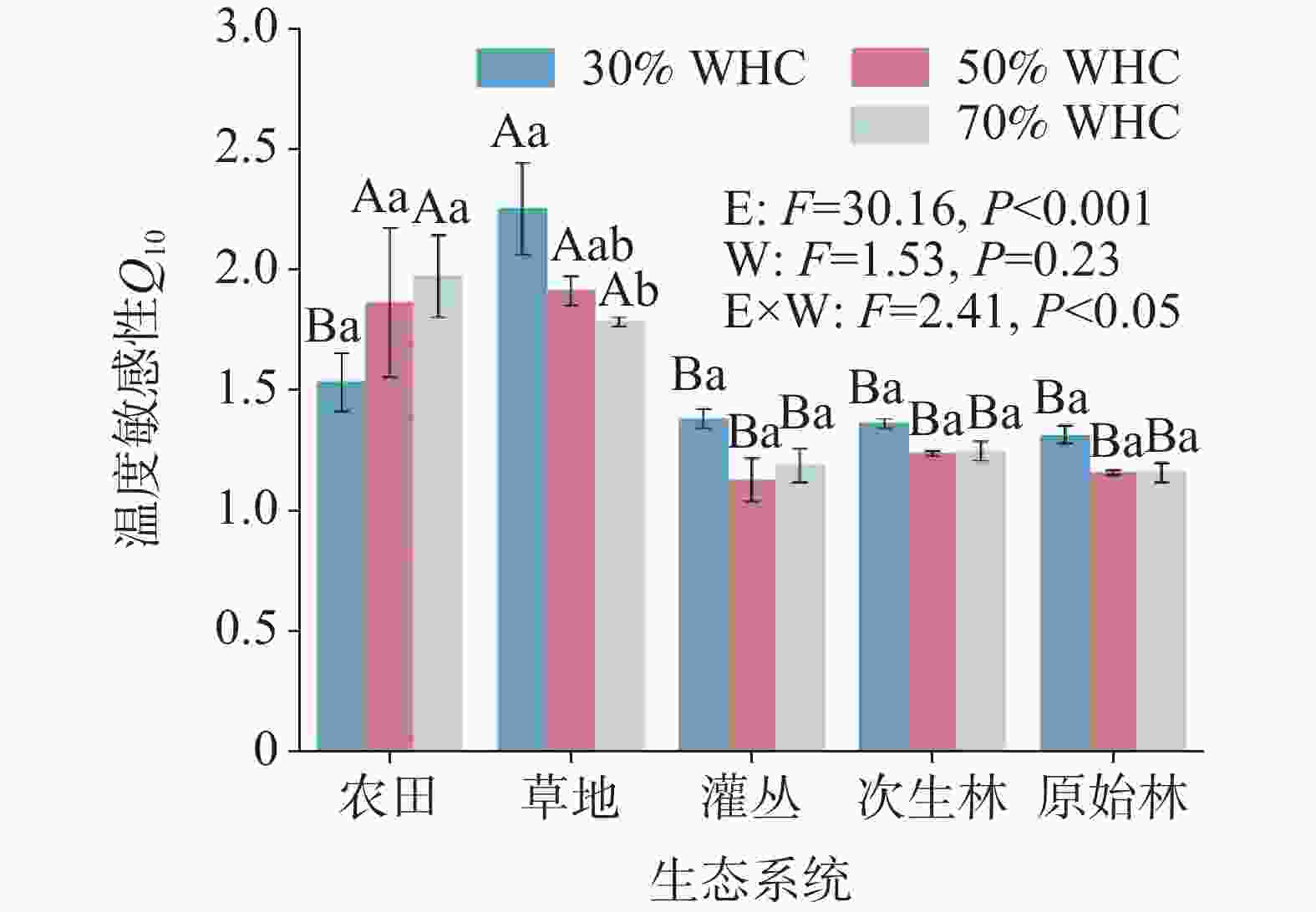
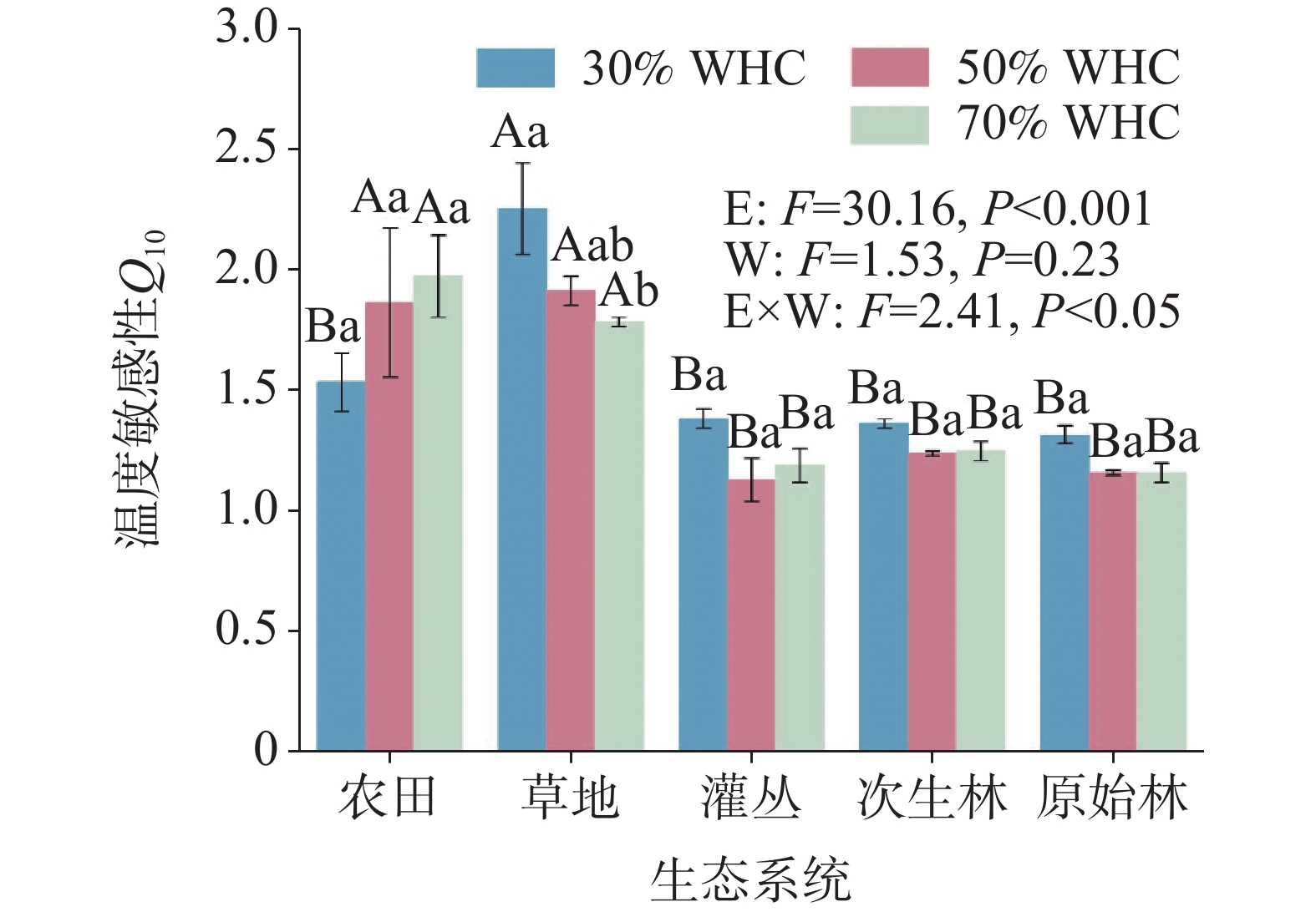
图 3 土壤有机碳矿化温度敏感性Q10
注:不同大写字母表示不同生态系统间差异显著,不同小写字母表示不同水分间差异显著;E为生态系统;W为水分。
Figure 3. Temperature sensitivity of SOC mineralization
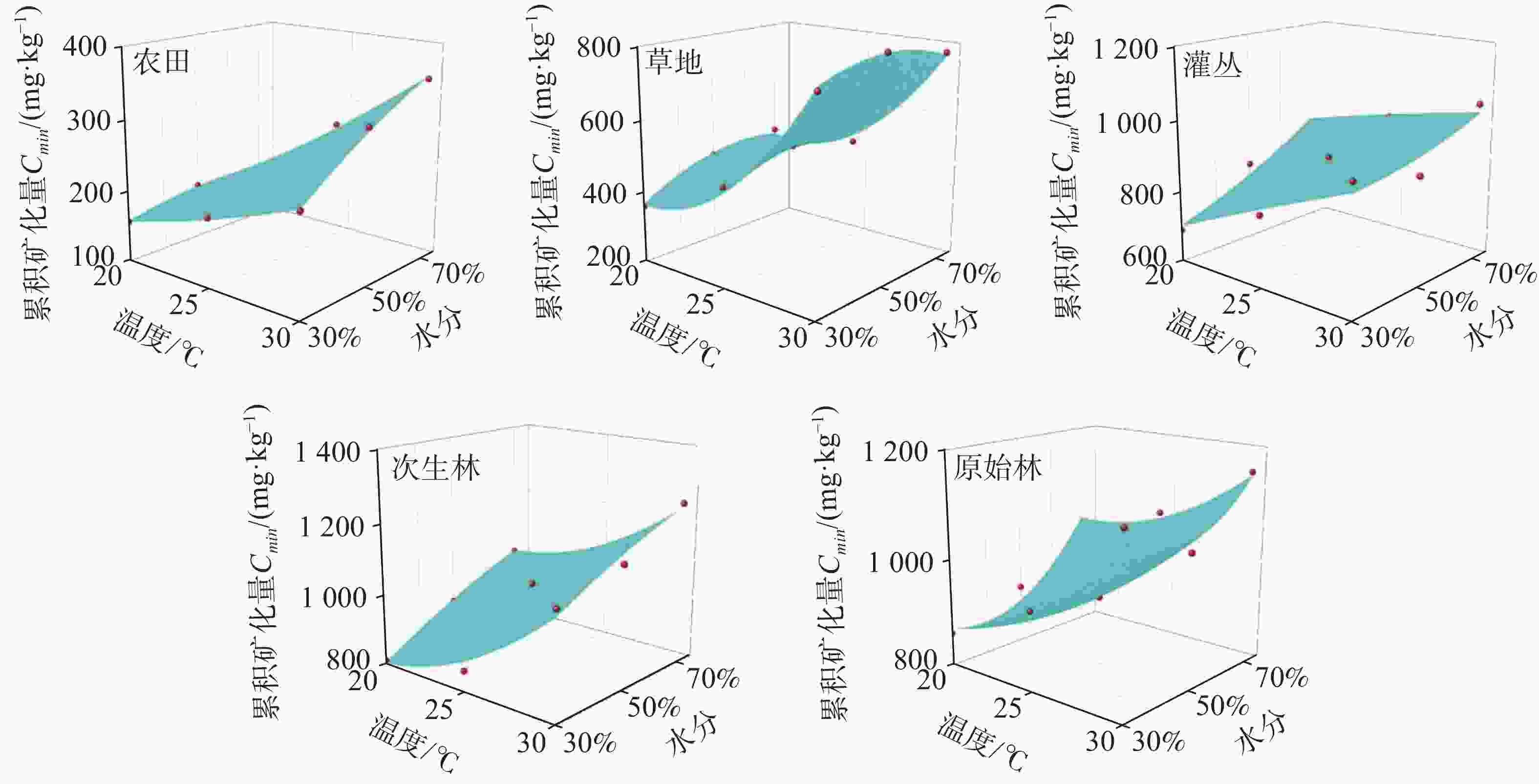
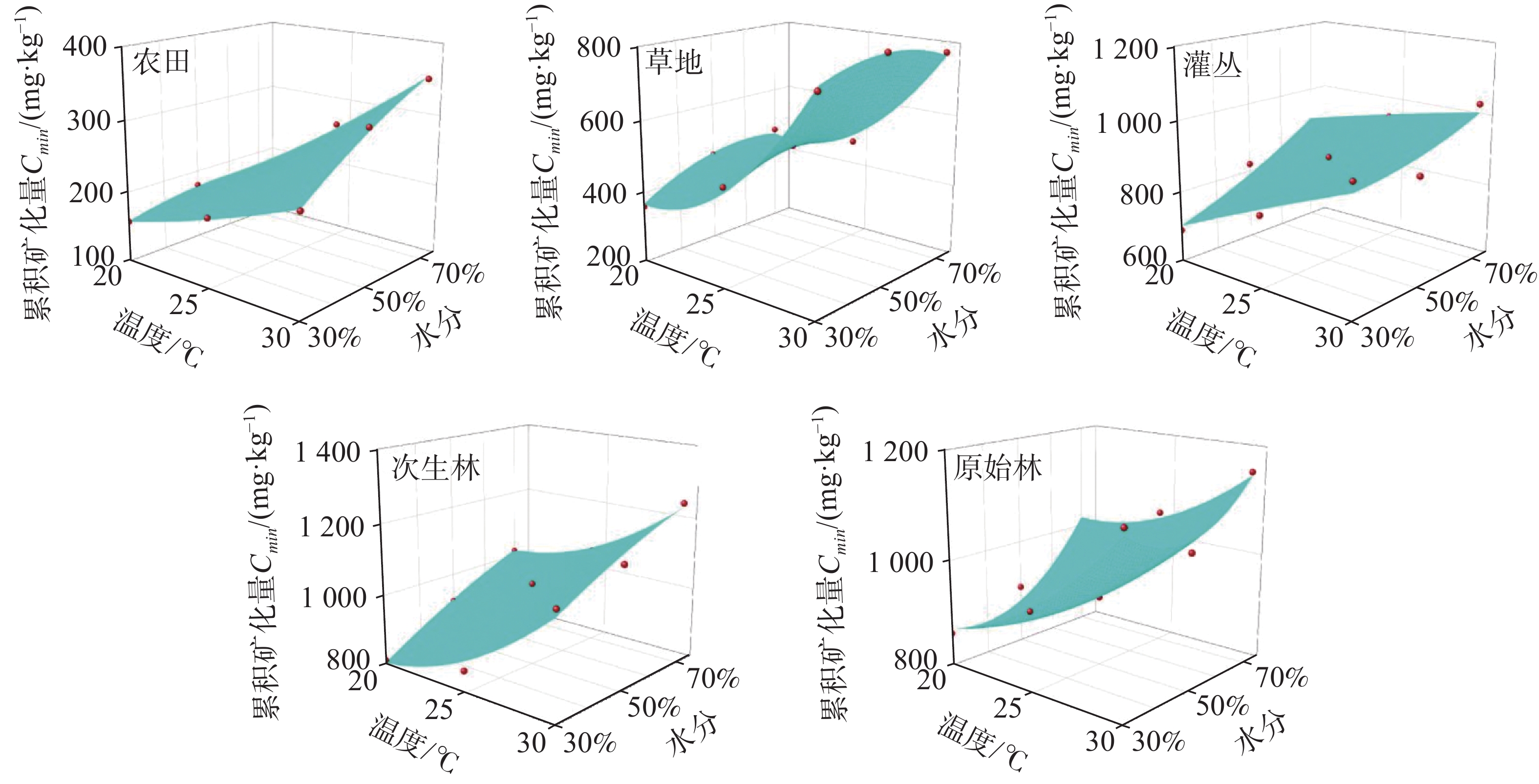
图 4 温度和水分与土壤有机碳累积矿化量的关系
Figure 4. Relationships between temperature, moisture and cumulative SOC mineralization
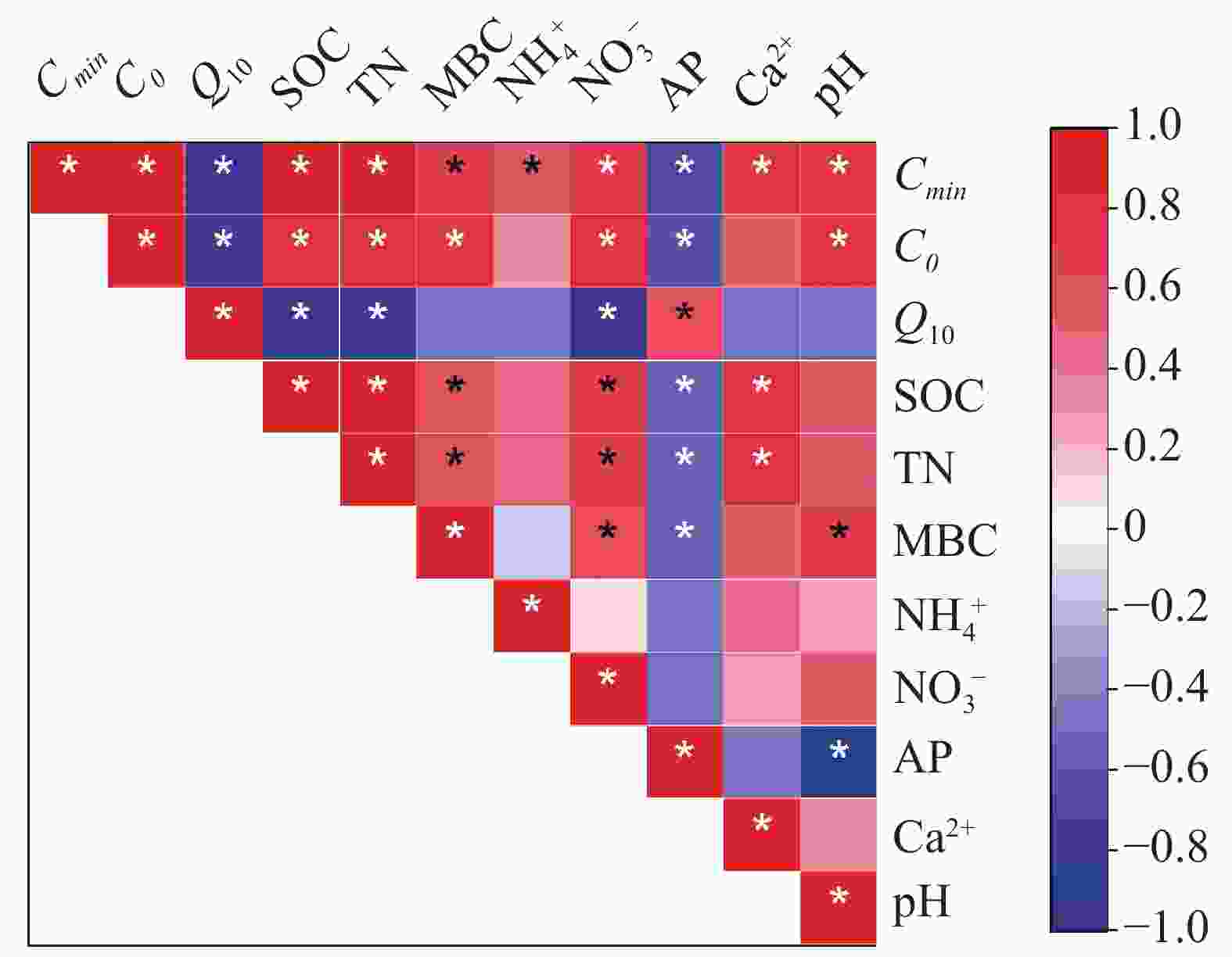
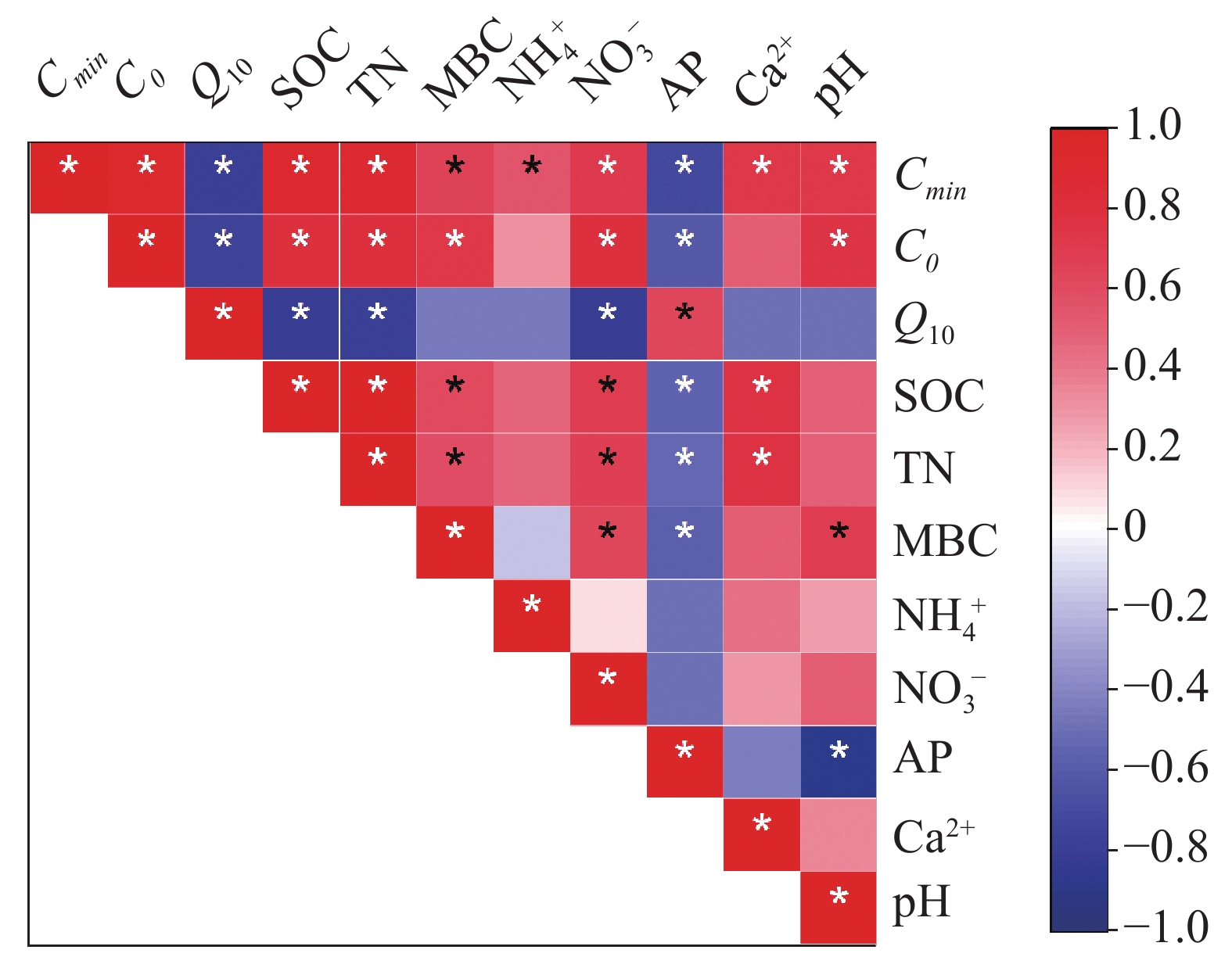
图 5 相关性分析
注:**表示在P<0.01水平上影响显著,*表示在P<0.05水平上影响显著。
Figure 5. Pearson correlation analysis
表 1 土壤基本性质
Table 1. Soil basic properties
土壤性质 农田 草地 灌丛 次生林 原始林 有机碳 SOC/(g·kg−1) 14.09±0.67c 14.16±0.83c 41.82±2.51b 48.40±2.97a 38.47±0.44b 总氮 TN/(g·kg−1) 1.75±0.03c 2.29±0.58c 4.74±0.30ab 5.52±0.27a 4.29±0.31b 微生物量碳 MBC/(mg·kg−1) 77.27±5.66c 439.71±76.62b 703.55±61.37a 663.97±43.36a 207.08±26.58c 铵态氮 NH$_4^{+}$/(mg·kg−1) 9.84±0.74d 13.77±0.67c 11.08±1.03cd 23.16±1.35b 36.33±1.86a 硝态氮 ${\rm{NO}}_3^{-}$/(mg·kg−1) 15.99±3.16b 17.04±5.37b 40.26±5.66a 27.19±1.97b 28.70±2.65ab 有效磷AP/(mg·kg−1) 17.08±2.48a 7.48±1.25b 8.01±0.61b 6.92±0.37b 6.31±0.51b 速效钾AK/(mg·kg−1) 127.88±2.83ab 103.43±12.47b 111.33±20.45ab 139.83±3.52a 118.10±1.75ab 交换性钙Ca2+/(g·kg−1) 0.70±0.45c 5.67±1.89c 17.61±6.48bc 85.89±8.02a 28.54±2.21b pH 4.94±0.38b 7.24±0.16a 7.29±0.16a 7.02±0.13a 6.89±0.06a 田间持水量WHC/% 42.32 48.10 52.92 48.20 51.47 注:不同小写字母表示不同生态系统差异显著(P<0.05)。  下载: 导出CSV
表 2 生态系统、温度和水分对土壤有机碳矿化的影响
Table 2. Effects of ecosystem, temperature and moisture on soil organic carbon mineralization
因素 平均矿化速率AR 累积矿化量Cmin 潜在矿化量C0 累积矿化率Cmin/SOC F P F P F P F P 生态系统 466.074 <0.01 455.657 <0.01 177.532 <0.01 234.400 <0.01 温度 87.700 <0.01 84.729 <0.01 23.701 <0.01 117.674 <0.01 水分 21.060 <0.01 20.097 <0.01 8.583 <0.01 15.037 <0.01 生态系统×温度 3.570 <0.05 3.587 <0.05 0.580 0.792 22.154 <0.01 生态系统×水分 1.948 0.062 1.848 0.078 1.170 0.326 1.042 0.411 温度×水分 0.839 0.504 0.834 0.507 0.288 0.885 0.291 0.883 生态系统×温度×水分 0.474 0.954 0.458 0.960 0.390 0.982 0.665 0.820
下载: 导出CSV
表 3 不同处理土壤有机碳矿化特征
Table 3. Characteristics of soil organic carbon mineralization under different treatments
生态系统 温度 水分 平均矿化速率AR 潜在矿化量C0 累积矿化率Cmin/SOC 农田 20 ℃ 30%WHC 3.04±0.31Ca 204.16±30.34Ba 1.12±0.13Ba 50%WHC 3.43±0.60Ba 229.34±46.16Ba 1.27±0.16Ba 70%WHC 3.40±0.24Ca 269.05±59.06Ba 1.26±0.09Ca 25 ℃ 30%WHC 3.80±0.20Bb 219.03±15.16Bb 1.41±0.10ABa 50%WHC 4.44±0.62Bab 256.90±13.34Bab 1.66±0.33Ba 70%WHC 5.18±0.48Ba 288.69±21.08ABa 1.91±0.18Ba 30 ℃ 30%WHC 4.64±0.09Ab 374.92±46.99Aa 1.72±0.17Ab 50%WHC 6.07±0.36Aa 561.71±72.55Aa 2.25±0.21Aa 70%WHC 6.85±0.63Aa 488.87±81.21Aa 2.53±0.19Aa 均值 4.54±0.26 321.41±27.13 1.68±0.10 草地 20 ℃ 30%WHC 6.93±0.26Cb 488.52±67.54Ba 2.56±0.19Bb 50%WHC 8.66±0.49Ca 577.74±42.73Ba 3.20±0.22Bab 70%WHC 9.11±0.10Ba 580.28±10.47Ba 3.37±0.17Ba 25 ℃ 30%WHC 9.19±0.93Ba 567.11±29.53Ba 3.39±0.34Ba 50%WHC 10.21±0.29Ba 720.18±72.86Ba 3.78±0.27Ba 70%WHC 9.39±0.13Ba 595.73±15.32Ba 3.47±0.17Ba 30 ℃ 30%WHC 14.72±0.08Ac 828.80±11.02Ab 5.45±0.33Aa 50%WHC 15.74±0.10Aa 905.07±4.88Aa 5.82±0.32Aa 70%WHC 15.07±0.05Ab 820.41±9.19Ab 5.57±0.31Aa 均值 11.00±0.61 675.98±29.03 4.07±0.24 灌丛 20 ℃ 30%WHC 13.27±0.56Aa 1074.08 ±116.68Aa1.67±0.16Aa 50%WHC 15.78±1.57Aa 1275.01 ±256.52Aa1.97±0.23Aa 70%WHC 17.11±1.85Aa 1413.67 ±169.07Aa2.13±0.23Aa 25 ℃ 30%WHC 15.25±1.90Aa 1110.93 ±167.05Aa1.93±0.26Aa 50%WHC 17.26±2.83Aa 1429.48 ±270.57Aa2.15±0.33Aa 70%WHC 18.50±2.92Aa 1401.46 ±286.60Aa2.30±0.34Aa 30 ℃ 30%WHC 18.35±0.60Aa 1335.78 ±83.65Aa2.30±0.15Aa 50%WHC 17.38±0.90Aa 1313.22 ±97.34Aa2.18±0.22Aa 70%WHC 20.05±1.45Aa 1528.26 ±133.71Aa2.50±0.16Aa 均值 17.01±0.62 1320.21 ±59.502.13±0.08 次生林 20 ℃ 30%WHC 15.63±0.32Bc 956.67±31.90Cc 1.69±0.073Bb 50%WHC 17.66±0.23Cb 1081.94 ±33.18Bb1.91±0.09Bab 70%WHC 19.53±0.32Ba 1149.84 ±33.95Ba2.11±0.10Ba 25 ℃ 30%WHC 16.57±0.35Bb 1055.07 ±22.73Ba1.79±0.08Bb 50%WHC 19.85±0.70Ba 1191.75 ±56.02Ba2.14±0.06ABa 70%WHC 20.59±0.65Ba 1199.62 ±48.94Ba2.22±0.07ABa 30 ℃ 30%WHC 21.07±0.41Ab 1185.32 ±19.25Ac2.28±0.10Aa 50%WHC 21.99±0.32Ab 1336.17 ±19.88Ab2.38±0.11Aa 70%WHC 24.11±0.28Aa 1433.41 ±19.97Aa2.61±0.18Aa 均值 19.67±0.51 1176.64 ±28.202.12±0.06 原始林 20 ℃ 30%WHC 16.57±0.58Bb 956.89±38.31Bb 2.24±0.07Bb 50%WHC 17.47±0.40Bab 1012.09 ±32.05Aab2.36±0.04Bb 70%WHC 19.20±0.70Ba 1114.24 ±25.33Aa2.59±0.07Ba 25 ℃ 30%WHC 18.25±0.58Bab 1105.23 ±64.51ABa2.47±0.08Bb 50%WHC 17.89±0.76Bb 1093.81 ±72.48Aa2.42±0.08Bb 70%WHC 20.31±0.66ABa 1278.82 ±42.98Aa2.75±0.06Ba 30 ℃ 30%WHC 21.67±0.54Aa 1286.89 ±54.11Aa2.93±0.04Aab 50%WHC 20.19±0.56Aa 1181.00 ±53.52Aa2.73±0.05Ab 70%WHC 22.31±0.82Aa 1270.97 ±70.01Aa3.02±0.08Aa 均值 19.32±0.40 1144.44 ±26.442.61±0.05 注:不同大写字母表示不同温度间差异显著,不同小写字母表示不同水分间差异显著。
下载: 导出CSV
表 4 土壤有机碳累积矿化量与温度、水分的拟合方程
Table 4. Fitting equations for cumulative SOC mineralization as a function of temperature and moisture
生态系统 方程 R2 农田 Z=189.96−8.57T−2.16W+0.24TW−0.02T2+0.20W2 0.996 草地 Z= 1751.70 −171.50T+17.52W−0.24TW+4.39T2−0.10W20.995 灌丛 Z=−65.50+38.03T+6.59W−0.28TW+0.04T2−0.15W2 0.926 次生林 Z= 1212.51 −73.09T+10.72W−0.11TW−0.03T2+2.07W20.978 原始林 Z= 1394.82 −46.35T−6.94W−0.26TW+0.16T2+1.56W20.975 注:Z为土壤有机碳累积矿化量;T为温度;W为水分。
下载: 导出CSV
表 5 土壤理化性质与土壤有机碳矿化特征的逐步回归分析
Table 5. Stepwise regression analysis of soil physicochemical properties and SOC mineralization characteristics
矿化特征 逐步回归方程 R2 重要性排序 Cmin Cmin=− 1464.350 +0.280MBC+15.907NH$_4^{+}$+11.742${\rm{NO}}_3^{-}$+29.741AP+2.945Ca2++166.976pH0.971 ${\rm{NO}}_3^{-}$>NH$_4^{+}$>pH>AP>Ca2+>MBC C0 C0=− 2887.27 +14.56SOC+12.53${\rm{NO}}_3^{-}$+49.60AP+388.05pH0.915 pH>SOC>AP>${\rm{NO}}_3^{-}$ Q10 Q10= 2.0786 −0.0113SOC−0.0168 ${\rm{NO}}_3^{-}$+0.0188AP0.758 ${\rm{NO}}_3^{-}$>SOC>AP
下载: 导出CSV
-
[1] Jörn P W Scharlemann, Edmund V J Tanner, Roland Hiederer, Valerie Kapos. Global soil carbon: Understanding and managing the largest terrestrial carbon pool[J]. Carbon Management, 2014, 5(1): 81-91. doi: 10.4155/cmt.13.77 [2] Bond-Lamberty B, Thomson A. Temperature-associated increases in the global soil respiration record[J]. Nature, 2010, 464: 579-582. [3] He T X, Li J, Du X R, Pei G T, Wang A H, Hu B Q, Zhang W, Zhang W D, Sun J F. Changes in SOC, pH, and Ca associated with microorganism mediated SOC mineralization and temperature sensitivity following vegetation restoration in karst regions[J]. Plant and Soil, 2025, 513(8): 1417-1431. doi: 10.1007/s11104-025-07254-4 [4] He X X, Sheng M Y, Wang L J, Zhang S L, Luo N N. Effects on soil organic carbon accumulation and mineralization of long-term vegetation restoration in Southwest China karst[J]. Ecological Indicator, 2022, 145 (12): 109622. [5] 黎俊, 杜馨如, 莫小亮, 张婷, 黄婧, 贺同鑫, 裴广廷, 宋立全, 孙立飞, 孙建飞, 胡宝清, 张伟东. 喀斯特不同土地利用方式土壤有机碳矿化特征及其影响因素[J]. 生态学报, 2025, 45(2): 730-742. doi: 10.20103/j.stxb.202403250614Li Jun, Du Xinru, Mo Xiaoliang, Zhang Ting, Huang Jing, He Tongxin, Pei Guangting, Song Liquan, Sun Lifei, Sun Jianfei, Hu Baoqing, Zhang Weidong. Characteritics of soil organic carbonmineralization and its influencing factors under different land use types in karat areas[J]. Acta Ecologica Sinica, 2025, 45(2): 730-742. doi: 10.20103/j.stxb.202403250614 [6] Jiang Z C, Lian Y Q, Qin X Q. Rocky desertification in Southwest China: Impacts, causes, and restoration[J]. Earth-Science Reviews, 2014, 132(5): 1-12. doi: 10.1016/j.earscirev.2014.01.005 [7] 刘鑫, 李思亮, 岳甫均, 钟君, 覃蔡清, 丁虎. 喀斯特系统生物地球化学循环及对全球变化的响应[J]. 中国岩溶, 2022, 41 (3): 465-476.Liu Xin, Li Siliang, Yue Fujun, Zhong Jun, Qin Caiqing, Ding Hu. Biogeochemical cycles of karst systems and their response to global change[J]. Carsologica Sinica, 2022, 41 (3): 465-476. [8] 岳跃民, 王克林, 罗为群, 韦霄, 李德军, 张伟, 吴协保. 人地耦合视角下喀斯特石漠化地区生态系统服务提升[J]. 生态学报, 2024, 44(18): 8159-8164. doi: 10.20103/j.stxb.202311092432Yue Yuemin, Wang Kelin, Luo Weiqun, Wei Xiao, Li Dejun, Zhang Wei, Wu Xiebao. Improving ecosystem services in rocky desertification areas of South China karst from the perspective of coupling human and natural systems[J]. Acta Ecologica Sinica, 2024, 44(18): 8159-8164. doi: 10.20103/j.stxb.202311092432 [9] 崔静, 温庆忠, 黄佳健. 喀斯特地区石漠化综合治理研究[J]. 中国水土保持, 2024(4): 49-52. doi: 10.3969/j.issn.1000-0941.2024.04.014Cui Jing, Wen Qingzhong, Huang Jiajian. Comprehensive management of stony desertification in karst areas[J]. Soil and Water Conservation in China, 2024(4): 49-52. doi: 10.3969/j.issn.1000-0941.2024.04.014 [10] Tong X W, Brandt M, Yue Y M, Ciais P, Rudbeck J M, Penuelas J, Wigneron J P, Xiao X M, Song X P, Horion S, Rasmussen K, Saatchi S, Fan L, Wang K L, Zhang B, Chen Z C, Wang Y H, Li X J, Fensholt R. Forest management in southern China generates short term extensive carbon sequestration[J]. Nature communications, 2020, 11(1): 129. doi: 10.1038/s41467-019-13798-8 [11] 熊康宁, 周文龙, 龙健, 罗井升. 喀斯特石漠化综合治理区表层土壤有机碳时空动态特征与趋势探讨[J]. 中国岩溶, 2011, 30(4): 383-390.Xiong Kangning, Zhou Wenlong, Long Jian, Luo Jingsheng. Spatial-temporal dynamic features and tendency of the topsoil organic carbon in integrated rehabilitating karst rocky desert[J]. Carsologica Sinica, 2011, 30(4): 383-390. [12] 曾发明, 吴泽燕, 章程, 杨奇勇. 峰丛洼地区石漠化治理的碳汇研究进展[J]. 中国岩溶, 2018, 37(1): 67-73. doi: 10.11932/karst20180103Zeng Faming, Wu Zeyan, Zhang Cheng, Yang Qiyong. Carbon sink in rocky desertification restoration, Southwest China: A case of the peak-cluster depression areas[J]. Carsologica Sinica, 2018, 37(1): 67-73. doi: 10.11932/karst20180103 [13] 沈永平, 王国亚. IPCC第一工作组第五次评估报告对全球气候变化认知的最新科学要点[J]. 冰川冻土, 2013, 35(5): 1068-1076.Shen Yongping, Wang Guoya. Key findings and assessment results of IPCC WGI Fifth Assessment Report[J]. Journal of Glaciology and Geocryology, 2013, 35(5): 1068-1076. [14] Li Y F, Xie T, Yang H T, Li X J. Revegetation enhances soil organic carbon mineralization and its temperature sensitivity in the Tengger Desert, North China[J]. Catena, 2022, 218: 106541. doi: 10.1016/j.catena.2022.106541 [15] 张宏, 黄懿梅, 祁金花, 安韶山. 温度和水分对黄土丘陵区3种典型土地利用方式下土壤释放CO2潜力的影响[J]. 中国生态农业学报, 2011, 19(4): 731-737. doi: 10.3724/SP.J.1011.2011.00731Zhang Hong, Huang Yimei, Qi Jinhua, An Shaoshan. Effects of temperature and moisture on soil CO2 release potential under three typical land use types in the hill-gully area of the Loess Plateau[J]. Chinese Journal of Eco-Agriculture, 2011, 19(4): 731-737. doi: 10.3724/SP.J.1011.2011.00731 [16] 董星丰, 陈强, 臧淑英, 赵光影, 刘超, 吴祥文. 温度和水分对大兴安岭多年冻土区森林土壤有机碳矿化的影响[J]. 环境科学学报, 2019, 39(12): 4269-4275.Dong Xingfeng, Chen Qiang, Zang Shuying, Zhao Guangying, Liu Chao, Wu Xiangwen. Effect of temperature and moisture on soil organic carbon mineralization of predominantly permafrost forest in the Great Hing'an Mountains[J]. Acta Scientiae Circumstantiae, 2019, 39(12): 4269-4275. [17] 杨继松, 刘景双, 孙丽娜. 温度、水分对湿地土壤有机碳矿化的影响[J]. 生态学杂志, 2008, 27 (1): 38-42.Yang Jisong, Liu Jingshuang, Sun Lina. Effects of temperature and soil moisture on wetland soil organic carbon mineralization [J]. Chinese Journal of Ecology, 2008, 27 (1): 38-42. [18] Wang Q K, Zhao X C, Chen L C, Yang Q P, Chen S, Zhang W D. Global synthesis of temperature sensitivity of soil organic carbon decomposition: Latitudinal patterns and mechanisms[J]. Functional Ecology, 2019, 33(3): 514-523. [19] 杜馨如, 杨荣, 王兰丰, 张婷, 裴广廷, 贺同鑫, 张伟, 张伟东, 孙建飞. 氮添加和固氮植物引种对喀斯特草地生态系统土壤有机碳矿化的影响[J]. 生态学报, 2026, 46(4): 1700-1711.Du Xinru, Yang Rong, Wang Lanfeng, Zhang Ting, Pei Guangting, He Tongxin, Zhang Wei, Zhang Weidong, Sun Jianfei. Effects of nitrogen addition and introduction nitrogen-fixing plants on soil organic carbon mineralization in karst grassland ecosystems[J]. Acta Ecologica Sinica, 2026, 46(4): 1700-1711. [20] He T X, Sun J F, Hu B Q, Zhu T B, Zhang W. The importance of fine root protection in topsoil carbon and nitrogen sequestration following land-use changes on sloping karst ecosystems[J]. Catena, 2023, 220: 106660. [21] Hu C, Zhang Z H, Zhong C F, Hu G, Xu C H. Impact of different land use types on bacterial and fungal communities in a typical karst depression in southwestern China[J]. Forests, 2024, 15(8): 1299. doi: 10.3390/f15081299 [22] 裴广廷, 李夏, 贺同鑫, 黎俊, 庞榆, 胡宝清, 张伟东, 孙建飞. 广西喀斯特石漠化区不同植被恢复模式下土壤微生物多样性与群落结构特征及驱动因素分析[J]. 地理科学, 2024, 44(9): 1630-1642. doi: 10.13249/j.cnki.sgs.20230490Pei Guangting, Li Xia, He Tongxin, Li Jun, Pang Yu, Hu Baoqing, Zhang Weidong, Sun Jianfei. Characteristics of soil microbial diversity and community structure under different revegetation types in karst rocky desertification areas and analysis of driving factors[J]. Scientia Geographica Sinica, 2024, 44(9): 1630-1642. doi: 10.13249/j.cnki.sgs.20230490 [23] Cox P M, Betts R A, Jones C D, Spall S A, Totterdell I J. Acceleration of global warming due to carbon-cycle feedbacks in a coupled climate model[J]. Nature, 2000, 408(6809): 184-187. doi: 10.1038/35041539 [24] Fortunat J, Prentice I. , Stephen S, Robert M, Georg H, Gian-Kasper P, Stefan G, Klaus H. Global warming feedbacks on terrestrial carbon uptake under the Intergovernmental Panel on Climate Change (IPCC) Emission Scenarios[J]. Global Biogeochemical Cycles, 2001, 15(4): 891-907. doi: 10.1029/2000GB001375 [25] 杨金艳, 王传宽. 土壤水热条件对东北森林土壤表面CO2通量的影响[J]. 植物生态学报, 2006, 30(2): 286-294.Yang Jinyan, Wang Chuankuan. Effects of soil temperature and moisture on soil surface CO2 flux of forests in northeastern China[J]. Chinese Journal of Plant Ecology, 2006, 30(2): 286-294. [26] Suseela V, Conant T R, Wallenstein D M, Dukes J S. Effects of soil moisture on the temperature sensitivity of heterotrophic respiration vary seasonally in an old-field climate change experiment[J]. Global Change Biology, 2012, 18(1): 336-348. doi: 10.1111/j.1365-2486.2011.02516.x [27] 孙永磊, 周金星, 庞丹波, 刘玉国, 肖桂英, 张清. 喀斯特断陷盆地不同植被恢复模式土壤水分动态变化[J]. 林业科学研究, 2018, 31(4): 104-112.Sun Yonglei, Zhou Jinxing, Pang Danbo, Liu Yuguo, Xiao Guiying, Zhang Qing. Soil moisture dynamic change of different vegetation restoration patterns in karst faulted basins[J]. Forest Research, 2018, 31(04): 104-112. [28] Cheng H, Zhou X, Dong R, Wang X, Liu G, Li Q. Priming of soil organic carbon mineralization and its temperature sensitivity in response to vegetation restoration in a karst area of Southwest China[J]. Science of the Total Environment, 2022, 851: 158400. doi: 10.1016/j.scitotenv.2022.158400 [29] 周玮, 姜霞, 姚世菊, 张艳. 岩溶库区不同植被类型土壤碳、氮及其组分特征: 以贵阳市花溪水库为例[J]. 中国岩溶, 2024, 43(3): 640-649.Zhou Wei, Jiang Xia, Yao Shiju, Zhang Yan. Characteristics of soil carbon, nitrogen and their components under different vegetation types in the karst reservoir area: A case study of Huaxi reservoir in Guiyang[J]. Carsologica Sinica, 2024, 43(3): 640-649. [30] Tian P, Zhao X, Liu S, Sun Z, Jing Y, Wang Q. Soil microbial respiration in forest ecosystems along a north-south transect of eastern China: Evidence from laboratory experiments[J]. Catena, 2022, 211: 105980. doi: 10.1016/j.catena.2021.105980 [31] 陈浈雄, 张超, 李全, 宋新章, 施曼. 土壤有机碳分解温度敏感性的影响机制研究进展[J]. 应用生态学报, 2023, 34(9): 2575-2584.Chen Zhenxiong, Zhang Chao, Li Quan, Song Xinzhang, Shi Man. Mechanism underlying temperature sensitivity of soil organic carbon decomposition: A review[J]. Chinese Journal of Applied Ecology, 2023, 34(9): 2575-2584. [32] Chen Z J, Geng S C, Zhou X Y, Gui H R, Zhang L L, Huang Z Q, Wang M H, Zhang J H, Han S J. Nitrogen addition decreases soil aggregation but enhances soil organic carbon stability in a temperate forest[J]. Geoderma, 2022, 426: 116112. doi: 10.1016/j.geoderma.2022.116112 [33] 史学军, 潘剑君, 陈锦盈, 杨志强, 张黎明, 孙波, 李忠佩. 不同类型凋落物对土壤有机碳矿化的影响[J]. 环境科学, 2009, 30(6): 1832-1837. doi: 10.3321/j.issn:0250-3301.2009.06.046Shi Xuejun, Pan Jianjun, Chen Jinying, Yang Zhiqiang, Zhang Liming, Sun Bo, Li Zhongpei. Effects of different types of litters on soil organic carbon mineralization[J]. Environmental Science, 2009, 30(6): 1832-1837. doi: 10.3321/j.issn:0250-3301.2009.06.046 [34] 岳祥飞, 李衍青, 刘鹏. 广西岩溶区灌木林地凋落物—土壤碳、氮、磷化学计量特征[J]. 中国岩溶, 2023, 42(5): 1106-1116. doi: 10.11932/karst2023y032Yue Xiangfei, Li Yanqing, Liu Peng. Stoichiometric characteristics of C, N and P in soil and litter of shrublands in karst areas of Guangxi[J]. Carsologica Sinica, 2023, 42(5): 1106-1116. doi: 10.11932/karst2023y032 [35] Liu Yuan, He Nianpeng, Zhu Jianxing, Xu Li, Yu Guirui, Niu Shuli, Sun Xiaomin, Wen Xuefa. Regional variation in the temperature sensitivity of soil organic matter decomposition in China's forests and grasslands[J]. Global Change Biology, 2017, 23(8): 3393-3402. doi: 10.1111/gcb.13613 [36] 张帅. 全球土壤有机碳矿化温度敏感性模拟研究[D]. 杭州: 浙江大学, 2024.Zhang Shuai. Modelling the temperature sensitivity of global soil organic carbon mineralization [D]. Hangzhou: Zhejiang University, 2024. -

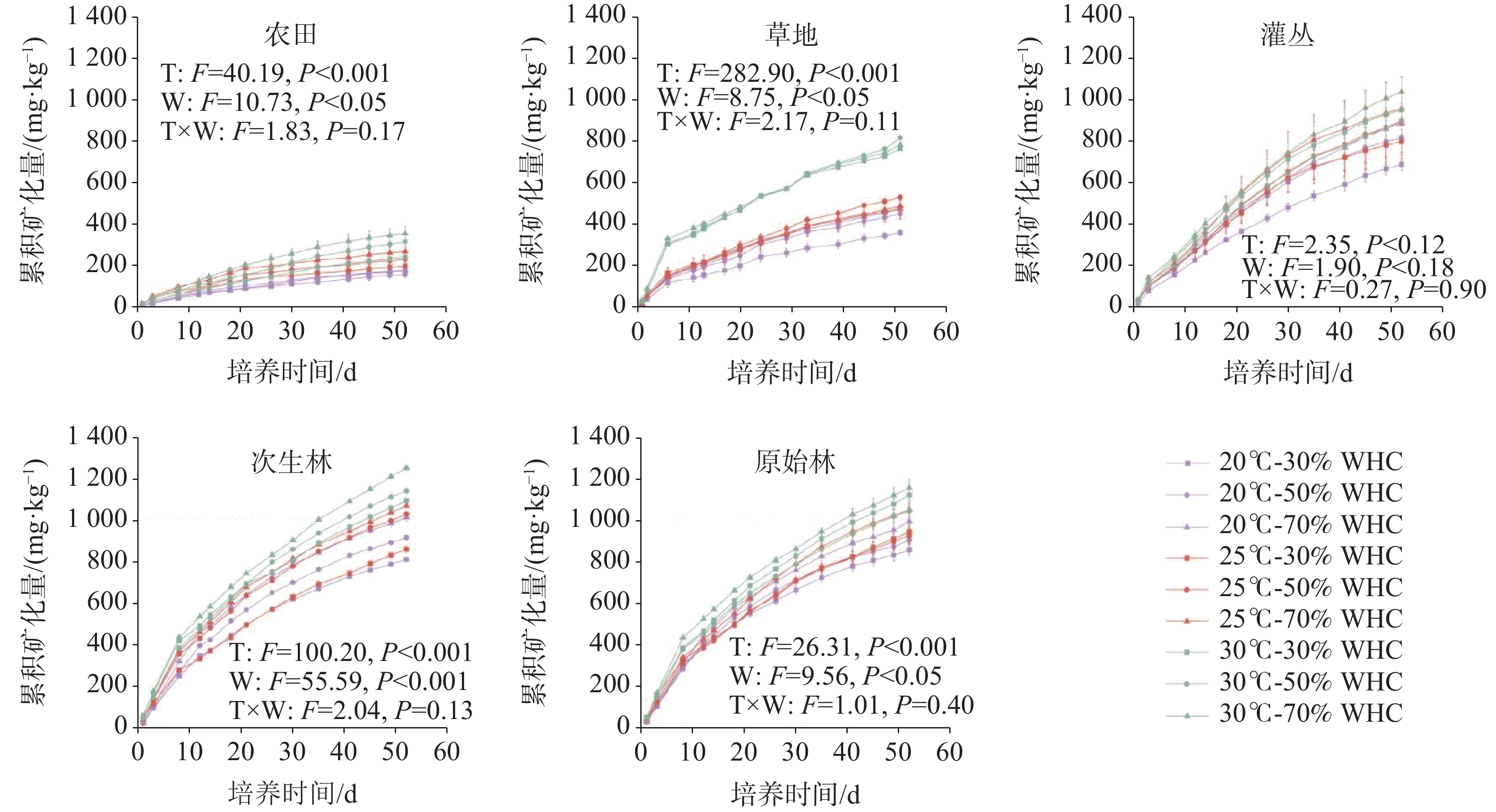
 点击查看大图
计量
- 文章访问数: 68
- HTML浏览量: 28
- PDF下载量: 8
- 被引次数: 0
