


Study on the influence of hydrochemical characteristics on the genesis of intermittent high-temperature geysers in Xizang
-
摘要: 西藏地区因独特的地质构造与强烈的地热活动分布着我国著名的间歇性高温喷泉。文章对西藏典型间歇性温泉水化学特征进行了总结,结果显示这类温泉的水化学特征具有高度的相似性:温泉水温度接近当地沸点,pH呈弱碱性,二氧化硅含量较高,阳离子以钾钠为主钙镁含量极低,阴离子以氯根、重碳酸根为主,硫酸根含量较低。基于这些共性,将其命名为高硅碱性热液。热液中高含量的二氧化硅胶体粒子在沉降的过程中降低了钙镁含量;同时高含量的二氧化硅为热液流经的通道和空腔内表面涂覆硅化膜,修复水室中产生的裂隙,为喷发过程提供保压作用;硅化膜的存在也起到了隔热保温的作用,保证了间歇性高温喷泉喷发过程不受外界环境的影响。Abstract:
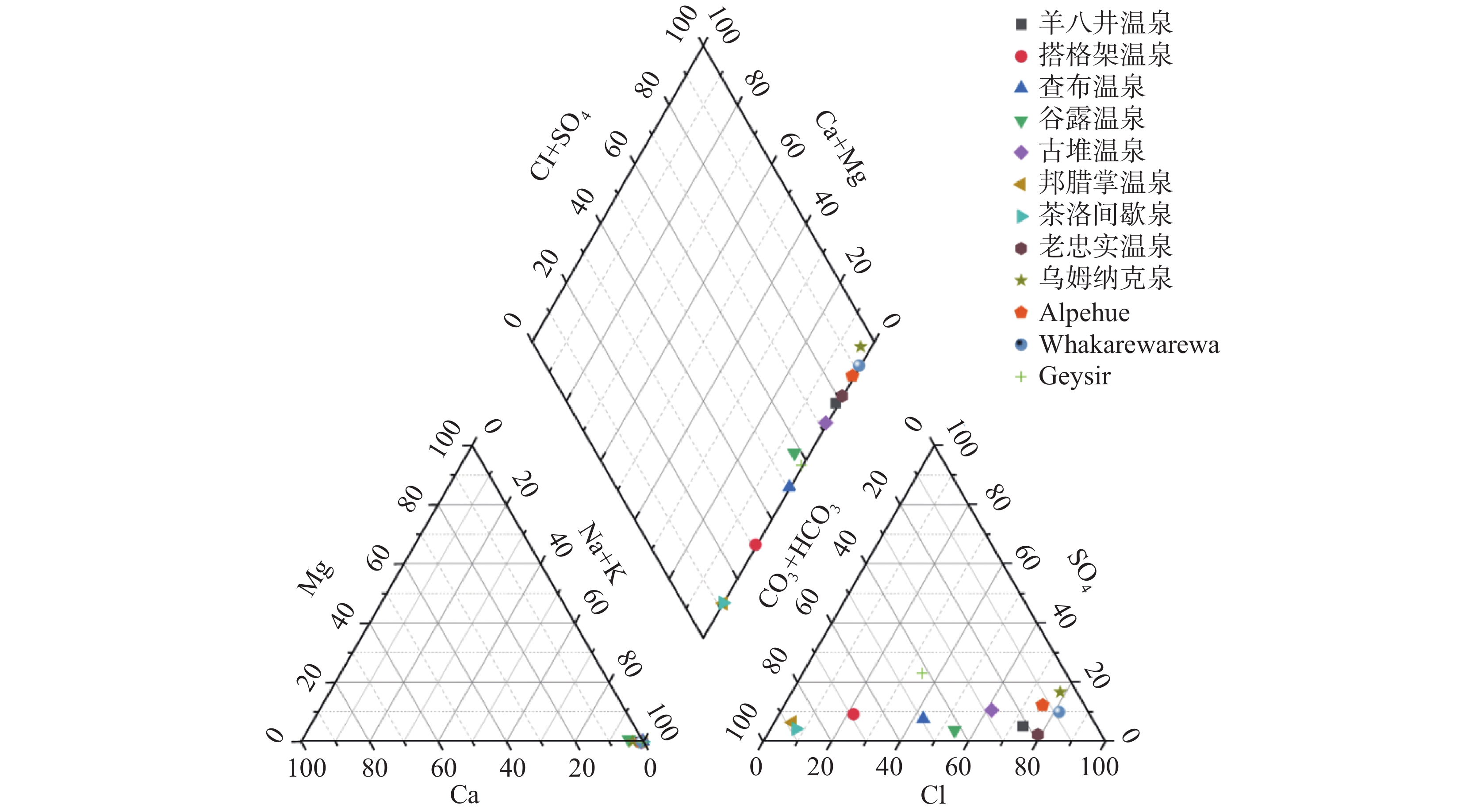
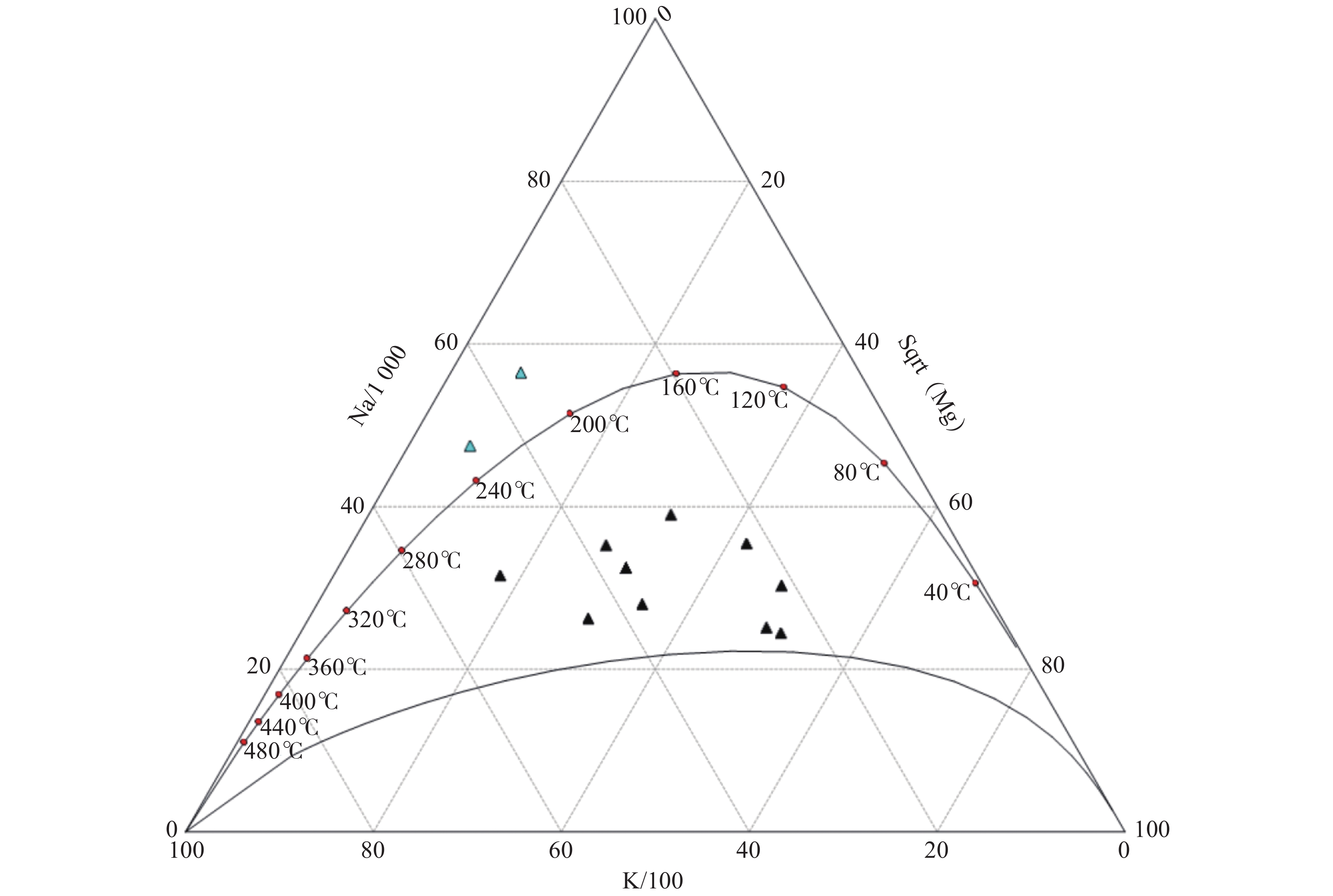
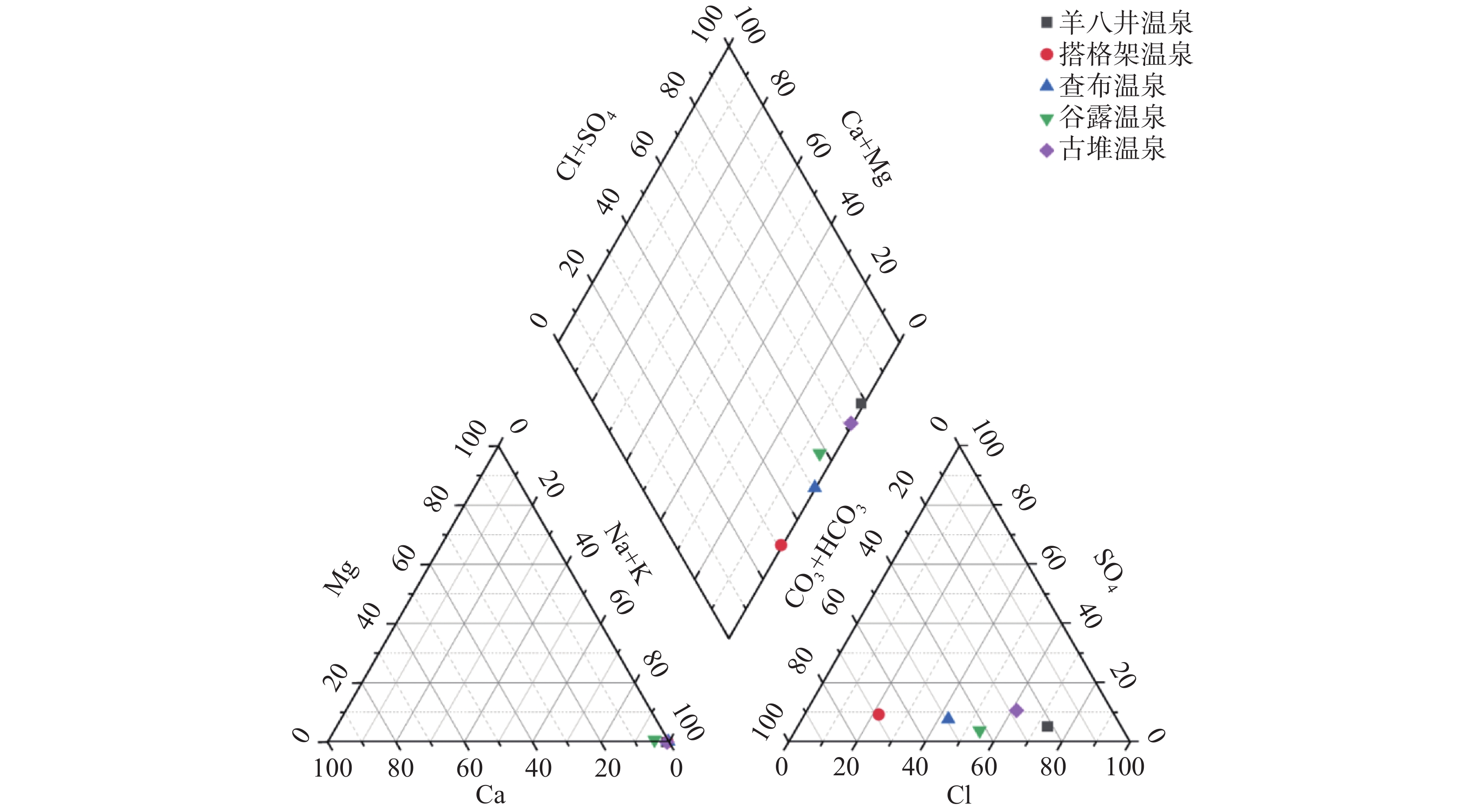
This study systematically summarizes the hydrochemical characteristics of typical intermittent high-temperature hot springs in Xizang, aiming to clarify the consistent patterns of their fluid composition and the key factors controlling their eruption. Through comprehensive analysis of hydrochemical parameters and graphical classification methods, the results reveal the high degree of similarity in the hydrochemical properties of these hot springs. Specifically, the geothermal water temperature is close to the local boiling point, with weakly alkaline pH. The water exhibits relatively high silica (SiO2) content; cationically, it is dominated by sodium (Na+) and potassium (K+), while calcium (Ca2+) and magnesium (Mg2+) contents are extremely low. Anionically, chloride (Cl−) and bicarbonate (${\rm{HCO}}_3^{-}$) are the primary components, with a low sulfate (${\rm{SO}}_4^{2-}$) content. Based on these consistent features, this type of geothermal fluid is formally defined as "high-silica alkaline hydrothermal fluid". Focusing on the main chemical components of the fluid in intermittent high-temperature fountains, this study particularly emphasizes the presence of colloidal silica particles in the hydrothermal fluid and their intrinsic correlation with the formation of silicified films. In terms of hydrochemical composition, the intermittent high-temperature fountains exhibit distinct regularity and uniqueness, which are prominently reflected in their ionic distribution and environmental parameters. From the perspective of cation composition, Na+ and K+ are the dominant species, with their combined proportion accounting for up to 98% of the total cations-establishing them as the absolute main cations. In stark contrast, the proportions of Ca2+ and Mg2+, which are common cations in most geothermal systems, are negligible, typically less than 1%. This significant discrepancy in cation ratios constitutes one of the unique chemical signatures of these fountains. Beyond the aforementioned ionic characteristics, the high SiO2 content and weakly alkaline environment are indispensable properties of the intermittent high-temperature fountains in Xizang.These key factors interact synergistically to shape the unique, iconic hydrochemical composition of Xizang's intermittent high-temperature fountains, i.e., the high-silica alkaline hydrothermal fluid system. To further verify the hydrochemical type and evolutionary stage of the fluid, two standard hydrogeochemical classification tools were employed. On the Piper trilinear diagram (a widely used tool for hydrochemical classification), the cations of this fluid type are concentrated in the Na++K+ corner, while the anions are distributed along the base of the diagram, far from the ${\rm{SO}}_4^{2-}$ axis, which is consistent with the low ${\rm{SO}}_4^{2-}$ content observed in the chemical analysis. On the Na-K-Mg ternary diagram (a critical tool for evaluating geothermal fluid maturity), among the water samples collected from 12 intermittent high-temperature fountains, 10 were classified as partially mature water and 2 as fully mature water; no immature water samples were detected. This result indicates that the geothermal fluid has undergone sufficient water-rock interaction in the subsurface and has not been significantly mixed with shallow, unreacted groundwater, further confirming the deep-origin nature of the fluid. Furthermore, researchers identified that the structure of the groundwater reservoir of intermittent high-temperature fountains is critical to their eruption. For the periodic eruption to occur, the reservoir must maintain excellent airtightness to prevent pressure leakage. This airtightness is primarily attributed to the deposition of the low-permeability coating on the inner surfaces of large fractures or cavities within the reservoir, and the formation of this coating is closely linked to the high SiO2 content in the geothermal water. During the sedimentation process of colloidal silica particles in the hydrothermal fluid, these particles effectively reduce the contents of Ca2+ and Mg2+-likely through adsorption and co-precipitation. In contrast, alkali metal ions (e.g., K+, Na+, Li+, Rb+) are less affected by this process and thus remain relatively enriched in the fluid. Additionally, the high SiO2 content in the hydrothermal fluid promotes the formation of silicified films on the inner surfaces of fluid-flow channels and cavities. These silicified films can repair small fractures generated in the groundwater reservoir, thereby enhancing the reservoir's airtightness and providing effective pressure retention to support the subsequent eruption process. In conclusion, this study clarifies the unique hydrochemical characteristics of intermittent high-temperature hot springs in Xizang and defines the "high-silica alkaline hydrothermal fluid" type, which enriches the classification system of geothermal fluids in high-altitude regions. The analysis of the relationship between colloidal silica, silicified films, and groundwater reservoir airtightness also provides a new mechanistic understanding of the eruption of intermittent high-temperature fountains. These findings can serve as a theoretical basis for further research on geothermal systems in Xizang and other tectonically active, high-altitude areas, as well as for the exploration and utilization of geothermal resources in related regions. -
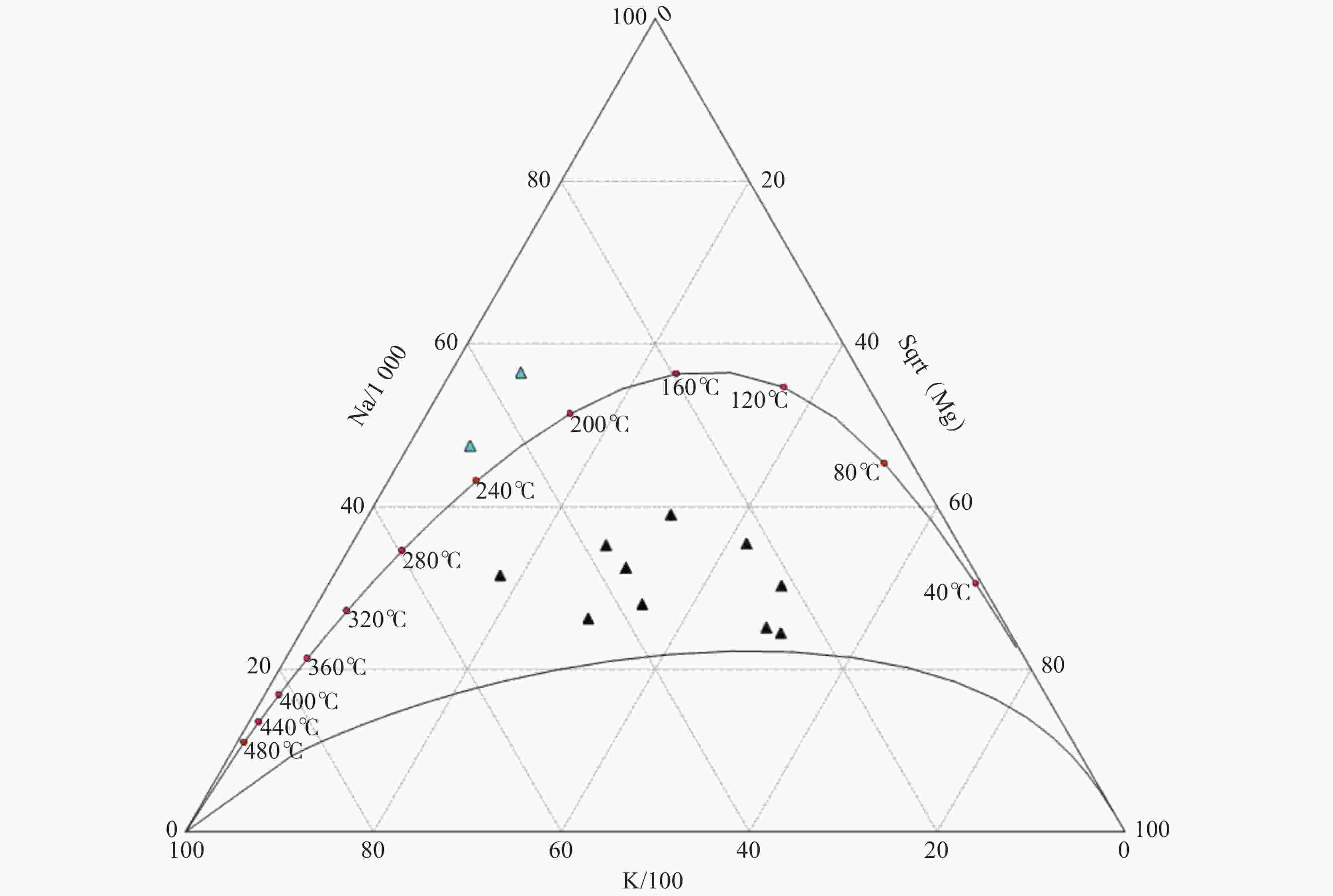
图 3 间歇性喷泉水在Na-K-Mg三角图上的分布
Figure 3. Na-K-Mg triangle diagram plots of intermittent geyser water
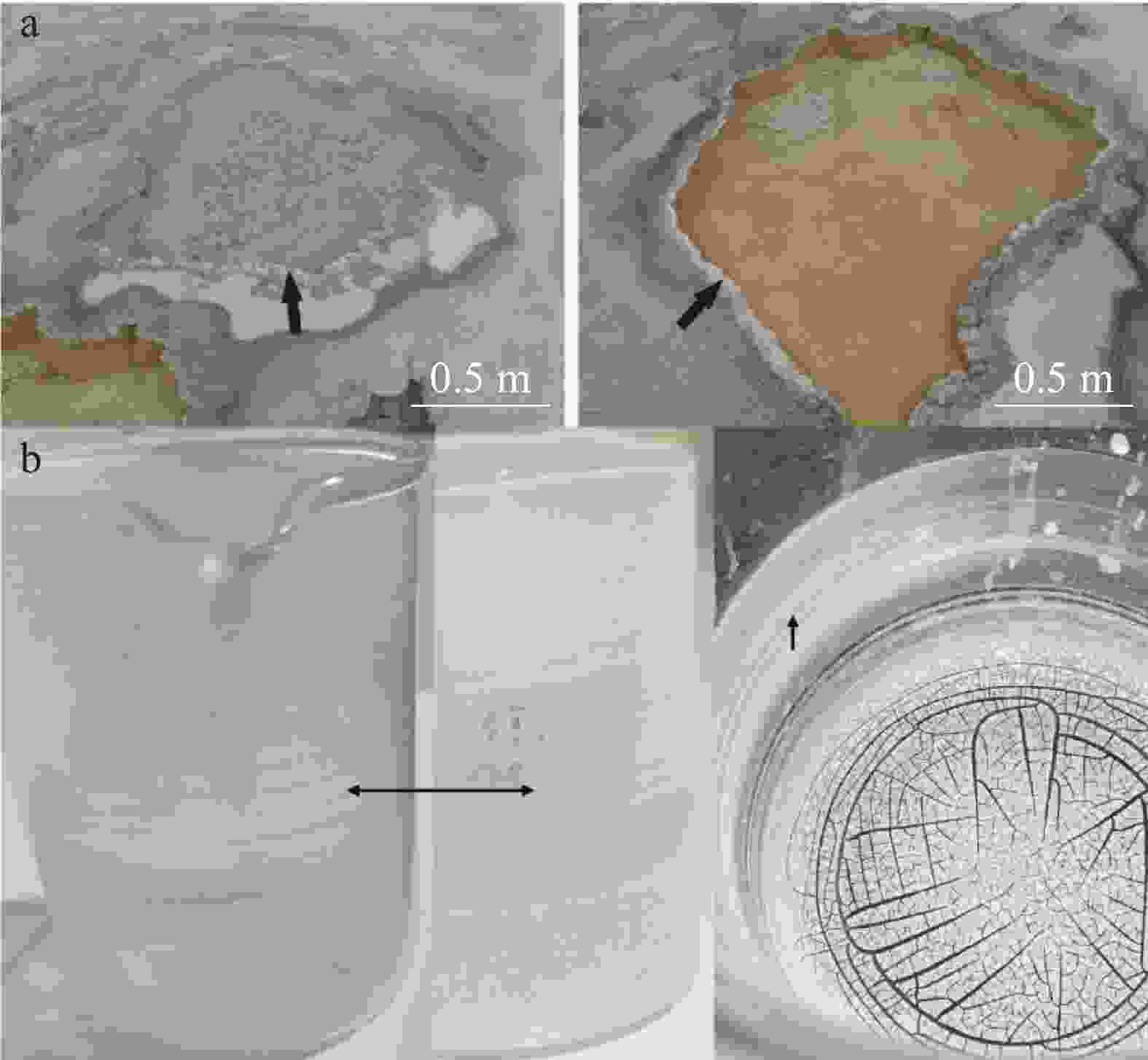
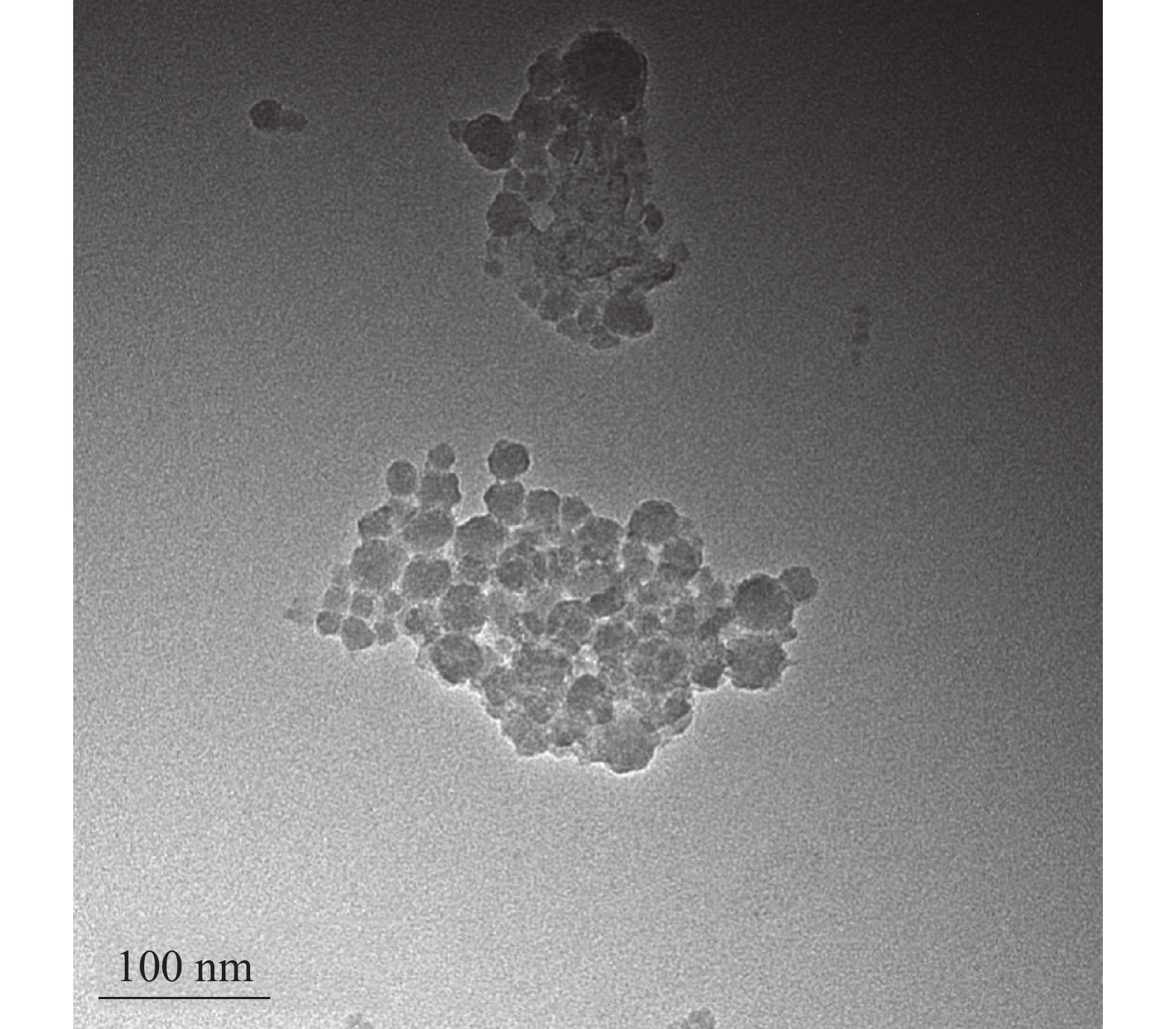
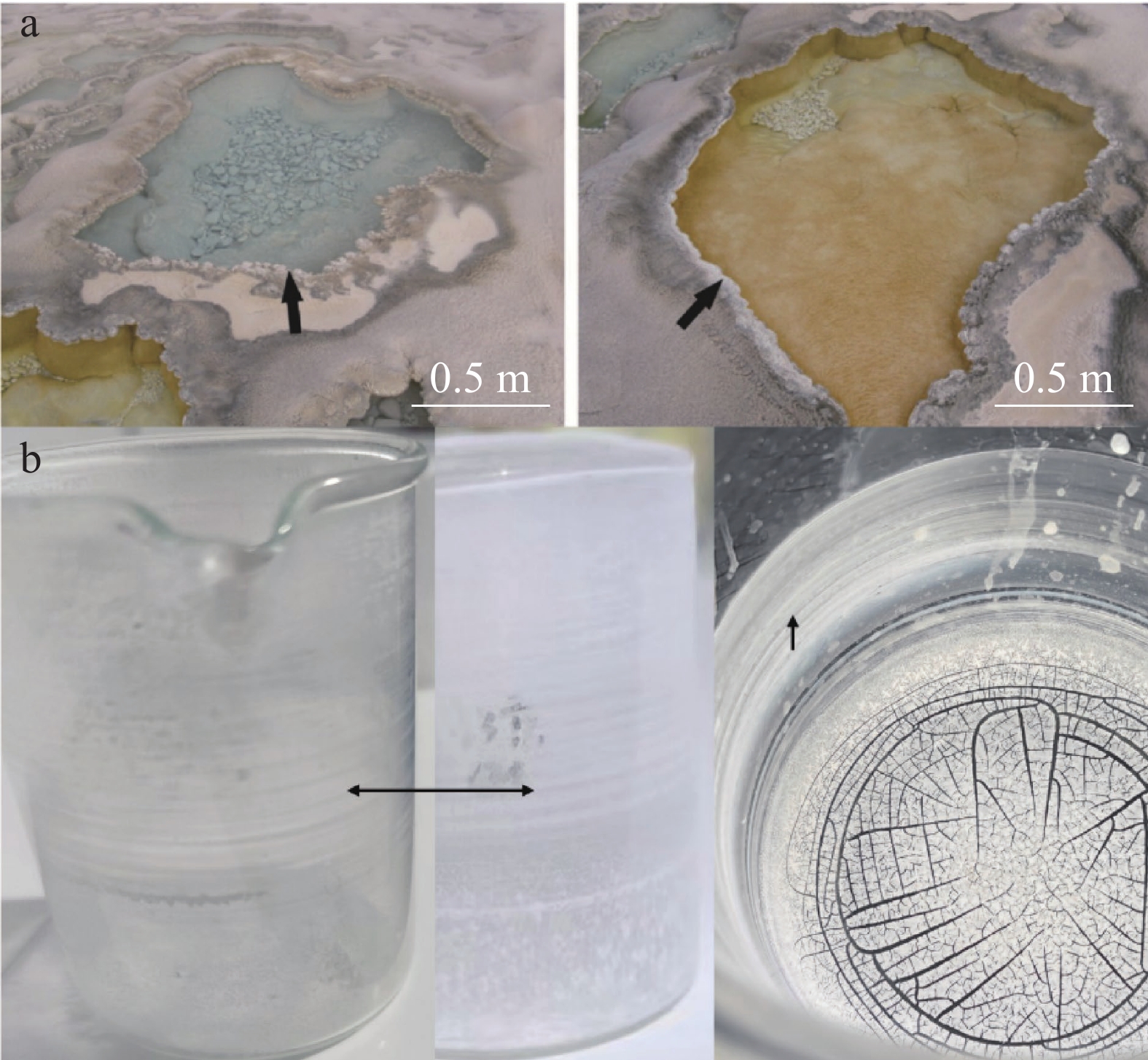
图 5 间歇泉卵、池边硅华、室内模拟硅华圈
Figure 5. Images of geyser egg, silica deposits by the pool and simulated silicon deposits circle
表 1 西藏间歇性喷泉水的水化学特征
Table 1. Hydrochemical characteristics of geyser in Xizang
温泉点 温度/℃ pH Ca2+ Mg2+ Na+ K+ SiO2 ${\rm{HCO}}_3^{-}$ ${\rm{SO}}_4^{2-}$ Cl− mg·L−1 羊八井温泉 84 8.6 15.5 0.12 1658 259.1 1509 169 190.4 1973 搭格架温泉 84 8.2 1.7 0.11 398 34.9 310 479 81.0 139 查布温泉 86 9.0 0.1 0.50 379 59.5 280 477 69.5 285 谷露温泉 85 8.7 42.4 4.88 978 138.0 365 1123 80.6 837 古堆温泉 85 8.4 4.7 <0.013 789 81.4 306 357 181.8 775  下载: 导出CSV
表 2 间歇性喷泉水的水化学特征
Table 2. Hydrochemical characteristics of intermittent geyser water
温泉点 温度/℃ pH Ca2+ Mg2+ Na+ K+ SiO2 ${\rm{HCO}}_3^{-}$ ${\rm{SO}}_4^{2-}$ Cl− mg·L−1 羊八井温泉 84 8.6 15.5 0.12 1658 259.1 1509 169 190.4 1973 搭格架温泉 84 8.2 1.7 0.11 398 34.9 310 479 81.0 139 查布温泉 86 9.0 0.1 0.50 379 59.5 280 477 69.5 285 谷露温泉 85 8.7 42.4 4.88 978 138.0 365 1123 80.6 837 古堆温泉 85 8.4 4.7 <0.013 789 81.4 306 357 181.8 775 邦腊掌温泉 95 9.2 <0.5 <0.20 213 21.3 172 255 28.8 17 茶洛间歇泉 88 6.9 0.6 <0.05 309 28.9 291 405 28.7 36 老忠实温泉 1.2 0.02 403 25.0 356 195 20.0 484 乌姆纳克泉 101 9.2 16.0 0.20 482 36.0 326 66 180.0 623 Alpehue 95 7.8 2.7 <0.07 390 23.2 369 99 87.5 395 Whakarewarewa 100 9.2 2.0 0.20 400 54.0 425 100 93.0 554 Geysir 80 9.1 0.8 <0.20 232 22.7 502 73 123.0 138
下载: 导出CSV
-
[1] 金文正. 云南省洱源县断裂特征及其对地热的控制作用[J]. 中国岩溶, 2024, 43(1): 57-71.Jin Wenzheng. Characteristics of faults and their controlling effect on geothermal energy in Eryuan county, Yunnan Province[J]. Carsologica Sinica, 2024, 43(1): 57-71. [2] 刘永涛. 云南省龙陵县邦腊掌温泉水文地球化学与间歇喷泉研究 [D]. 北京: 中国地质大学, 2009.Liu Yongtao. A study of hydrochemistry and geyser of thermal groundwater in the Banglazhang geothermal field in Longling, Yunnan [D]. Beijing: China University of Geosciences, 2009. [3] Reed M H, Munoz-Saez C, Hajimirza S, Wu S M, Barth A, Girona T, Rasht-Behesht M, White E B, Karplus M S, Hurwitz S, Manga M. The 2018 reawakening and eruption dynamics of Steamboat Geyser, the world's tallest active geyser[J]. Proceedings of the National Academy of Sciences, 2021, 118(2): e2020943118. [4] Ajayi M, Ayers J C. CH4 and CO2 diffuse gas emissions before, during and after a Steamboat Geyser eruption[J]. Journal of Volcanology and Geothermal Research, 2021, 414(1): 107233. [5] Eibl E P S, Mueller D, Walter T R, Allahbakhshi M, Jousset P, Hersir G P, Dahm T. Eruptive cycle and bubble trap of Strokkur geyser, Iceland[J]. Journal of Geophysical Research Solid Earth, 2021, 126(4): 1-29. [6] Munoz-Saez C, Manga M, Hurwitz S, Slagter S, Churchill D M, Reich M, Damby D, Morata D. Radiocarbon dating of silica sinter and postglacial hydrothermal activity in the El Tatio geyser field[J]. Geophysical Research Letters, 2020, 47(11): 1-23. [7] 严克涛, 郭清海, 刘明亮. 西藏搭格架高温热泉中砷的地球化学异常及其存在形态[J]. 吉林大学学报: 地球科学版, 2019, 49(2): 548-558.Yan Ketao, Guo Qinghai, Liu Mingliang. Geochemical anomalies of arsenic and its speciation in Daggyai geothermal springs, Tibet[J]. Journal of Jilin University (Earth Science Edition), 2019, 49(2): 548-558. [8] Karlstrom L, Hurwitz S, Sohn R, Vandemeulebrouck J, Murphy F, Rudolph M L, Johnston M J S, Manga M, Mccleskey R B. Eruptions at lone star geyser, Yellowstone National Park, USA: 1. Energetics and eruption dynamics[J]. Journal of Geophysical Research: Solid Earth, 2013, 118(8): 4048-4062. doi: 10.1002/jgrb.50251 [9] Eibl E P S, Hainzl S, Vesely N I K, Walter T R, Jousset P, Hersir G P, Dahm T. Eruption interval monitoring at Strokkur geyser, Iceland[J]. Geophysical Research Letters, 2020, 47(1): 1-14. [10] Belousov A, Belousova M, Nechayev A. Video observations inside conduits of erupting geysers in Kamchatka, Russia, and their geological framework: Implications for the geyser mechanism[J]. Geology, 2013, 41(4): 387-390. doi: 10.1130/G33366.1 [11] Rudolph M L, Sohn R A, Lev E. Fluid oscillations in a laboratory geyser with a bubble trap[J]. Journal of Volcanology and Geothermal Research, 2018, 368: 100-110. [12] Toramaru A, Maeda K. Mass and style of eruptions in experimental geysers [J]. Journal of Volcanology & Geothermal Research, 2013, 257: 227-239. [13] Shteinberg A, Manga M, Korolev E. Measuring pressure in the source region for geysers, Geyser Valley, Kamchatka[J]. Journal of Volcanology & Geothermal Research, 2013, 264: 12-16. [14] Munoz-Saez C, Manga M, Hurwitz S, Rudolph M L, Namiki A, Wang C Y. Dynamics within geyser conduits, and sensitivity to environmental perturbations: Insights from a periodic geyser in the El Tatio geyser field, Atacama Desert, Chile[J]. Journal of Volcanology & Geothermal Research, 2015, 292: 41-55. [15] Lupi M, Collignon M, Fischanger F, Aurore C, Daniele T, Laura P. Geysers, boiling groundwater and tectonics: The 3D subsurface resistive structure of the haukadalur hydrothermal field, Iceland[J]. Journal of Geophysical Research: Solid Earth, 2022, 127(11): e2022JB024040. [16] Collignon M, Pioli L, Trippanera D, Carrier A, Lupi M. Conduit processes at the Haukadalur geyser-hosting hydrothermal field (Iceland) revealed by in situ temperature and high-speed camera measurements[J]. Journal of Geophysical Research Solid Earth, 2023, 128(11): 1-18. [17] Walter T R, Jousset P, Allahbakhshi M, Witt T, Gudmundsson M T, Hersir G P. Underwater and drone based photogrammetry reveals structural control at Geysir geothermal field in Iceland[J]. Journal of Volcanology & Geothermal Research, 2020, 39: 106282. [18] Ercan H U, Ece O I, Schroeder P A, Gulmez F. Characteristics and evolution of the Etili silica sinter epithermal deposits, anakkale − Turkey: Relation to alkali chloride vs acid-sulfate fluids[J]. Ore Geology Reviews, 2022, 142: 104726. doi: 10.1016/j.oregeorev.2022.104726 [19] Hurwitz S, Manga M. The fascinating and complex dynamics of geyser eruptions[J]. Annual Review of Earth & Planetary Sciences, 2017, 45(1): 31-59. [20] 张知非, 沈敏子, 周长进. 羊八井热田的人工间歇井[J]. 北京大学学报(自然科学版), 1982(4): 85-90.Zhang Zhifei, Shen Minzi, Zhou Changjin. Geysering wells in Yangbajain geothermal field[J]. Acta Scientiarum Naturalium Universitatis Pekinensis, 1982(4): 85-90. [21] 刘高令, 姜贞贞, 刘高博, 邬国栋, 苏思强, 周会东, 卓玛曲西, 胡亚燕, 李明礼. 西藏地区羊八井地热水中胶体粒子分析与表征[J]. 岩矿测试, 2023, 42(6): 1156-1164.Liu Gaoling, Jiang Zhenzhen, Liu Gaobo, Wu Guodong, Su Siqiang, Zhou Huidong, Zhuoma Quxi, Hu Yayan, Li Mingli. Analysis and characterization of colloidal particles in Yangbajing geothermal water, Tibet[J]. Rock and Mineral Analysis, 2023, 42(6): 1156-1164. [22] 曹入文, 周训, 陈柄桦, 李壮. 四川巴塘县茶洛地区温泉及间歇喷泉水化学特征和成因分析[J]. 地学前缘, 2021, 28(4): 361-372.Cao Ruwen, Zhou Xun, Chen Binghua, Li Zhuang. Hydrogeochemica characteristics and genetic analysis of the Chaluo hot springs and geysers in the Batang County of Sichuan Province[J]. Earth Science Fronftiers, 2021, 28(4): 361-372. [23] Hurwitz S, Hunt A G, Evans W C. Temporal variations of geyser water chemistry in the upper Geyser Basin, Yellowstone National Park, USA[J]. Geochemistry Geophysics Geosystems, 2012, 13(12): 1-19. doi: 10.1029/2011GC003955 [24] Motyka R J, Nye C J, Turner D L, Liss S A. The geyser bight geothermal area, Umnak Island, Alaska[J]. Geothermics, 1993, 22(4): 301-327. doi: 10.1016/0375-6505(93)90005-8 [25] Munoz-Saez C, Perez-Nuez C, Martini S, Vargas-Barrera A, Reich M, Morata D, Manga M . The Alpehue geyser field, Sollipulli Volcano, Chile [J]. Journal of Volcanology and Geothermal Research, 2020, 406: 1-38. [26] Jones B, Renaut R W. Petrography and genesis of spicular and columnar geyserite from the Whakarewarewa and Orakeikorako geothermal areas, North Island, New Zealand[J]. Canadian Journal of Earth Sciences, 2003, 40: 1585-1610. doi: 10.1139/e03-062 [27] Jones B, Renaut R W. Impact of seasonal changes on the formation and accumulation of soft siliceous sediments on the discharge apron of Geysir, Iceland[J]. Journal of sedimentary research, 2010, 80(1): 17-35. doi: 10.2110/jsr.2010.008 [28] Giggenbach W F. Geothermal solute equilibria. Derivation of Na-K-Mg-Ca geoindicators[J]. Geochimica Et Cosmochimica Acta, 1988, 52(12): 2749-2765. doi: 10.1016/0016-7037(88)90143-3 [29] 白新飞, 胡彩萍, 宋津宇, 杨时骄, 郄亮, 张军, 于超, 洪欢仁, 王涛, 宋亮. 肥城安驾庄岩溶型地热氡泉水化学特征及成因机理 [J]. 中国岩溶, 2025, 44(2): 283-299, 339.Bai Xinfei, Hu Caiping, Song Jinyu, Yang Shijiao, Qie Liang, Zhang Jun, Yu Chao, Hong Huanren, Wang Tao, Song Liang. Chemical characteristics and genetic mechanism of karst geothermal radon spring in Anjiazhuang, Feicheng [J]. Carsologica Sinica, 2025, 44(2): 283-299, 399. [30] 张秋霞, 刘东林, 岳冬冬, 杨骊, 冯昭龙, 李胜涛. 天津市深部地热资源水文地球化学特征及循环模式[J]. 中国岩溶, 2025, 44(3): 445-461.Zhang Qiuxia, Liu Donglin, Yue Dongdong, Yang Li, Feng Zhaolong, Li Shengtao. Hydrogeochemical characteristics and circulation model of deep geothermal resources in Tianjin[J]. Carsologica Sinica, 2025, 44(3): 445-461. [31] Smith D J, Jenkin G R T, Naden J, Boyce A J, Petterson M G, Toba T, Darling W G, Taylor H, Millar I L. Anomalous alkaline sulphate fluids produced in a magmatic hydrothermal system-Savo, Solomon Islands[J]. Chemical Geology, 2010, 275(1): 35-49. [32] Pirajno F. Subaerial hot springs and near-surface hydrothermal mineral systems past and present, and possible extraterrestrial analogues[J]. Geoscience Frontiers, 2020(11): 1549-1569. [33] Golla J K. Using principal component analysis to aid in visualization and interpretation of geothermal solute chemistry: an application to Yellowstone thermal waters[J]. GRC Transactions, 2018, 42: 1226-1239. [34] 郭清海. 岩浆热源型地热系统及其水文地球化学判据[J]. 地质学报, 2020, 94(12): 3544-3554.Guo Qinghai. Magma-heated geothermal systems and hydrogeochemicel evidence of their occurrence[J]. Acta Geologica Sinica, 2020, 94(12): 3544-3554. [35] Azimov P Y, Bushmin S A. Solubility of minerals of metamorphic and metasomatic rocks in hydrothermal solutions of varying acidity: Thermodynamic modeling at 400-800 ℃ and 1-5 kbar[J]. Geochemistry International, 2007, 45(12): 1210-1234. doi: 10.1134/S0016702907120038 [36] Sanada T, Takamatsu N, Yoshiike Y. Geochemical interpretation of long-term variations in rare earth element concentrations in acidic hot spring waters from the Tamagawa geothermal area, Japan[J]. Geothermics, 2006, 35(2): 141-155. doi: 10.1016/j.geothermics.2006.02.004 [37] 许鹏, 谭红兵, 张燕飞, 张文杰. 特提斯喜马拉雅带地热水化学特征与物源机制[J]. 中国地质, 2018, 45(6): 1142-1154.Xu Peng, Tan Hongbing, Zhang Yanfei, Zhang Wenjie. Geochemical characteristics and source mechanism of geothermal water in Tethys Himalaya belt[J]. Geology in China, 2018, 45(6): 1142-1154. [38] Guo Q, Pang Z, Wang Y, Tian J. Fluid geochemistry and geothermometry applications of the Kangding high-temperature geothermal system in eastern Himalayas[J]. Applied Geochemistry, 2017, 81: 63-75. doi: 10.1016/j.apgeochem.2017.03.007 [39] Jones B. Siliceous sinters in thermal spring systems: Review of their mineralogy, diagenesis, and fabrics[J]. Sedimentary Geology, 2020, 413: 105820. [40] 高洪雷, 胡志华, 万汉平, 郝伟林, 张松, 梁晓. 西藏谷露地热田地热地质特征[J]. 地球科学, 2023, 48(3): 1014-1029.Gao Honglei, Hu Zhihua, Wan Hanping, Hao Weilin, Zhang Song, Liang Xiao. Characteristics of geothermal geology of the Gulu geothermal field in Tibet[J]. Earth Science, 2023, 48(3): 1014-1029. [41] Ciraula D A, Carr B J, Sims K W W. Geophysical imaging of the shallow geyser and hydrothermal reservoir structures of Spouter Geyser, Yellowstone National Park: geyser dynamics I[J]. Journal of Geophysical Research-Solid Earth, 2023, 128(2): e2022JB024417. [42] 游雅贤, 文华国, 郑荣才, 罗连超. 陆地热泉硅华研究进展与展望[J]. 地质科技情报, 2019, 38(1): 68-81.You Yaxian, Wen Huaguo, Zheng Rongcai, Luo Lianchao. Advances and prospects of the terrestrial geothermal siliceous sinter research[J]. Geological Science and Technology Information, 2019, 38(1): 68-81. [43] Zhou B, Ren E, Sherriff B L, Yao Y. Multinuclear NMR study of Cs-bearing geyserites of the Targejia hot spring cesium deposit in Tibet[J]. American Mineralogist, 2013, 98(5-6): 907-913. doi: 10.2138/am.2013.4273 [44] Barbieri R, Cavalazzi B, Stivaletta N, Lopez-Garcia P. Silicified Biota in High-Altitude, Geothermally Influenced Ignimbrites at El Tatio Geyser Field, Andean Cordillera (Chile)[J]. Geomicrobiology Journal, 2014, 31(6): 493-508. doi: 10.1080/01490451.2013.836691 [45] Menezes C P, Bezerra F H R, Balsamo F, Mozafari M, Vieira M M, Srivastava N K, Castro D L. Hydrothermal silicification along faults affecting carbonate-sandstone units and its impact on reservoir quality, Potiguar Basin, Brazil[J]. Marine and Petroleum Geology, 2019, 110: 198-217. doi: 10.1016/j.marpetgeo.2019.07.018 [46] Tanaka M, Takahashi K. Identification of chemical species of silica in natural hot water using fast atom-bombartment mass spectrometry[J]. Instrumentation Science & Technology, 2005, 33(1): 47-60. [47] Smith I J, Lynne B Y, Jaworowski C, Qasim I, Heasler H, Foley D. The formation of geyser eggs at Old Faithful Geyser, Yellowstone National Park, U. S. A[J]. Geothermics, 2018, 75: 105-121. [48] Rimstidt J D, Cole D R. Geothermal mineralization; I: The mechanism of formation of the Beowawe, Nevada, Siliceous sinter deposit[J]. American Journal of Science, 1983, 283(8): 861-875. doi: 10.2475/ajs.283.8.861 [49] Risacher F, Fritz B, Hauser A. Origin of components in Chilean thermal waters[J]. Journal of South American Earth Sciences, 2011, 31(1): 153-170. doi: 10.1016/j.jsames.2010.07.002 [50] Kaasalainen H, Stefansson A. The chemistry of trace elements in surface geothermal waters and steam, Iceland [J]. Chemical Geology, 2012, 330-331: 60-85. -

 点击查看大图
计量
- 文章访问数: 1610
- HTML浏览量: 96
- PDF下载量: 33
- 被引次数: 0
