


Application of high-density electrical method in karst exploration in Liannan county, Guangdong
-
摘要: 粤西北连南县为典型浅覆盖岩溶塌陷隐患地区,岩溶塌陷地质灾害频发。采用高密度电法,结合钻探揭露等手段,查明区内地下岩溶分布及发育特征。结果表明:(1)不同采集装置对同一目标体反演的电阻率等值线具有各自的显示特点,可选择多排列组合装置提高勘探分辨率;(2)高密度电法可精确划分岩土分界面和测定覆盖层厚度,推断出岩溶异常区8处、地下岩溶发育带2条,物探推断与验证钻孔结果吻合较好;(3)圈定了8处岩溶塌陷隐患区。通过本次研究工作,高密度电法在识别溶洞或岩溶裂隙带方面具有良好的效果,推断出的岩溶塌陷隐患区对后续预防和治理提供了重要的依据。Abstract:
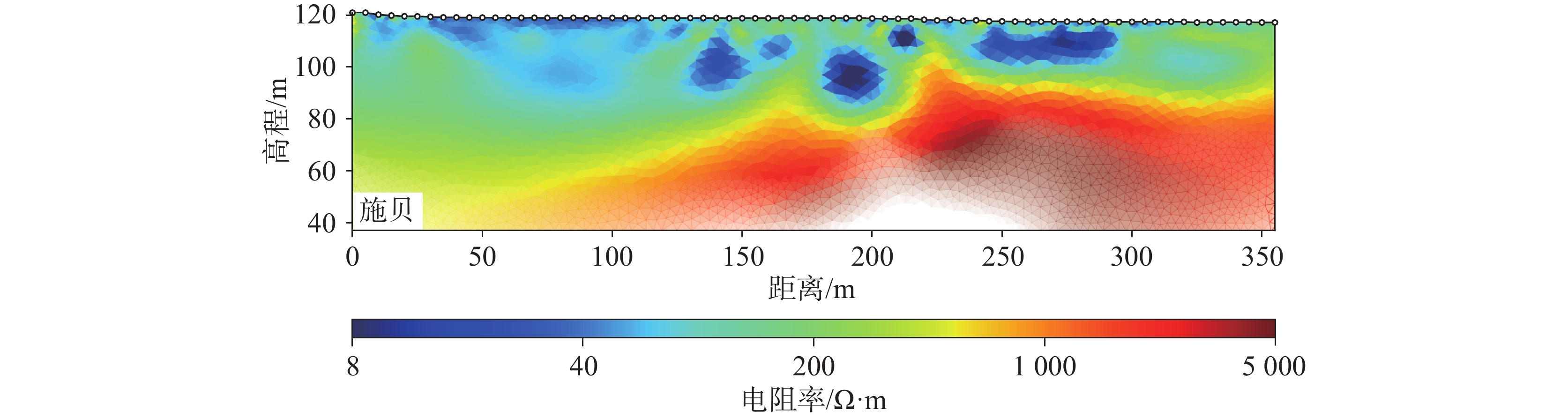
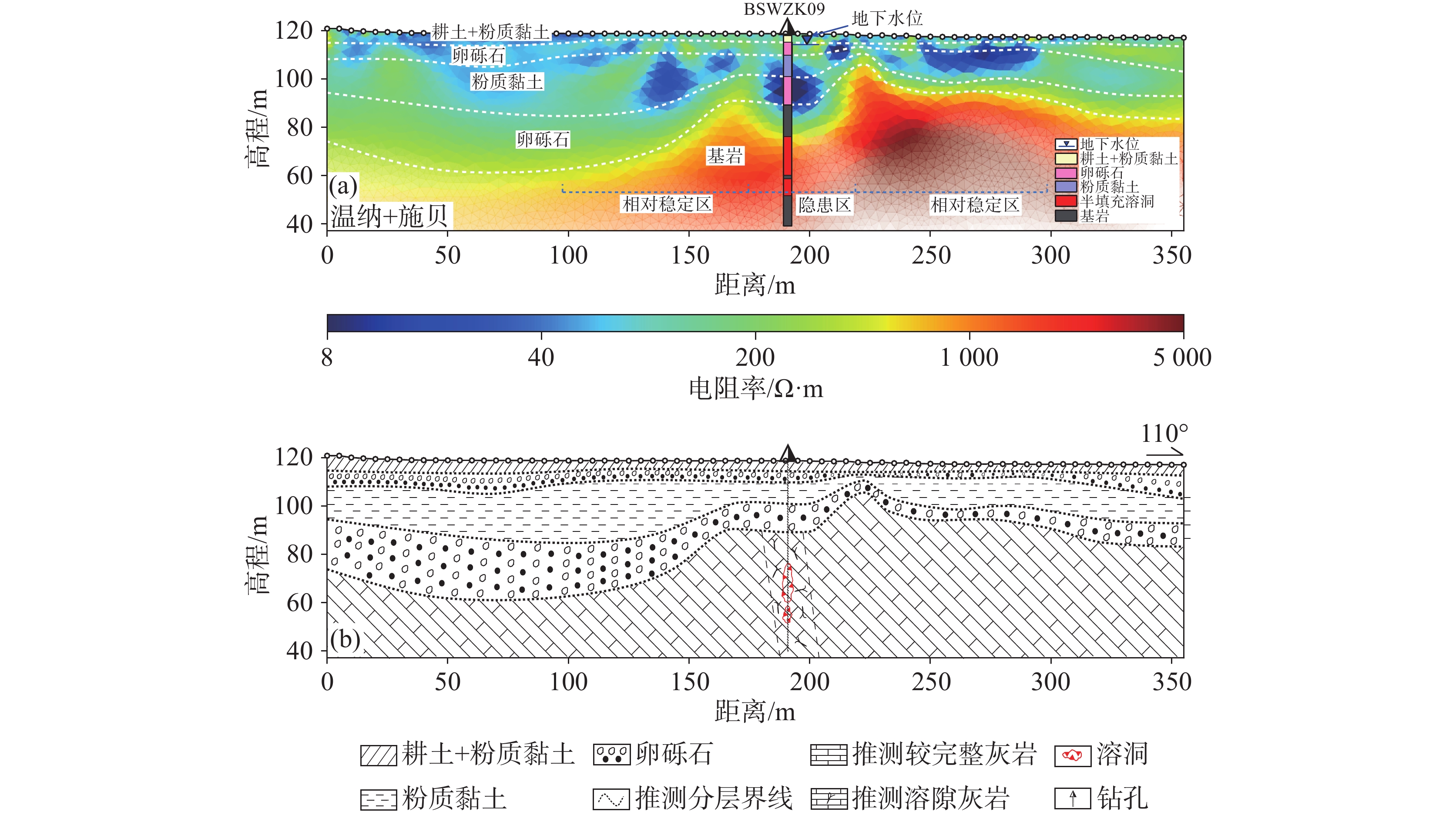
In covered karst areas, the Quaternary overburden is connected to underlying karst cavities and fissure networks, making these regions susceptible to karst ground collapses due to natural or anthropogenic factors. The northwestern Guangdong region is widely distributed with extensive carbonate rock formations where karst processes are prominent. In recent years, the increasing frequency of extreme climate events has intensified the occurrence of shallow covered karst collapse disasters in this area. These disasters are widespread, highly concealed, and sudden, posing a significant threat to the safety of lives and property. Therefore, studying the geological structural characteristics of potential karst ground collapse zones is of considerable practical significance and profound social value. The high-density resistivity method comprises a set of direct current (DC) electrical exploration techniques that exploit the differences in electrical properties between subsurface targets and surrounding media. This method involves artificially establishing a stable DC electric field underground and performing scanning observations using a predetermined electrode array configuration. By analyzing extensive spatial variations in resistivity within a specific subsurface area, it enables the investigation and elucidation of relevant geological issues. The high-density electrical method has proven valuable in various scenarios involving karst ground collapses. For example, in geological surveys of covered karst areas, the Wenner quadrupole array has been used to detect underground cavities, yielding results that align well with borehole data. Therefore, this study selects a typical shallow covered karst collapse-prone area in Liannan county, Qingyuan City, to investigate the distribution and development characteristics of underground karst using the high-density electrical method combined with drilling. First, the profile of a high-density electrical test was established in Meicun, Liannan county, where data were collected using both the Wenner and Schlumberger array. Inversion was performed on the respective datasets as well as on the combined array data. The inversion profiles clearly reveal significant high-resistivity zones interspersed with low-resistivity anomalies. The Wenner array inversion profile displays a relatively wide low-resistivity anomaly zone located between 185 m and 225 m along the survey line, with a lateral extent of about 40 m and a depth of about 30 m, covering an area of approximately 1,200 m2. However, the resistivity contour anomaly zone is not distinctly delineated. In contrast, the Schlumberger array inversion profile reveals a narrower anomaly zone located between 180 m and 205 m along the survey line, with a lateral extent of about 25 m and a depth of about 25 m, covering an area of approximately 625 m2. The resistivity contour anomaly zone is more clearly defined, exhibiting sharper lateral boundaries. The combined array provides a more refined depiction of the anomaly zone, better constraining the subsurface anomaly. By integrating borehole data, it was concluded that both arrays accurately reflect the low-resistivity anomaly zone. In terms of detection objectives, the Wenner array is better suited for identifying layered structures, while the Schlumberger array excels at delineating anomalous bodies. Simultaneously, joint inversion of the combined arrays leverages the strengths of each array to improve resolution. Second, analysis of the single-point apparent resistivity sounding curve extracted from borehole locations shows that the resistivity value is about 100 Ω·m at the minimum electrode spacing of 7.5 m. As the spacing increases, the resistivity gradually decreases, stabilizing at 22.5 m, followed by a turning point of increasing resistivity at 27.5 m, which is inferred to be the rock-soil interface. As the resistivity continues to rise, a V-shaped anomaly appears in the 47.5 to 57.5 m segment, likely caused by karst fissures or partially to fully filled cavities. The anomaly location on the sounding curve aligns well with borehole findings. Finally, the high-density electrical method was applied to analyze the study area. The results indicate the followings, (1) Different acquisition arrays exhibit distinct characteristics in the resistivity contours of the same target during inversion. Therefore, the optimal array should be selected based on the detection objective prior to fieldwork, and combining multiple arrays can enhance resolution. (2) Integrating high-density electrical inversion results with single-point apparent resistivity sounding curves can improve the accuracy of borehole placement. (3) The high-density electrical method can precisely delineate the rock-soil interface, measure overburden thickness, and successfully identify eight karst anomaly zones and two underground karst development belts. These geophysical inferences show strong consistency with verification borehole data. (4) This study successfully delineated eight potential karst collapse hazard zones. Overall, the research demonstrates that the high-density electrical method is highly effective in identifying cavities and karst fissure zones, providing critical and reliable support for subsequent prevention and mitigation efforts. -
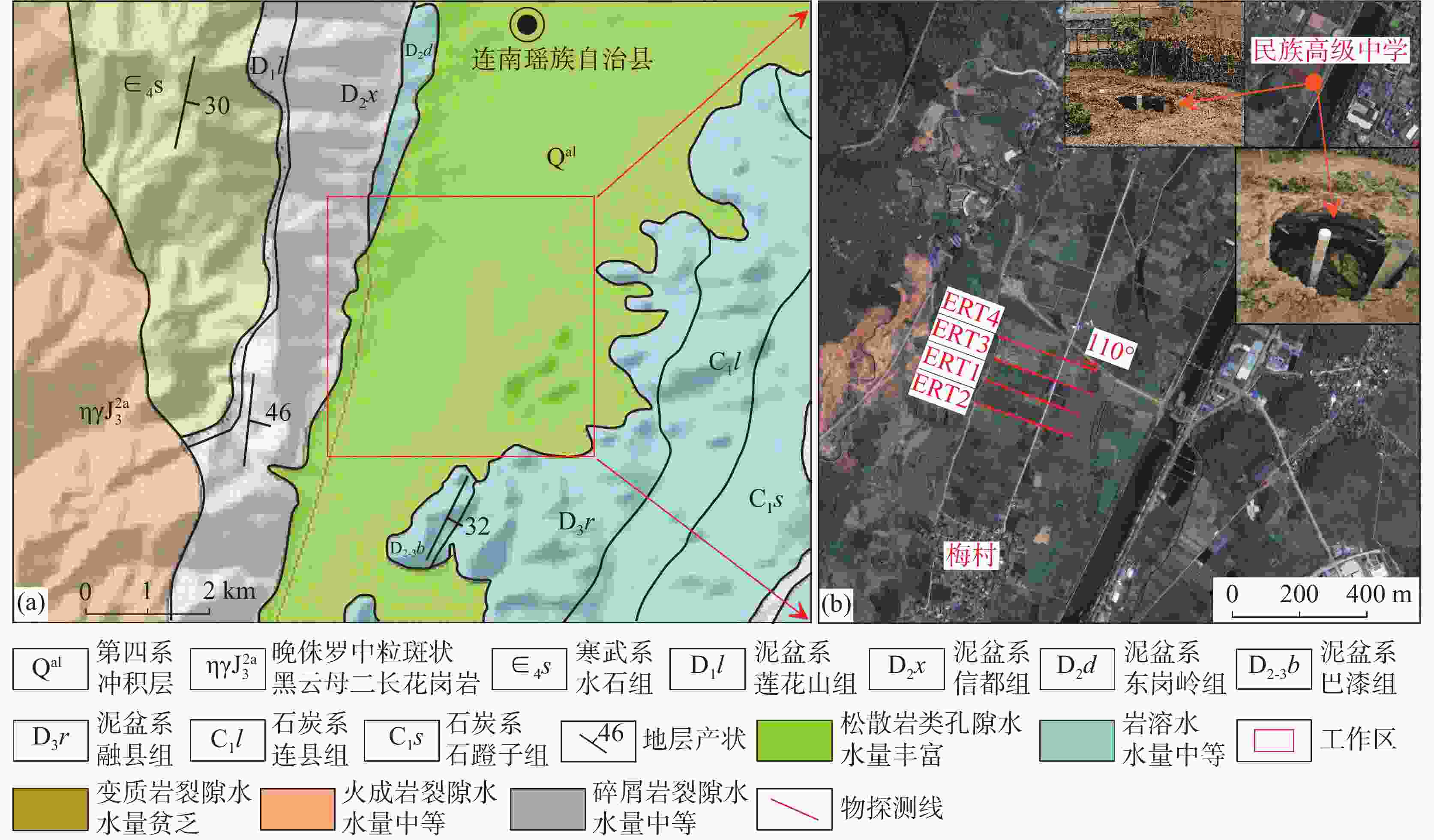
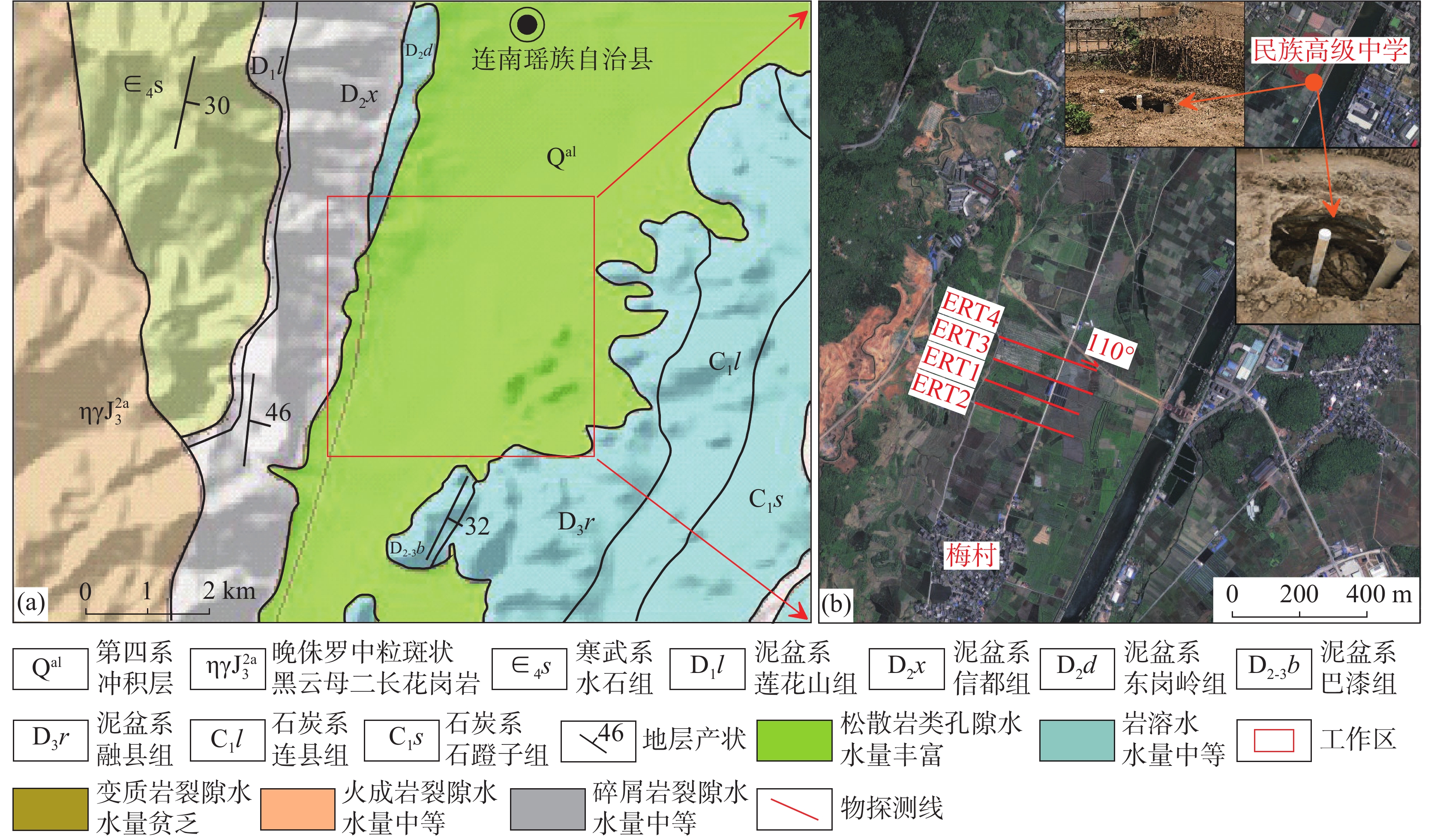
图 1 研究区水文地质(a)及测线位置(b)简图
Figure 1. Simplified diagram of the hydrogeology (a) and survey line location (b) of the study area
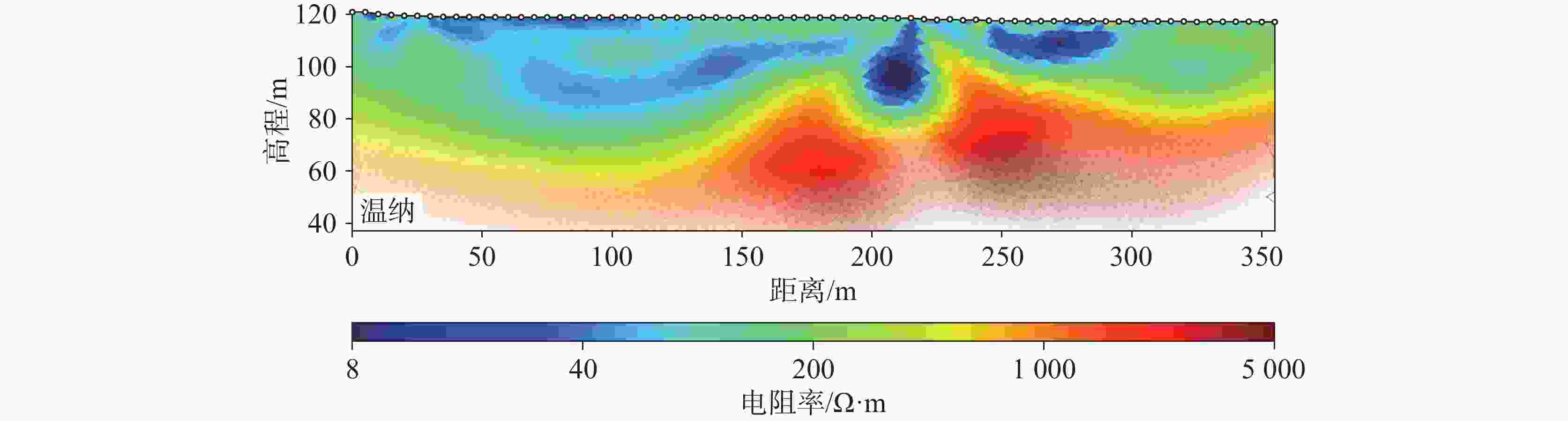
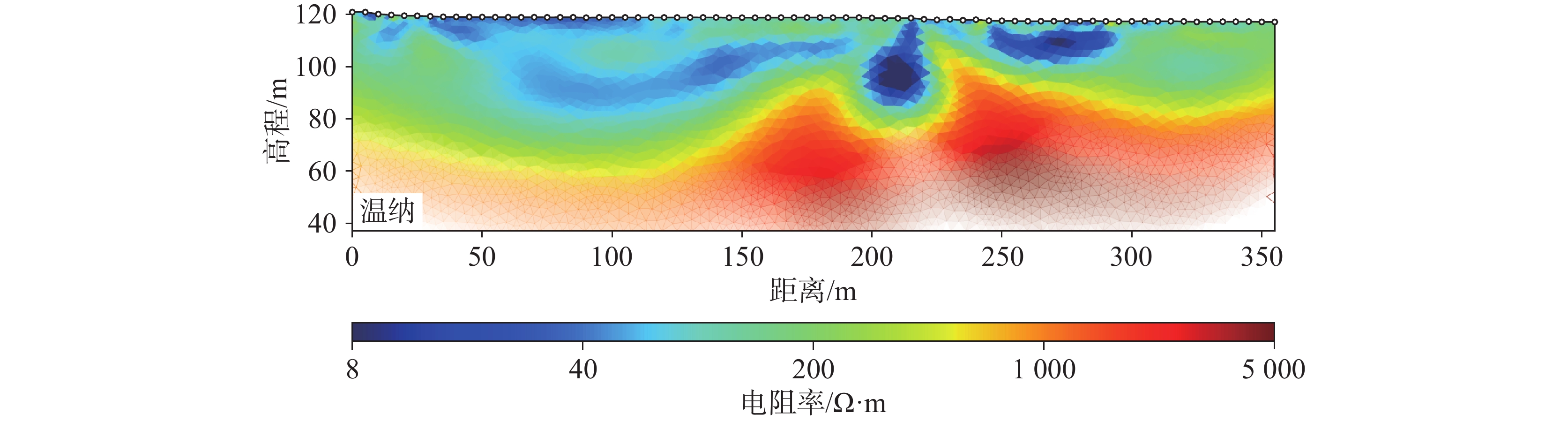
图 2 温纳装置高密度电法反演剖面图
Figure 2. Cross-section of high-density electrical inversion of Wenner device
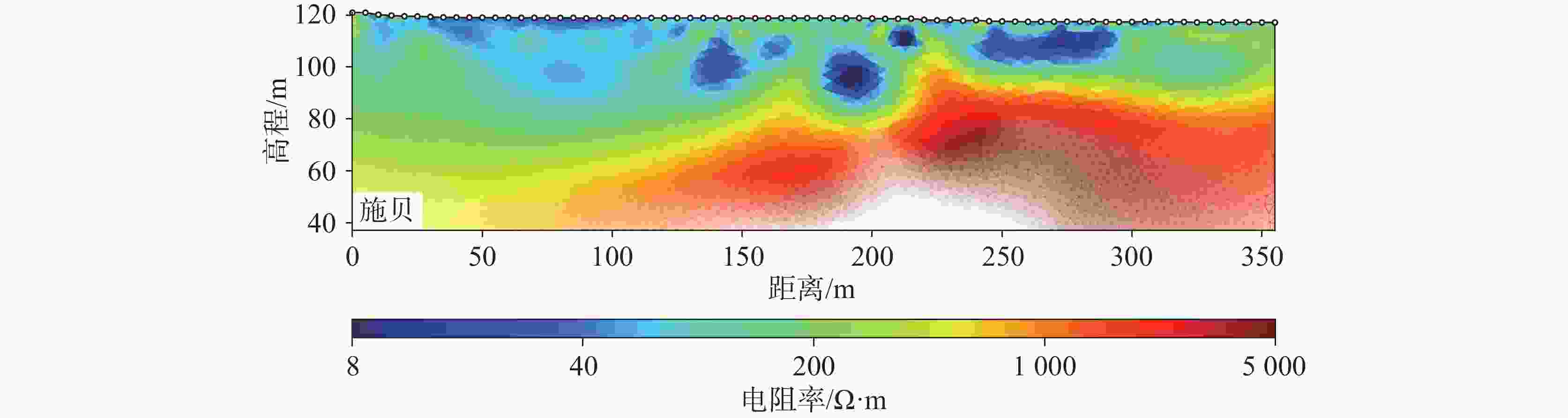
图 3 施贝装置高密度电法反演剖面图
Figure 3. Cross-section of high-density electrical inversion of Schlumberger device
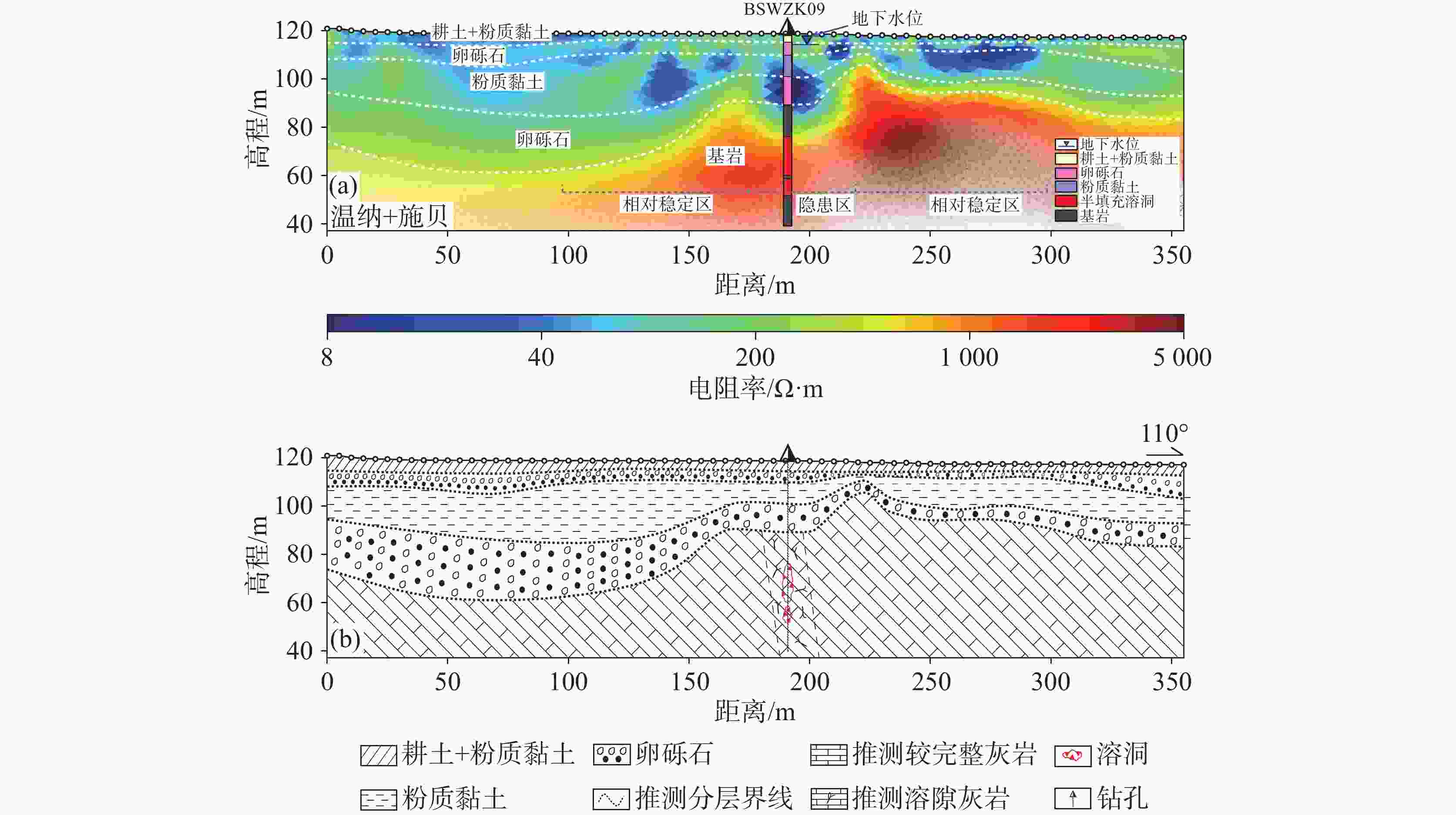
图 4 组合排列装置高密度电法反演剖面图(a)和推断地质剖面图(b)
Figure 4. Cross-section of high-density electrical inversion for combined arrangement device (a) and inferred geological cross-section (b)
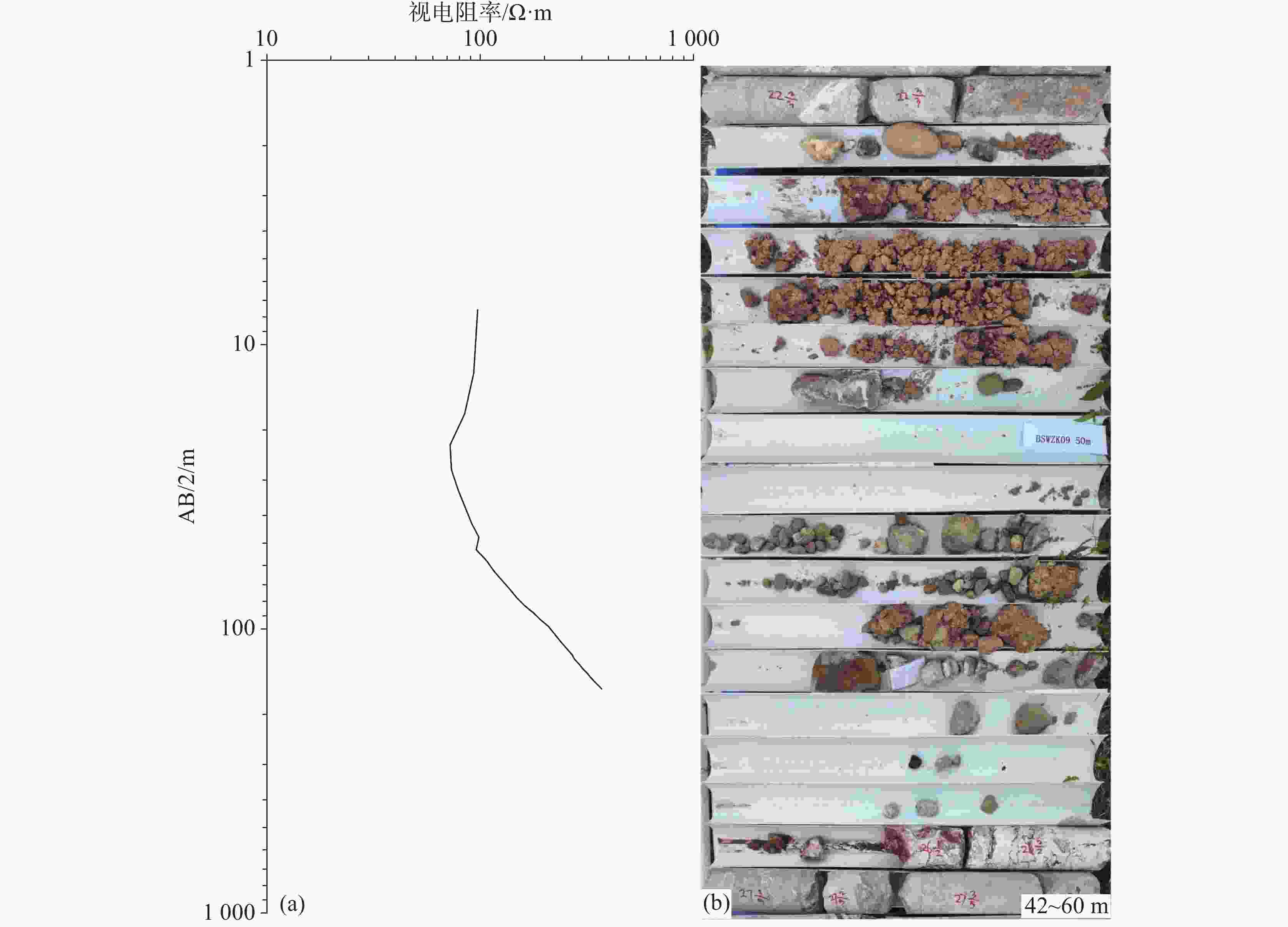
图 5 BSWZK09钻孔处视电阻率单支测深曲线(a)和部分岩芯照片(b)
Figure 5. Single branch sounding curve of apparent resistivity at BSWZK09 borehole (a) and photos of some cores (b)
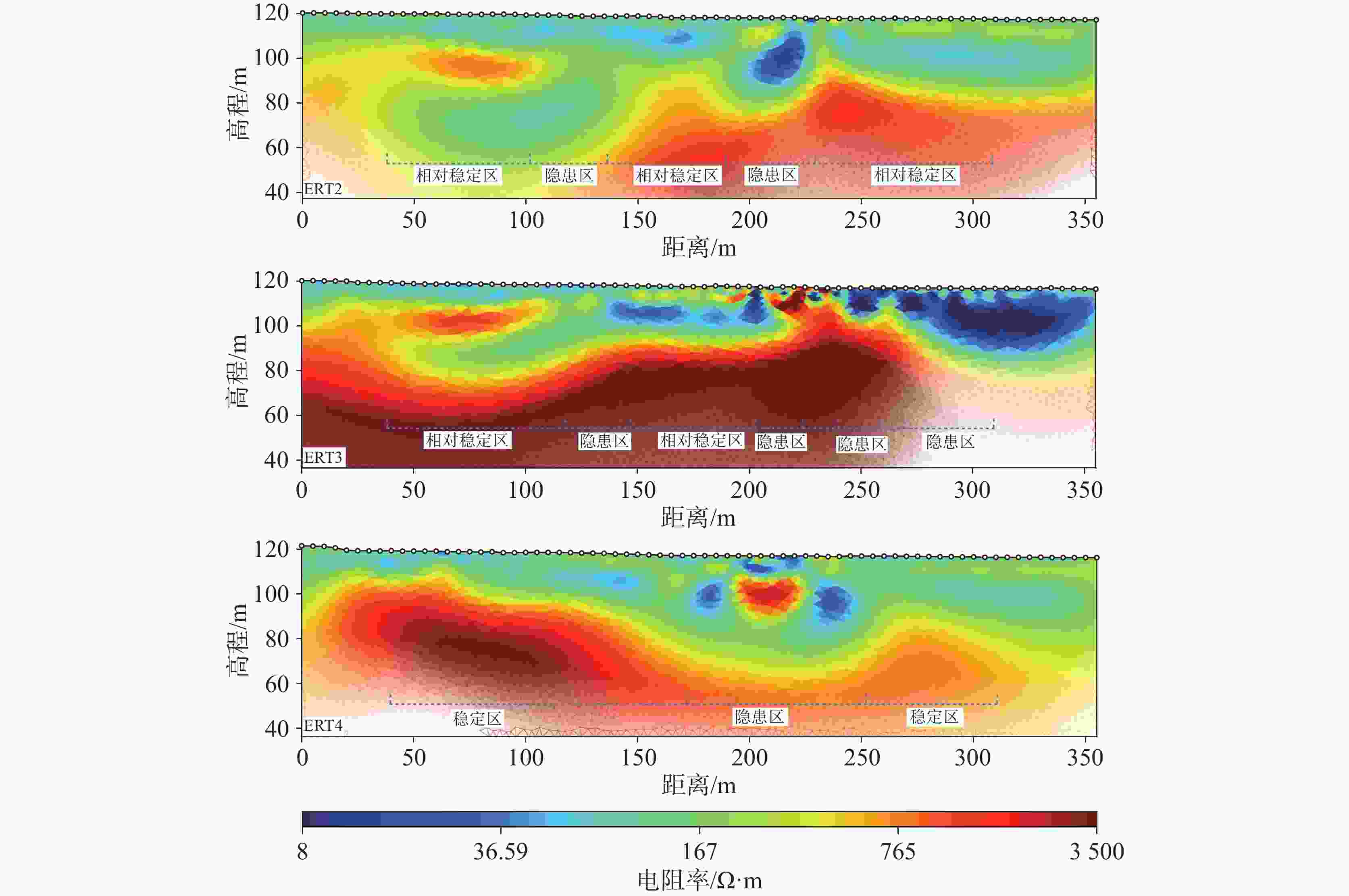
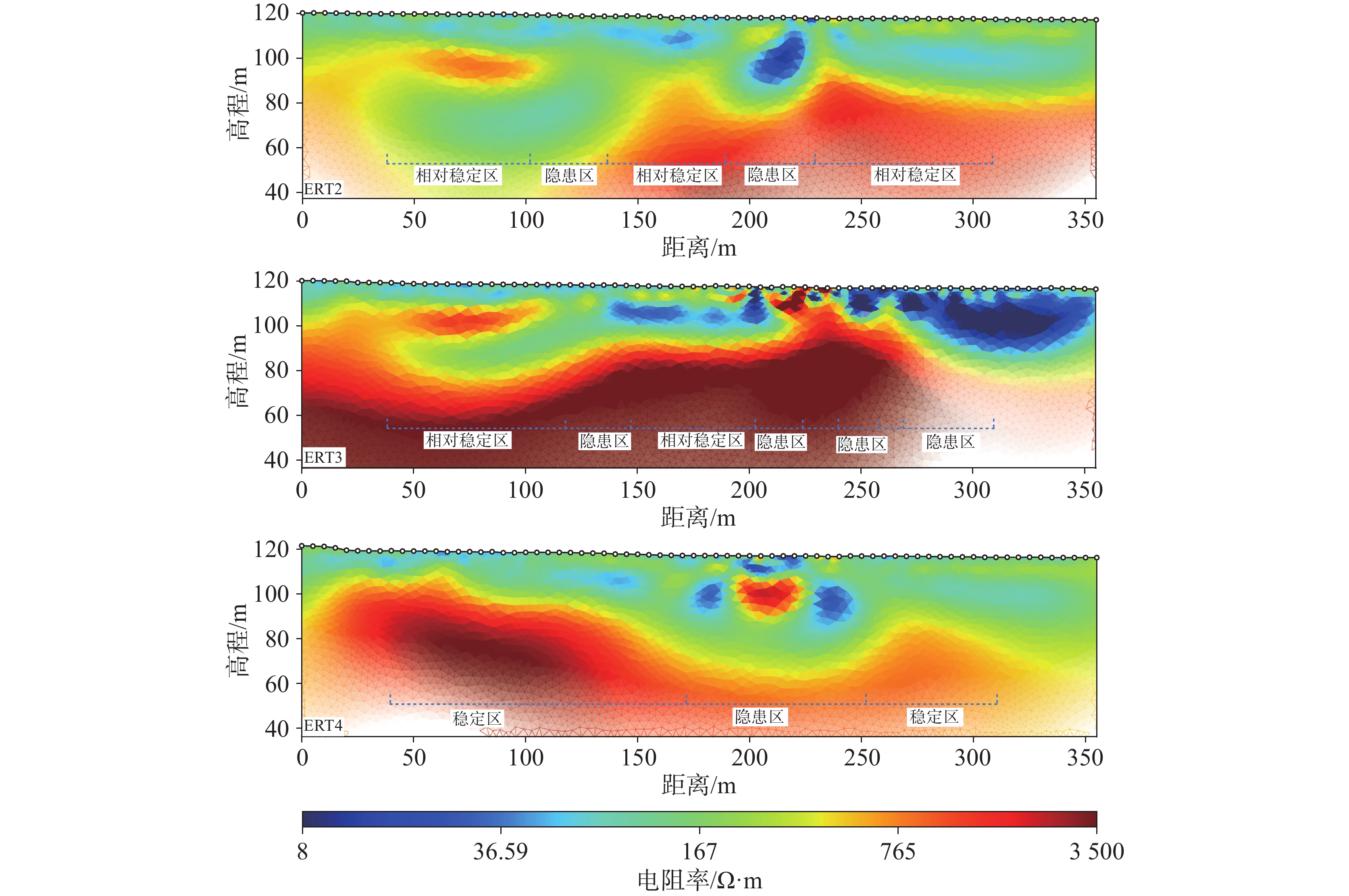
图 6 ERT2、ERT3和ERT4测线高密度电法反演剖面图
Figure 6. Cross-sections of high-density electrical inversion of ERT2, ERT3, and ERT4 survey lines
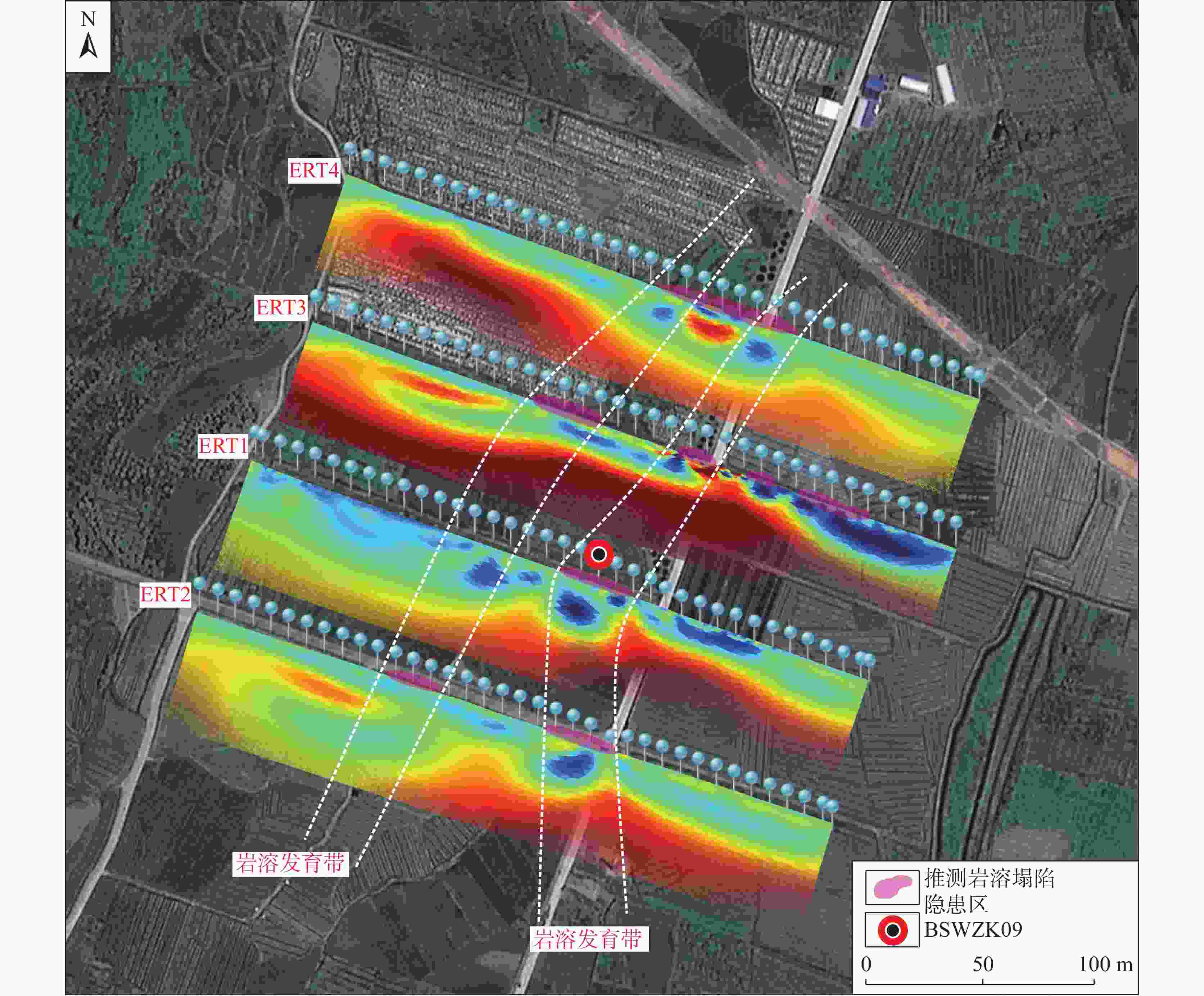
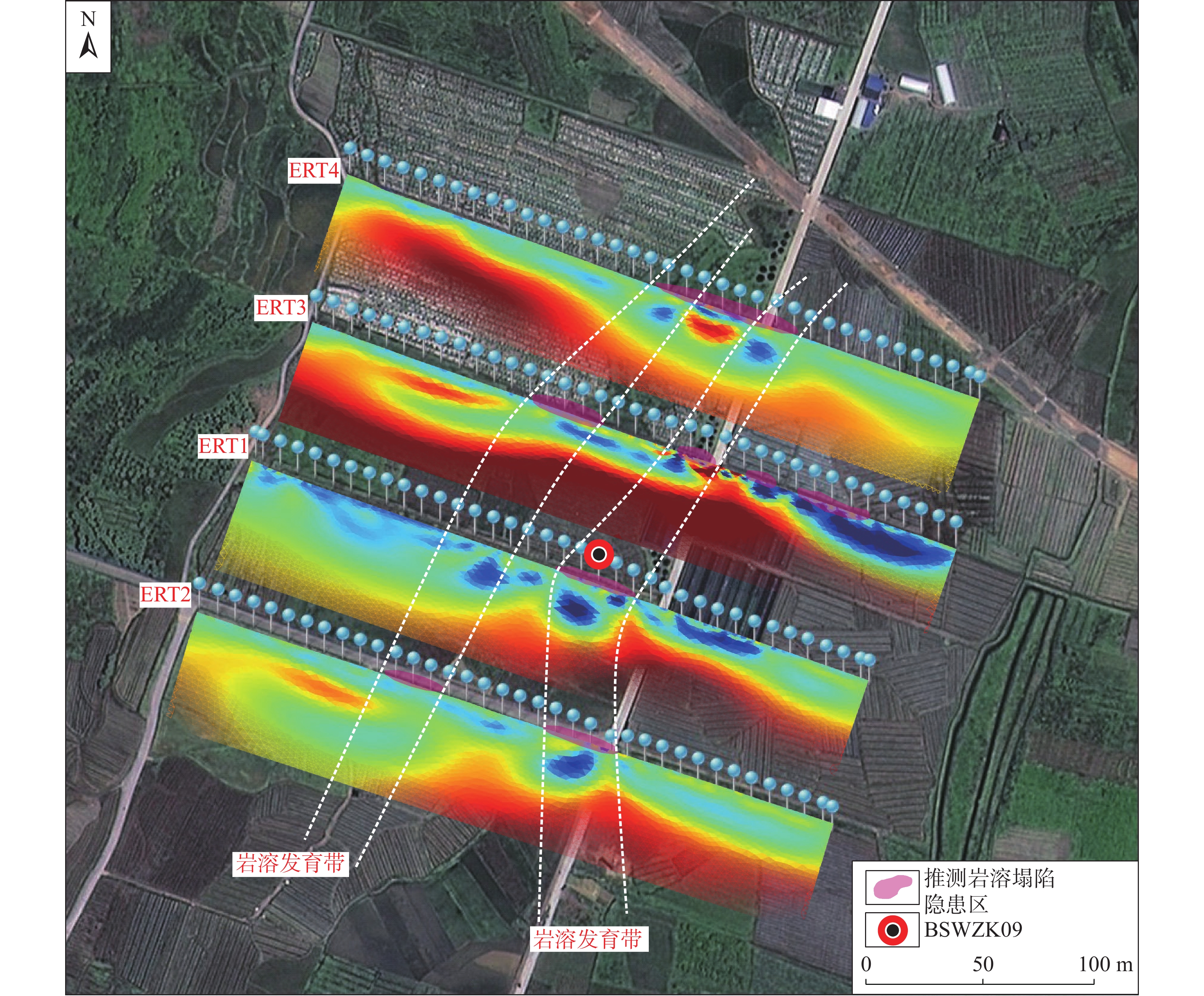
图 7 岩溶塌陷隐患区及发育带推断
Figure 7. Inference of hidden danger areas and development zones of karst collapses
表 1 地层及水文特征表
Table 1. Strata and hydrological characteristics in the study area
岩石地层 地层代号 岩性特征 地下水类型 富水程度 第四系冲积层 Qal 黏土、砂质黏土、含砾中粗砂 松散岩孔隙水 丰富 泥盆系巴漆组 D2-3b 深灰、灰黑、泥晶、含炭质泥质、白云质灰岩 岩溶水 中等 泥盆系融县组 D3r 灰白、灰黑色泥晶–粉晶灰岩夹含生物砾屑白云质灰岩 岩溶水 中等 泥盆系东岗岭组 D2d 灰、灰黑色夹少量白云质,偶夹含燧石、泥质白云质灰岩 岩溶水 中等 泥盆系信都组 D2x 灰白色细粒、中粒石英砂岩和页岩,夹泥质粉砂岩 碎屑岩裂隙水 中等  下载: 导出CSV
表 2 常见岩土介质电阻率表
Table 2. Common rock and soil medium resistivity
岩土介质 电阻率
范围/Ω·m岩土介质 电阻率
范围/Ω·m黏土 101~102 碳质岩层 100~102 湿砂、卵石 102~103 地下水 <102 干砂、卵石 103~105 石灰岩 3×10²~104
下载: 导出CSV
-
[1] 罗小杰, 罗程. 覆盖型岩溶地面塌陷综合地质预测与危险性评估[J]. 中国岩溶, 2016, 35(1): 51-59. doi: 10.11932/karst20160108LUO Xiaojie, LUO Cheng. Comprehensive geological prediction and risk assessment of covered karst ground collapse.[J]. Carsologica Sinica, 2016, 35(1): 51-59. doi: 10.11932/karst20160108 [2] 罗小杰. 覆盖型岩溶地面塌陷防治与应急处置[J]. 人民长江, 2016, 47(5): 38-44.LUO Xiaojie. Prevention, control and emergency disposal of covered karst ground collapse[J]. Yangtze River, 2016, 47(5): 38-44. [3] 罗小杰. 也论覆盖型岩溶地面塌陷机理[J]. 工程地质学报, 2015, 23(5): 886-895.LUO Xiaojie. Further discussion on mechanism of covered karst ground collapse[J]. Journal of Engineering Geology, 2015, 23(5): 886-895. [4] 王忠忠, 黄文龙, 庄卓涵, 胡飞跃, 刘广宁. 珠三角丘陵山区岩溶塌陷发育特征及地质模式: 以广州北部为例[J]. 地质与勘探, 2023, 59(6): 1304-1314. doi: 10.12134/j.dzykt.2023.06.015WANG Zhongzhong, HUANG Wenlong, ZHUANG Zhuohan, HU Feiyue, LIU Guangning. Development features and geological models of karst collapse in hilly areas of the Pearl River Delta: A case study of northern Guangzhou[J]. Geology and Exploration, 2023, 59(6): 1304-1314. doi: 10.12134/j.dzykt.2023.06.015 [5] 杨磊, 张耀磊, 宋光啸, 覃剑文, 潘光明. 覆盖型岩溶区地面塌陷灾变规律与影响因素研究[J]. 应用基础与工程科学学报, 2024, 33(1):192-204.YANG Lei, ZHANG Yaolei, SONG Guangxiao, QIN Jianwen, PAN Guangming. Study on the Law of Ground Collapse and its Influencing Factors in Covered Karst Areas[J]. Journal of Basic Science and Engineering, 2024, 33(1):192-204. [6] 周文龙, 吴荣新, 肖玉林. 充水溶洞特征的高密度电阻率法反演分析研究[J]. 中国岩溶, 2016, 35(6): 699-705.ZHOU Wenlong, WU Rongxin, XIAO Yulin. Back analysis of high density resistivity method in the water-bearing karst cave[J]. Carsologica Sinica, 2016, 35(6): 699-705. [7] 郑智杰, 敖文龙, 曾洁, 甘伏平, 张伟. 综合物探法在柳州泗角村岩溶塌陷区调查中的应用[J]. 水文地质工程地质, 2017, 44(5): 143-149.ZHENG Zhijie, AO Wenlong, ZENG Jie, GAN Fuping, ZHANG Wei. Application of integrated geophysical methods to karst collapse investigation in the Sijiao village near Liuzhou[J]. Hydrogeology & Engineering Geology, 2017, 44(5): 143-149. [8] 刘伟, 甘伏平, 张伟, 贾龙. 红层区岩溶塌陷调查地球物理勘探技术应用研究[J]. 地球物理学进展, 2015, 30(6): 2923-2930. doi: 10.6038/pg20150661LIU Wei, GAN Fuping, ZHANG Wei, JIA Long. Application of geophysical prospection to Karst collapse in red bed area[J]. Progress in Geophysics, 2015, 30(6): 2923-2930. doi: 10.6038/pg20150661 [9] 温建亮, 张富明, 马玉龙, 薛俊杰. 芒硝矿地下溶蚀区综合地球物理勘查效果比较[J]. 地球物理学进展, 2020, 35(2): 793-798. doi: 10.6038/pg2020CC0498WEN Jianliang, ZHANG Fuming, MA Yulong, XUE Junjie. Comparison geophysical techniques for detecting underground dissolution area of glauber mine[J]. Progress in Geophysics, 2020, 35(2): 793-798. doi: 10.6038/pg2020CC0498 [10] 李能勇, 刘春超, 王增. 高密度电法与联合剖面法在岩溶勘探中的应用[J]. 安徽地质, 2024, 34(2): 124-129. doi: 10.3969/j.issn.1005-6157.2024.02.008LI Nengyong, LIU Chunchao, WANG Zeng. Application of high-density electrical method and composite profiling method to karst exploration[J]. Geology ofAnhui, 2024, 34(2): 124-129. doi: 10.3969/j.issn.1005-6157.2024.02.008 [11] 李春波, 张丽, 任磊, 于蒙, 代涛, 李福庆. 高密度电法在秦皇岛地区岩溶勘察工作中的应用[J]. 矿产勘查, 2024, 15(S1): 358-363.LI Chunbo, ZHANG Li, REN Lei, YU Meng, DAI Tao, LI Fuqing. Application of high density electrical method in karst exploration in Qinhuangdao area[J]. Mineral Exploration, 2024, 15(S1): 358-363. [12] 刘伟, 甘伏平, 周启友, 张伟. 高密度电阻率成像法与微动谱比法探测岩溶区塌陷的地质背景: 以广 东省高要市蛟塘镇塱下村塌陷区为例[J]. 地质与勘探, 2019, 55(1): 115-126.LIU Wei, GAN Fuping, ZHOU Qiyou, ZHANG Wei. Probing geological conditions of karst collapses using high-density resistivity imaging and microtremor spectral ratio methods: An example of Langxia village, Jiaotang town, Gaoyao City, Guangdong Province[J]. Geology and Exploration, 2019, 55(1): 115-126. [13] 吴亚楠. 高密度电阻率法在莱芜市泉河地区岩溶地质勘查中的应用[J]. 中国岩溶, 2018, 37(4): 617-623.WU Yanan. Application of the high-density electrical resistivity method to karst geological exploration in Quanhe, LaiwuCity. Carsologica Sinica[J], 2018, 37(4): 617-623. [14] Ismail Ahmed, Anderson N. 2-D and 3-D Resistivity Imaging of Karst Sites in Missouri, USA[J]. Environmental and Engineering Geoscience, 2012, 18: 281-293. [15] Cho I K, Kim K S, Lee K S. 3D Resistivity Survey at a Collapsed Tunnel Site[J]. Geophysics and Geophysical Exploration, 2015, 18, 14-20. [16] 郑智杰, 曾洁, 甘伏平, 张伟, 卢秀华. 高密度电法在柳州太阳村镇岩溶塌陷区调查中的应用研究[J]. 地质与勘探, 2017, 53(1): 124-132.ZHENG Zhijie, ZENG Jie, GAN Fuping, ZHANG Wei, LU Xiuhua. Application of high-density electrical resistivity imaging to karst collapse investigation at the Taiyangcun town, Liuzhou[J]. Geology and Exoloration, 2017, 53(1): 124-132. [17] 张银松, 曹聪, 康世海, 刘家富. 重庆市中梁山地区隐伏塌陷特征及物探勘测的思路[J]. 中国岩溶, 2020, 39(6): 918-927. doi: 10.11932/karst20200611ZHANG Yinsong, CAO Cong, KANG Shihai, LIU Jiafu. Characteristics of hidden karst collapse in the Zhongliangshan area of Chongqing and an approach of geophysical surveys[J]. Carsologica Sinica, 2020, 39(6): 918-927. doi: 10.11932/karst20200611 [18] 刘子宁, 窦磊, 张伟, 朱文斌, 莫滨, 陈恩, 贾磊. 粤西北连州地区下石炭统连县组新剖面的确定与特征[J]. 中 国地质, 2023, 50(2): 533-542.LIU Zining, DOU Lei, ZHANG Wei, ZHU Wenbin, MO Bin, CHEN En, JIA Lei. Identification and characteristics of a new section of the Lower Carboniferous Lianxian Formation in the Lianzhou area, northwest Guangdong[J]. Geology in China, 2023, 50(2): 533-542. [19] 闫清华, 阳映, 李双莹, 张亚龙, 倪斌, 衣骏杰. 高密度电法在某垃圾焚烧环保发电站岩溶场地勘察中的应[J]. 地质与勘探, 2021, 57(5): 1107-1116.YAN Qinghua, YANG Ying, LI Shuangying, ZHANG Yalong, NI Bin, YI Junjie. Application of the High Density Resistivity Method in Karst Site Investigation of a Waste Incineration Environmental Protection Power Station[J]. Geology and Exploration, 2021, 57(5): 1107-1116. [20] 王喜迁, 孙明国, 张皓, 江玉乐. 高密度电法在岩溶探测中的应用[J]. 煤田地质与勘探, 2011, 39(5): 72-75. doi: 10.3969/j.issn.1001-1986.2011.05.018WANG Xiqian, SUN Mingguo, ZHANG Hao, JIANG Yule. Application of high-density electrical technique in karst detection[J]. Coalgeology Exploration, 2011, 39(5): 72-75. doi: 10.3969/j.issn.1001-1986.2011.05.018 [21] Rücker Carsten. Günther Thomas, Wagner, Florian. M. pyGIMLi: An open-source library for modelling and inversion in geophysics[J]. Computers and Geosciences, 2017, 109: 106-123. doi: 10.1016/j.cageo.2017.07.011 [22] Rücker Carsten. Günther Thomas, Spitzer Klaus. Three-dimensional modelling and inversion of dc resistivity data incorporating topography-I. Modelling[J]. Geophysical Journal International, 2006, 166(2): 495-505. doi: 10.1111/j.1365-246X.2006.03010.x [23] Bazin Sara, Pfaffhuber Andreas Aspmo. Mapping of quick clay by electrical resistivity tomography under structural constraint. [24] Günther Thomas, Rücker Carsten, Spitzer Klaus. Three-dimensional modelling and inversion of DC resistivity data incorporating topography-II. Inversion[J]. Geophysical Journal International, 2006, 166(2): 506-517. doi: 10.1111/j.1365-246X.2006.03011.x [25] 严加永, 孟贵祥, 吕庆田, 张昆, 陈向斌. 高密度电法的进展与展望[J]. 物探与化探, 2012, 36(4): 576-584.YAN Jiayong, MENG Guixiang, LYU Qingtian, ZHANG Kun, CHEN Xiangbin. The Progress and Prospect of the electrical Resistivity imaging survey[J]. Geophysical&Geochemical exploration, 2012, 36(4): 576-584. -


 点击查看大图
计量
- 文章访问数: 534
- HTML浏览量: 183
- PDF下载量: 40
- 被引次数: 0
