


Wavelet transform analysis of the response mechanism of CO2 concentration to tourist activities in Zhijin Cave
-
摘要: 旅游活动将导致洞穴环境发生改变,特别是对于洞穴CO2浓度短时间内变化影响,多时间尺度下两者间的关联性研究较少。为准确探讨旅游活动对洞内CO2浓度的影响及其响应机制,本文基于织金洞封控期和运营期洞内温度、CO2浓度和游客量监测数据,利用小波变换进行多时间尺度下时频和时滞性分析。结果表明:织金洞内部环境受旅游活动扰动,洞内平均温度提升0.2~0.9 ℃,但各监测点间变幅存在差异;与封控期相比,运营期旅游高峰时段洞内CO2浓度明显升高,高峰时段后,3#和4#下降过程较为缓慢,5#至7#呈快速下降特征;织金洞运营期洞内CO2浓度长周期短于封控期,存在与客流日间差异特征显著关联的短周期变化;节假日期间洞内CO2浓度与游客量存在显著的正相关性,昼夜尺度上洞内CO2浓度对旅游活动的响应具有滞后性。研究结果为旅游活动对洞穴内部微环境的扰动程度及其影响过程提供重要的数据支撑,为指导洞穴开发、利用、管理提供科学理论依据。Abstract:
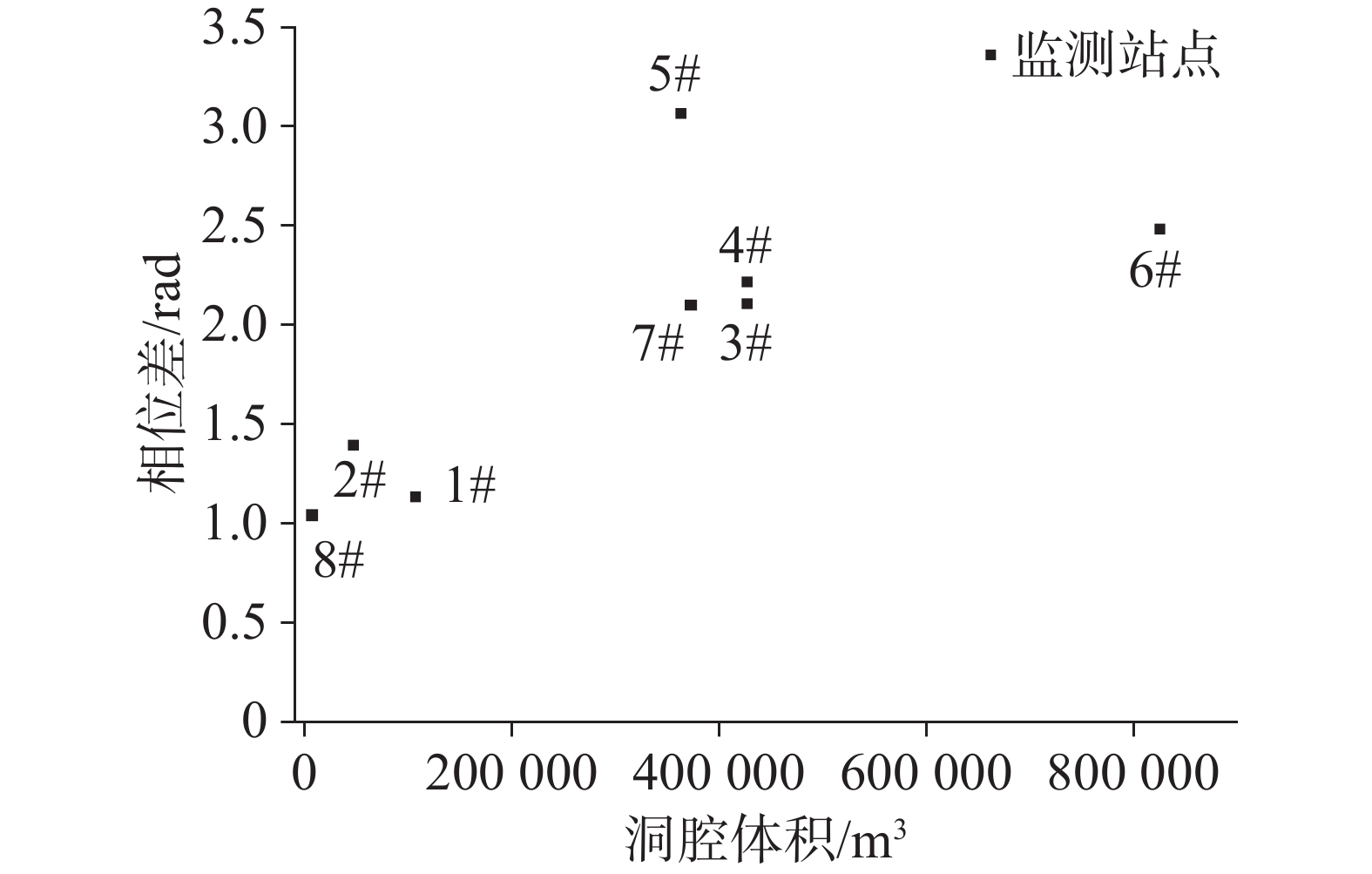
Karst caves are among the most frequented visited geological sites worldwide. However, their stable environments are vulnerable to changes caused by tourist activities, including variations in temperature, CO2 concentrations, humidity, airflow, microbial communities, and groundwater chemistry. Therefore, it is imperative to investigate the impact of tourist on cave ecosystems and to implement strategies aimed at enhancing the overall environmental quality of these caves. These efforts are crucial for ensuring the sustainable development of tourist caves. As a principal driver of karst processes, CO2 has garnered considerable attention in the fields of regional carbon cycling, weathering of cave sedimentary landscapes, and the analysis of cave ecological capacity. Prior research primarily focused on the characteristics of CO2 concentration variations, their sources, and influencing factors within tourist caves. Observations of diurnal and nocturnal fluctuations in CO2 concentrations clearly indicate that tourist activities exert a significant influence on these variations. However, monitoring of CO2 concentrations prior to development has not been conducted in most tourist caves, which limits the ability to accurately assess the extent of tourist impact on CO2 dynamics. The closure of tourist caves during the COVID-19 pandemic has provided a unique opportunity for comparative analyses. Currently, statistical analyses of CO2 concentrations in tourist caves predominantly rely on line graphs and scatter plots, which illustrate magnitude and variability but fail to accurately capture frequency variations across multiple temporal scales. Moreover, the depth of data exploration remains limited. Additionally, studies exploring the temporal variations of CO2 concentrations in relation to tourist volume often involve a degree of subjectivity. While, wavelet transform techniques can effectively reveal the periodic temporal-frequency characteristics of time series data across various scales, while precisely depicting the lag between dynamic changes in time series and their influencing factors. This methodological approach effectively addresses the existing gaps in research concerning CO2 levels in tourist caves. This study utilizes monitoring data on temperature, CO2 concentrations, and tourist volume from Zhijin Cave during both the lockdown and operation period. By employing wavelet transform for comprehensive time-frequency and lag analysis across multiple temporal scales, this research aims to provide an accurate assessment of the impact of tourist activities on CO2 concentrations within the cave, ultimately offering a scientific foundation to enhance predictive capabilities regarding CO2 levels in Zhijin Cave. The results reveal that following disturbances caused by tourist activities, the average temperature within Zhijin Cave increased by 0.23 to 0.86 °C, with notable variations observed among different monitoring sites. Compared to the lockdown period, CO2 concentrations within the cave exhibited a marked increase during peak tourist hours of the operation period. Subsequently, the decline in CO2 levels at monitoring points 3 and 4 was relatively gradual, whereas points 5 through 7 demonstrated a rapid decrease. During the operation period, the long-term periodicity of CO2 concentrations in Zhijin Cave was shorter than that recorded during the lockdown, with significant short-term fluctuations closely associated with variations in daytime visitor flows. During the holiday period (September 30 to October 4), a significant positive correlation was identified between CO2 concentrations and tourist volume within the cave. The response of CO2 concentrations to tourist activities displayed a distinct lag effect across both diurnal and nocturnal time scales. Overall, it was found that larger cave volumes were associated with longer lag times for CO2 concentrations in response to changes in tourist volume. These findings provide valuable insights for analyzing the changes in CO2 concentrations within tourist caves under relatively natural conditions and offer a scientific foundation for effective cave management. However, it is important to note that this study did not include monitoring of CO2 concentrations in the overlying soil, which limits the availability of direct data to characterize soil CO2 variations during the lockdown period. Additionally, the elevated visitor numbers during peak holiday periods influenced the correlation between CO2 concentrations and visitor counts during non-holiday intervals. Therefore, a comprehensive consideration of data comparisons during non-holiday periods is warranted. Furthermore, the analysis was conducted over a limited timeframe, which restricts its broader applicability. It is suggested that future research should adopt innovative analytical methodologies to investigate the response of CO2 concentrations in the cave to tourist volume across seasonal and interannual scales. -
Key words:
- wavelet transform /
- cave environment /
- CO2 concentration /
- tourist activities /
- response mechanism /
- Zhijin Cave
-
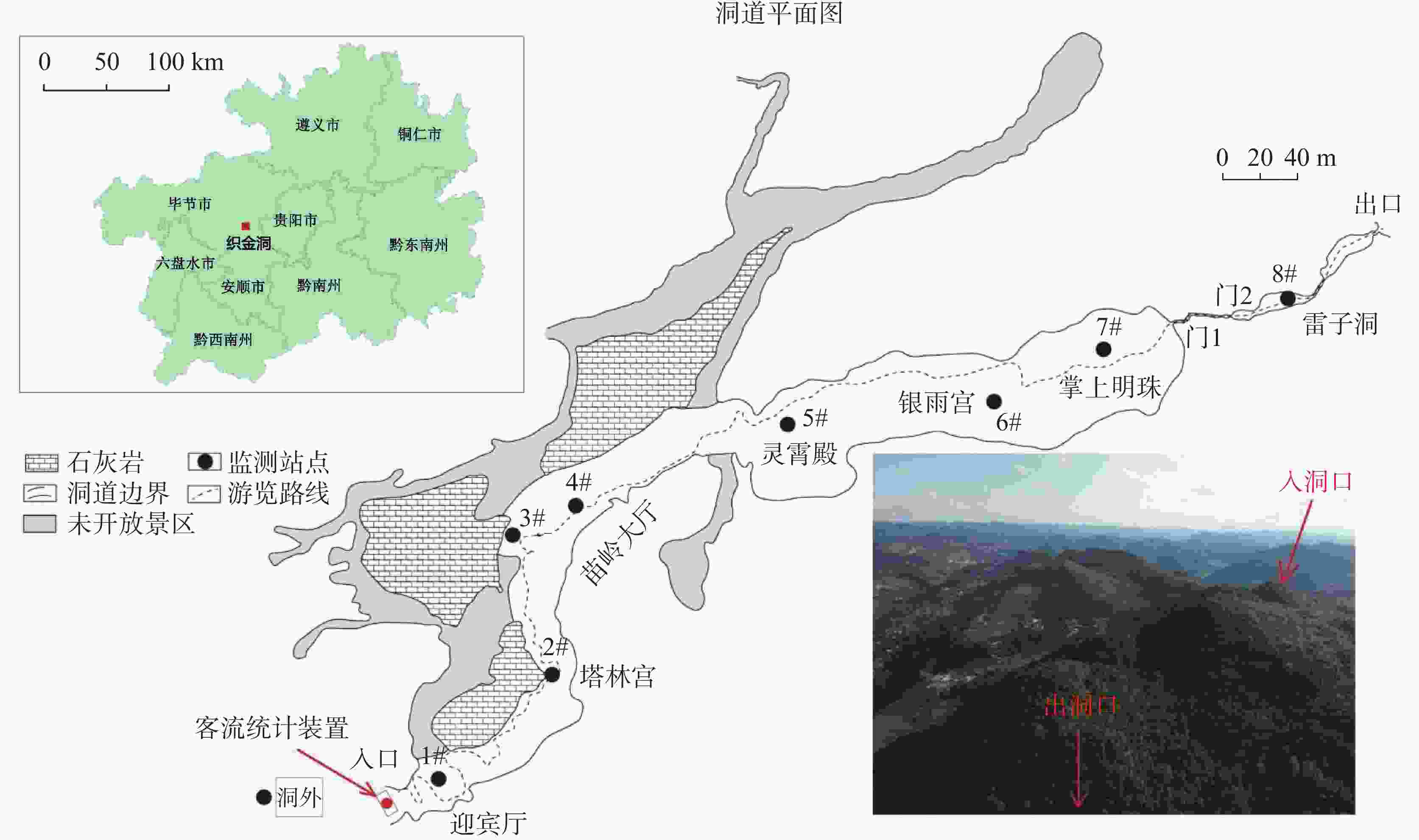
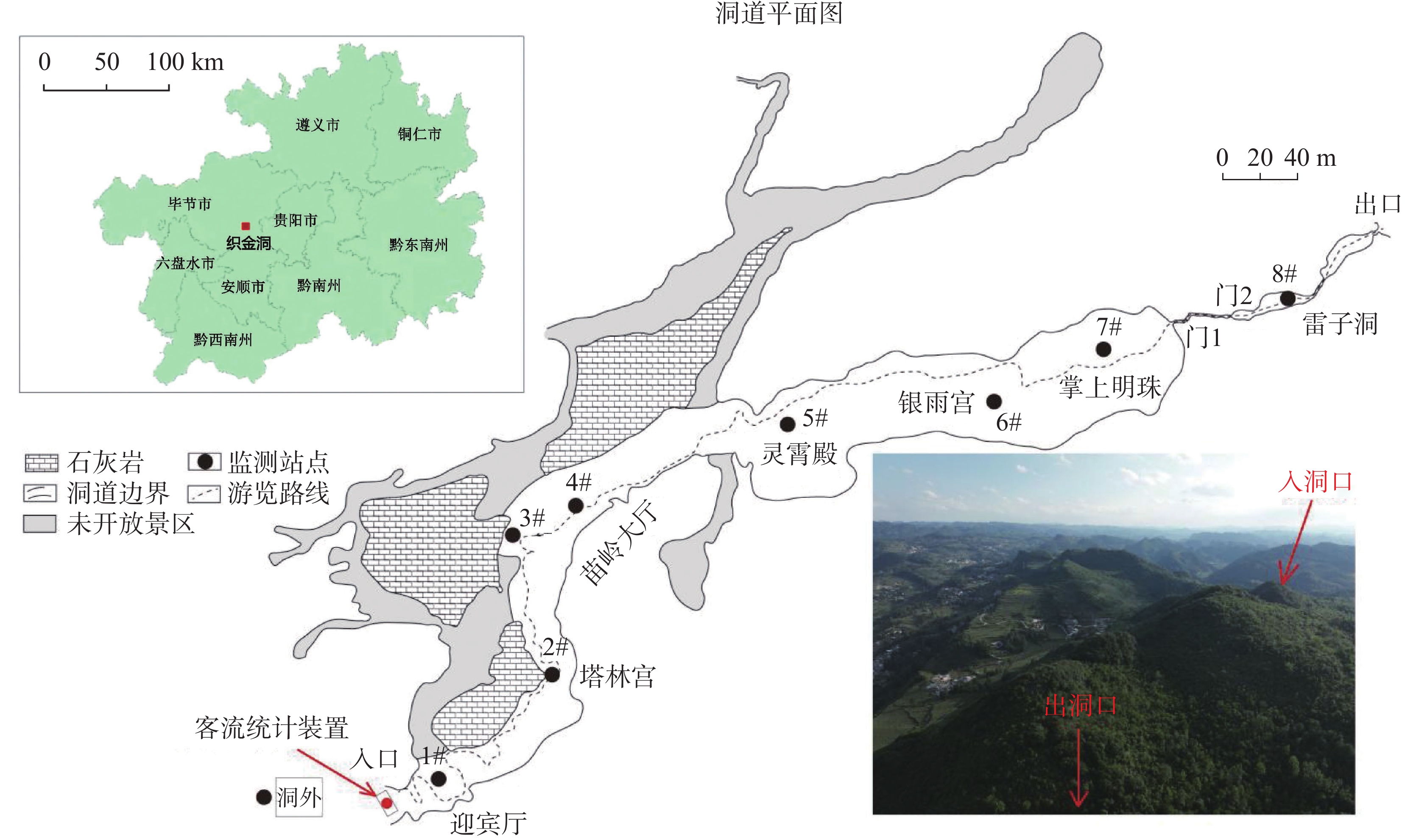
图 1 织金洞地理位置、监测点分布和无人机航拍图
Figure 1. Geographical location of Zhijin Cave, distribution of monitoring points, and aerial photography of UAV

图 2 运营期间游客量变化特征
Figure 2. Characteristics of tourist volume changes during the operation period
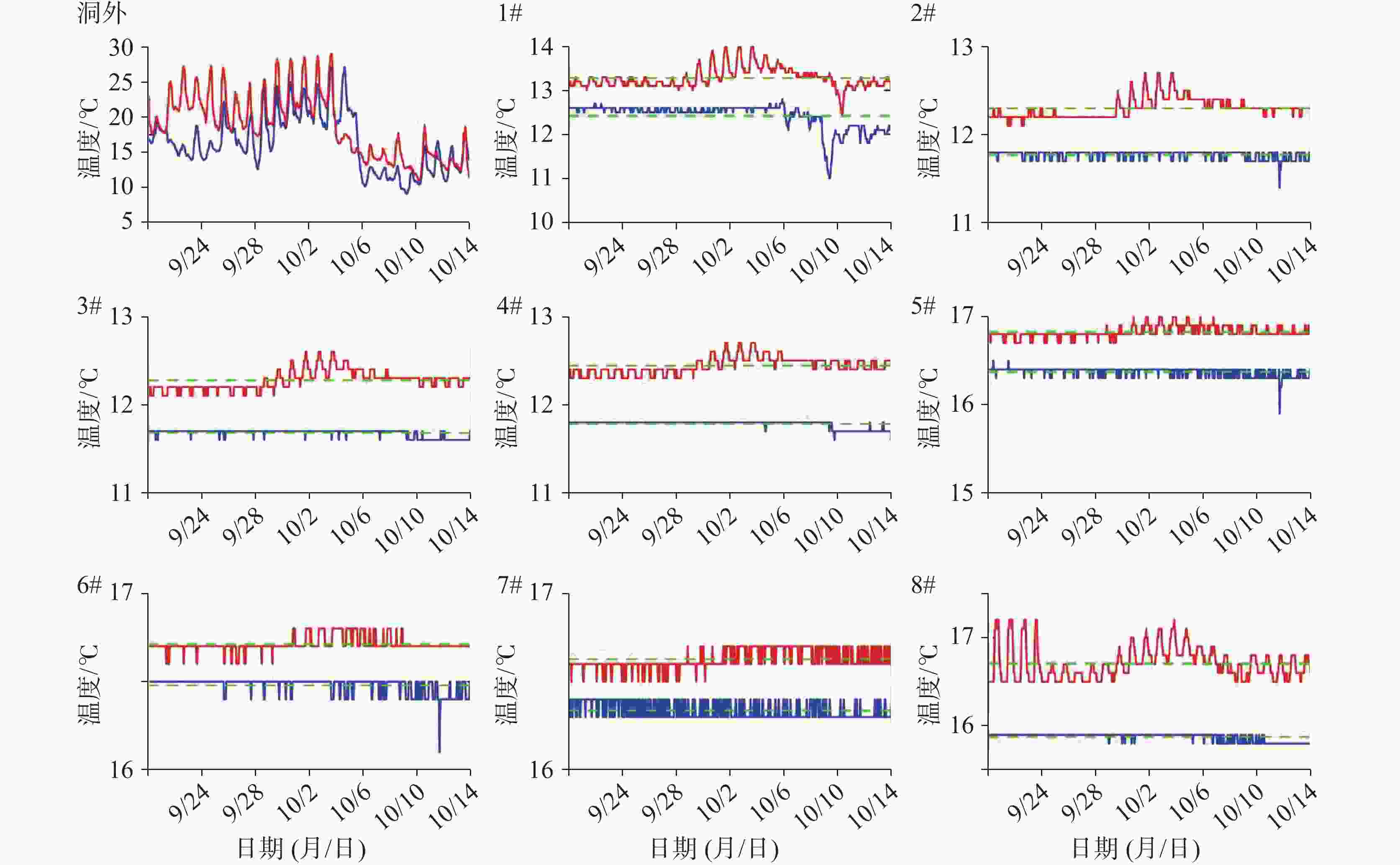
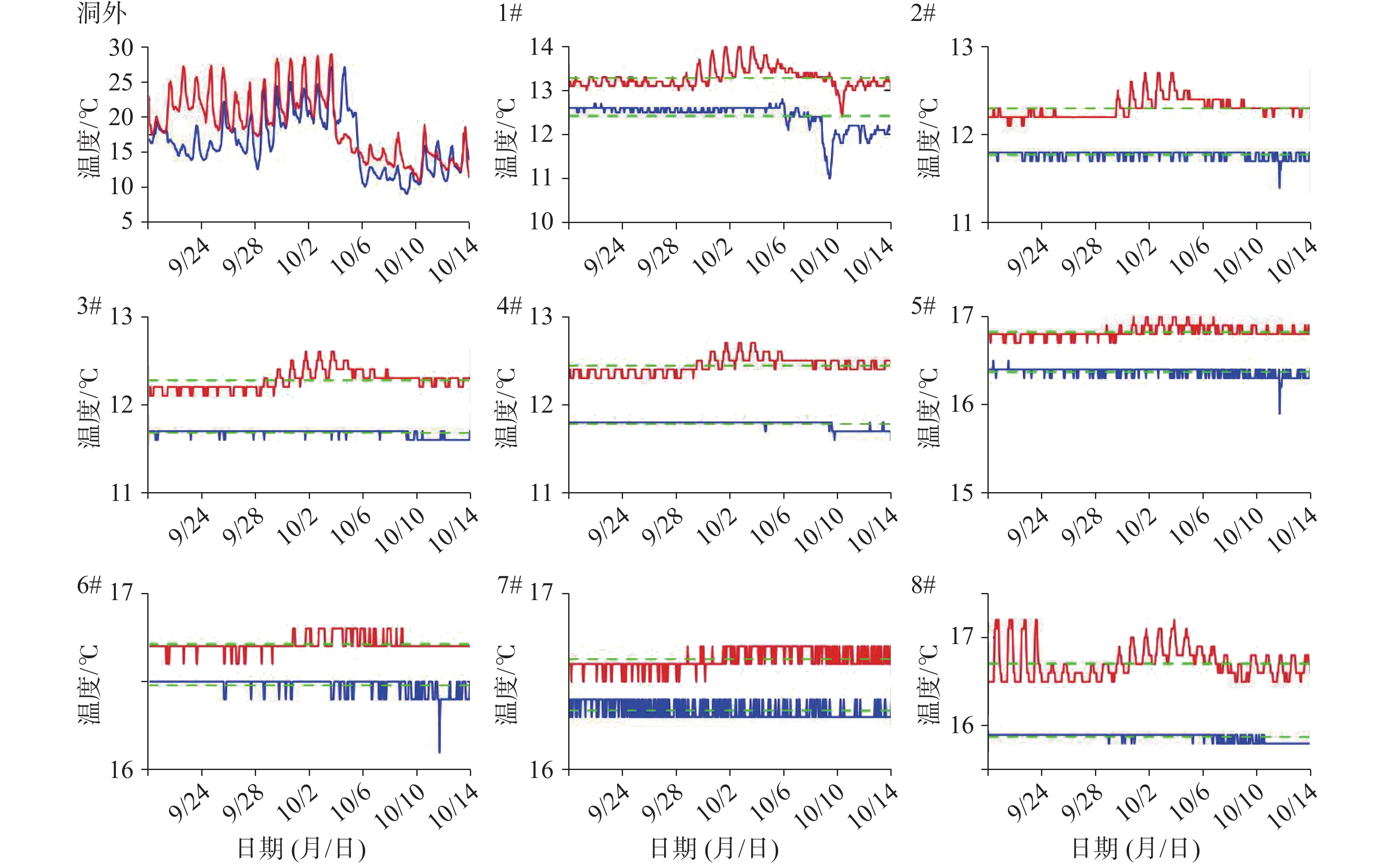
图 3 织金洞各监测点气温变化(蓝线为2022年封控期,红线为2023年运营期,绿线为均值线)
Figure 3. The temperature changes of each monitoring point in Zhijin Cave (blue line:lockdown period in 2022; red line: operation period in 2023; green line: mean line)
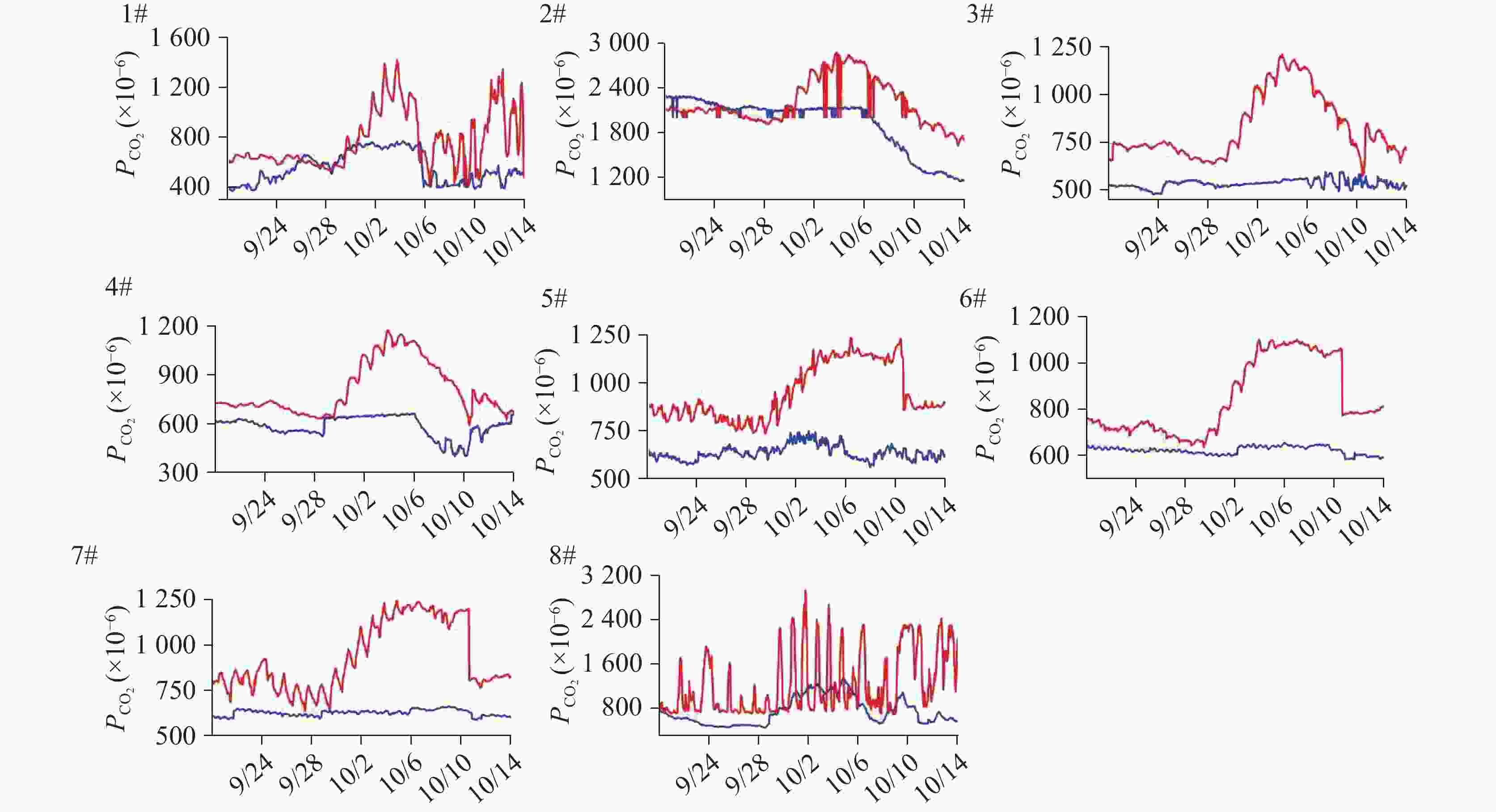
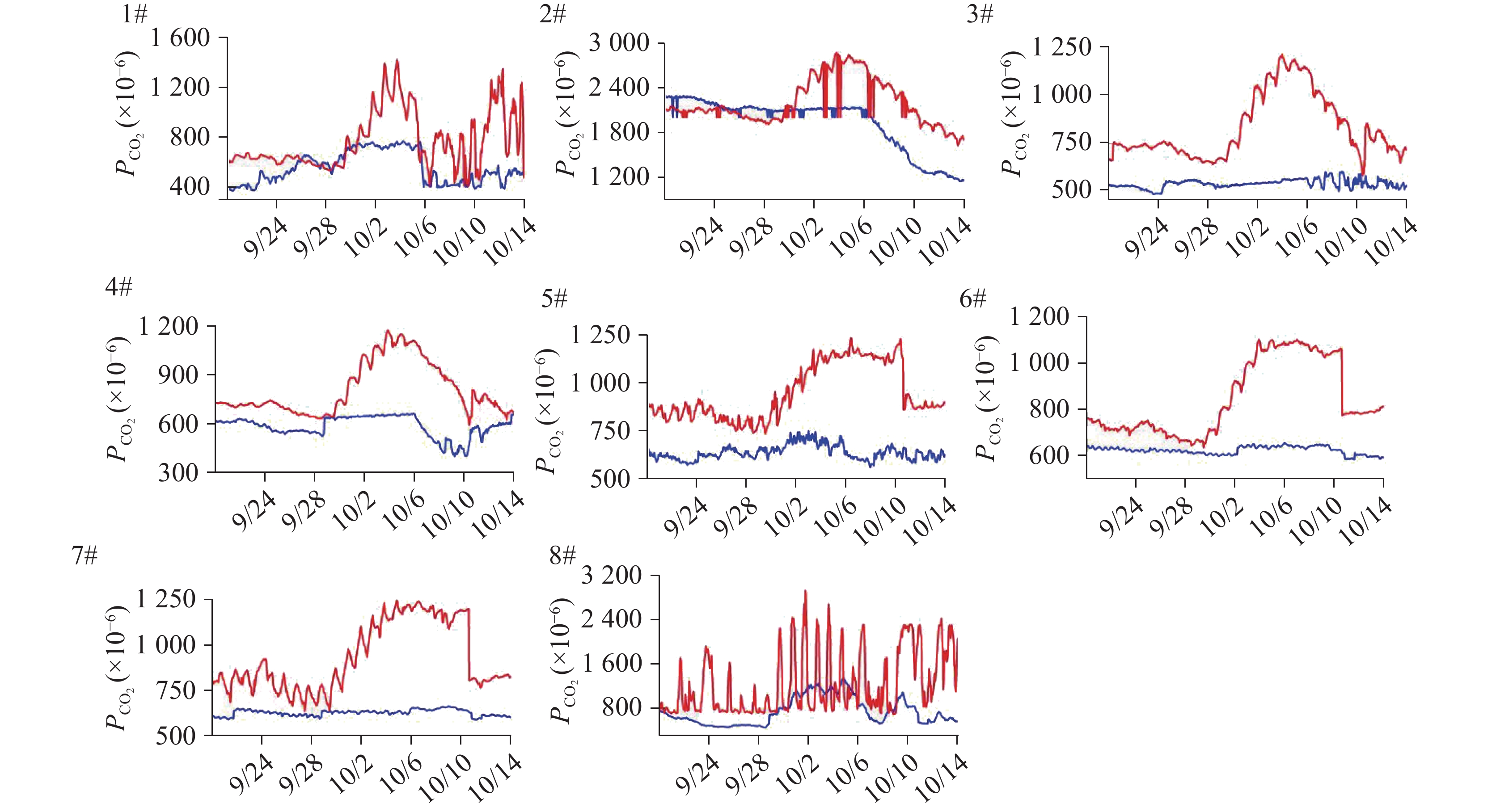
图 4 织金洞洞内CO2浓度变化(蓝线2022年封控期,红线2023年运营期)
Figure 4. Changes in CO2 concentration in Zhijin Cave (blue line: lockdown period in 2022; red line: operation period in 2023)
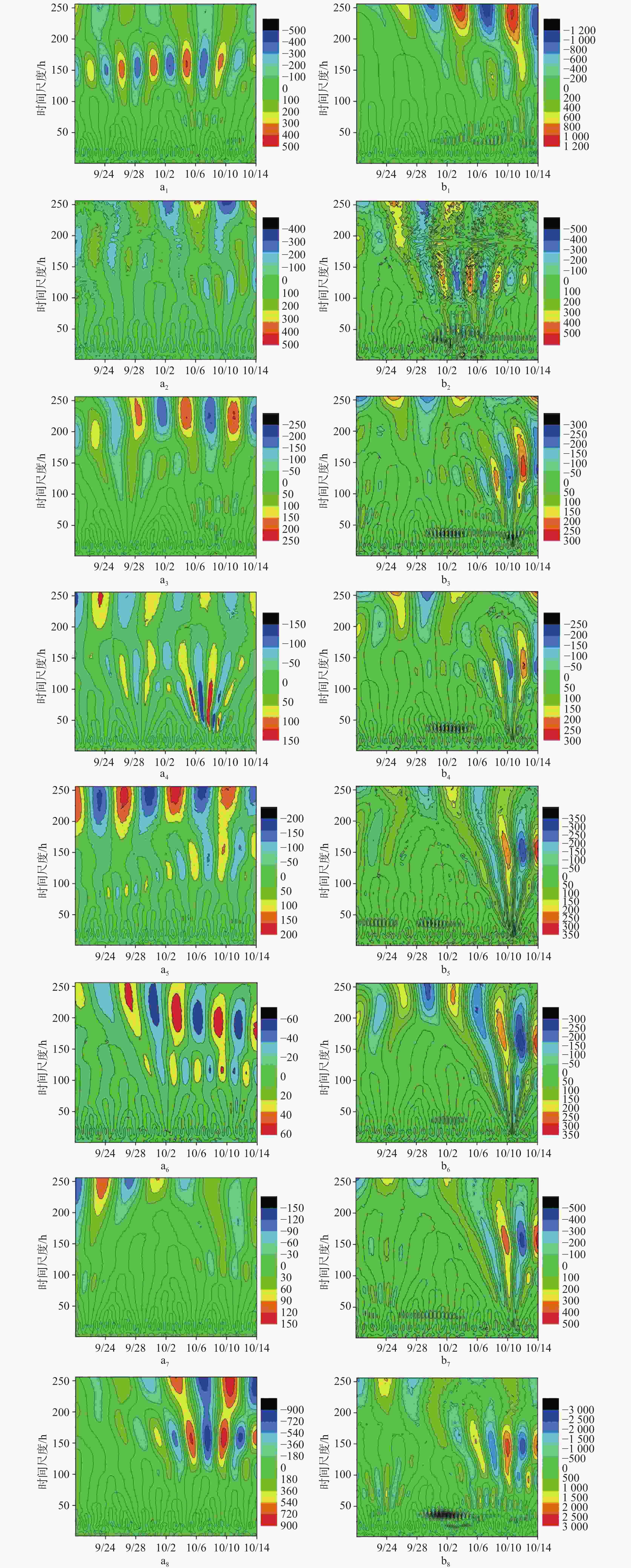
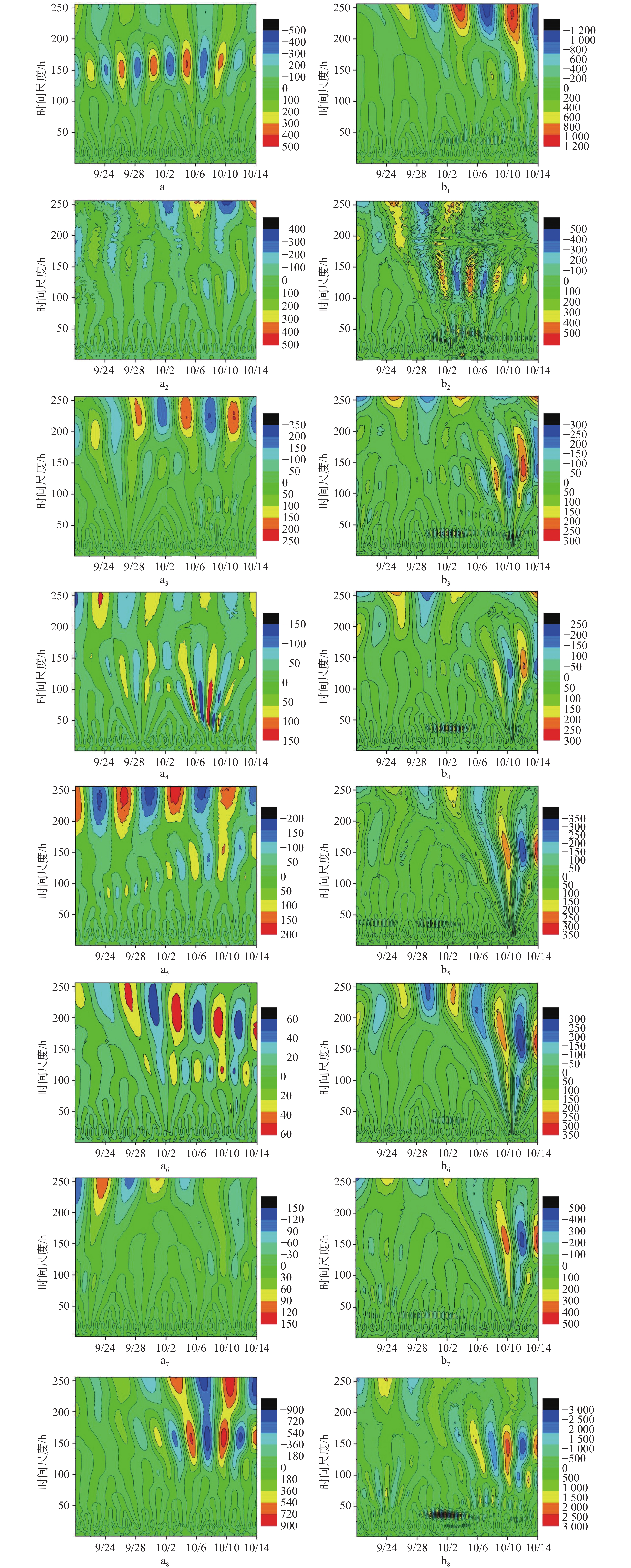
图 5 织金洞临时封控和正常运营状况下洞穴CO2小波系数实部
注:a1~a8为2022年临时封控期;b1~b8为2023年正常运营期。
Figure 5. Real part of CO2 wavelet coefficients in Zhijin Cave under temporary lockdown and normal operation conditions
Note: a1~a8 represent the temporary lockdown period in 2022; while b1~b8 denote the normal operation period in 2023.
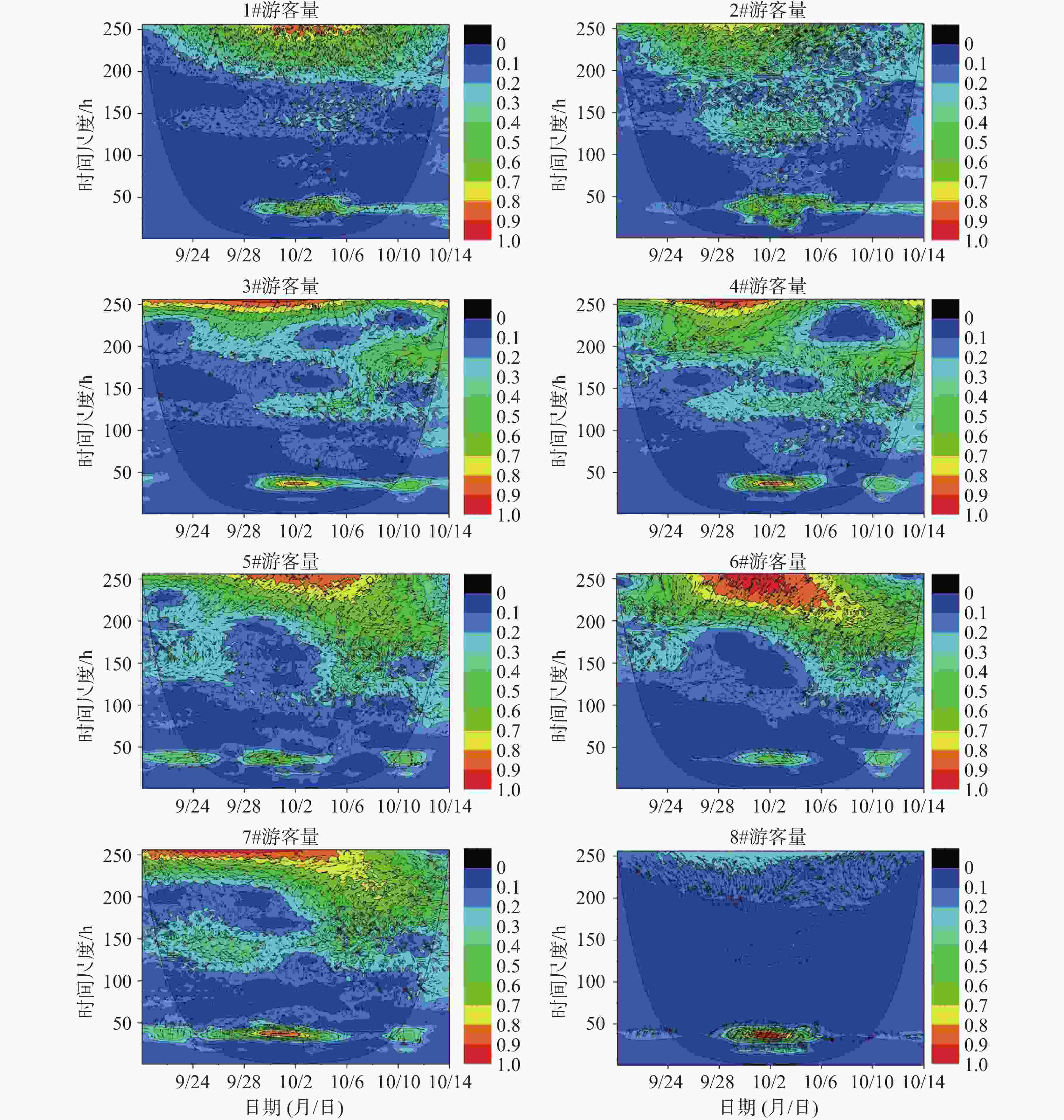
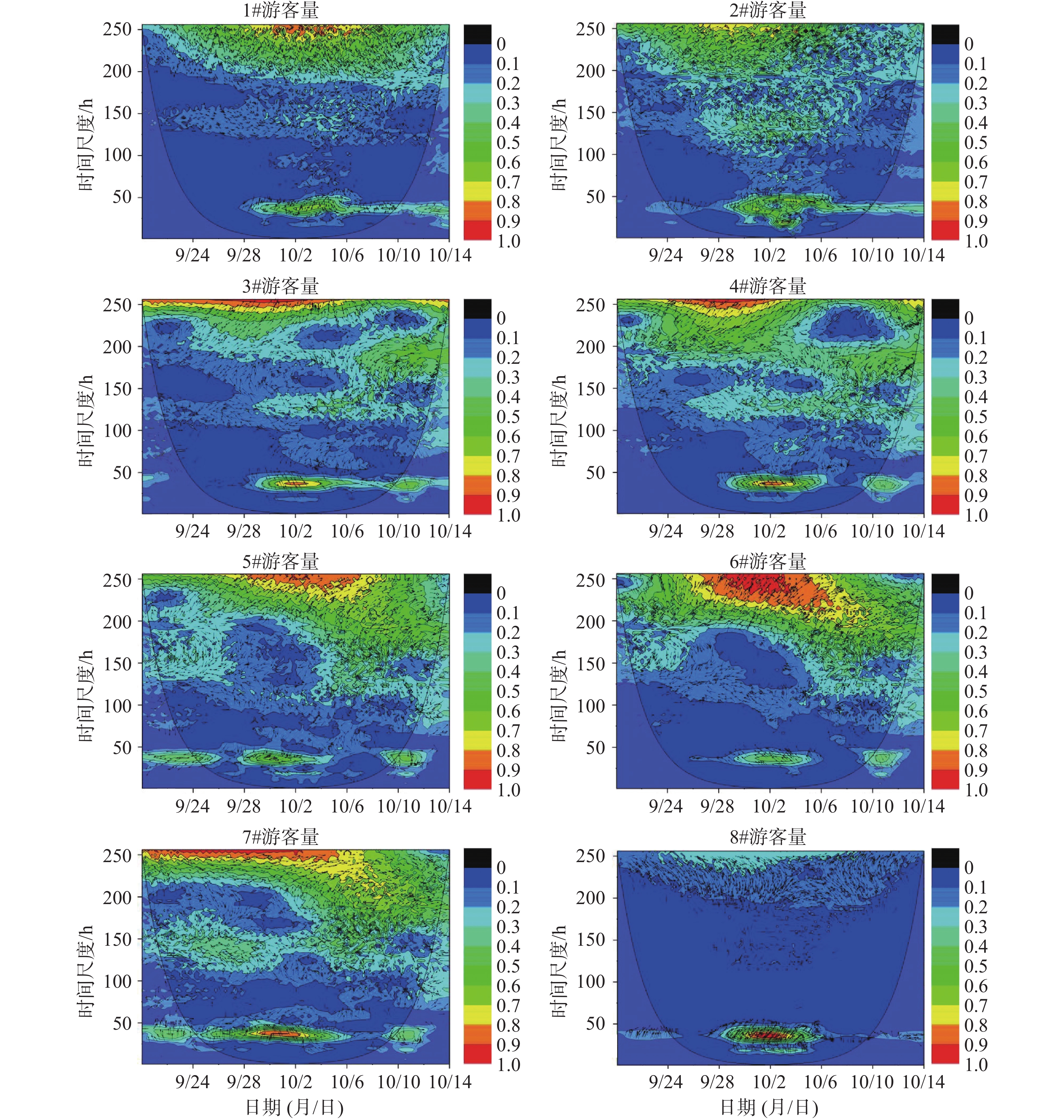
图 6 2023年织金洞各监测站点CO2浓度与游客量小波相干谱
注:图例表示交叉小波相关性(无量纲),黑弧线为小波影响锥边界,弧线以内表示通过α=0.05的红色噪音标准谱显著性检验,箭头方向反映了洞内CO2浓度与游客量的相位关系:箭头水平向右,表示两者同步变换;水平向左,表示洞内CO2浓度滞后游客量1/2周期;箭头垂直向上,表示洞内CO2浓度滞后游客量1/4周期;向下则提前1/4周期。
Figure 6. Coherence spectrum of CO2 concentration and tourist volume wavelet in each monitoring point of the Zhijin Cave in 2023
Note: The legend indicates the cross-wavelet coherence (dimensionless). The black arcs represent the boundaries of the wavelet cone of influence. Regions within the arcs denote areas that pass the red noise standard spectral significance test at α=0.05. The arrow directions reflect the phase relationship between cave CO2 concentration and tourist numbers:right-pointing arrows indicate in-phase synchronization between the two variables;left-pointing arrows signify that cave CO2 concentration lags behind tourist volume by half a period (1/2 period);upward-pointing arrows denote cave CO2 concentration lagging tourist numbers by a quarter period (1/4 period);and downward-pointing arrows suggest cave CO2 concentration leads tourist volumns by a quarter period (1/4 period).
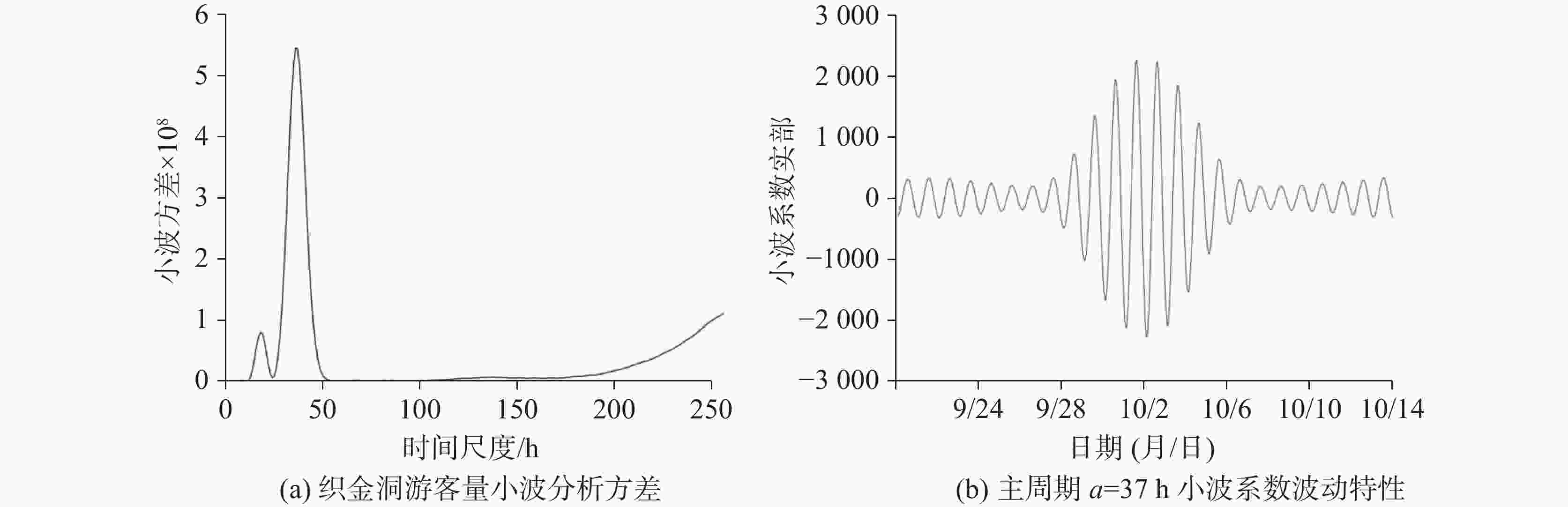
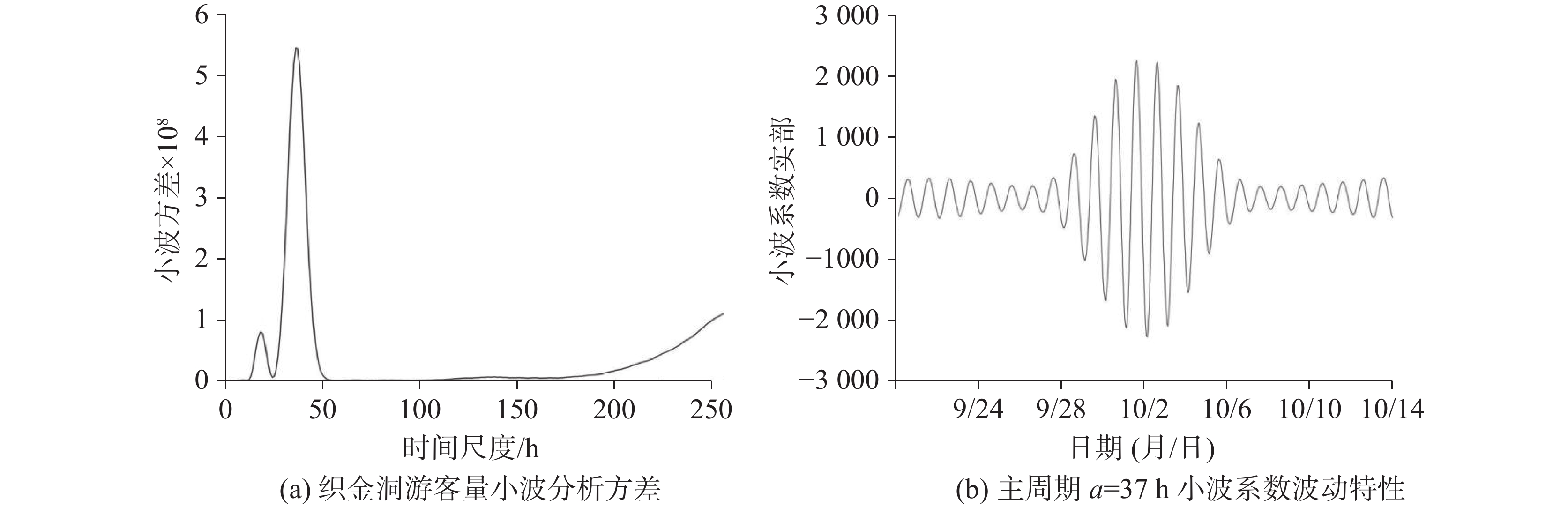
图 8 织金洞游客量呈小波变化特征
Figure 8. Characteristics of wavelet transform of tourist volume in Zhijin Cave (a) wavelet analysis of tourist volume in Zhijin Cave; (b) fluctuation characteristics of wavelet coefficient with the main period a=37h
表 1 织金洞监测点洞腔主要参数
Table 1. Main cavity indexes of Zhijin Cave
监测站点 景点名称 长度/m 高度 宽度 面积/
m2体积/
m3测点海拔/
m到旅游步道
距离/m最大/m 最小/m 最大/m 最小/m 1# 迎宾厅 105 26 8 70 20 4700 106218 1267 20 2# 塔林宫 91 29 12 38 5 2900 45895 1264 4 3# 苗岭大厅 281 38 19 85 50 18000 426384 1244 14 4# 苗岭大厅 281 38 19 85 50 18000 426384 1249 6 5# 灵霄殿 180 42 14 95 38 11600 362114 1306 3 6# 银雨宫 190 66 40 115 90 18600 825472 1329 25 7# 掌上明珠 120 58 21 125 39 12500 372191 1339 19 8# 雷子洞 58 14 6 23 6 800 6512 1309 4  下载: 导出CSV
-
[1] Chiarini V, Duckeck J, De Waele J. A global perspective on sustainable show cave tourism[J]. Geoheritage, 2022, 14(3): 82. doi: 10.1007/s12371-022-00717-5 [2] Sáez M, Benavente D, Cuezva S, Huc M, Fernández-Cortés Á, Mialon A, Kerr Y, Sánchez-Moral S, Mangiarotti S. Scenarios for the Altamira cave CO2 concentration from 1950 to 2100[J]. Scientific Reports, 2024, 14(1): 10359. doi: 10.1038/s41598-024-60149-9 [3] Piano E, Mammola S, Nicolosi G, Isaia M. Advancing tourism sustainability in show caves[J].Cell Reports Sustainability, 2024, 1(3):1-13. [4] Martin-Pozas T, Nováková A, Jurado V, Cuezva S, Fernandez-Cortes A, Saiz-Jimenez C, Sanchez-Moral S. A Second Fungal Outbreak in Castañar Cave, Spain, Discloses the Fragility of Subsurface Ecosystems[J]. Microbial Ecology, 2024, 87(1): 53. doi: 10.1007/s00248-024-02367-2 [5] 朱晓燕, 张美良. 基于岩溶洞穴旅游活动中洞穴环境因子的研究[J]. 中国岩溶, 2020, 39(3): 426-431. doi: 10.11932/karst2020y14ZHU Xiaoyan, ZHANG Meiliang. Study on cave environmental factors based on karst cave tourism activities[J]. Carsologica Sinica, 2020, 39(3): 426-431. doi: 10.11932/karst2020y14 [6] Balestra V, Bellopede R, Cina A, De Regibus C, Manzino A, Marini P, Maschio P, Vigna B. Study of the environmental impact in show caves: a multidisciplinary research[J]. Geoingegneria Ambientale E Mineraria1, 2021, 163: 24-35. [7] 吴夏, 潘谋成, 曹建华, 朱晓燕, 张美良, 杨会, 唐伟, 蓝高勇. 开放洞穴环境变化特征及其影响因素: 以桂林凉风洞为例[J]. 中国岩溶, 2019, 38(3): 361-369.WU Xia, PAN Moucheng, CAO Jianhua, ZHU Xiaoyan, ZHANG Meiliang, YANG Hui, TANG Wei, LAN Gaoyong. Characteristics of open cave environment and its influencing factors: A case study of Liangfeng cave, Guilin[J]. Carsologica Sinica, 2019, 38(3): 361-369. [8] 吴泽燕, 章程, 蒋忠诚, 罗为群, 曾发明. 岩溶关键带及其碳循环研究进展[J]. 地球科学进展, 2019, 34(5): 488-498.WU Zeyan, ZHANG cheng, JIANG Zhongcheng, LUO Weiqun, ZENG Famign. Advance of karst critical zone and Its carbon cycle[J]. Advances In Earth Science, 2019, 34(5): 488-498. [9] 徐亚, 周忠发, 范宝祥, 安丹, 朱粲粲, 冯崇玉, 丁圣君. 岩溶洞穴生态环境容量及影响因素分析: 以绥阳大风洞–响水洞为例[J]. 环境科学与技术, 2021, 44(2): 186-195.XU Ya, ZHOU Zhongfa, FAN Baoxiang, AN Dan, ZHU Cancan, FENG Chongyu, DING Shengjun. Analysis of Ecological Environment Capacity and Influencing Factors of Karst Cave: Taking Dafeng-Xiangshui Caves, Suiyang as an Example[J]. Environmental Science & Technology, 2021, 44(2): 186-195. [10] Shi L, Zhou Z, Fan B, Yan L, Ding S, Zhang H, Huang J. Study on vertical migration of CO2 in a karst cave system[J]. Episodes Journal of International Geoscience, 2022, 45.4: 431-444. [11] Oberhelman A, Martin J B, Flint M K. Sources of limestone dissolution from surface water-groundwater interaction in the carbonate critical zone[J]. Chemical Geology, 2024: 122229. [12] Addesso R, Bellino A, Baldantoni D. Underground ecosystem conservation through high-resolution air monitoring[J]. Environmental Management, 2022, 69: 982-993. [13] Spötl C, Fairchild I J, Tooth A F. Cave air control on dripwater geochemistry, Obir Caves (Austria): Implications for speleothem deposition in dynamically ventilated caves[J]. Geochimica et Cosmochimica Acta, 2005, 69(10): 2451-2468. doi: 10.1016/j.gca.2004.12.009 [14] Faimon J, Troppová D, Baldík V, Novotný R. Air circulation and its impact on microclimatic variables in the Císařská Cave (Moravian Karst, Czech Republic)[J]. International Journal of Climatology, 2012, 32(4): 599-623. doi: 10.1002/joc.2298 [15] Cao M, Jiang Y, Chen Y, Fan J, He Q. Variations of soil CO2 concentration and pCO2 in a cave stream on different time scales in subtropical climatic regime[J]. Catena, 2020, 185: 104280. doi: 10.1016/j.catena.2019.104280 [16] McDonough LK, Iverach CP, Beckmann S, Manefield M, Rau GC, Baker A, Kelly BFJ. Spatial variability of cave-air carbon dioxide and methane concentrations and isotopic compositions in a semi-arid karst environment[J]. Environmental Earth Sciences, 2016, 75: 1-20. doi: 10.1007/s12665-015-4873-x [17] 蔡炳贵, 沈凛梅, 郑伟, 李克普, 白云志, 董春志. 本溪水洞洞穴空气CO2浓度与温、湿度的空间分布和昼夜变化特征[J]. 中国岩溶, 2009, 28(4): 348-354.CAI Binggui, SHEN Linmei, ZHENG Wei, LI Kepu, BAI Yunzhi, DONG Chunzhi. Spatial distribution and diurnal variation in CO2 concentration, temperature and relative humidity of the cave air-A case study from Water Cave, Benxi, Liaoning, China[J]. Carsologica Sinica, 2009, 28(4): 348-354. [18] Frisia S, Fairchild IJ, Fohlmeister J, Miorandi R, Spötl C and Borsato A. Carbon mass-balance modelling and carbon isotope exchange processes in dynamic caves[J]. Geochimica et Cosmochimica Acta, 2011, 75(2): 380-400. doi: 10.1016/j.gca.2010.10.021 [19] Li Y, Yan Y, Wang X, Luo W, Zhao J, Sun Z, Ye Z, Chen X, Shi X, Xu Y, Baker JL. Sources and transport of CO2 in the karst system of Jiguan Cave, Funiu Mountains, China[J]. Science of the Total Environment, 2024, 918: 170507. doi: 10.1016/j.scitotenv.2024.170507 [20] Lang M, Faimon J, Pracný P, Štelcl J, Kejíková S, Hebelka J. Impact of water exhaled out by visitors in show caves: a case study from the Moravian Karst (Czech Republic)[J]. Environmental Science and Pollution Research, 2024, 31(18): 27117-27135. doi: 10.1007/s11356-024-32946-2 [21] Lang M, Faimon J, Kejíková S. The impact of door opening on CO2 levels: A case study from the Balcarka Cave (Moravian Karst, Czech Republic)[J]. International Journal of Speleology, 2017, 46(3): 3. [22] Guirado E, Ramos-López D, Maldonado AD, Moreno-Balcázar JJ, Calaforra JM. Modeling carbon dioxide for show cave conservation[J]. Journal for nature conservation, 2019, 49: 76-84. doi: 10.1016/j.jnc.2019.03.002 [23] Lang M, Faimon J, Pracný P, Kejíková S. A show cave management: anthropogenic CO2 in atmosphere of Výpustek Cave (Moravian Karst, Czech Republic)[J]. Journal for nature conservation, 2017, 35: 40-52. doi: 10.1016/j.jnc.2016.11.007 [24] 范宝祥, 周忠发, 薛冰清, 汤云涛, 汪炎林, 朱粲粲, 安丹. 短时间尺度下旅游洞穴空气环境自净能力研究: 以绥阳大风洞为例[J]. 中国岩溶, 2020, 39(2): 275-285.FAN Baoxiang, ZHOU Zhongfa, XUE Bingqing, TANG Yuntao, WANG Yanlin, ZHU Cancan, AN Dan. Characteristics of Air Environment Changes in Caves under Short-term and High Intensive Tourism Activities and Its Influence Factors: A Case Study of the Dafeng Cave in the Suiyang County[J]. Carsologica Sinica, 2020, 39(2): 275-285. [25] 张萍, 杨琰, 孙喆, 梁沙, 张娜, 田宁, 李建仓, 凌新有, 张志钦. 河南鸡冠洞CO2季节和昼夜变化特征及影响因子比较[J]. 环境科学, 2017, 38(1): 60-69.ZHANG Ping, YANG Yan, SUN Zhe, LIANG Sha, ZHANG Na, TIAN Ning, LI Jiancang, LING Xinyou, ZHANG Zhiqin[J]. Environment Science, 2017, 38(1): 60-69. [26] 赵振华, 罗振江, 黄林显, 邢立亭, 李洪涛, 孙虹洁. 基于小波分析的济南西郊地下水位对降雨响应机制研究[J]. 中国岩溶, 2023, 42(5): 931-939.ZHAO Zhenhua, LUO Zhenjiang, HUANG Linxian, XING Liting, LI Hongtao, SUN Hongjie. Research on the response mechanism of groundwater level to rainfall in the western suburb of Jinan based on wavelet analysis[J]. Carsologica Sinica, 2023, 42(5): 931-939. [27] 项彩娟, 陈植华, 王涛, 黄荷, 孙帮涛, 王勇. 基于小波分析的滇东北毛坪铅锌矿充水水源识别[J]. 地质科技情报, 2019, 38(6): 231-240.XIANG Caijuan, CHEN Zhihua, WANG Tao, HUANG He, SUN Bangtao, WANG Yong. Recognition of Water Source of Maoping Lead-Zinc Mine in Northeast Yunnan Based on Wavelet Analysis[J]. Geological Science and Technology Information, 2019, 38(6): 231-240. [28] 张强, 周忠发, 张绍云, 曹明达, 谢雅婷, 张结, 殷超, 潘艳喜. 织金洞洞穴环境CO2浓度的空间变化分析[J]. 地球与环境, 2016, 44(6): 654-662.ZHANG Qiang, ZHOU Zhongfa, ZHANG Shaoyun, CAO Mingda, XIE Yating, ZHANG Jie, YIN Chao, PAN Yanxi. Analysis of CO2 Concentration Changes under Different Spectral Scales in Zhijin Cave Environment[J]. Earth and Environment, 2016, 44(6): 654-662. [29] 殷超, 周忠发, 潘艳喜, 张结, 曹明达, 张绍云. 织金洞洞穴环境变化及成因分析[J]. 中国岩溶, 2017, 36(4): 591-597.YIN Chao, ZHOU Zhongfa, PAN Yanxi, ZHANG Jie, CAO Mingda, ZHANG Shaoyun. Environmental changes and their cause of the Zhijin Cave in Guizhou Province[J]. Carsologica Sinica, 2017, 36(4): 591-597. [30] 潘艳喜, 周忠发, 张结, 汪炎林, 田衷珲. 喀斯特旅游洞穴微气候环境要素时空分布特征及影响因素:以贵州织金洞为例[J]. 科学技术与工程, 2018, 18(10): 20-30.PAN Yanxi, ZHOU Zhongfa, ZHANG Jie, WANG Yanlin, TIAN Zhonghui. Temporal and Spatial Distribution Characteristics of Microclimate Environmental Elements in Karst Tourism Caves:A Case Study of Zhijin Cave in Guizhou Province[J]. Science Technology and Engineering, 2018, 18(10): 20-30. [31] 杨明凤, 殷建军. 岩溶洞穴温度与当地多年平均气温的关系研究: 以云南普者黑排龙洞为例[J]. 中国岩溶, 2024, 43(4): 780-795.YANG Mingfeng, YIN Jianjun. Relationship between temperatures of karst caves and local average temperatures: Taking Pailong cave of Puzhehei, Yunnan as an example[J]. Carsologica Sinica, 2024, 43(4): 780-795. [32] 徐尚全, 殷建军, 杨平恒, 周小萍, 沈立成. 旅游活动对洞穴环境的影响及洞穴的自净能力研究: 以重庆雪玉洞为例[J]. 热带地理, 2012, 32(3): 286-292. doi: 10.3969/j.issn.1001-5221.2012.03.012XU Shangquan, YIN Jianjun, YANG Pingheng, ZHOU Xiaoping, SHEN Licheng. Impacts of Tourism Activities on Cave Environments and Self-purification Ability of the Cave: A Case Study of Xueyu Cave, Chongqing[J]. Tropical Geography, 2012, 32(3): 286-292. doi: 10.3969/j.issn.1001-5221.2012.03.012 [33] 张美良, 朱晓燕, 吴夏, 张碧云, 潘谋成. 旅游活动对巴马水晶宫洞穴环境及碳酸钙沉积物景观的影响[J]. 中国岩溶, 2017, 36(1): 119-130. doi: 10.11932/karst20170115ZHANG Meiliang, ZHU Xiaoyan, WU Xia, ZHANG Biyun, PAN Moucheng. Impact of tourism activities on the cave environment and landscape of calcium carbonate (CaCO3) deposits at Shuijinggong cave, Bama country[J]. Carsologica Sinica, 2017, 36(1): 119-130. doi: 10.11932/karst20170115 [34] Surić M, Lončarić R, Kulišić M, Sršen L. Spatio-temporal variations of cave-air CO2 concentrations in two Croatian show caves: natural vs. anthropogenic controls[J]. Geologia Croatica, 2021, 74(3): 273-286. doi: 10.4154/gc.2021.21 [35] 张强, 周忠发, 陈全, 谢雅婷. 织金洞CO2浓度空间分布与昼夜变化的规律及成因分析[J]. 科学技术与工程, 2016, 16(26): 18-27. doi: 10.3969/j.issn.1671-1815.2016.26.003ZHANG Qiang, ZHOU Zhongfa, CHEN Quan, XIE Yating. Study on Spatial Distribution and Diurnal Variation and Causes of Carbon Dioxide Concentration in Zhijin Cave Envi-ronment[J]. Science Technology and Engineering, 2016, 16(26): 18-27. doi: 10.3969/j.issn.1671-1815.2016.26.003 [36] 张结, 周忠发, 潘艳喜, 殷超, 汪炎林, 田衷珲. 贵州织金洞CO2浓度不同时间尺度变化及其影响因子分析[J]. 生态与农村环境学报, 2017, 33(11): 1013-1022. doi: 10.11934/j.issn.1673-4831.2017.11.008ZHANG Jie, ZHOU Zhongfa, PAN Yanxi, YIN Chao, WANG Yanlin, TIAN Zhonghui. Variation of CO2 Concentration in Zhijin Cave, Guizhou Province Relative to Time Scale and Its Affecting Factors[J]. Journal of Ecology and Rural Environment, 2017, 33(11): 1013-1022. doi: 10.11934/j.issn.1673-4831.2017.11.008 -


 点击查看大图
计量
- 文章访问数: 557
- HTML浏览量: 282
- PDF下载量: 23
- 被引次数: 0
