


CO2 emission fluxes and bacterial community structures characteristics in the water bodies of the Lingqu and the Darongjiang Rivers
-
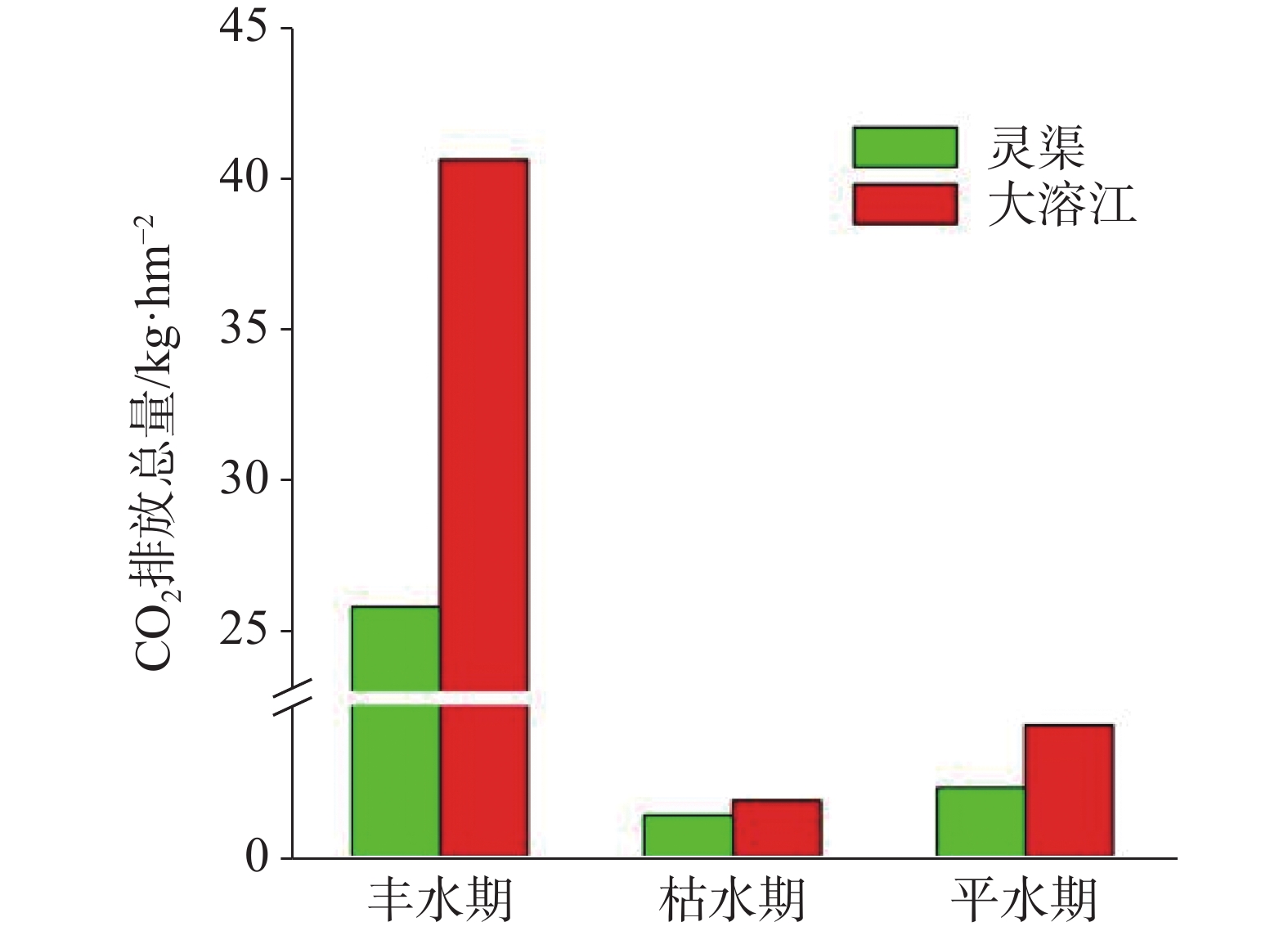
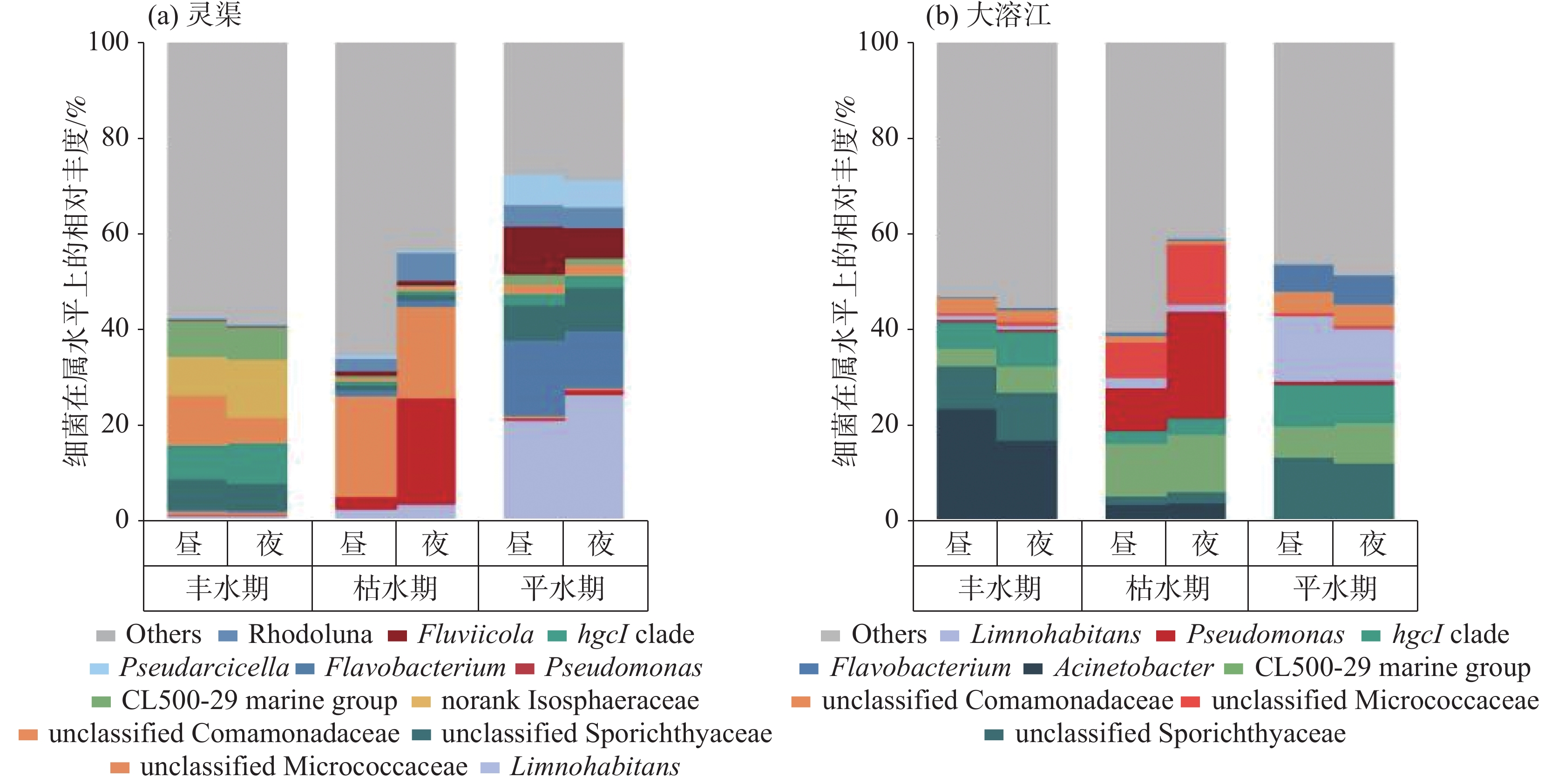
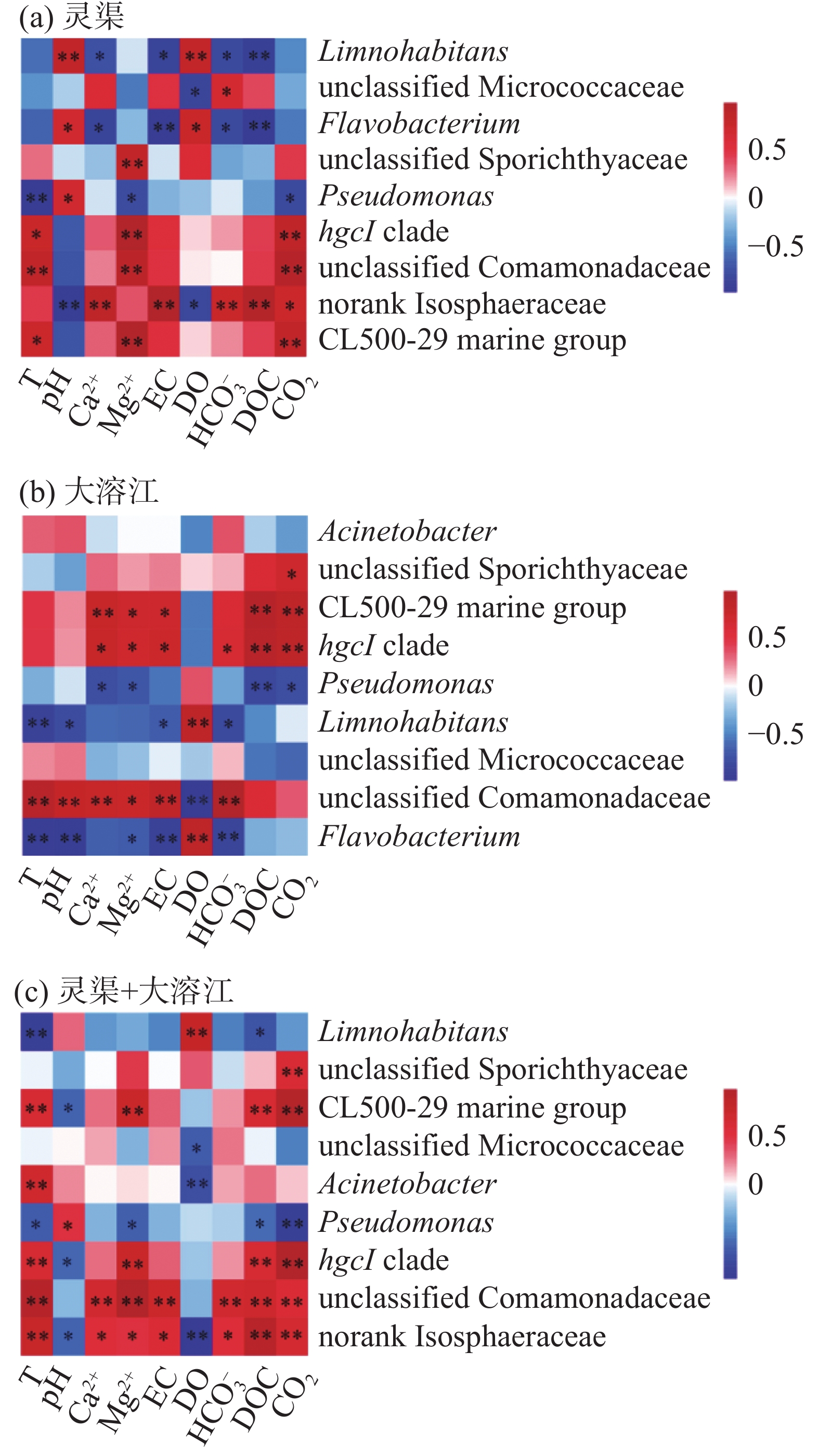
摘要: 为研究岩溶与非岩溶区域河流CO2排放通量差异及其驱动因素,在丰水期(2023年8月)、枯水期(2024年1月)和平水期(2024年3月),采用静态箱法测定漓江上游的灵渠断面(岩溶区)和大溶江断面(非岩溶区)的CO2排放通量,并用高通量测序技术测定细菌群落结构特征。结果显示:(1)在三个水文期中的48 h内,灵渠的CO2排放总量分别为25.82 kg·hm−2、1.38 kg·hm−2和2.29 kg·hm−2,而大溶江的CO2排放总量分别为40.46 kg·hm−2、1.88 kg·hm−2和4.36 kg·hm−2;(2)灵渠的CO2排放通量与pH(P<0.01)和总氮(TN)(P<0.05)呈显著负相关关系,而大溶江的CO2排放通量与溶解性有机碳(DOC)(P<0.05)和TN(P<0.01)呈显著正相关关系;(3)灵渠优势细菌为栖湖菌(Limnohabitans)(1.20%~26.58%)、假单胞菌(Pseudomonas)(0.24%~22.00%)和unclassified Micrococcaceae(0.45%~21.07%)等12个属,而大溶江的优势细菌为不动杆菌(Acinetobacter)(0.23%~23.79%)、unclassified Sporichthyaceae(1.64%~13.54%)和CL500-29 marine group(3.74%~12.02%)等9个属。热图分析显示,CO2排放通量与CL500-29 marine group(P<0.01)和hgcI clade(P<0.01)的相对丰度呈显著正相关关系,而与Pseudomonas的相对丰度呈显著负相关关系(P<0.01);(4)生态网络分析显示,灵渠网络的节点数、总边数和模块化指数均低于大溶江,表明岩溶区细菌之间的相互作用较弱、群落结构不稳定、生态系统更脆弱。因此,生物因素(CL500-29 marine group、hgcI clade和Pseudomonas等)与非生物因素(pH、DOC和TN等)共同调控着漓江水体CO2的排放过程。
-
关键词:
- 灵渠 /
- 大溶江 /
- CO2排放 /
- 细菌群落 /
- 溶解有机碳(DOC)
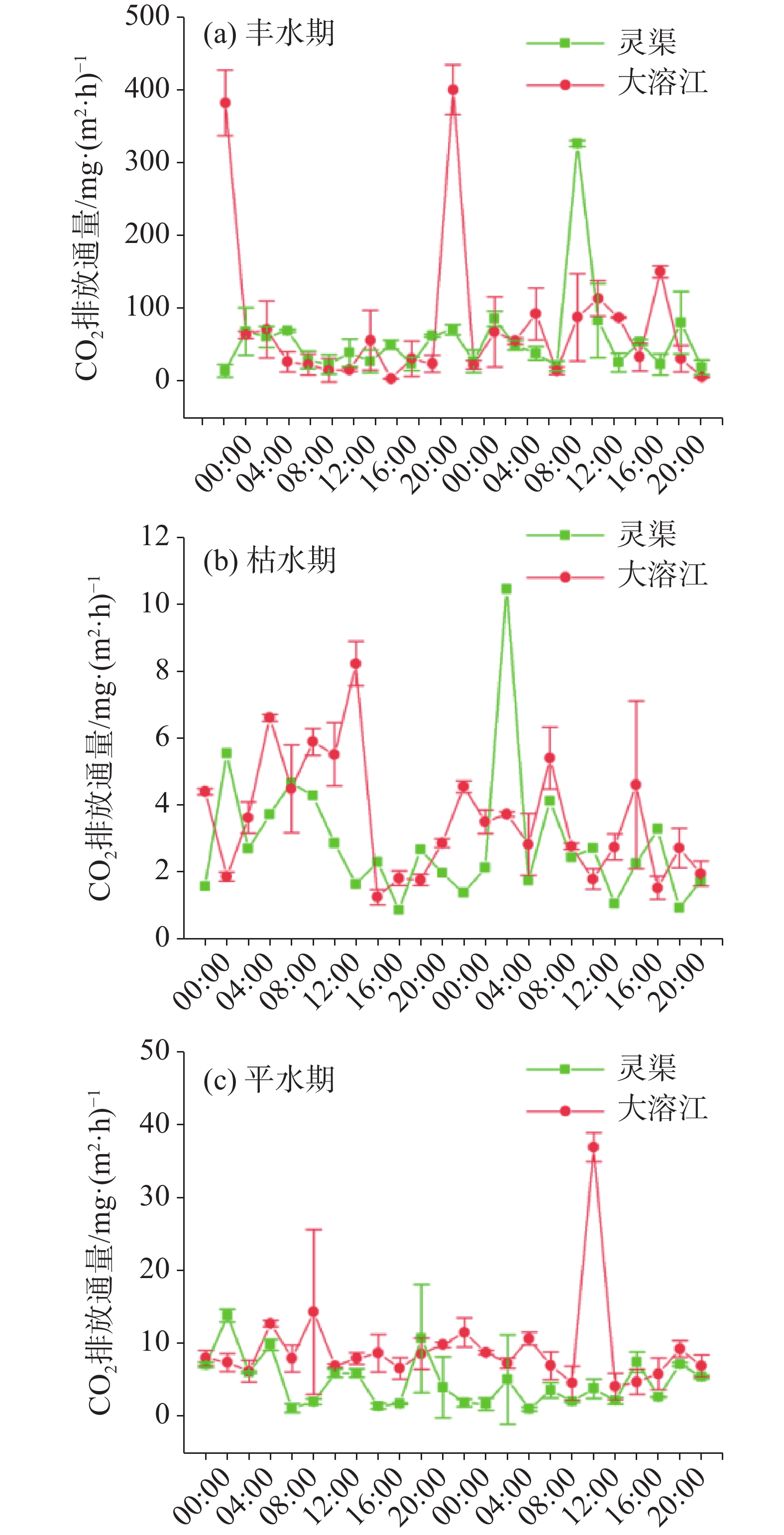
Abstract:Rivers connect two major carbon pools-terrestrial ecosystems and marine ecosystems-and play a crucial role in the global carbon cycle. Microorganisms are the main agents driving the carbon cycling processes within river ecosystems. To some extent, microorganisms and the physicochemical characteristics of rivers can affect the production of CO2 in rivers and are the key factors in the riverine carbon cycle. Therefore, studying the interrelationships among CO2 emission fluxes, microorganisms and physicochemical properties at the water-air interface of rivers is essential for understanding the underlying mechanisms of riverine carbon emissions. In South China, carbonates are widely distributed, and karst processes are highly active, serving as significant drivers of the river carbon cycle. However, the differences in CO2 emission characteristics between rivers in Karst Areas (KA) and Non-Karst Areas (NKA) as well as their driving mechanisms, remain unclear. To investigate CO2 emission fluxes and their driving factors in river sections in KA, the Lingqu section (KA) and the Darongjiang River section (NKA) in the upper reaches of the Lijiang River were selected as the sampling points. During the wet season (August 2023), dry season (January 2024), and normal season (March 2024), CO2 emission fluxes were measured over 48-hour periods at both the Lingqu River section and the Darongjiang River section by the static chamber method. The bacterial community structures of the rivers were characterized by high-throughput sequencing technology. Correlations between CO2 emission fluxes, river physicochemical properties, and the microbial communities were analyzed. The main results are as follows. (1) Within 48 hours during the three hydrological periods, the CO2 emission fluxes at the Lingqu River section were 14.54 to 352.88 mg·(m2·h)−1, 0.85 to 10.47 mg·(m2·h)−1, and 1.05 to 13.83 mg·(m2·h)−1, respectively. The total emissions were 25.82 kg·hm−2, 1.38 kg·hm−2, and 2.29 kg·hm−2, respectively. At the Darongjiang River section, CO2 emission fluxes were 3.70 to 399.90 mg·(m2·h)−1, 1.25 to 8.24 mg·(m2·h)−1, and 4.14 to 36.09 mg·(m2·h)−1, respectively, with total emissions of 40.46 kg·hm−2, 1.88 kg·hm−2, and 4.36 kg·hm−2, respectively. The CO2 emission fluxes at the water-air interface in both KA and NKA were positive, indicating that the study area is a source of CO2. The CO2 emission followed the pattern: flood season > normal season > dry season. (2) The CO2 emission flux at the Lingqu River section was significantly negatively correlated with pH (P<0.01) and Total Nitrogen (TN) (P<0.05), while the CO2 emission flux at the Darongjiang River was significantly positively correlated with Dissolved Organic Carbon (DOC) (P<0.05) and TN (P<0.01). When the CO2 emission flux and physicochemical properties of both the Lingqu River and Darongjiang River sections were analyzed, the CO2 emission flux showed a significant positive correlation with DOC (P<0.05) and a significant negative correlation with pH (P<0.01). (3) At the bacterial genus level, twelve dominant bacterial genera were identified in the Lingqujiang River section, including Limnohabitans (1.20% to 26.58%), Pseudomonas (0.24% to 22.00%), and unclassified Micrococcaceae (0.45% to 21.07%). In contrast, nine dominant bacterial genera were found in the Darongjiang River section, including Acinetobacter (0.23% to 23.79%), unclassified Sporichthyaceae (1.64% to 13.54%), and the CL500-29 marine group (3.74% to 12.02%). Heat map analysis showed that the CO2 emission fluxes at both the Lingqu and Darongjiang River sections were significantly positively correlated with the relative abundances of the CL500-29 marine group (P<0.01) and the hgcI clade (P<0.01). Conversely, emissions were significantly negatively correlated with the relative abundance of Pseudomonas (P<0.01). (4) Ecological network analysis shows that the number of nodes, the total number of edges, and the modularity index of the Lingqu River section network are all lower than those of the Darongjiang River section. This indicates that the interactions among bacteria in the KA are weaker, the community structure is unstable, and the ecosystem is more fragile. Therefore, both biological factors (such as the CL500-29 marine group, hgcI clade, and Pseudomonas) and abiotic factors (such as pH, DOC, and TN) jointly regulate the CO2 emission process of the Lijiang River. To maintain a low CO2 emission at the water-air interface, interference to the river ecosystem in the KA should be minimized as much as possible. This study analyzes the CO2 emissions and microbial communities at the water-air interface of the river in the KA (the Lingqu River section) and the NKA (the Darongjiang River section) of the upper reaches of the Lijiang River. The research shows that the CO2 emission flux in the KA basin is relatively low and reveals differences in the community structure and stability of microorganisms between these two areas. -
Key words:
- the Lingqu River /
- the Darongjiang River /
- CO2 emission /
- bacterial community /
- Dissolved Organic Carbon
-
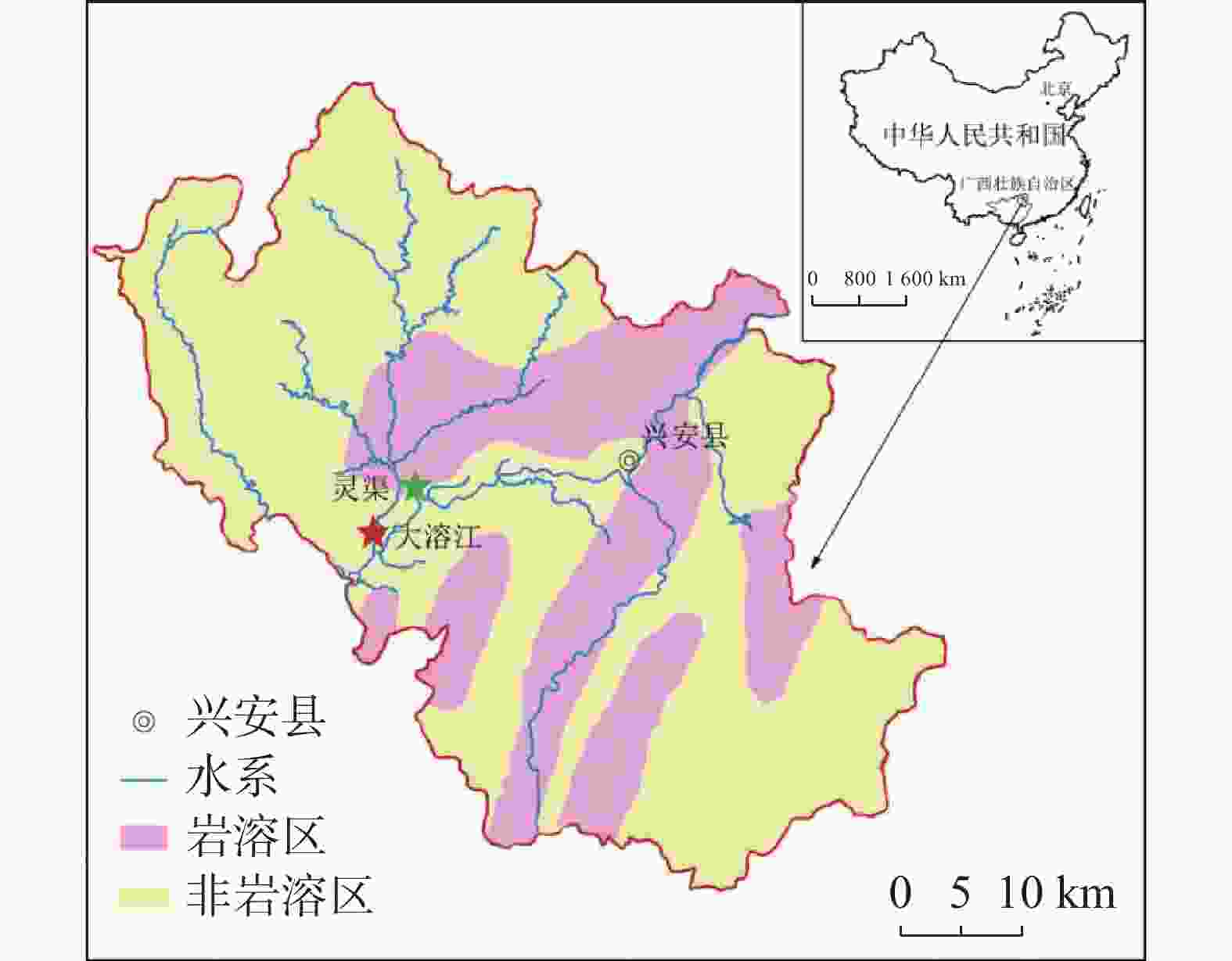
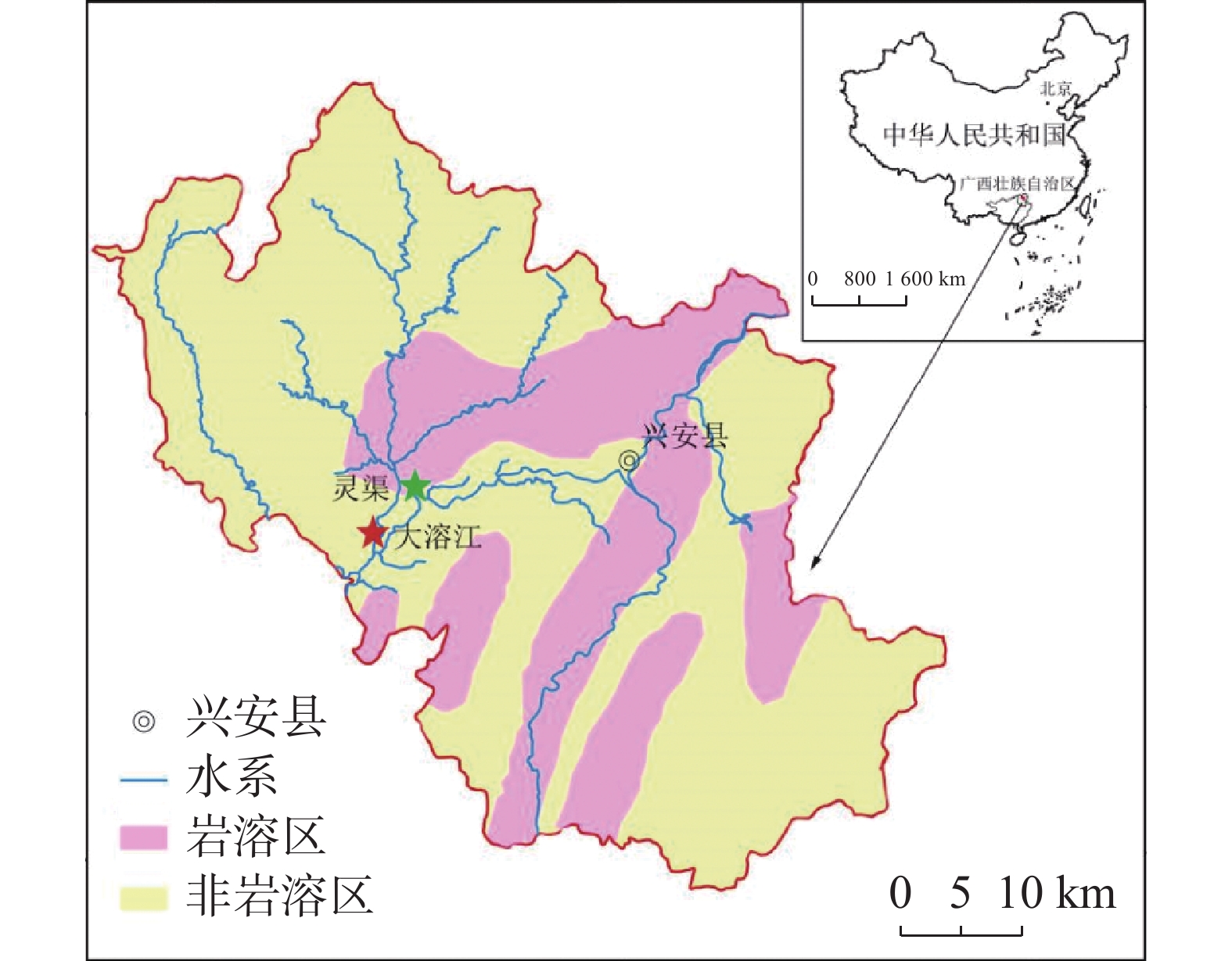
图 1 研究区土地类型及样点分布
Figure 1. Distribution of land types and sampling points in the study area
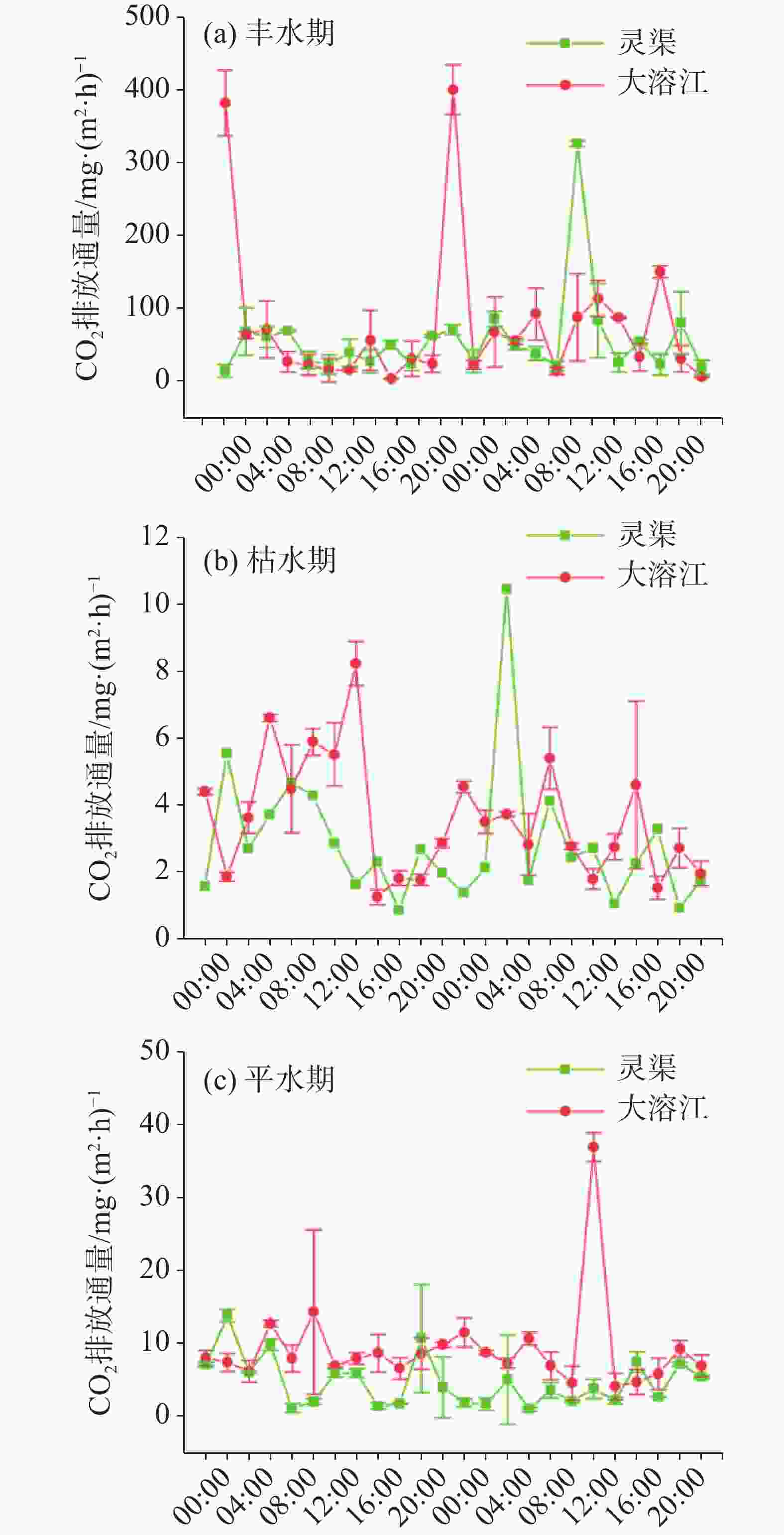
图 2 灵渠和大溶江三个水文期48 h内CO2排放通量
Figure 2. CO2 emission fluxes within 48 hours during three hydrolo-gical periods of the Lingqu River and the Darongjiang River
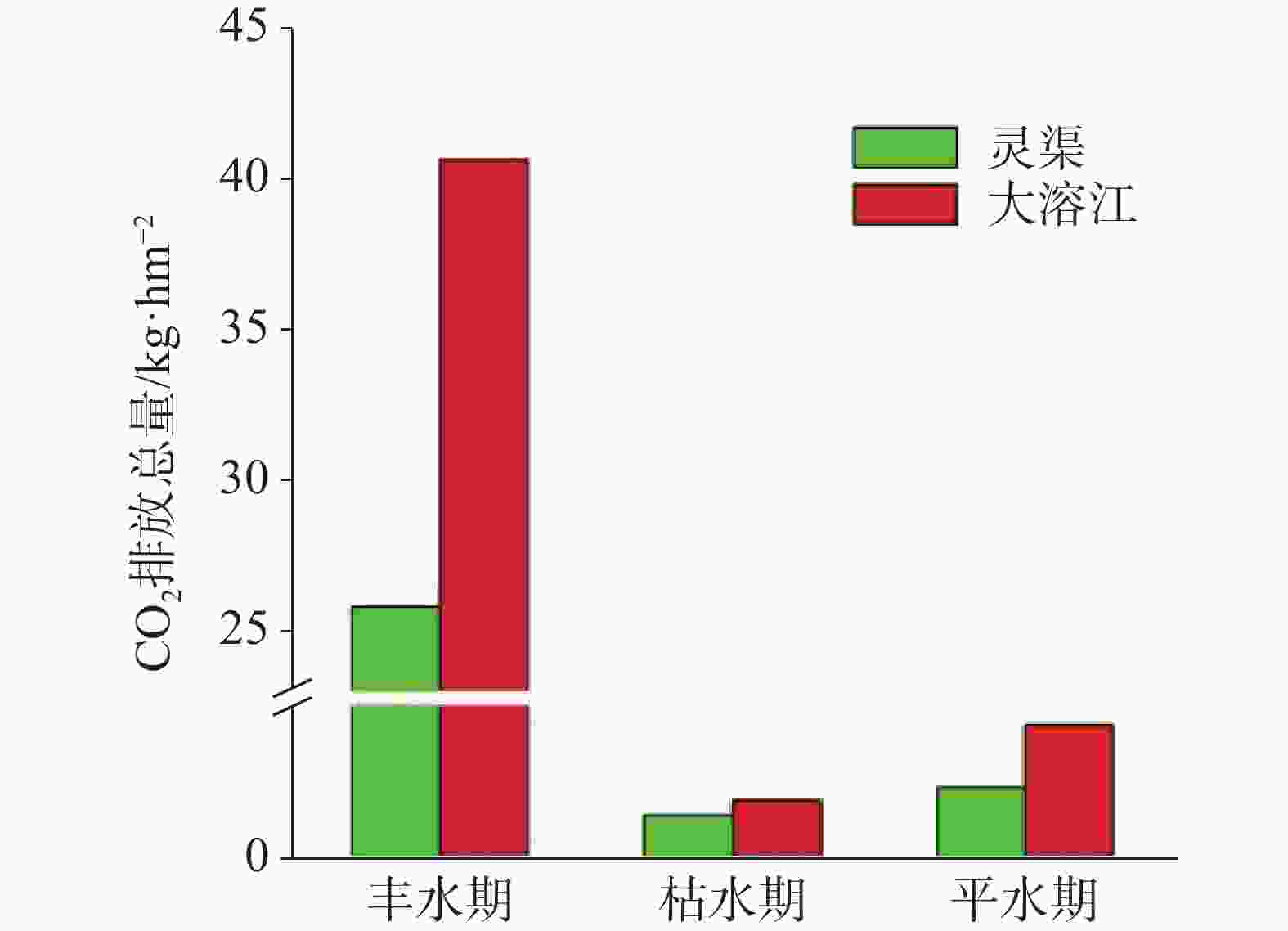
图 3 灵渠和大溶江三个水文期48 h内CO2排放总量
Figure 3. Total CO2 emissions within 48 hours in three hydrolo-gical periods of the Lingqu River and the Darongjiang River
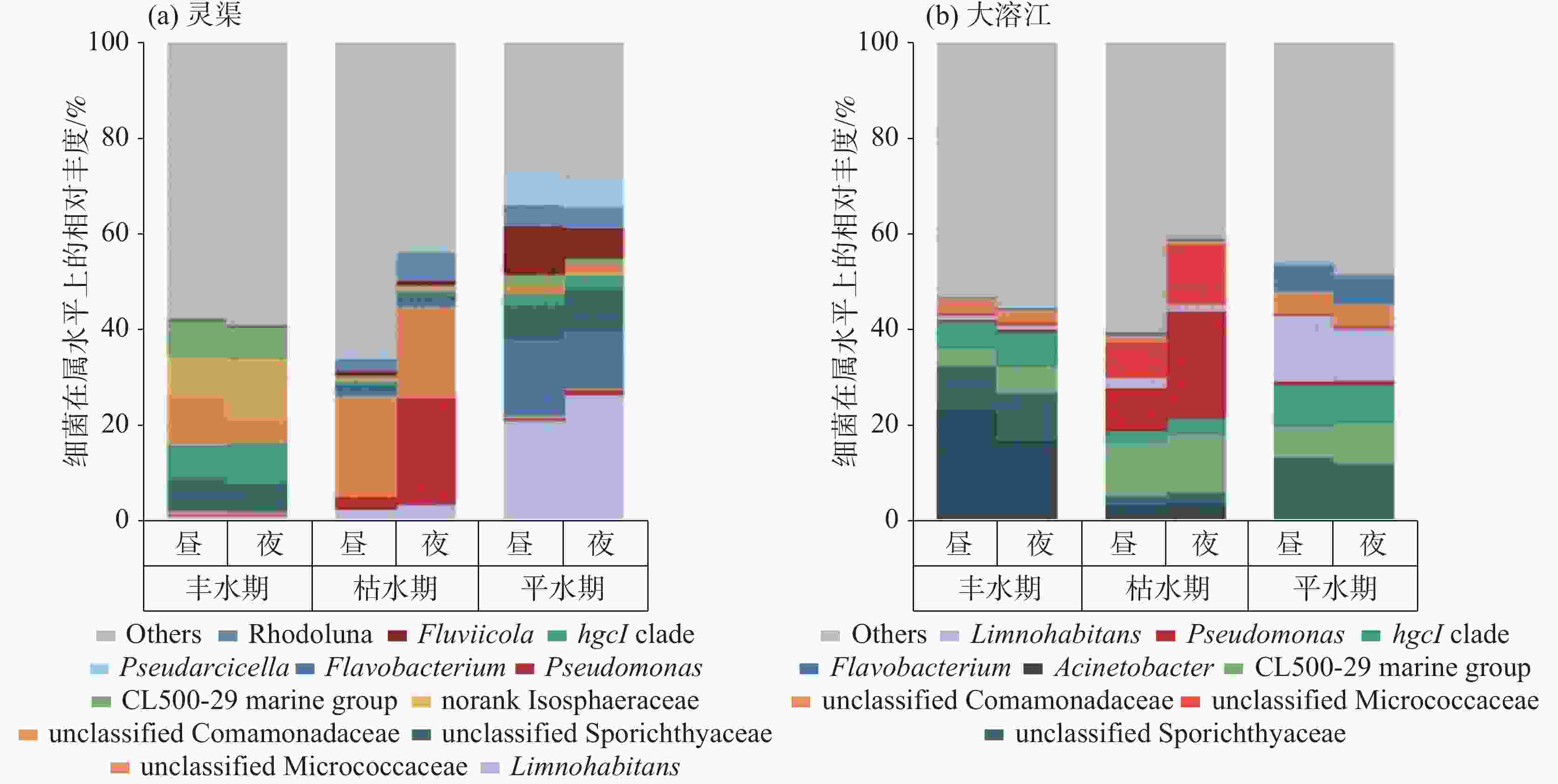
图 4 灵渠和大溶江细菌属水平上的相对丰度
Figure 4. Relative abundances of bacteria at genus level in the Lingqu River and the Darongjiang River
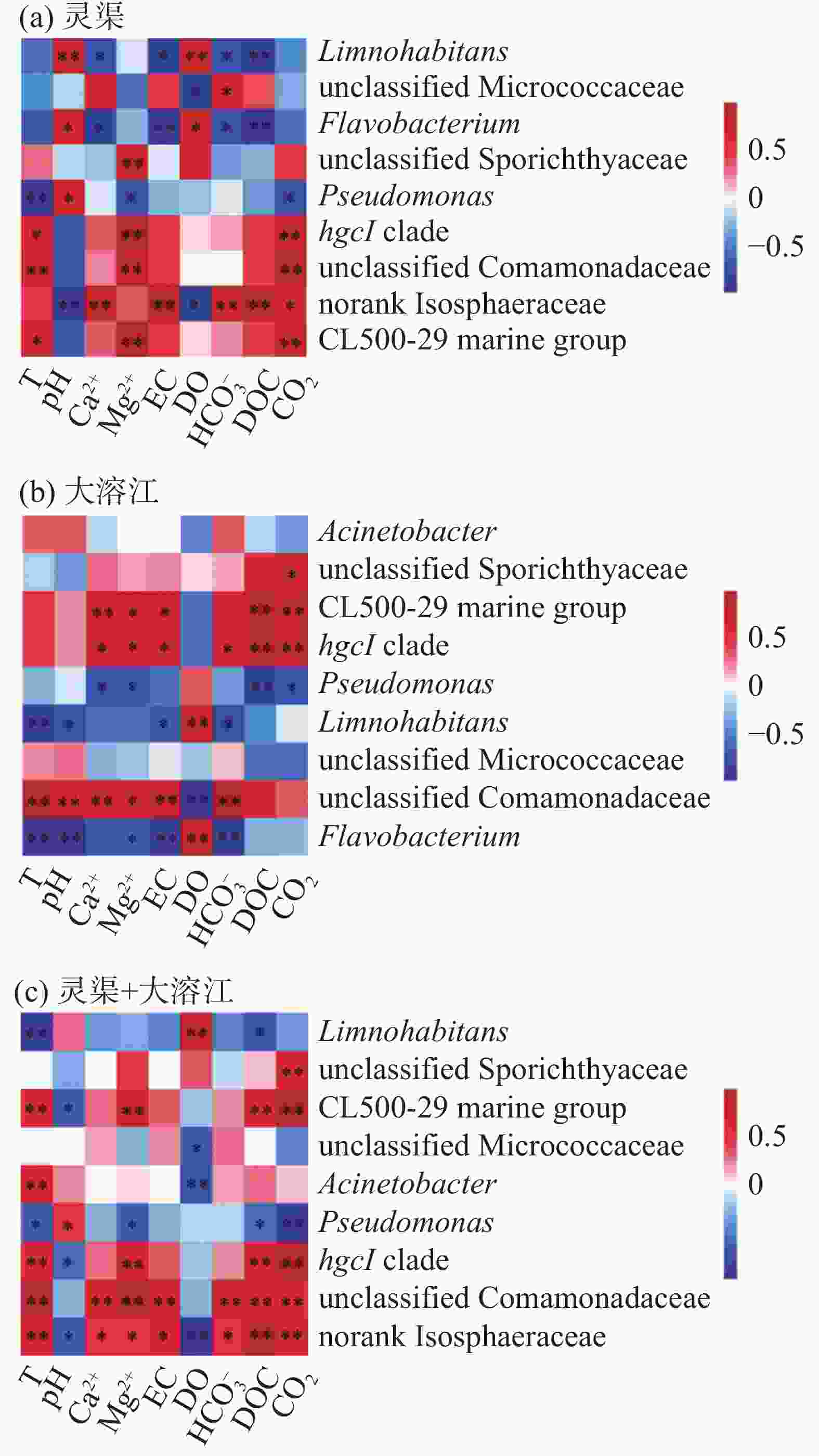
图 5 灵渠(a)、大溶江(b)和灵渠+大溶江(c)在属水平上的优势细菌与理化特征的相关性
注:*表示数据在0.05水平上显著相关,**表示在0.01水平上显著相关。
Figure 5. Correlations between dominant bacteria at genus level and physicochemical properties in the Lingqu River(a), the Darongjiang River(b) and Lingqu + Darongjiang Rivers (c)
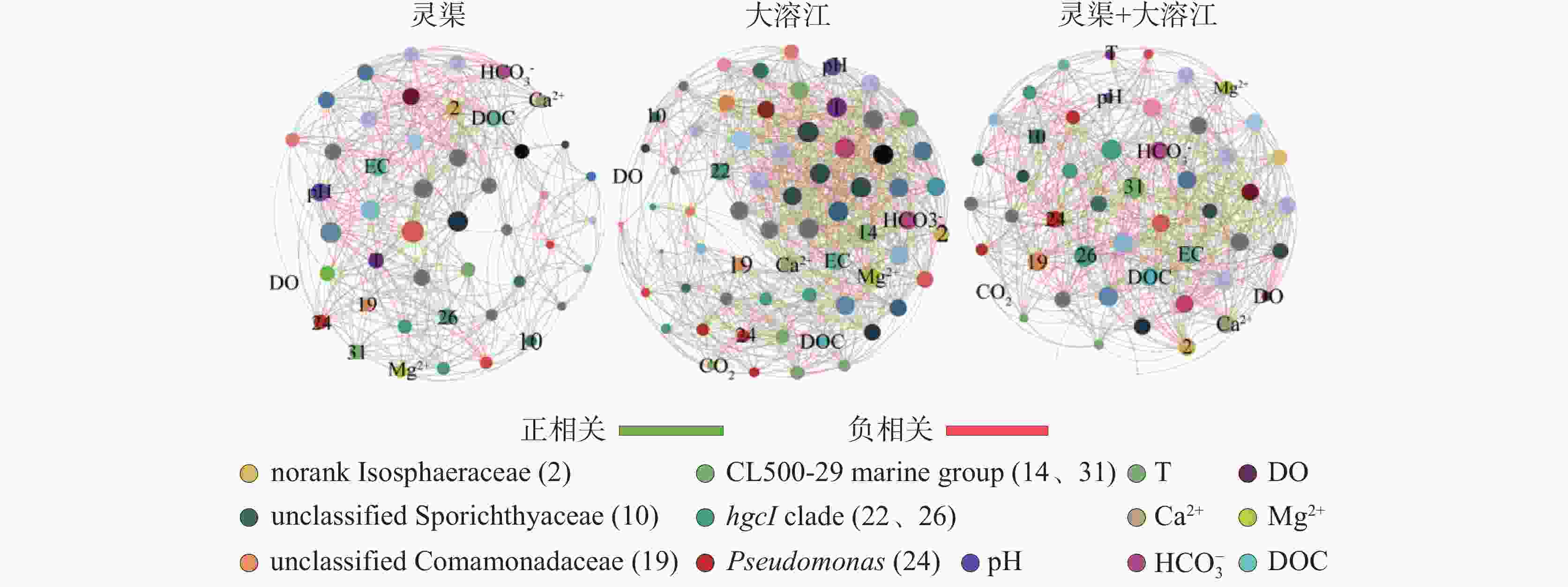
图 6 灵渠和大溶江细菌OTUs与理化特性的共现网络关系
注:不同颜色节点表示不同物种的属分类水平和理化特征,节点大小表示物种连接度大小,红色连线表示正相关边,绿色连线表示负相关边。
Figure 6. Co-occurrence network relationship between bacteria at the OTUs level and physicochemical properties in the Lingqu River and the Darongjiang River
表 1 灵渠和大溶江水体的理化特征
Table 1. Physicochemical properties of water bodies in the Lingqu River and the Darongjiang River
时期 样点 时间 T pH EC DO Ca2+ Mg2+ K+ Na+ ${\rm{HCO}}_3^{-}$ TN TP Chl-a CODMn DOC ${\rm{NO}}_3^{-}$-N NH$_4^{+}$-N /℃ /μS·cm−1 /mg·L−1 mg·L−1 /mg·L−1 /mg·L−1 /mg·L−1 /mmol·L−1 /mg·L−1 /mg·L−1 /ug·L−1 /mg·L−1 /mg·L−1 /mg·L−1 /mg·L−1 丰水期 灵渠 昼 25.96±0.49c 7.09±0.07b 276.10±1.12a 7.39±1.56b 48.35±0.05a 2.55±0.07a 1.97±0.05a 1.69±0.05b 1.82±0.06a 1.67±0.17a 0.04±0.01a 0.24±0.00b 2.61±0.10a 6.41±1.61a 1.24±0.01e 0.12±0.00a 夜 26.68±0.33b 7.04±0.03b 260.73±1.08b 11.42±0.41a 43.50±0.02b 2.45±0.02b 1.83±0.02a 1.60±0.04c 1.92±0.02a 1.50±0.10b 0.03±0.00a 0.18±0.00b 2.76±0.31a 5.61±1.72a 1.13±0.01f 0.10±0.01c 大溶江 昼 29.14±0.17a 7.36±0.05a 131.43±0.09c 8.00±0.35b 22.30±0.03c 2.32±0.05c 1.24±0.03b 0.76±0.06d 0.92±0.06b 1.83±0.19a 0.03±0.01a 0.51±0.07a 3.03±0.16a 2.40±1.51b 1.44±0.02c 0.10±0.01b 夜 28.87±0.08a 7.35±0.03a 112.30±0.14d 7.96±0.16b 17.78±0.20d 2.02±0.03d 1.12±0.20b 0.51±0.00f 0.91±0.02b 1.67±0.04a 0.02±0.00b 0.46±0.02a 2.73±0.25a 2.78±1.69a 1.42±0.00c 0.09±0.01d 枯水期 灵渠 昼 14.65±0.07d 7.92±0.01b 243.97±0.42a 7.57±0.03d 45.72±0.37a 2.11±0.01a 1.31±0.01b 1.22±0.01b 1.73±0.05b 2.18±0.04a 0.02±0.00a 0.30±0.00b 1.53±0.03b 5.15±0.28a 4.83±0.02a 0.01±0.00b 夜 14.85±0.03c 8.10±0.01a 237.97±0.12b 7.94±0.04c 44.83±0.44a 2.07±0.02b 1.32±0.01b 1.18±0.02c 1.83±0.03a 2.26±0.02a 0.03±0.01a 0.55±0.00a 1.63±0.05a 3.53±1.12a 4.79±0.01a 0.01±0.01b 大溶江 昼 15.04±0.01b 7.33±0.01d 68.30±0.10c 9.28±0.04b 10.02±0.16b 1.31±0.01c 0.60±0.01c 1.04±0.02d 0.50±0.05c 1.10±0.07b 0.01±0.00b 0.59±0.00a 1.47±0.03b 1.05±0.20b 2.41±0.02c 0.01±0.00a 夜 15.24±0.00a 7.35±0.01c 67.43±0.05d 9.40±0.01a 9.60±0.11b 1.30±0.01c 0.59±0.00d 0.99±0.01e 0.45±0.00c 1.10±0.03b 0.01±0.00b 0.66±0.16a 1.46±0.00c 1.90±0.32b 2.42±0.04c 0.01±0.01b 平水期 灵渠 昼 14.96±0.02b 8.01±0.01b 195.90±0.14b 15.99±0.10b 39.33±0.13a 2.45±0.01a 0.75±0.01a 1.18±0.05c 1.55±0.13a 1.88±0.02b 0.11±0.01b 1.27±0.13a 1.53±0.03b 2.43±0.10b 1.72±0.00a 0.06±0.00c 夜 15.15±0.02a 8.18±0.03a 198.20±0.37a 17.15±0.16a 39.83±0.57a 2.48±0.01a 0.78±0.02a 1.17±0.02c 1.40±0.06a 2.33±0.01a 0.16±0.01a 1.12±0.00a 1.63±0.05a 2.15±0.03b 1.70±0.01b 0.06±0.00d 大溶江 昼 13.23±0.02d 7.25±0.03c 67.90±0.14c 9.90±0.06c 9.86±0.44b 1.30±0.06b 0.44±0.00a 0.98±0.01e 0.40±0.00b 1.32±0.00d 0.09±0.01c 0.90±0.02b 1.47±0.03b 1.56±0.28d 1.25±0.00c 0.05±0.00e 夜 13.35±0.01c 7.17±0.01d 67.97±0.12c 9.79±0.02c 9.70±0.30b 1.25±0.04b 0.44±0.01a 1.28±0.05a 0.45±0.12b 1.38±0.01c 0.04±0.01d 0.80±0.11b 1.46±0.00c 1.80±0.09c 1.23±0.01c 0.07±0.00b 注:表中数据为平均值±标准差,不同字母表示灵渠和大溶江在0.05水平上差异显著,最大的平均数标记为a。  下载: 导出CSV
表 2 灵渠和大溶江CO2排放通量与理化特征的相关性
Table 2. Correlation between CO2 emission fluxes and physicochemical properties in the Lingqu River and the Darongjiang River
CO2排放通量 T pH EC DO Ca2+ Mg2+ K+ Na+ 灵渠 0.650* −0.699* 0.599* −0.105 0.357 0.615* 0.476 0.524 大溶江 0.119 0.263 0.472 0.221 0.580* 0.434 0.354 0.413 灵渠+大溶江 0.384 −0.617** 0.114 −0.194 0.089 0.323 0.201 −0.012 CO2排放通量 ${\rm{HCO}}_3^{-}$ TN TP Chl-a CODMn DOC ${\rm{NO}}_3^{-}$-N NH$_4^{+}$-N 灵渠 0.238 −0.706* −0.175 −0.399 0.640* 0.559 −0.757** 0.615* 大溶江 0.419 0.739** 0.260 −0.151 0.407 0.713* −0.441 0.751** 灵渠+大溶江 0.017 −0.225 −0.124 −0.318 0.450* 0.455* −0.718** 0.599** 注:*表示数据在0.05水平上显著相关,**表示在0.01水平上显著相关。
下载: 导出CSV
表 3 灵渠和大溶江优势细菌与理化特征的网络关键拓扑参数
Table 3. Key network topological parameters of dominant bacteria and physicochemical properties in the Lingqu River and the Darongjiang river
参数 灵渠 大溶江 灵渠+大溶江 节点数 49 66 51 边数 462 952 644 网络直径 3 3 3 模块化 0.32 0.44 0.21 平均路径长度 1.63 1.60 1.62 图密度 0.39 0.44 0.51 平均聚类系数 0.72 0.73 0.69 正相关边数和占比/% 257 509 326 55.63 53.47 50.62 负相关边数和占比/% 205 443 318 44.37 46.53 49.38
下载: 导出CSV
-
[1] 姚冠荣, 高全洲. 河流碳循环对全球变化的响应与反馈[J]. 地理科学进展, 2005, 24(5): 52-62.YAO Guanrong, GAO Quanzhou. The feedback and response of the riverine carbon cycle to global changes[J]. Progress in Geography, 2025, 24(5): 52-62. [2] Hahn M W. The microbial diversity of inland waters[J]. Current Opinion in Biotechnology, 2006, 17(3): 256-261. doi: 10.1016/j.copbio.2006.05.006 [3] 道日娜, 王晓丽, 李亚如, 李可妮. 河流温室气体的产生和排放及影响因素研究综述[J]. 应用化工, 2023, 52(10): 2909-2914.DAO Rina, WANG Xiaoli, LI Yaru, LI Keni. Research on the production and emission of river greenhouse gases and influencing factors[J]. Applied Chemical Industry, 2023, 52(10): 2909-2914. [4] Falkowski P G, Fenchel T, Delong E F. The microbial engines that drive Earth's biogeochemical cycles[J]. Science, 2008, 320(5879): 1034-1039. doi: 10.1126/science.1153213 [5] 韩磊, 胡盎, 任明磊, 孟凡凡, 吴庆龙, 王建军. 湖泊微生物群落及其介导的碳循环过程[J]. 生命科学, 2023, 35(12): 1613-1629.HAN Lei, HU Ang, REN Minglei, MENG Fanfan, WU Qinglong, WANG Jianjun. Lake microbial communities and their mediated carbon cycling processes[J]. Chinese Bulletin of Life Sciences, 2023, 35(12): 1613-1629. [6] 刘丛强, 蒋颖魁, 陶发祥, 郎赟超, 李思亮. 西南喀斯特流域碳酸盐岩的硫酸侵蚀与碳循环[J]. 地球化学, 2008, 37(4): 404-414.LIU Congqiang, JANG Yingkui, TAO Faxiang, LANG Yunchao, LI Siliang. Chemical weathering of carbonate rocks by sulfuric acid and the carbon cycling in Southwest China. Geochimica, 2008, 37(4): 404-414. [7] 刘睿, 张静, 陈祖胜, 刘睿, 倪茂飞, 刘文胜. 典型喀斯特河流水-气界面二氧化碳交换特性及其营养调控因素[J]. 环境科学, 202142(2): 740-748.LIU Rui, ZHANG Jing, CHEN Zusheng, NI Maofei, LIU Wensheng. Water-air carbon dioxide exchange and nutritional controls in a typical karst river[J]. Environmental Science, 202142(2): 740-748. [8] 张陶. 漓江典型断面水气界面CO2交换的通量、变化及控制机制[D]. 重庆: 西南大学, 2018.ZHANG Tao. Flux, variation and control mechanism of CO2 exchange across water-air interface of typical section in Lijiang River, SW China[D]. Chongqing: Southwest University, 2018. [9] 王晓锋, 袁兴中, 陈槐, 何奕忻, 罗珍, 刘恋, 何宗苡. 河流CO2与CH4排放研究进展[J]. 环境科学, 2017, 38(12): 5352-5366.WANG Xiaofeng, YUAN Xingzhong, CHEN Huai, HE Yixin, LUO Zhen, LIU Lian, HE Zongyi. Review of CO2 and CH4 emissions from rivers[J]. Environmental Science, 2017, 38(12): 5352-5366. [10] Schulte P, Geldern R V, Freitag H, Karim A, Négrel P, Petelet G E, Probst A, Probst J L, Telmer K, Veizer J. Applications of stable water and carbon isotopes in watershed research: weathering, carbon cycling, and water balances[J]. Earth-Science Reviews, 2011, 109(1): 20-31. [11] 龚琬晴, 文帅龙, 王洪伟, 吴涛, 李鑫, 钟继承. 大黑汀水库夏秋季节温室气体赋存及排放特征[J]. 中国环境科学, 2019, 39(11): 4611-4619.GONG Wanqing, WEN Shuailong, WANG Hongwei, WU Tao, LI Xin, ZHONG Jicheng. Characteristics of greenhouse gas occurrence and emission in summer and autumn of Daheiting reservoir[J]. China Environmental Science, 2019, 39(11): 4611-4619. [12] 倪茂飞, 李思悦. 典型喀斯特河流二氧化碳分压及交换通量季节变化[J]. 第四纪研究, 2023, 43(2): 412-424.NI Maofei, LI Siyue. Partial pressure of carbon dioxide and its water-air exchange in a typical karst river[J]. Quaternary Sciences, 2023, 43(2): 412-424. [13] 张富强, 周忠发, 孔杰, 丁圣君, 王翠, 谢江婷, 温朝程, 邹艳. 喀斯特山区筑坝河流水-气界面CO2通量变化特征及影响因素分析[J]. 地球与环境, 2024, 52(01): 11-20.ZHANG Fuqiang, ZHOU Zhongfa, KONG Jie, DING Shengjun, WANG Cui, XIE Jiangting, WEN Chaocheng, ZOU Yan. Variation and influencing factors of CO2 flux at the water-air interface of dammed rivers in karst mountainous areas[J]. Earth and Environment, 2024, 52(01): 11-20. [14] Pomeroy L R, Wiebe W J. Temperature and substrates as interactive limiting factors for marine heterotrophic bacteria[J]. Aquatic Microbial Ecology, 2001, 23: 187-204. doi: 10.3354/ame023187 [15] Fuhrman J A, Steele J A, Hewson I, Schwalbach M S, Brown M V, Green J L, Brown J H. A latitudinal diversity gradient in planktonic marine bacteria[J]. Proceedings of the National Academy of Sciences of the United States of America, 2008, 105(22): 7774-7778. [16] Borges A V, Darchambeau F, Lambert T, Bouillon S, Morana C, Brouyere S, Hakoun V, Jurado A, Tseng H C, Descy J P. Effects of agricultural land use on fluvial carbon dioxide, methane and nitrous oxide concentrations in a large European river, the Meuse (Belgium)[J]. Science of the Total Environment, 2018, 610-611: 342-355. [17] Shang Y, Wu X, Wang X, Wei Q, Ma S, Sun G, Zhang H, Wang L, Dou H, Zhang H. Factors affecting seasonal variation of microbial community structure in Hulun Lake, China[J]. Science of the Total Environment, 2022, 805: 150294-150294. doi: 10.1016/j.scitotenv.2021.150294 [18] 姚程, 王谦, 姜霞, 郭轶男, 王坤, 吴志皓, 车霏霏, 陈俊伊. 湖泊生态系统碳汇特征及其潜在碳中和价值研究[J]. 生态学报, 2023, 43(3): 893-909.YAO Cheng, WANG Qian, JANG Xia, GUO Yinan, WANG Kun, CHE Feifei, WU Zhihao, CHEN Junyi. Review of lake ecosystem's characteristics of carbon sink and potential value on carbon neutrality[J]. Acta Ecologica Sinica, 2023, 43(3): 893-909. [19] Langenheder S, Lindström E S, Tranvik L J. Weak Coupling between Community Composition and Functioning of Aquatic Bacteria[J]. Limnology and Oceanography, 2005, 50(3): 957-967. doi: 10.4319/lo.2005.50.3.0957 [20] 沈烽, 赵大勇, 黄睿, 王司辰, 曹新益, 徐慧敏, 曾巾, 余钟波. 南京玄武湖浮游细菌群落结构的季节变化及其与环境因子的关系[J]. 湖泊科学, 2017, 29(3): 662-669. doi: 10.18307/2017.0315SHEN Feng, ZHAO Dayong, HUANG Rui, WANG Sichen, CAO Xinyi, XU Huimin, ZENG Jin, YU Zhongbo. Seasonal variation of bacterioplankton community structure in Xuanwu Lake (Nanjing) and its relationship with environmental factors[J]. Journal of Lake Sciences, 2017, 29(3): 662-669. doi: 10.18307/2017.0315 [21] Valle J, Gonsior M, Harir M, Enrich P A, Schmitt K P, Bastviken D, Conrad R, Hertkorn N. Extensive processing of sediment pore water dissolved organic matter during anoxic incubation as observed by high-field mass spectrometry (FTICR-MS)[J]. Water Research, 2018, 129: 252-263. doi: 10.1016/j.watres.2017.11.015 [22] Song W, Xu C, Liu Q, Wang L, Wu M, Zeng L. Experimental petrological study of carbonatite and its significanceson the earth deep carbon cycle[J]. Geological Review, 2012, 58(4): 726-744. [23] 张陶, 李建鸿, 蒲俊兵, 吴飞红, 袁道先. 桂江典型断面夏季水-气界面CO2交换的碳源与机制[J]. 第四纪研究, 2020, 40(4): 1048-1057.ZHANG Tao, LI Jianhong, PU Junbing, WU Feihong, YUAN Daoxian. Sources and controlling mechanisms of CO2 exchange across water-air interface in summer in two typical transects of Guijiang river, CHINA[J]. Quaternary Sciences, 2020, 40(4): 1048-1057. [24] 张陶, 蒲俊兵, 袁道先, 章程, 何师意, 于奭, 刘文, 莫雪, 周建超, 杨会, 唐伟. 亚热带典型岩溶区地表溪流水文地球化学昼夜变化及其影响因素研究[J]. 环境科学, 2014, 35(8): 2944-2951.ZHANG Tao, PU Junbing, YUAN Daoxian, ZHANG Cheng, HE Shiyi, YU Shi, LIU Wen, MO Xue, ZHOU Jianchao, YANG Hui, TANG Wei. Diel variations of hydrochemistry and influencing factors in a surface stream in subtropical karst area, SW China[J]. Environmental Science, 2014, 35(8): 2944-2951. [25] Xiang S, Li Y, Wang W, Zhang B, Shi W, Zhang J, Huang F, Liu F, Guan X. Antibiotics adaptation costs alter carbon sequestration strategies of microorganisms in karst river[J]. Environmental Pollution, 2021, 288: 117819-117819. doi: 10.1016/j.envpol.2021.117819 [26] Xia F, Liu Z, Zhao M, Li Q, Li D, Cao W, Zeng C, Hu Y, Chen B, Bao Q, Zhang Y, He Q, Lai C, He X, Ma Z, Han Y, He H. High stability of autochthonous dissolved organic matter in karst aquatic ecosystems: Evidence from fluorescence[J]. Water Research, 2022, 220: 118723-118723. doi: 10.1016/j.watres.2022.118723 [27] Yun Y, Wang H, Man B, Xiang X, Zhou J, Qiu X, Duan Y, Engel A S. The relationship between pH and bacterial communities in a single karst ecosystem and its implication for soil acidification[J]. Frontiers in microbiology, 2016, 7: 1955. [28] Fang Y, Liu J, Yang J, Wu G, Hua Z, Dong H, Hedlund B P, Baker B J, Jiang H. Compositional and metabolic responses of autotrophic microbial community to salinity in lacustrine environments[J]. mSystems, 2022, 7(4): 0033522-0033522. [29] Iker B C, Kambesis P, Oehrle S A, Groves C, Barton H A. Microbial atrazine breakdown in a karst groundwater system and its effect on ecosystem energetics[J]. Journal of environmental quality, 2010, 39(2): 509-518. doi: 10.2134/jeq2009.0048 [30] Li Q, Song A, Peng W, Jin Z, Müller W E, Wang X. Contribution of aerobic anoxygenic phototrophic bacteria to total organic carbon pool in aquatic system of subtropical karst catchments, Southwest China: evidence from hydrochemical and microbiological study[J]. FEMS microbiology ecology, 2017, 93(6). [31] Liu J, Fu B, Yang H, Zhao M, He B, Zhang X. Phylogenetic shifts of bacterioplankton community composition along Pearl Estuary: the potential impact of hypoxia and nutrients[J]. Frontiers in microbiology, 2015, 6: 64. [32] 吕锡斌, 吴云成, 陈良强, 刘明庆, 杨帆, 王蒙蒙, 田伟, 王莉. 赤水河流域浮游细菌群落特征及其与水质的关系[J]. 环境科学学报, 2021, 41(11): 4596-4605.LU Xibin, WU Yuncheng, CHEN Liangqing, LIU Mingqing, YANG Fan, WANG Mengmeng, TIAN Wei, WANG Li. Characteristics of the bacterioplankton community and their relationships with water quality in Chishui River basin[J]. Acta Scientiae Circumstantiae, 2021, 41(11): 4596-4605. [33] Li S, Luo J, Wu D, Xu Y. Carbon and nutrients as indictors of daily fluctuations of pCO2 and CO2 flux in a river draining a rapidly urbanizing area[J]. Ecological Indicators, 2020, 109: 105821. doi: 10.1016/j.ecolind.2019.105821 [34] 柴琦浓, 薛云凤, 孙海龙, 贺海波, 马震, 曹文芳, 邵明玉. 喀斯特河流生物碳泵效应的营养盐限制及对富营养化缓解的意义: 以漓江流域为例[J]. 地球与环境, 2024, 52(6): 663-674. doi: 10.3724/EE.1672-9250.2024.52.017CHAI Qinong, XUE Yunfeng, SUN Hailong, HE Haibo, MA Zhen, CAO Wenfang, SHAO Mingyu. Nutrient limitation of biological carbon pump in karst rivers and implications for eutrophication mitigation: a case study of the Lijiang River basin[J]. Earth and Environment, 2024, 52(6): 663-674. doi: 10.3724/EE.1672-9250.2024.52.017 [35] 黄奇波, 刘朋雨, 覃小群, 孔祥胜. 桂江流域岩溶碳汇特征[J]. 中国岩溶, 2011, 30(4): 437-442.HUANG Qibo, LIU Pengyu, QIN Xiaoqun, KONG Xiangsheng. The characteristics of karst carbon sink in the Guijiang Catchment[J]. Carsologica Sinica, 2024, 52(6): 663-674. [36] 孙平安, 于奭, 莫付珍, 何师意, 陆菊芳, 原雅琼. 不同地质背景下河流水化学特征及影响因素研究: 以广西大溶江、灵渠流域为例[J]. 环境科学, 2016, 37(1): 123-131.SUN Pingan, YU Shi, MO Fuzhen, HE Shiyi, LU Jufang, YUAN Yaqiong. Hydrochemical characteristics and influencing factors in different geological background: a case study in Darongjiang and Lingqu basin, Guangxi, China[J]. Environmental Science, 2016, 37(1): 123-131. [37] 国家环保局本书编委会. 水和废水监测分析方法[M]. 北京: 中国环境科学出版社, 1989.Editorial Board of the State Environmental Protection Administration. Analytical methods for water and wastewater monitoring[M]. China Environmental Science Press, Beijing, 1989. [38] Lambert M, Fréchette J L. Analytical techniques for measuring fluxes of CO2 and CH4 from hydroelectric reservoirs and natural water bodies[J]. 2005. [39] 成功, 陈静, 刘晶晶, 张阿凤, 王旭东, 冯浩, 赵英. 秸秆/生物炭施用对关中地区小麦—玉米轮作系统净增温潜势影响的对比分析[J]. 环境科学, 2017, 38(02): 792-801.CHENG Gong, CHEN Jing, LIU Jingjing, ZHANG Afeng, WANG Xudong, FENG Hao, ZHAO Ying. Comparative analysis on effect of wheat straw and its biochar amendment on net global warming potential under wheat-Maize rotation ecosystem in the Guanzhong plain. Environmental Science, 2017, 38(02): 792-801. [40] 李军, 邹胜章, 赵一, 赵瑞科, 党志文, 潘民强, 朱丹尼, 周长松. 会仙岩溶湿地地下水主要离子特征及成因分析[J]. 环境科学, 2021, 42(4): 1750-1760.LI Jun, ZOU Shengzhang, ZHAO Yi, ZHAO Ruike, DANG Zhiwen, PAN Minqiang, ZHU Danni, ZHOU Changsong. Major ionic characteristics and factors of karst groundwater at Huixian karst wetland, China[J]. Environmental Science, 2021, 42(4): 1750-1760. [41] 刘再华. 碳酸盐岩岩溶作用对大气CO2沉降的贡献[J]. 中国岩溶, 2000, 19(4): 3-10.LIU Zaihua. Contribution of carbonate rock weathering to the atmospheric CO2 sink[J]. Carsologica Sinica, 2000, 19(4): 3-10. [42] 袁道先. 碳循环与全球岩溶[J]. 第四纪研究, 1993(1): 1-6.YUAN Daoxian. Carbon cycle and global karst[J]. Quaternary Sciences, 1993(1): 1-6. [43] LUO J, Li S, Ni M, Zhang J. Large spatiotemporal shifts of CO2 partial pressure and CO2 degassing in a monsoonal headwater stream[J]. Journal of Hydrology, 2019, 579. [44] 焦杰松, 何师意, 张红波. 岩溶区流域水化学时空变化特征: 以桂江流域为例[J]. 西南师范大学学报(自然科学版), 2014, 39(3): 158-165.JAO Jiesong, HE Shiyi, ZHANG Hongbo. Water chemical temporal and spatial changes characteristics in karst areas[J]. Journal of Southwest China Normal University (Natural Science Fdition), 2014, 39(03): 158-165. [45] 张洪. 岩溶区土壤有机质对土壤肥力和抗蚀性的影响[D]. 重庆: 西南大学, 2007.ZHANG Hong. Effects of soil organic matter on soil fertility and anti-erodibility in karst area[D]. Chongqing: Southwest University, 2007. [46] 李丽, 蒲俊兵, 李建鸿, 于奭, 肖琼, 张陶. 亚热带典型岩溶溪流水气界面CO2交换通量变化过程及其环境影响[J]. 环境科学, 2016, 37(7): 2487-2495.LI Li, PU Junbing, LI Jianhong, YU Shi, XIAO Qiong, ZHANG Tao. Variations of CO2 exchange fluxes across water-air interface and environmental meaning in a surface stream in subtropical karst area, SW China[J]. Environmental Science, 2016, 37(7): 2487-2495. [47] 李建鸿, 蒲俊兵, 孙平安, 袁道先, 刘文, 张陶, 莫雪. 不同地质背景水库区夏季水-气界面温室气体交换通量研究[J]. 环境科学, 2015, 36(11): 4032-4042.LI Jianhong, PU Junbing, SUN Pingan, YUAN Daoxian, LIU Wen, ZHANG Tao, MO Xue. Summer greenhouse gases exchange flux across water-air interface in three water reservoirs located in different geologic setting in Guangxi, China[J]. Environmental Science, 2015, 36(11): 4032-4042. [48] 王亮, 肖尚斌, 刘德富, 陈文重, 王雨春, 陈小燕, 段玉杰. 香溪河库湾夏季温室气体通量及影响因素分析[J]. 环境科学, 2012, 33(5): 1471-1475.WANG Liang, XIAO Shangbin, LIU Defu, CHEN Wenzhong, WANG Yuchun, CHEN Xiaoyan, DUAN Yujie. Fluxes of greenhouse gases from Xiangxi River in summer and their influencing factors[J]. Environmental Science, 2012, 33(5): 1471-1475. [49] Deemer B R, Harrison J A, Li S, Beaulieu J J, DelSontro T, Barros N, Bezerra-Neto J F, Powers S M, Santos M A, Vonk J A. Greenhouse gas emissions from reservoir water surfaces: A new global synthesis[J]. Bioscience, 2016, 66(11): 949-949. doi: 10.1093/biosci/biw117 [50] Yuan X, Liu Q, Cui B, Xu X, Liang L, Sun T, Yan S, Wang X, Li C, Li S, Li M. Effect of water-level fluctuations on methane and carbon dioxide dynamics in a shallow lake of Northern China: Implications for wetland restoration[J]. Journal of Hydrology, 2021, 597. [51] Schrier-Uijl A P, Veraart A J, Leffelaar P A, Berendse F, Veenendaal E M. Release of CO2 and CH4 from lakes and drainage ditches in temperate wetlands[J]. Biogeochemistry, 2011, 102(1-3): 265-279. doi: 10.1007/s10533-010-9440-7 [52] Su H, Liang H, Li F, Xu A, Li H, Du W, Gao Z. The responses of N2O, CO2 emissions, and bacterial communities to nitrogen addition in saline−alkaline wetlands of northeast China[J]. Atmosphere, 2023, 14(11). [53] Guo Y, Gu S, Wu K, Tanentzap A J, Yu J, Liu X, Li Q, He P, Qiu D, Deng Y, Wang P, Wu Z, Zhou Q. Temperature-mediated microbial carbon utilization in China's lakes[J]. Global Change Biology, 2023, 29(17): 5044-5061. doi: 10.1111/gcb.16840 [54] Newton R J, Jones S E, Eiler A, McMahon K D, Bertilsson S. A guide to the natural history of freshwater lake bacteria[J]. Microbiology & Molecular Biology Reviews Mmbr, 2011, 75(1): 14-49. [55] Ghylin T W, Garcia S L, Moya F, Oyserman B O, Schwientek P, Forest K T, Mutschler J, Dwulit-Smith J, Chan L K, Martinez-Garcia M. Comparative single-cell genomics reveals potential ecological niches for the freshwater acI Actinobacteria lineage[J]. Isme Journal, 2014, 8(12): 2503-2516. doi: 10.1038/ismej.2014.135 [56] Warnecke F, Sommaruga R, Sekar R, Hofer J S, Pernthaler J. Abundances, identity, and growth state of Actinobacteria in mountain lakes of different UV transparency[J]. Applied and Environmental Microbiology, 2005, 71(9): 5551-5559. doi: 10.1128/AEM.71.9.5551-5559.2005 [57] Droppo I G, Krishnappan B G, Lawrence J R. Microbial interactions with naturally occurring hydrophobic sediments: Influence on sediment and associated contaminant mobility[J]. Water Research, 2016, 92: 121-130. doi: 10.1016/j.watres.2016.01.034 [58] 薛银刚, 江晓栋, 孙萌, 刘菲, 滕加泉, 耿金菊, 谢文理, 张皓. 基于高通量测序的冬季太湖竺山湾浮游细菌和沉积物细菌群落结构和多样性研究[J]. 生态与农村环境学报, 2017, 33(11): 992-1000.XUE Yingang, JIANG Xiaodong, SUN Meng, LIU Fei, TENG Jiaquan, GENG Jinju, XIE Wenli, ZHANG Hao. Structure and diversity profiles of planktonic and sediment bacteria communities in the Zhushan bay of lake Taihu in winter based on high-throughput sequencing[J]. Journal of Ecology and Rural Environment, 2017, 33(11): 992-1000. [59] 郭珺, 樊芳芳, 王立革, 武爱莲, 郑军. 固碳微生物菌株的分离鉴定及其固碳能力测定[J]. 生物技术通报, 2019, 35(1): 90-97.GUO Jun, FAN Fangfang, WANG Lige, WU Ailian, ZHENG Jun. Isolation, identification of carbon-fixing bacteria and determination of their carbon-fixing abilities[J]. Biotechnology Bulletin, 2019, 35(1): 90-97. [60] 严嘉慧, 周岐海, 胡林安, 钟菊新, 李强. 不同演替阶段岩溶石灰土可培养细菌的群落特征[J]. 微生物学报, 2021, 61(6): 1666-1680.YAN Jiahui , ZHOU Qihai, HU Linan, ZHONG Juxin, LI Qiang. Community characteristics of culturable bacteria in calcareous soil at different succession stages[J]. Acta Microbiologica Sinica, 2021, 61(6): 1666-1680. [61] 康卫华. 会仙岩溶湿地土壤固碳微生物菌群及固碳能力研究[D]. 武汉: 华中科技大学, 2023.KANG Weihua. Study on the carbon-fixing microbial community and carbon-fixing capacity in Huixian karst wetland soils[D]. Huhan: Huazhong University of Science and Technology, 2023. [62] Liao H, Zhang Y, Wang K, Hao X, Chen W, Huang Q. Complexity of bacterial and fungal network increases with soil aggregate size in an agricultural Inceptisol[J]. Applied Soil Ecology, 2020, 154. [63] 何若雪. 岩溶水体细菌群落对岩溶碳汇的影响研究: 以柳州红花水库为例[D]. 重庆: 西南大学, 2017.HE Ruoxue. Impact of aquatic bacteria on karst carbon sequestration: a case study in the Honghua hydropower station, Liujiang bsin[D]. Chongqing: Southwest University, 2017. [64] Wu B, Wang P, Devlin A T, Chen L, Xia Y, Zhang H, Nie M, Ding M. Spatial and temporal distribution of bacterioplankton molecular ecological networks in the Yuan River under different human activity intensity[J]. Microorganisms, 2021, 9(7): 1532-1532. doi: 10.3390/microorganisms9071532 [65] Wang Y, Zhang R, Zheng Q, Deng Y, Van N J D, Zhou J, Jiao N. Bacterioplankton community resilience to ocean acidification: evidence from microbial network analysis[J]. Ices Journal of Marine Science, 2016, 73(3): 865-875. doi: 10.1093/icesjms/fsv187 [66] Deng Y, Zhang P, Qin Y, Tu Q, Yang Y, He Z, Warren S C, Zhou J. Network succession reveals the importance of competition in response to emulsified vegetable oil amendment for uranium bioremediation[J]. Environmental Microbiology, 2016, 18(1): 205-18. doi: 10.1111/1462-2920.12981 [67] Zhou H, Gao Y, Jia X, Wang M, Ding J, Cheng L, Bao F, Wu B. Network analysis reveals the strengthening of microbial interaction in biological soil crust development in the Mu Us Sandy Land, northwestern China[J]. Soil Biology and Biochemistry, 2020, 144: 107782. doi: 10.1016/j.soilbio.2020.107782 [68] Maceda-Veiga A, MacNally R, Rodríguez S, Szabo S, Ruff T. Effects of two submerged macrophyte species on microbes and metazoans in rooftop water-storage ponds with different labile carbon loadings[J]. Water Research, 2022, 211: 117999. doi: 10.1016/j.watres.2021.117999 [69] Wang T, Flint S, Palmer J. Magnesium and calcium ions: roles in bacterial cell attachment and biofilm structure maturation[J]. Biofouling, 2019, 35(9): 1-16. -


 点击查看大图
计量
- 文章访问数: 790
- HTML浏览量: 577
- PDF下载量: 10
- 被引次数: 0
