- Included in CSCD
- Chinese Core Journals
- Included in WJCI Report
- Included in Scopus, CA, DOAJ, EBSCO, JST
- The Key Magazine of China Technology

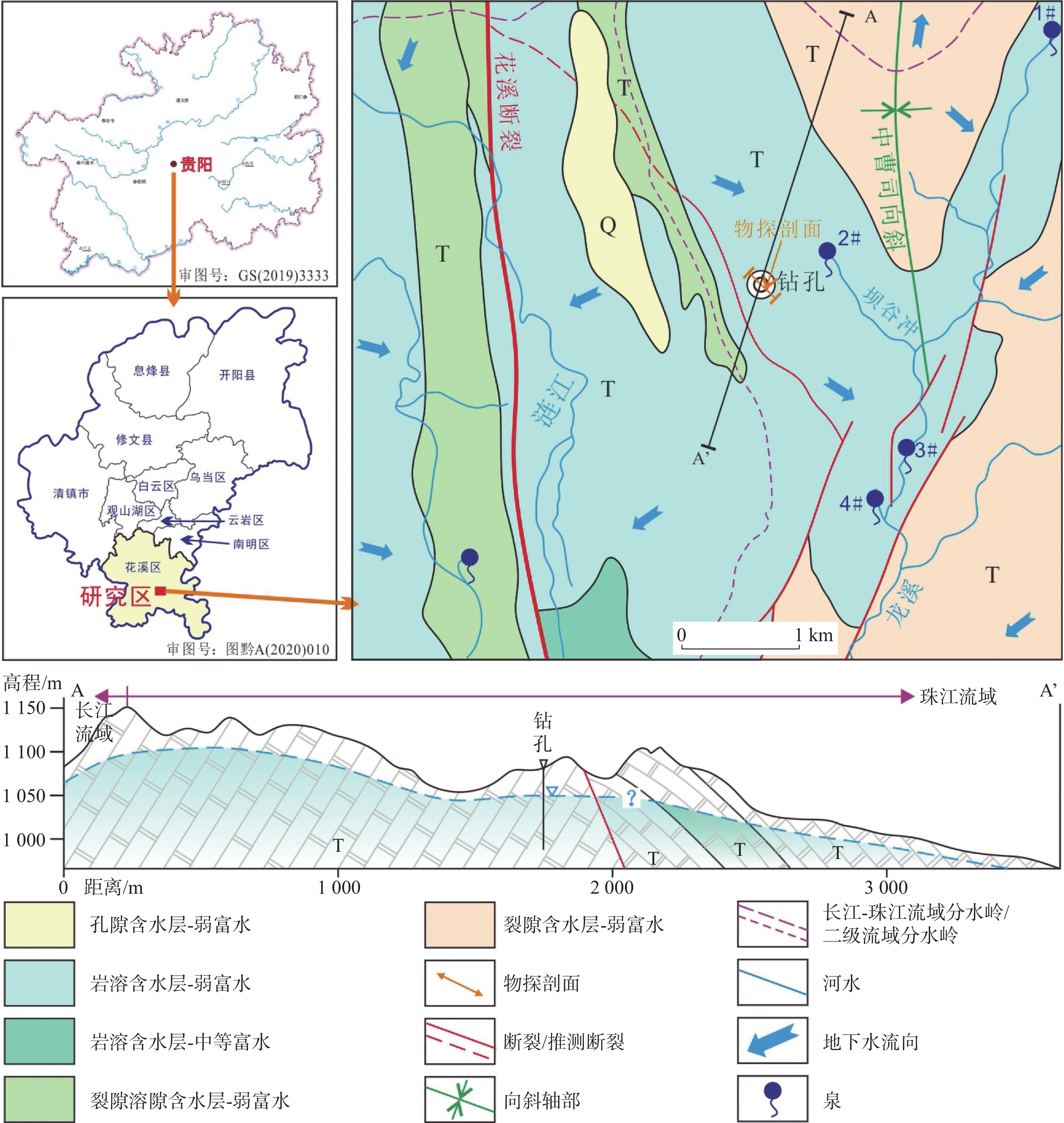
| Citation: | MA Jianfei, FU Changchang, ZHANG Chunchao, LI Xiangquan, GAO Ming, ZHANG Lei, WANG Zhenxing. Karst development characteristics and influencing factors in the Yangtze River- Pearl River Watershed in Huaxi, Guiyang[J]. CARSOLOGICA SINICA. doi: 10.11932/karst2026y024

|

| [1] |
卢耀如. 喀斯特发育机理与发展工程建设效应研究方向[J]. 地球学报, 2016, 37(4): 419-432 doi: 10.3975/cagsb.2016.04.04
LU Yaoru. Karst development mechanism and research directions of developing engineering construction effect[J]. Acta Geoscientica Sinica, 2016, 37(4): 419-432. doi: 10.3975/cagsb.2016.04.04
|
| [2] |
李术才, 许振浩, 黄鑫, 林鹏, 赵晓成, 张庆松, 杨磊, 张霄, 孙怀凤, 潘东东. 隧道突水突泥致灾构造分类、地质判识、孕灾模式与典型案例分析[J]. 岩石力学与工程学报, 2018, 37(5): 1041-1069 doi: 10.13722/j.cnki.jrme.2017.1332
LI Shucai, XU Zhenhao, HUANG Xin, LIN Peng, ZHAO Xiaocheng, ZHANG Qingsong, YANG Lei, ZHANG Xiao, SUN Huaifeng, PAN Dongdong. Classification, geological identification, hazard mode and typical case studies of hazard-causing structures for water and mud inrush in tunnels[J]. Chinese Journal of Rock Mechanics and Engineering, 2018, 37(5): 1041-1069. doi: 10.13722/j.cnki.jrme.2017.1332
|
| [3] |
李向全, 张春潮, 侯新伟. 采煤驱动下晋东大型煤炭基地地下水循环演变特征: 以辛安泉域为例[J]. 煤炭学报, 2021, 46(9): 3015-3026 doi: 10.13225/j.cnki.jccs.2020.0778
LI Xiangquan, ZHANG Chunchao, HOU Xinwei. Characteristics of groundwater circulation and evolution in Jindonglarge coal base driven by coal mining: An example of Xin’an spring area[J]. Journal of China Coal Society, 2021, 46(9): 3015-3026. doi: 10.13225/j.cnki.jccs.2020.0778
|
| [4] |
张永双, 杜国梁, 郭长宝, 李向全, 任三绍, 吴瑞安. 川藏交通廊道典型高位滑坡地质力学模式[J]. 地质学报, 2021, 95(3): 605-617 doi: 10.19762/j.cnki.dizhixuebao.2021135
ZHANG Yongshuang, DU Guoliang, GUO Changbao, LI Xiangquan, REN Sanshao, WU Ruian. Research on typical geomechanical model of high-position landslides on the Sichuan-Tibet traffic corridor[J]. Acta Geologica Sinica, 2021, 95(3): 605-617. doi: 10.19762/j.cnki.dizhixuebao.2021135
|
| [5] |
MA Jianfei, LI Xiangquan, ZHANG Chunchao, FU Changchang, WANG Zhenxing, BAI Zhanxue. Identification of origin and runoff of karst groundwater in the glacial lake area of the Jinsha River fault zone, China[J]. Sci Rep, 2022, 12: 14661. doi: 10.1038/s41598-022-18960-9
|
| [6] |
殷跃平. 新三峡库区长期地质安全战略研究[J]. 中国水利, 2024(22): 26-35 doi: 10.3969/j.issn.1000-1123.2024.22.007
YIN Yueping. Studies on long-term geological safety strategy in the new Three Gorges Reservoir area[J]. China Water Resources, 2024(22): 26-35. doi: 10.3969/j.issn.1000-1123.2024.22.007
|
| [7] |
彭建兵, 王飞永, 徐继山. 盆地圈层结构与城市地质安全[J/OL]. 地球科学. 2025. https://link.cnki.net/urlid/42.1874.P.20250610.1418.002.
PENG Jianbing, WANG Feiyong, XU Jishan. Basin Layered Structure and Urban Geological Safety[J/OL]. Earth Science. 2025. https://link.cnki.net/urlid/42.1874.P.20250610.1418.002.
|
| [8] |
张发旺, 陈立, 王滨, 么红超, 许柏青, 李敏巍, 胡博文, 钱龙. 矿区水文地质研究进展及中长期发展方向[J]. 地质学报, 2016, 90(9): 2464-2475 doi: 10.3969/j.issn.1672-1667.2022.15.076
ZHANG Fawang, CHEN Li, WANG Bin, YAO Hongchao, XU Baiqing, LI Minwei, HU Bowen, QIAN Long. Progress of hydrogeological research in mining areas and its mid- and long- term trend[J]. Acta Geologica Sinica, 2016, 90(9): 2464-2475. doi: 10.3969/j.issn.1672-1667.2022.15.076
|
| [9] |
马剑飞, 付昌昌, 张春潮, 白占学. 康定北部高原构造岩溶发育特征与地下水径流带识别[J]. 地质科技通报, 2022, 41(1): 288-299 doi: 10.19509/j.cnki.dzkq.2022.0017
MA Jianfei, FU Changchang, ZHANG Chunchao, BAI Zhanxue. Plateau tectonic karst development characteristics and underground conduits identification in the northern part of Kangding[J]. Bulletin of Geological Science and Technology, 2022, 41(1): 288-299. doi: 10.19509/j.cnki.dzkq.2022.0017
|
| [10] |
马剑飞, 李向全, 张春潮, 付昌昌, 谢小国, 王晓刚, 李欣泽, 张登飞, 白占学, 王振兴. 青藏高原东部典型构造岩溶地下水补给来源、模式及开发利用潜力[J]. 中国地质, 2025, 52(1): 347-361 doi: 10.12029/gc20220416004
MA Jianfei, LI Xiangquan, ZHANG Chunchao, FU Changchang, XIE Xiaoguo, WANG Xiaogang, LI Xinze, ZHANG Dengfei, BAI Zhanxue, WANG Zhenxing. Recharge sources, model and development potential of typical tectonic karst groundwater in the eastern Qinghai−Xizang Plateau[J]. Geology in China, 2025, 52(1): 347-361. doi: 10.12029/gc20220416004
|
| [11] |
ZHANG Cheng, XIAO Qiong, WU Zeyan, K. Martin. Ecosystem-driven karst carbon cycle and carbon sink effects[J]. Journal of Groundwater Science and Engineering, 2022, 10(2): 99-112.
|
| [12] |
LI Qingshan, KANG Xiaobing, XU Mo, MAO Bangyan. Effects of coal mining and tunnel excavation on groundwater flow system in karst areas by modeling: A case study in Zhongliang Mountain, Chongqing, Southwest China[J]. Journal of Groundwater Science and Engineering, 2023, 11(4): 391-407. doi: 10.26599/JGSE.2023.9280031
|
| [13] |
樊燏, 黄琨, 段慧毓, 林宇航, 罗明明, 万军伟, 温汉辉, 曲金才, 张龙轩. 粤西北连州盆地构造演化对岩溶作用及岩溶塌陷的控制[J]. 地质科技通报, 2024, 43(4): 273-290 doi: 10.19509/j.cnki.dzkq.tb20230120
FAN Yu, HUANG Kun, DUAN Huiyu, LIN Yuhang, LUO Mingming, WAN Junwei, WEN Hanhui, QU Jincai, ZHANG Longxuan. Control of tectonic evolution on karstification and karst collapse in the Lianzhou Basin, northwestern Guangdong Province[J]. Bulletin of Geological Science and Technology, 2024, 43(4): 273-290. doi: 10.19509/j.cnki.dzkq.tb20230120
|
| [14] |
康小兵, 乔宇, 眭素刚, 王帮团, 许模. 采动影响下复杂岩溶矿区地表水-地下水交互模式[J/OL]. 地球科学. https://link.cnki.net/urlid/42.1874.P.20251201.0834.008
KANG Xiaobing, QIAO Yu, SUI Sugang, WANG Bangtuan, XU Mo. The interactive mode between surface water and groundwater in complex karst mining areas under the influence of mining activities[J/OL]. Earth Science. https://link.cnki.net/urlid/42.1874.P.20251201.0834.008
|
| [15] |
张贵, 周翠琼, 王波, 顾维芳, 戴文敏, 张文鋆. 滇东南岩溶区找水打井经验: 以云南省广南县珠琳地区为例[J]. 中国岩溶, 2017, 36(5): 626-632 doi: 10.11932/karst20170504
ZHANG Gui, ZHOU Cuiqiong, WANG Bo, GU Weifang, DAI Wenmin, ZHANG Wenjun. Experiences of well drilling for water search in karst areas of southeastern Yunnan Province: An example of the Zhulin area, Guangnan county[J]. Carsologica Sinica, 2017, 36(5): 626-632. doi: 10.11932/karst20170504
|
| [16] |
王波, 张华, 王宇, 张贵, 张文鋆, 高瑜, 罗为群. 泸西喀斯特断陷盆地地表水与地下水流域边界与水动力性质[J]. 中国岩溶, 2020, 39(3): 319-326 doi: 10.11932/karst20200302
WANG Bo, ZHANG Hua, WANG Yu, ZHANG Gui, ZHANG Wenjun, GAO Yu, LUO Weiqun. Watershed boundaries and hydrodynamic properties of surface water and groundwater in the Luxi karst fault-depression basin[J]. Carsologica Sinica, 2020, 39(3): 319-326. doi: 10.11932/karst20200302
|
| [17] |
邱书敏. 岩溶地下水分水岭的类型及其实践意义[J]. 中国岩溶. 1992. 4(11). 12. 279-280. QIU Shumin. On the divide types of karst ground water catchment and their practical significance[J]. Carsologica Sinica, 1992. 4(11). 12. 279-280.
|
| [18] |
王东华. 分水岭区岩溶地下水的勘测开发[J]. 地下水, 2025, 47(2): 80-82 doi: 10.19807/j.cnki.DXS.2025-02-025
WANG Donghua. Exploration and development of karst groundwater in watershed area[J]. Groundwater, 2025, 47(2): 80-82. doi: 10.19807/j.cnki.DXS.2025-02-025
|
| [19] |
李向全, 张春潮, 马剑飞, 付昌昌, 王振兴, 白占学, 赵崇钦, 阎涛. 高原构造岩溶水文地质特征与隧道突涌水风险判识[J/OL]. 地质学报, 2025
LI Xiangquan, ZHANG Chunchao, MA Jianfei, FU Changchang, WANG Zhenxing, BAI Zhanxue, ZHAO Chongqin, YAN Tao. Hydrogeological characteristics of the plateau tectonic karst and water inrush risk identification and evaluation of tunnels. Acta Geologica Sinica, 2025.
|
| [20] |
王旺盛, 沙松龄, 任宇翔. 滇中引水工程香炉山深埋长隧洞岩溶水文地质综合勘察研究[J]. 水利水电快报, 2025, 46(9): 38-43 doi: 10.15974/j.cnki.slsdkb.2025.09.007
WANG Wangsheng, SHA Songling, REN Yuxiang. Comprehensive survey and research on karst hydrogeological geology of Xianglushan deep buried long tunnel in central Yunnan water diversion project[J]. Express Water Resources & Hydropower Information, 2025, 46(9): 38-43. doi: 10.15974/j.cnki.slsdkb.2025.09.007
|
| [21] |
邵长杰, 王磊, 刘惠东, 崔永兴, 刘伟. 虎溪台隧道岩溶地下水涌水成因分析及涌水量预测[J]. 中国岩溶, 2025, 44(3): 477-487+518 doi: 10.11932/karst20250303
SHAO Changjie, WANG Lei, LIU Huidong, CUI Yongxing, LIU Wei. Genesis analysis of karst groundwater inrush and prediction of its water inflow in the Huxitai Tunnel[J]. Carsologica Sinica, 2025, 44(3): 477-487+518. doi: 10.11932/karst20250303
|
| [22] |
袁道先. 中国岩溶动力系统[M]. 北京: 地质出版社, 2002
YUAN Daoxian. Karst dynamic system of China[M]. Beijing: Geological Publishing House, 2002.
|
| [23] |
侯加根, 马晓强, 刘钰铭, 赵彬. 缝洞型碳酸盐岩储层多类多尺度建模方法研究: 以塔河油田四区奥陶系油藏为例[J]. 地学前缘, 2012, 19(2): 59-66
HOU Jiagen, MA Xiaoqiang, LIU Yuming, ZHAO Bin. Modelling of carbonate fracture-vuggy reservoir: A case study of Ordovician reservoir of 4th block in Tahe Oilfield[J]. Earth Science Frontiers, 2012, 19(2): 59-66.
|
| [24] |
罗书文, 毛永琴, 吴克华, 高占东, 王慧澄, 王德远, 孙燕, 邓亚东, 张弘智. 贵州花溪高坡岩溶台地分水岭水文地貌特征及发育演化研究[J]. 中国岩溶, 2024, 43(5): 991-1006 doi: 10.11932/karst20240501
LUO Shuwen, MAO Yongqin, WU Kehua, GAO Zhandong, WANG Huicheng, WANG Deyuan, SUN Yan, DENG Yadong, ZHANG Hongzhi. Research on hydrogeomorphologic characteristics and evolution of the watershed on the Gaopo karst tableland in Huaxi of Guizhou[J]. Carsologica Sinica, 2024, 43(5): 991-1006. doi: 10.11932/karst20240501
|
| [25] |
陶华飞, 彭功勋, 李承海, 钟涛. 岩溶发育的分形规律探讨[J]. 西部探矿工程, 2014, 26(10): 13-16 doi: 10.3969/j.issn.1004-5716.2014.10.005
TAO Huafei, PENG Gongxun, LI Chenghai, ZHONG Tao. Discussion on the fractal law of karst development[J]. West-China Exploration Engineering, 2014, 26(10): 13-16. doi: 10.3969/j.issn.1004-5716.2014.10.005
|
| [26] |
伍齐乔, 李景瑞, 曹飞, 梁彬, 朱现胜, 张庆玉, 淡永. 顺北1井区奥陶系断溶体油藏岩溶发育特征[J]. 中国岩溶, 2019, 38(3): 444-449 doi: 10.11932/karst20190313
WU Qiqiao, LI Jingrui, CAO Fei, LIANG Bin, ZHU Xiansheng, ZHANG Qingyu, DAN Yong. Characteristics of fault-karst carbonate reservoirs in the Shunbei No. 1 well block, Tarim basin[J]. Carsologica Sinica, 2019, 38(3): 444-449. doi: 10.11932/karst20190313
|
| [27] |
李苍松. 岩溶地质分形预报方法的应用研究[D]. 重庆: 西南交通大学, 2006. LI Cangsong. Research on the Application of Fractal Forecasting Method in Karst Geology [D]. Chongqing: Southwest Jiaotong University. 2006.
|
| [28] |
邓宇林, 郭绪磊, 罗明明, 陈祥勇, 况野, 周宏. 基于扫描电镜和CT 成像技术的碳酸盐岩溶蚀作用微观结构和变化规律研究[J]. 中国岩溶, 2022, 41(5): 698-707 doi: 10.11932/karst20220503
DENG Yulin, GUO Xulei, LUO Mingming, CHEN Xiangyong, KUANG Ye, ZHOU Hong. Study on the microstructure and variation law of carbonate rock dissolution based on scanning electron microscopy and CT imaging technology[J]. Carsologica Sinica, 2022, 41(5): 698-707. doi: 10.11932/karst20220503
|
| [29] |
刘动, 林沛元, 李伟科, 黄胜, 马保松. 跨孔CT岩溶识别方法准确性的统计学评价[J]. 岩土力学, 2024, 45(3): 822-834+926 doi: 10.16285/j.rsm.2023.0424
LIU Dong, LIN Peiyuan, LI Weike, HUANG Sheng, MA Baosong. Statistical Evaluation of Karst Identification Accuracy Using Cross-hole CT Method[J]. Rock and Soil Mechanics, 2024, 45(3): 822-834+926. doi: 10.16285/j.rsm.2023.0424
|
| [30] |
谭谣, 漆继红, 许模, 郑童心, 王钟毓, 王帅. 钻孔岩溶地质分形特征在岩溶发育程度分析中的应用[J]. 高校地质学报, 2024, 30(5): 603-612 doi: 10.16108/j.issn1006-7493.2023052
TAN Yao, QI Jihong, XU Mo, ZHENG Tongxin, WANG Zhongyu, WANG Shuai. Application of fractal characteristics of drill hole karst geology in analyzing the degree of karst development[J]. Geological Journal of China Universities, 2024, 30(5): 603-612. doi: 10.16108/j.issn1006-7493.2023052
|
| [31] |
LIU, X. , LIU, H. , MENG, X. , LIN, C. , WANG, Y. , HU, H. , DU, Y. Exploring karst caves in an urban area using surface and borehole geophysical methods[J]. Bull Eng Geol Environ, 2025, 84, 212.
|
| [32] |
张利民, 王海, 李文强, 李任杰, 吉锋. 灰岩溶蚀特性及细观结构损伤演化特征[J/OL]. 土木与环境工程学报(中英文), 2025. https://link.cnki.net/urlid/50.1218.TU.20250613.1037.002.
ZHANG Limin, WANG Hai, LI Wenqiang, LI Renjie, JI Feng. Dissolution characteristics and meso-structure damage evolution of limestone[J/OL]. Journal of Civil and Environmental Engineering, 2025. https://link.cnki.net/urlid/50.1218.TU.20250613.1037.002.
|
| [33] |
武东强, 邢立亭, 兰晓荀, 孟庆晗, 侯玉松, 赵振华, 孙斌, 袁学圣. 济南岩溶含水介质孔隙结构特征[J]. 中国岩溶, 2021, 40(4): 680-688 doi: 10.11932/karst20210409
WU Dongqiang, XING Liting, LAN Xiaoxun, MENG Qinghan, HOU Yusong, ZHAO Zhenhua, SUN Bin, YUAN Xuesheng. Pore structure characteristics of karst water-bearing media in Jinan[J]. Carsologica Sinica, 2021, 40(4): 680-688. doi: 10.11932/karst20210409
|
| [34] |
王榕臻, 邢立亭, 邓兴, 于苗, 袁学圣. 济南泉域岩溶含水介质发育特征研究[J]. 济南大学学报(自然科学版), 2024, 38(3): 280-287 doi: 10.13349/j.cnki.jdxbn.20240305.001
WANG Rongzhen, XING Liting, DENG Xing, YU Miao, YUAN Xuesheng. Karst Development Characteristics of Aquifer Medium in Jinan Spring Area[J]. Journal of University of Jinan (Science and Technology), 2024, 38(3): 280-287. doi: 10.13349/j.cnki.jdxbn.20240305.001
|
| [35] |
孟津竹. 溶蚀与循环荷载作用下碳酸盐岩损伤机理及力学特性研究[D]. 沈阳: 沈阳工业大学, 2024
MENG Jinzhu. Study on Damage Mechanism & Mechanical Properties of Carbonate Rocks under Dissolution and Cyclic Load[D]. Shenyang: Shenyang University of Technology, 2024.
|
| [36] |
张春潮, 李向全, 王振兴, 侯新伟, 桂春雷, 白占学, 付昌昌. 不同碳酸盐岩岩性试片的溶蚀速率研究—以三姑泉域为例[J]. 水资源与水工程学报, 2018, 29(5): 218-223
ZHANG Chunchao, LI Xiangquan, WANG Zhenxing, HOU Xinwei, GUI Chunlei, BAI Zhanxue, FU Changchang. Dissolution rate of different carbonate rocks: A case study in Sangu Spring Basin[J]. Journal of Water Resources & Water Engineering, 2018, 29(5): 218-223.
|
| [37] |
平世飞. 含石膏地层溶蚀作用下多场耦合模拟研究[D]. 长春: 吉林大学, 2023
PING Shifei. Study on multi-field coupling simulation of gypsum-bearing formation induced by dissolution [D]. Changchun: Jilin University, 2023.
|
| [38] |
邓国仕, 岑鑫雨, 唐业旗, 钟金先. 乌蒙山以礼河流域岩溶地下水富集特征及供水意义研究[J]. 中国岩溶, 2023, 42(4): 685-698 doi: 10.11932/karst20230405
DENG Guoshi, CEN Xinyu, TANG Yeqi, ZHONG Jinxian. Study on the enrichment characteristics and water supply significance of karst groundwater in the Yili river basin, Wumeng Mountain area[J]. Carsologica Sinica, 2023, 42(4): 685-698. doi: 10.11932/karst20230405
|
Website Copyright © CARSOLOGICA SINICA 桂ICP备05009877号-1
Sponsor: Chinese Academy of Geological Sciences Sponsored by: Institute of Karst Geology, Chinese Academy of Geological Sciences Address: No.50, Qixing Road, Guilin, Guangxi
Post Code: 541004 Tel: 0773-5812949 7796657 Email: zgyrbjb@163.com
Supported by:
Beijing Renhe Information Technology Co., Ltd.



 DownLoad: