• Included in CSCD
  • Chinese Core Journals
  • Included in WJCI Report
  • Included in Scopus, CA, DOAJ, EBSCO, JST
  • The Key Magazine of China Technology
Volume 45 Issue 3
Jun.  2026
Turn off MathJax
Article Contents
YANG Bai, XIAO Kang, PAN Zongyuan, QIN Chao, HUANG Xiang. Study on vertical bearing behavior of pile foundations overlying karst cavities[J]. CARSOLOGICA SINICA, 2026, 45(3): 603-614. doi: 10.11932/karst2025y027
Citation: YANG Bai, XIAO Kang, PAN Zongyuan, QIN Chao, HUANG Xiang. Study on vertical bearing behavior of pile foundations overlying karst cavities[J]. CARSOLOGICA SINICA, 2026, 45(3): 603-614. doi: 10.11932/karst2025y027

Study on vertical bearing behavior of pile foundations overlying karst cavities

doi: 10.11932/karst2025y027
  • Received Date: 2025-04-15
  • Accepted Date: 2025-11-12
  • Rev Recd Date: 2025-10-09
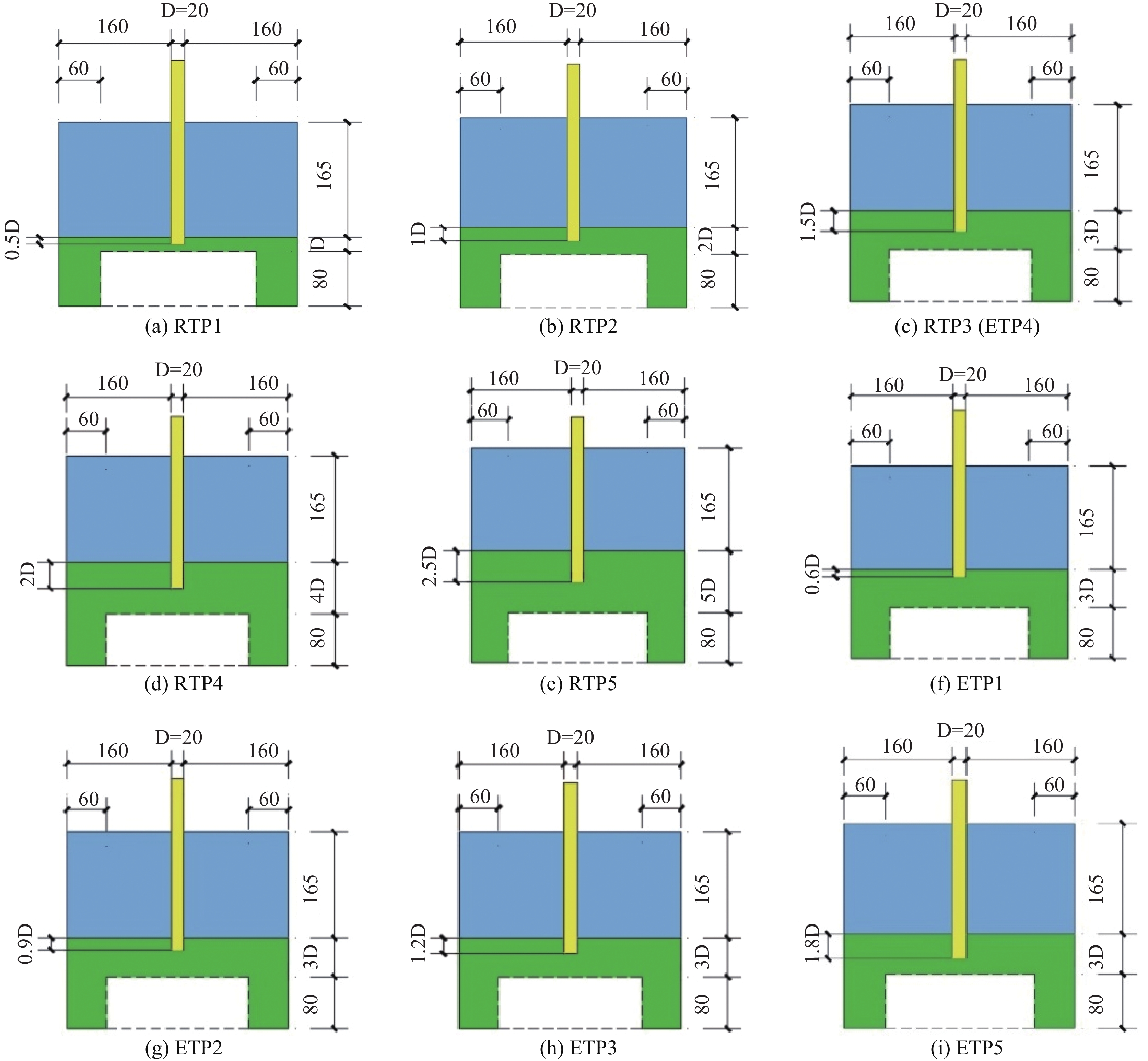
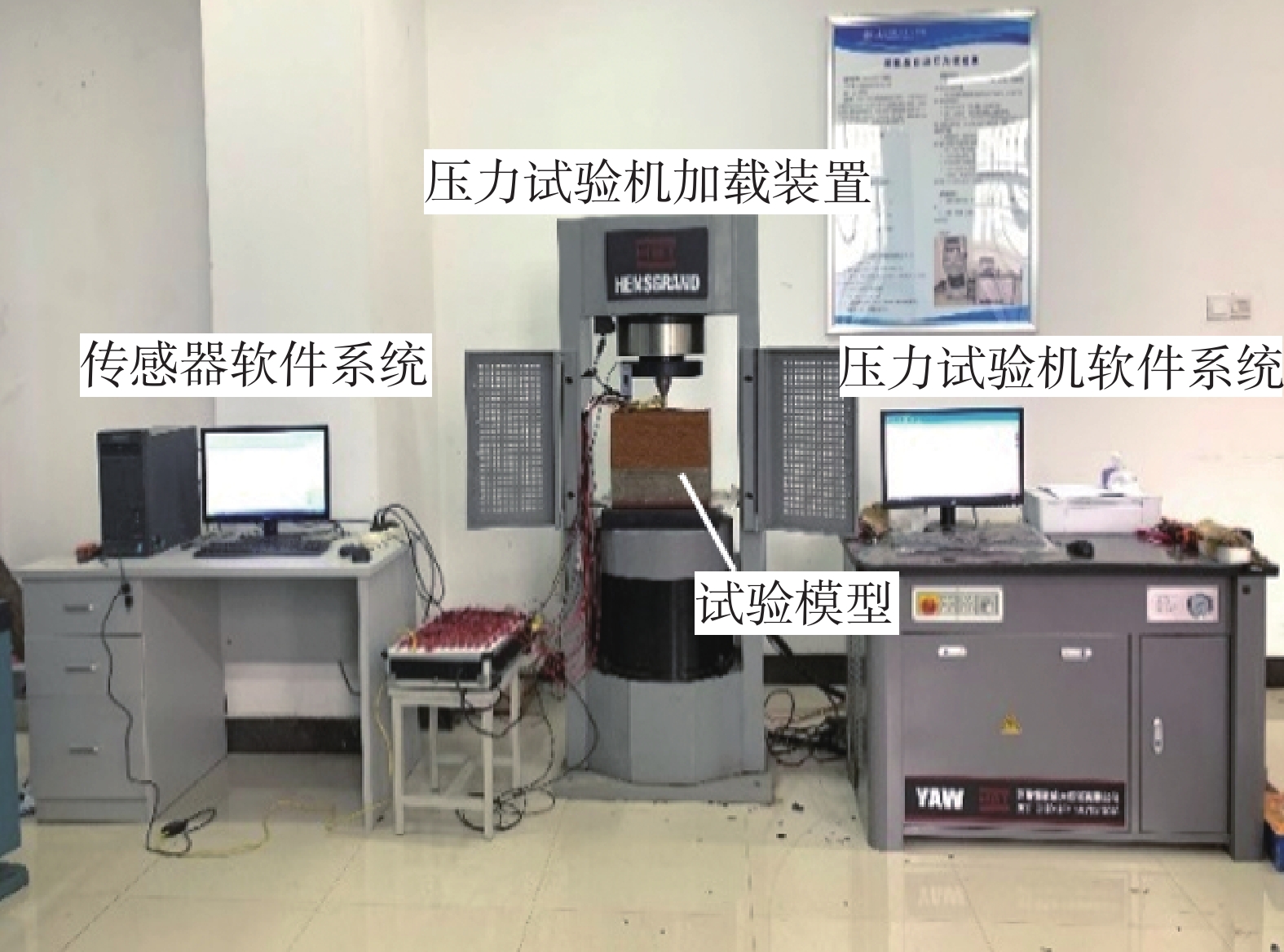
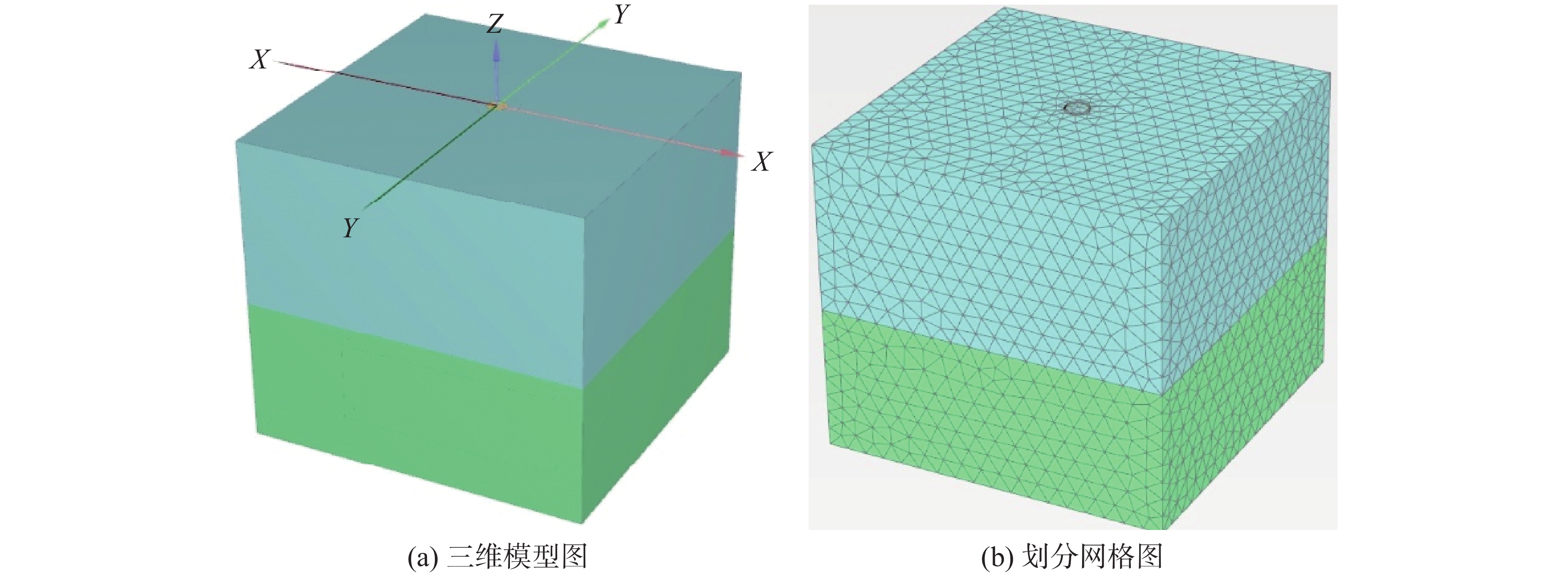
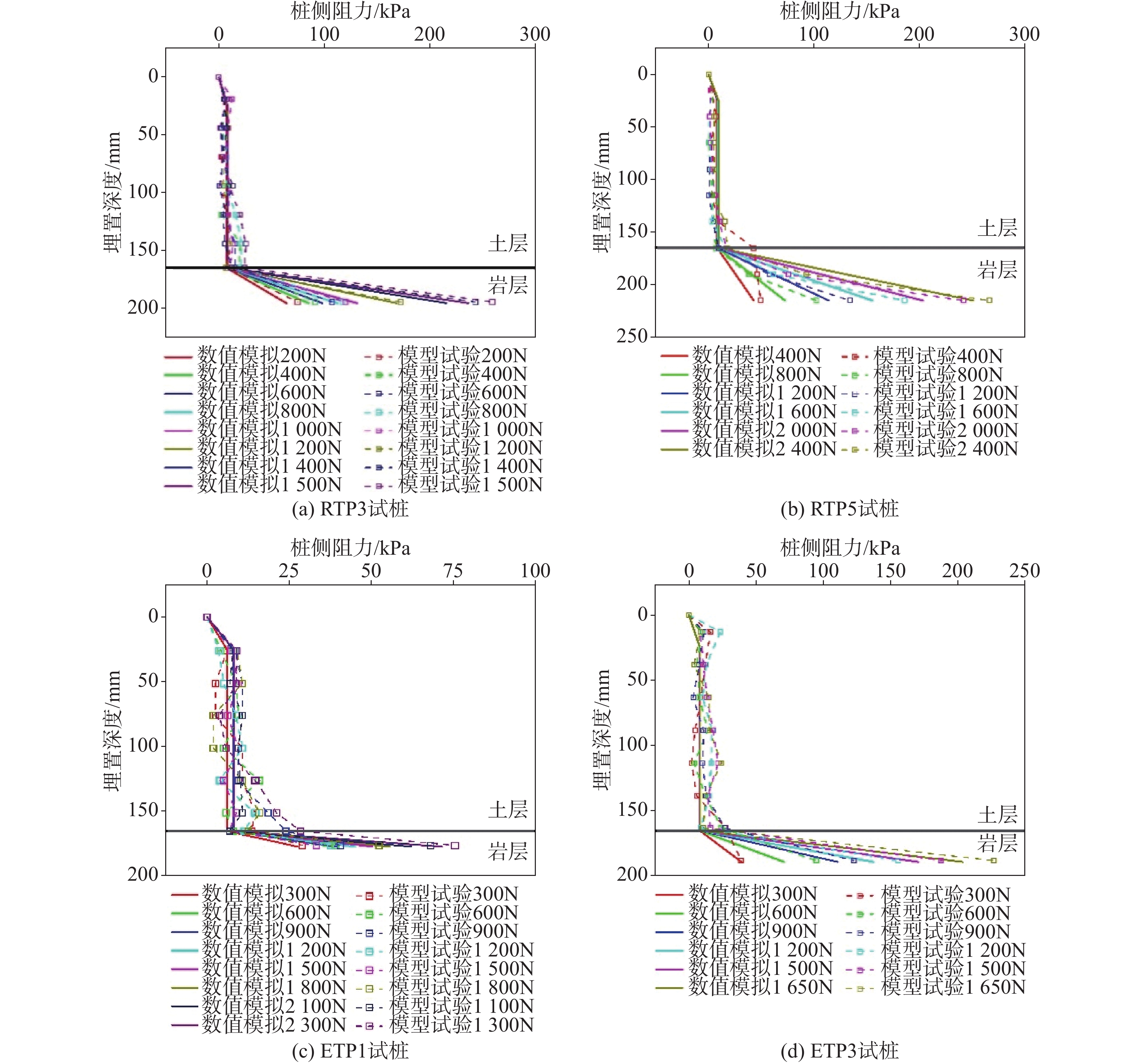
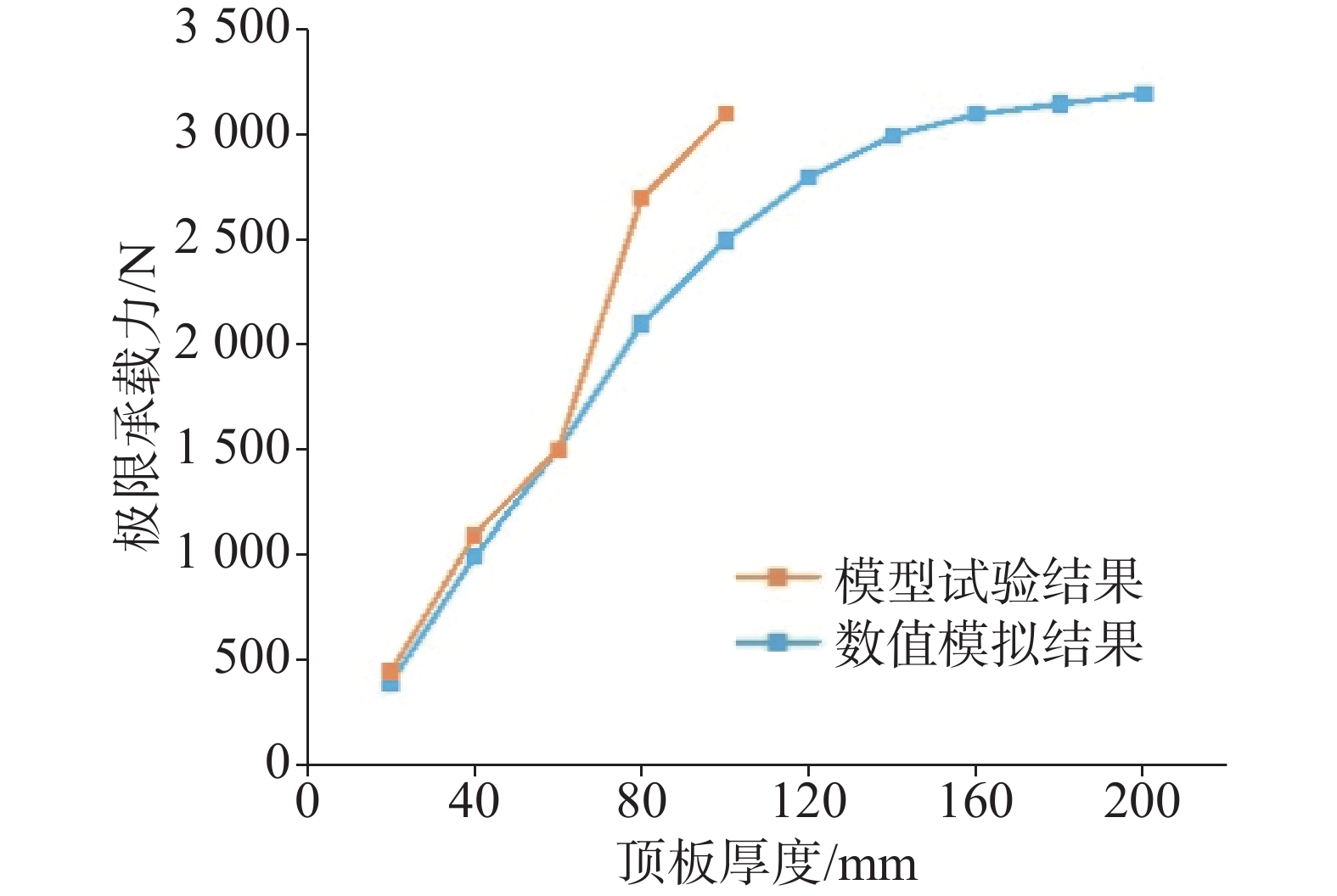
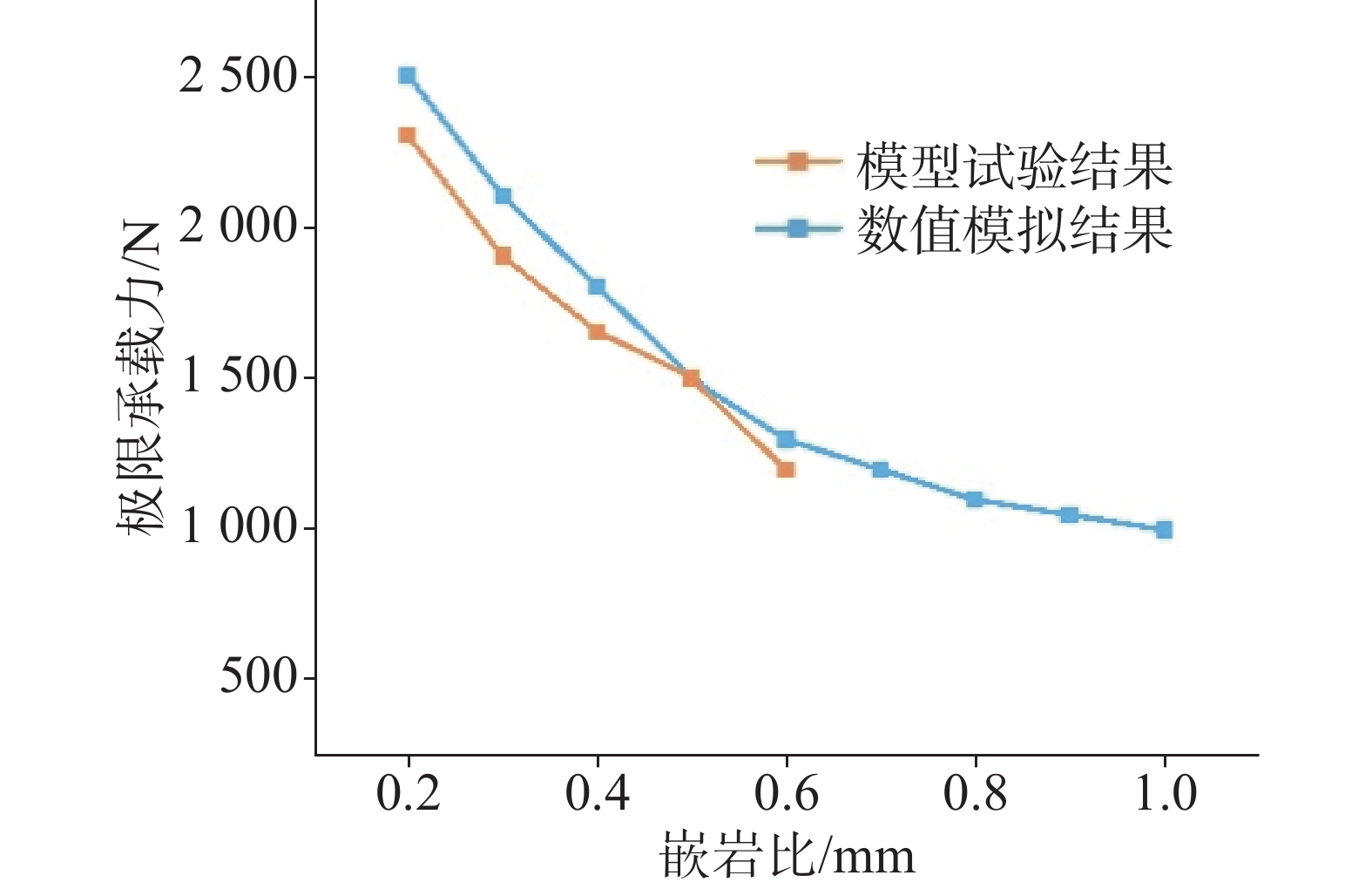
  • Karst regions are extensively distributed acorss China, where rock-socketed pile foundations are widely adopted in the construction of bridges, buildings, and other infrastructure owing to their high bearing capacity, minimal settlement, and favorable deformation control performance. However, when a karst cave exists beneath the pile tip, its load transfer mechanism, failure mode, and ultimate bearing capacity may deviate markedly from those of conventional pile foundations. Consequently, the stability of the cave roof and the interactions among the pile, overlying soil, bedrock, and underlying cavity constitute critical determinants of foundation safety. To investigate the vertical bearing behavior of pile foundations with underlying karst caves, this study integrates physical model tests with three-dimensional numerical simulations to examine the effects of cave roof thickness and rock-socketed ratio on failure characteristics, load–displacement response, axial force transfer, lateral resistance distribution, and ultimate bearing capacity.The physical model tests were designed based on the geological conditions of a karst site in Jiangnan District, Nanning, Guangxi, where the overlying layer is mainly red clay and the bedrock is moderately weathered dolomite. With a geometric similarity ratio of 30 and a volumetric weight similarity ratio of 1.2, nine model piles were fabricated in total. In the cave-roof-thickness test series, five piles shared a constant rock-socketed ratio of 0.5 while the cave roof thicknesses varied from 1D to 5D. In the rock-socketed-ratio test series, five piles maintained a uniform cave roof thickness of 3D with rock-socketed ratios ranging from 0.2 to 0.6; one specimen was shared between the two test series. The slow maintained load procedure was adopted to obtain the load–displacement curves at the pile top and the internal force responses along the pile shaft. Concurrently, a corresponding full-scale (1∶1) numerical model was developed using PLAXIS 3D. The Mohr–Coulomb constitutive model was assigned to both soil and rock masses, whereas the pile body was simulated as a linear elastic material. Interface elements were embedded at the pile shaft and pile tip to characterize the pile–soil and pile–rock contact behaviors. The interface strength reduction factors were determined via direct shear tests, yielding values of 0.5 for the pile–soil interface and 0.8 for the pile-rock interface.The results indicate that pile foundation with underlying karst caves exhibit a composite failure mode: columnar shear failure occurs along the pile shaft within the surrounding soil and rock mass, accompanied by trumpet-shaped punching failure of the cave roof beneath the pile tip. The displacement contour plots derived from numerical simulations are generally consistent with the failure morphology observed in the physical model tests, demonstrating that the established numerical model can effectively reproduce the failure mechanism of the pile-rock–cavity system. As the cave roof thickness increases, both the height and the scope of influence of the failure zone expand; conversely, these dimensions diminish with increasing rock-socketed ratio. These findings reveal that the roof thickness and the socketing condition collectively govern the diffusion of pile-tip loads within the rock mass and the subsequent punching failure process of the cave roof.The load-displacement curves of pile foundations with underlying karst caves exhibit distinct abrupt-failure characteristics. During the initial loading stage, the pile-head displacement increases approximately linearly with the applied load.Upon reaching the ultimate bearing capacity, any further load increment triggers a sharp surge in displacement, indicating sudden punching failure or instability of the cave roof. In contrast, piles without underlying cavities display a gradual load-displacement response without any pronounced inflection point. This discrepancy reflects the competitive relationship between the shaft resistance mobilized along the pile-soil/rock interface and the punching resistance offered by the cave roof. When the cave roof is relatively thin, the stress-affected zone beneath the pile tip readily penetrates the roof, rendering punching failure the dominant failure mechanism. Conversely, when the roof thickness is sufficient, the pile-tip load diffuses more effectively within the rock mass, leading to stable bearing behavior of the pile foundation.The axial force and shaft resistance profiles further elucidate the load transfer mechanism of pile foundation with underlying karst caves.At various load levels, the axial force along the pile shaft decreases progressively with depth, exhibiting a notably higher attenuation rate within the rock mass than within the overlying soil layer. Piles with underlying cavities predominantly behave as end-bearing piles. The distribution of shaft resistance displays a characteristic L-shaped pattern. Owing to the relatively low cohesion and internal friction angle of the red clay, the shaft resistance in the soil layer remains modest and mobilizes rapidly with increasing vertical load. In contrast, the rock mass possesses superior strength parameters; once relative shear displacement occurs at the pile-rock interface, the rock shaft resistance increases substantially, forming a distinct inflection point near the soil-rock interface. Both the rock shaft resistance and the pile tip resistance escalate continuously with rising vertical load, indicating that the bearing capacity of such piles is collectively governed by the rock shaft resistance, the pile tip resistance, and the stability of the underlying cave roof.The numerical results show good agreement with the physical model tests, with relative errors in ultimate bearing capacity ranging from −22.2% to 15.8%. Upon validating the reliability of the numerical model, parametric analyses were further extended to cover cave roof thicknesses from 1D to 10D and rock-socketed ratios from 0.2 to 1.0. The results indicate that the ultimate bearing capacity increases with cave roof thickness, exhibiting an approximately linear growth trend within the 1D–6D range; beyond 6D, the increase gradually plateaus. Conversely, the ultimate bearing capacity decreases with increasing rock-socketed ratio, showing an approximately linear decline as the ratio rises from 0.2 to 0.6; when the ratio exceeds 0.6, the rate of decrease diminishes markedly. These findings provide valuable references for evaluating the bearing behavior of rock-socketed piles in karst regions, determining rational design parameters, and implementing effective safety control measures.


  • loading
  • [1]
    赵桂清, 张吉禄, 周小涵, 刘新荣, 刘馨琳, 郭宏青, 岩溶区桥桩承载特性及溶洞变形机理研究[J]. 中国岩溶, 2024, 43(5): 1133-1143.

    Zhao Guiqing, Zhang Jilu, Zhou Xiaohan, Liu Xinrong, Liu Xinlin, Guo Hongqing. Study on bearing characteristics of bridge piles and deformation mechanisms of karst caves in karst area[J]. Carsologica Sinica, 2024, 43(5): 1133-1143.
    [2]
    温雅歌, 刘金栓, 尹泽鹏, 盛靖昱. 岩溶发育区某住宅项目基础及岩溶处理设计[J]. 中国岩溶, 2024, 43(5): 1187-1195.

    Wen Yage , Liu Jinshuan , Yin Zepeng , Sheng Jingyu. Design of foundation and karst treatment for a residential project in a karst development area[J]. Carsologica Sinica, 2024, 43(5): 1187-1195.
    [3]
    杨柏, 覃超, 张银海, 王威, 肖世国. 下伏溶洞的高嵌岩比基桩承载特性模型试验[J]. 岩土力学, 2025, 46(6): 1839-1850.

    Yang Bai, Qin Chao, Zhang Yinhai, Wang Wei, Xiao Shiguo. Model tests on bearing characteristics of foundation pile with high rocksocketed ratio in underlying karst cave[J]. Rock and Soil Mechanics, 2025, 46(6): 1839-1850.
    [4]
    杨柏, 肖世国, 覃超, 杨源浩, 石青叶. 下伏溶洞顶板厚度对桩基承载特性影响模型试验研究[J]. 岩石力学与工程学报, 2025, 44(1): 236-247. doi: 10.3724/1000-6915.jrme.2024.0419

    Yang Bai, Xiao Shiguo, Qin Chao, Yang Yuanhao, Shi Qingye. Experimental study on the bearing characteristics of piles under theinfluence of thickness of underlying karst cave roof[J]. Chinese Journal of Rock Mechanics and Engineering, 2025, 44(1): 236-247. doi: 10.3724/1000-6915.jrme.2024.0419
    [5]
    李想, 尹骥, 卫佳琦, 韦马季. 深覆盖岩溶地区高层建筑桩基优化实践[J]. 中国岩溶, 2019, 38(4): 591-599.

    Li Xiang, Yin Ji, Wei Jiaqi, Wei Maji. Optimization of pile foundation for high-rise buildings in deep-covered karst areas[J]. Carsologica Sinica, 2019, 38(4): 591-599.
    [6]
    滑帅. 广东岩溶区某输电塔桩基稳定性数值模拟分析[J]. 中国岩溶, 2014, 33(1): 44-50.

    Hua Shuai. Numerical simulation research on the stability of transmission tower pilefoundations in a karst area of Guangdong Province[J]. Carsologica Sinica, 2014, 33(1): 44-50.
    [7]
    金书滨, 黄生根, 常仲昆. 岩溶地区桩基承载性能试验研究[J]. 中国岩溶, 2005(2): 147-151, 155.

    Jin Shubin, Huang Shenggen, Chang Zhongkun. Test for bearing behavior of pile in karst area[J]. Carsologica Sinica, 2005(2): 147-151, 155.
    [8]
    郜江俊, 肖豹, 蒋春桂, 杨小龙. 基于岩体质量的溶洞顶板安全厚度确定方法[J]. 施工技术(中英文), 2022, 51(19): 13-18, 22.

    Gao Jiangjun, Xiao Bao, Jiang Chungui, Yang Xiaolong. Determination method of safe thickness of karst cave roof based on rock mass quality[J]. Construction Technology, 2022, 51(19): 13-18, 22.
    [9]
    袁维, 刘尚各, 聂庆科, 王伟. 基于冲切破坏模式的嵌岩桩桩端溶洞顶板临界厚度确定方法研究[J]. 岩土力学, 2019, 40(7): 2789-2798.

    Yuan Wei, Liu Shangge, Nie Qingke, Wang Wei. An approach for determining the critical thickness of the karst cave roof at thebottom ofsocketed pile based on punch failure mode[J]. Rock and Soil Mechanics, 2019, 40(7): 2789-2798.
    [10]
    董芸秀, 冯忠居, 郝宇萌, 姚宏生, 张新旺, 谢富贵. 岩溶区桥梁桩基承载力试验与合理嵌岩深度[J]. 交通运输工程学报, 2018, 18(6): 27-36.

    Dong Yunxiu, Feng Zhongju, Hao Yumeng, Yao Hongsheng, Zhang Xinwang, Xie Fugui. Experiment on bearing capacity of bridge pile foundations in karst areas and reasonable rock-socketed depth[J]. Journal of Traffic and Transportation Engineering, 2018, 18(6): 27-36.
    [11]
    雷勇, 尹君凡, 陈秋南. 岩溶区桩端基岩极限承载力及破坏模式试验研究[J]. 应用力学学报, 2017, 34(4): 774-780+822.

    Lei Yong, Yin Junfan, Chen Qiunan. The experimental study on limit bearing capacity and failuremode of pile end bedrock in Karst region[J]. Chinese Journal of Applied Mechanics, 2017, 34(4): 774-780+822.
    [12]
    赵明华, 吴高桥, 肖尧, 杨超炜, 徐卓君. 不同厚度溶洞顶板与基桩作用机理室内模型试验研究[J]. 水文地质工程地质, 2017, 44(6): 29-36.

    Zhao Minghua, Wu Gaoqiao, Xiao Yao, Yang Chaowei, Xu Zhuojun. Laboratory model tests on punching properties of karst cave roof under pile tip considering various thickness-span ratios[J]. Hydrogeology & Engineering Geology, 2017, 44(6): 29-36.
    [13]
    Wang Peisen, Ding Hongyan, Zhang Puyang. Influence of karst caves at pile side on the bearing capacity of super-long pile foundation[J]. Mathematical Problems in Engineering. 2020(2): 1-13.
    [14]
    Nie Qingke, Li Xilai, Yuang Wei, Wang Anli, Wang Wei, Jia Xiangxin, Shang Weidong. Calculation method for the critical thickness of a karst cave roof at the bottom of a socketed pile[J]. Advances in Materials Science and Engineering, 2021 : 1-11.
    [15]
    Chen Huiyun, Feng Zhongju , Wu Min, Zhou Guihai, Chen Lu, Zhang Cong. Study on the vertical bearing performances of piles on karst cavel[J]. Scientific Reports, 2023, 13(1): 4944.
    [16]
    Ovesen N K. The use of physical models in design: The scalinglaw relationship[J]. The 7th European Conference on Soil Mechanics and Foundation Engineering. Brighton, UK, 1979, 4: 318-323.
    [17]
    GB/T 50123-2019 工程岩体试验方法标准[S]. 2013.

    GB/T 50123-2019 Standard for Engineering Rock Mass Test Methods[S]. 2013.
  • 加载中

Catalog

    通讯作者: 陈斌, bchen63@163.com
    • 1. 

      沈阳化工大学材料科学与工程学院 沈阳 110142

    1. 本站搜索
    2. 百度学术搜索
    3. 万方数据库搜索
    4. CNKI搜索

    Article Metrics

    Article views (3) PDF downloads(2) Cited by()
    Proportional views
    Related

    /

    DownLoad:  Full-Size Img  PowerPoint
    Return
    Return