• Included in CSCD
  • Chinese Core Journals
  • Included in WJCI Report
  • Included in Scopus, CA, DOAJ, EBSCO, JST
  • The Key Magazine of China Technology
Volume 44 Issue 5
Oct.  2025
Turn off MathJax
Article Contents
ZHAI Huwei, HU Xiaobing, ZHANG Kai, MA Yongming, GAO Xubo, JIN Jianhong. Isotope-based identification of karst water system in Xin’an Spring Region[J]. CARSOLOGICA SINICA, 2025, 44(5): 971-980. doi: 10.11932/karst2023y004
Citation: ZHAI Huwei, HU Xiaobing, ZHANG Kai, MA Yongming, GAO Xubo, JIN Jianhong. Isotope-based identification of karst water system in Xin’an Spring Region[J]. CARSOLOGICA SINICA, 2025, 44(5): 971-980. doi: 10.11932/karst2023y004

Isotope-based identification of karst water system in Xin’an Spring Region

doi: 10.11932/karst2023y004
  • Received Date: 2023-01-11
    Available Online: 2026-01-13
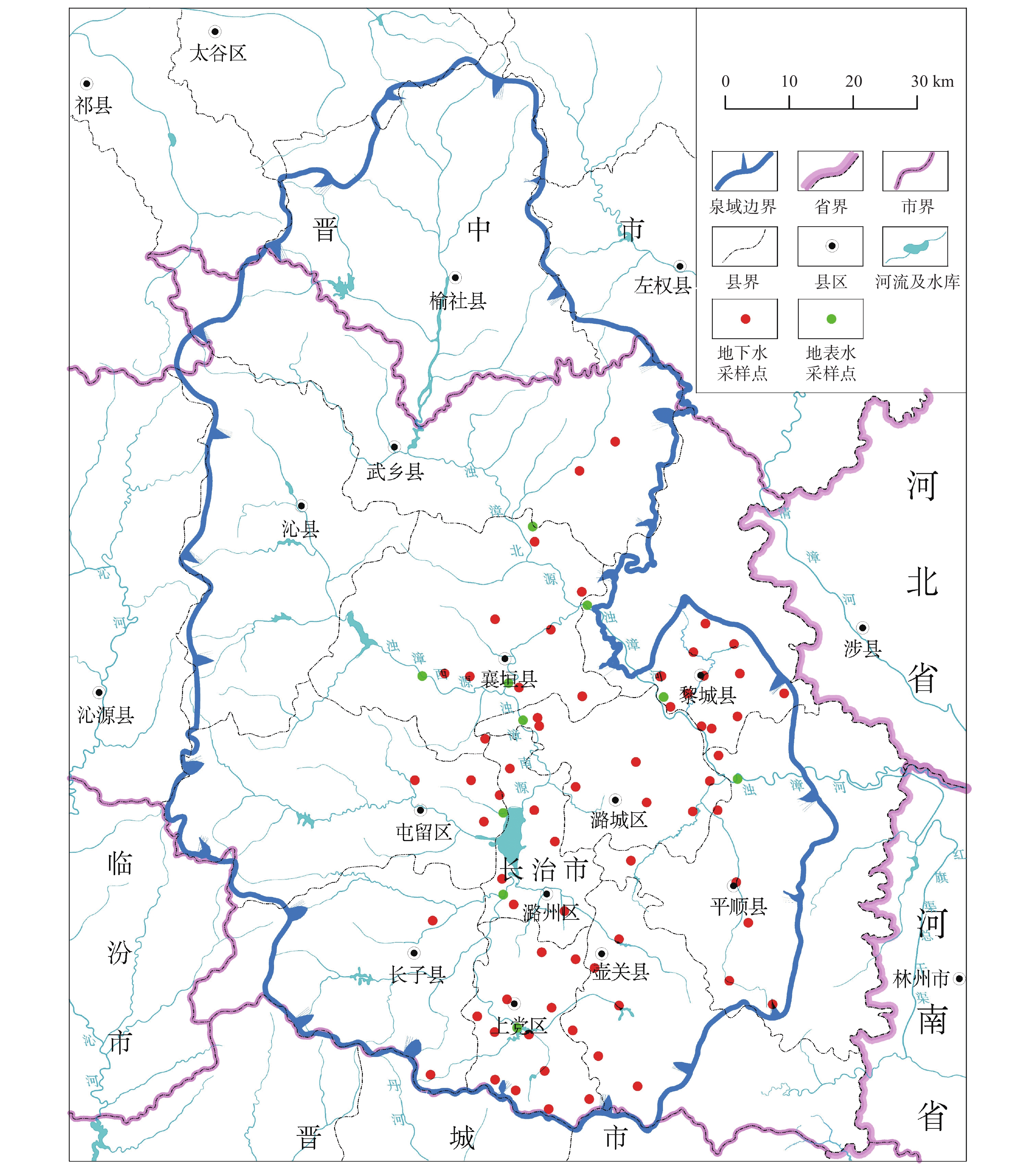
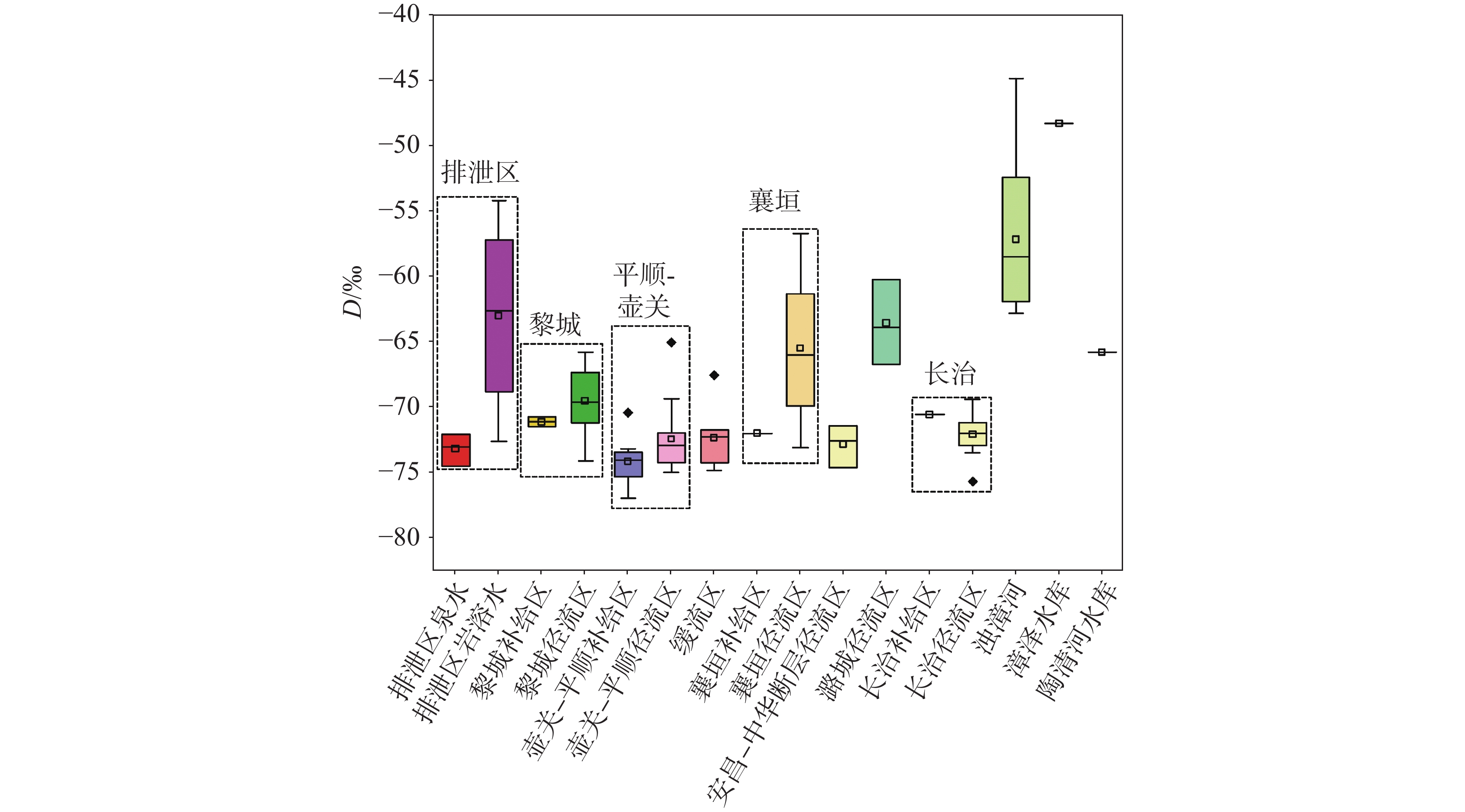
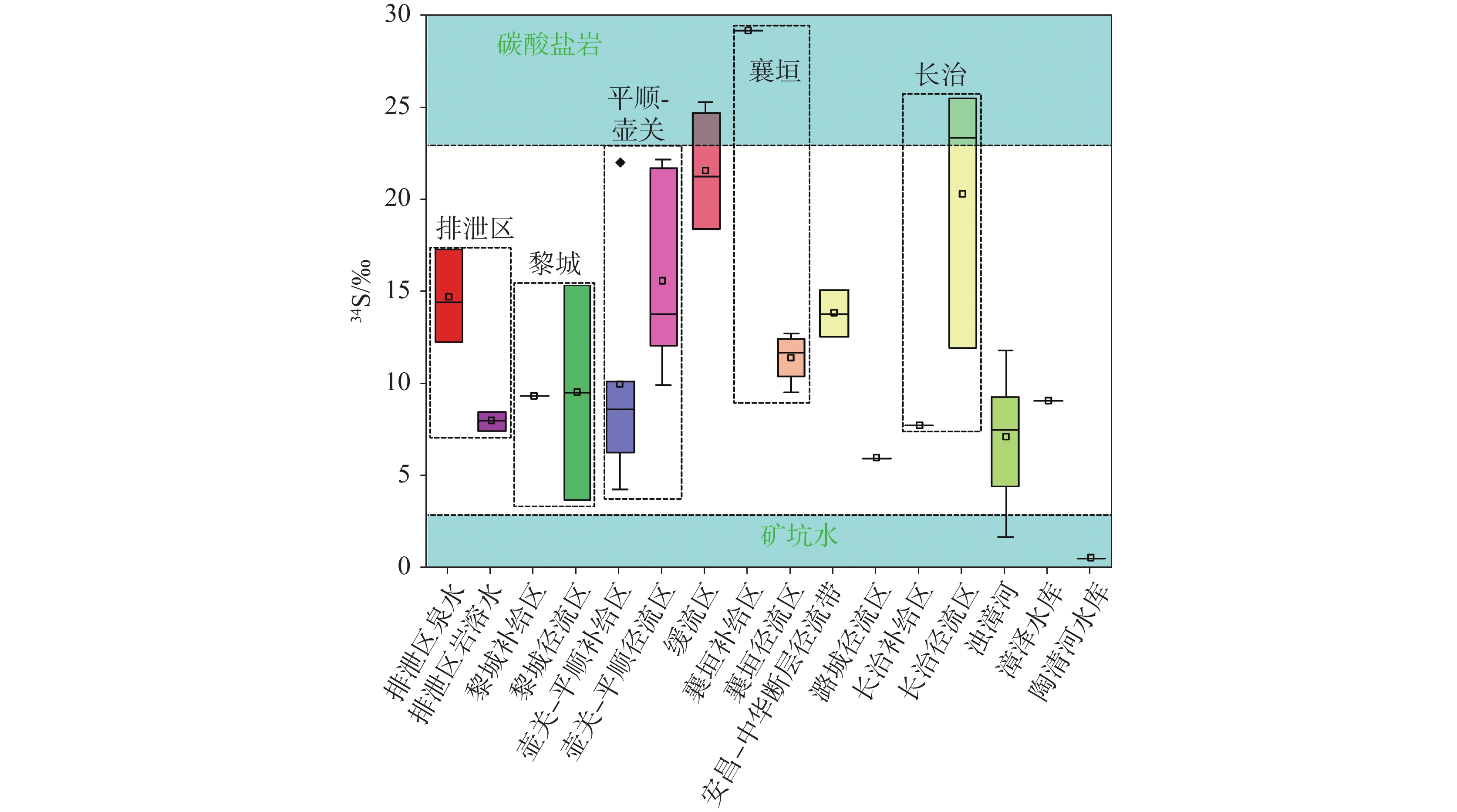
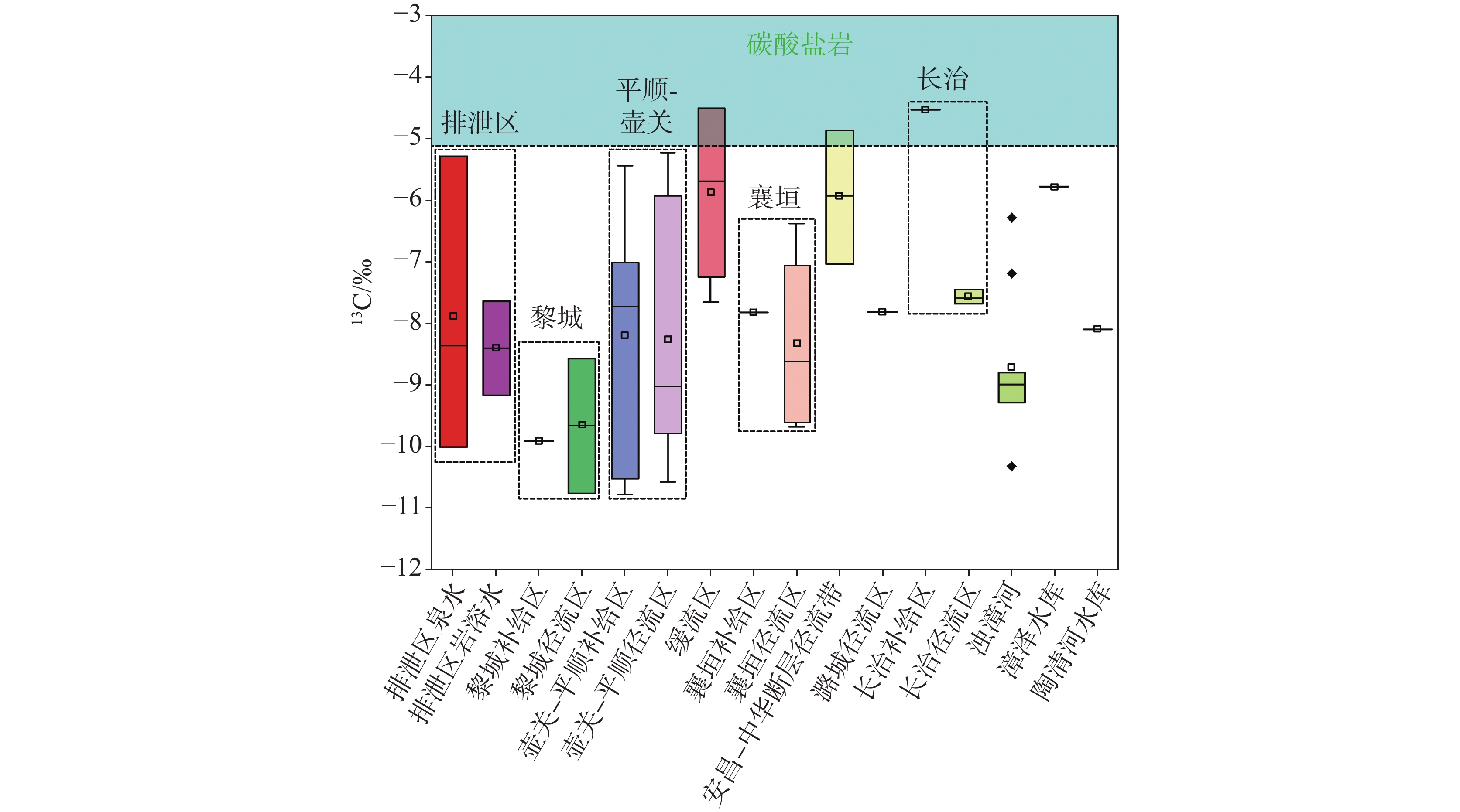
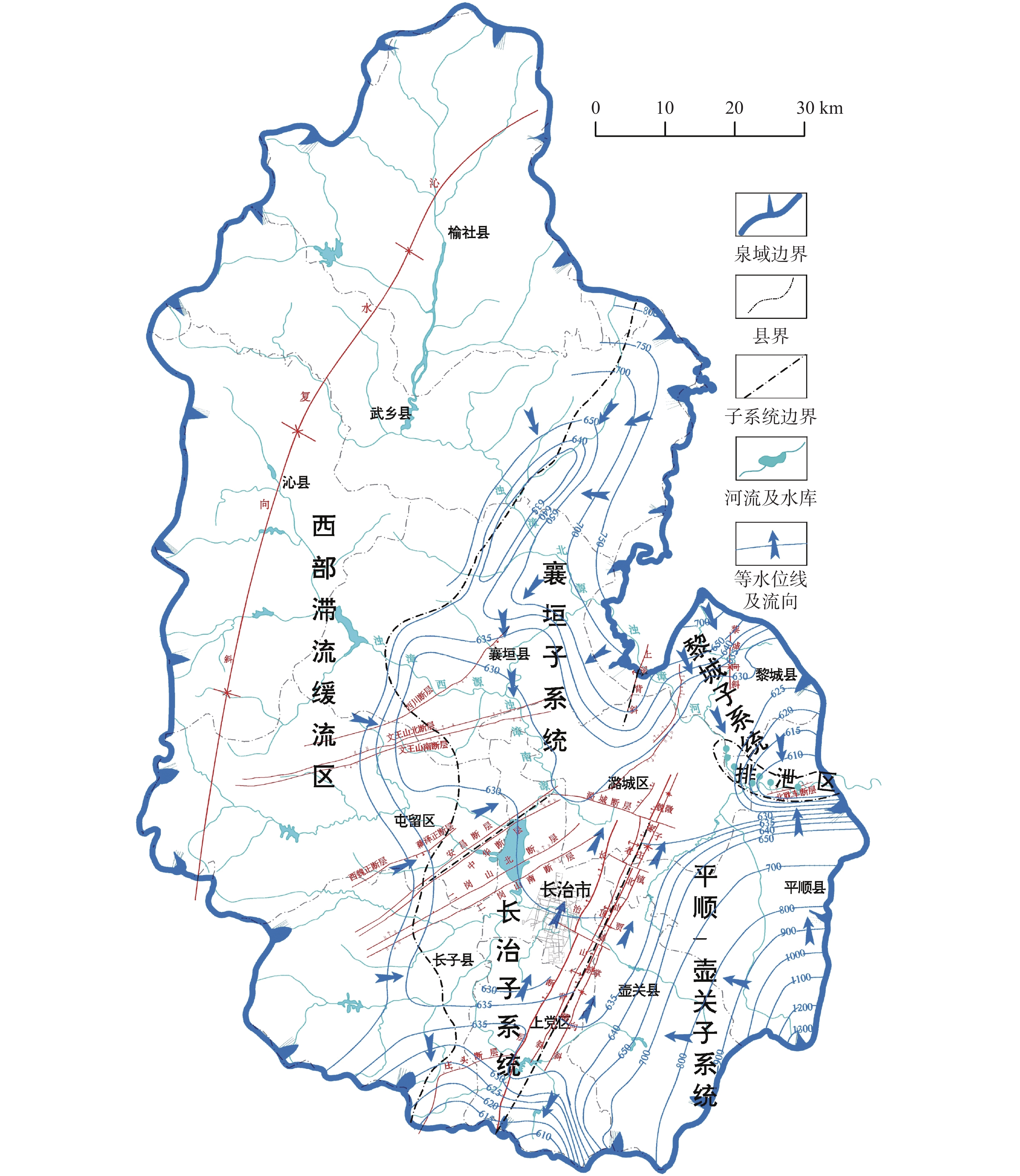
  • Xin’an Spring Region is located in the southeast of Shanxi Province, on the western side of the middle-southern section of the Taihang Mountains. The main area lies within Changzhi City, covering an area of 10,950 km2. The overall structure of the spring area is monoclonal, with a strike direction of NNE and a dip toward the NW; the strata are generally flat. Karst groundwater generally flows from west to east, which is opposite to the dip direction of the strata. The flow field is a fan-shaped spring group originating from the north, west, and south, characteristic of a "monoclinic inverted" karst water system.Karst groundwater in Xin'an Spring Region serves as the primary source of urban domestic water for Changzhi City. In recent years, the continuous increase in karst groundwater extraction has led to geological and environmental issues, such as the decline of karst water levels and the decrease of spring flow, which have severely constrained the sustainable development of the local economy and society. To provide technical support for the scientific protection and utilization of karst water resources, this project adopts isotope tracing method to conduct a comprehensive analysis and diagnosis of the spring field. This approach utilizes variations in natural isotopes in water to accurately interpret and identify the recharging runoff pathways within the groundwater system. In the relatively active hydrological cycle area in the central-eastern part of the spring domain, a total of 85 groups of isotope water samples were collected, including 14 groups of surface water samples and 71 groups of karst groundwater samples.The analyzed isotopes include stable isotopes D (2H), 18O, 87Sr/86Sr, 34S and 13C. The isotope composition is expressed as the per mil(‰) difference (δ) between the sample's stable isotope ratio and that of a standard reference, reflecting the direction and magnitude of isotopic variation relative to the standard. Based on the natural principles of isotope fractionation and the distribution of isotope test values, this study interprets characteristics such as boundaries of karst water subsystems, surface water leakage, and mine water contamination. Based on a consensus on the basic framework of the spring region, the isotopic data from water samples were divided into 14 system units. These include the Zhuozhang River, reservoir, Changzhi recharge area, Changzhi runoff area, Xiangyuan recharge area, Xiangyuan runoff area, Pingshun–Huguan recharge area, Pingshun–Huguan runoff area, Licheng recharge area, Licheng runoff area, Lucheng runoff area, Anchang–Zhonghua fault runoff zone, discharge area, and slow flow area.Isotopes in the spring region generally follow these rules: D (2H) and 18O isotopes are the inherent components of water, exhibiting similar distribution rules and characteristics, and originate from atmospheric precipitation, resulting in low δD (2H) and δ18O values. Sr in underground karst water mainly derives from celestite (SrSO4) and strontium rhodochrosite (SrCO3) present in soluble rocks. The 87Sr/86Sr in the same water body does not change due to SR fractionation. In its original state, the 87Sr/86Sr ratio in karst water is low. The 34S isotope in karst groundwater mainly originates from the dissolution of sulfate minerals, so the δ34S value is similar to that of sulfate minerals, and is relatively high. Dissolved inorganic carbon from carbonate dissolution typically exhibits a high δ13C value. Surface water, influenced by evaporation, shows elevated δD (2H) and δ18O values. It is also affected by the high 87Sr/86Sr ratio of non-carbonate rocks and the mixing of multiple water sources. The δ34S value in surface water due to microbial degradation, and the δ13C value is also low. Due to recharge from surface water leakage and mine water pollution, the isotopic values generally fall between these two end-members.Based on the isotopic indication rules outlined above and combined with isotopic test data, the hydraulic connections between various system units are analyzed. A collaborative analysis is conducted incorporating with geological water control structures, water levels, water quality, hydrochemistry, and other relevant factors. Finally, the karst water system in the Xin’an Spring Region is further divided into six zones: western stagnant slow-flow area, Changzhi subsystem, Xiangyuan subsystem, Pingshun–Huguan subsystem, Licheng subsystem, and discharge area.In addition, surface water leakage and mine water pollution are clearly reflected in the data. The δD(2H) and δ18O values of spring water in the discharge area are lower than those of karst well water in the discharge area, indicating that as the karst well water level declines, the karst well water is recharged by surface water from the Zhuozhang River. The Lucheng runoff area is a section of the river with abundant water leakage and is strongly affected by leakage;its δ13C value is -7.8 ‰, which is close to that of surface water. The 87Sr/86Sr value in the Pingshun–Huguan recharge area is higher than in the runoff area, likely because the southern recharge area is contaminated by pit water. Sampling points near the Taoqing River exhibit very low δ34S value, showing that the karst water is heavily affected by pit water pollution.


  • loading
  • [1]
    徐永新, 张志祥, 张永波, 梁永平, 曹建华, 蒋忠诚. 山西岩溶泉研究进展与前瞻[J]. 太原理工大学学报, 2017, 48(3): 413-426.

    XU Yongxin, ZHANG Zhixiang, ZHANG Yongbo, LIANG Yongping, CAO Jianhua, JIANG Zhongcheng. Research Advance in Karst Springs of Shanxi Province[J]. Journal of Taiyuan University of Technology, 2017, 48(3): 413-426.
    [2]
    梁永平, 申豪勇, 赵春红, 王志恒, 唐春雷, 赵一, 谢浩, 石维芝. 对中国北方岩溶水研究方向的思考与实践[J]. 中国岩溶, 2021, 40(3): 363-380.

    LIANG Yongping, SHEN Haoyong, ZHAO Chunhong, WANG Zhiheng, TANG Chunlei, ZHAO Yi, XIE Hao, SHI Weizhi. Thinking and practice on the research direction of karst water in northern China[J]. Carsologica Sinica, 2021, 40(3): 363-380.
    [3]
    王焰新. 我国北方岩溶泉域生态修复策略研究: 以晋祠泉为例[J]. 中国岩溶, 2022, 41(3): 331-344.

    WANG Yanxin. Study on ecological restoration strategy of karst spring region in north China: Taking Jinci spring as an example[J]. Carsologica Sinica, 2022, 41(3): 331-344.
    [4]
    田玉梅. 煤炭开采对辛安泉域地下水系统环境影响的分析[J]. 科技情报开发与经济, 2011, 21(33): 158-160.

    TIAN Yumei. Analysis of environmental impact of coal mining on groundwater system in Xin'an Spring Area[J]. Sci-Tech Information Development & Economy, 2011, 21(33): 158-160.
    [5]
    杨瑞芳. 辛安泉域岩溶地下水脆弱性评价研究[D]. 太原: 太原理工大学, 2016.

    YANG Ruifang. Study on vulnerability assessment of karst groundwater in Xin'an Spring Region[D]. Taiyuan: Taiyuan University of Technology, 2016.
    [6]
    陈荦, 张幼宽, 王长申. 基于时间序列分析的辛安泉流量变化研究[J]. 水文地质工程地质, 2012, 39(1): 19-23,41.

    CHEN Luo, ZHANG Youkuan, WANG Changshen. A study of evolution of the discharge of the Xin’an Spring with time series analysis[J]. Hydrogeology & Engineering geology, 2012, 39(1): 19-23,41.
    [7]
    张士俊, 李瑞丽, 武鹏林. 基于ArcGIS的辛安泉地下水水质评价研究[J]. 长江科学院院报, 2013, 30(5): 9-12.

    ZHANG Shijun, LI Ruili, WU Penglin. Study on groundwater quality evaluation of Xin'an Spring Based on ArcGIS[J]. Journal of Yangtze River Scientific Research Institute, 2013, 30(5): 9-12.
    [8]
    李学勤. 试论山西省辛安泉域岩溶水资源现状保护规划[J]. 西部探矿工程, 2013, 25(8): 184-186.

    LI Xueqin. On the current situation and protection planning of karst water resources in Xin'an Spring Region of Shanxi Province[J]. West-China Exploration Engineering, 2013, 25(8): 184-186.
    [9]
    Office of Shanxi Provincial Water Resources Management Committee. Boundary scope and key protected areas of spring region in Shanxi Province[M]. Beijing: China Water & Power Press, 1998.
    [10]
    常反堂. 长治市水资源评价[M]. 北京: 中国科学技术出版社, 2006.

    CHANG Fantang. Evaluation of water resources in Changzhi City[M]. Beijing: China Science and Technology Press, 2006.
    [11]
    梁永平, 王维泰. 中国北方岩溶水系统划分与系统特征[J]. 地球学报, 2010(6): 860-868.

    LIANG Yongping, WANG Weitai. Division and characteristics of karst water system in northern China[J]. Acta Geoscientica Sinica, 2010(6): 860-868.
    [12]
    金鑫光. 山西辛安泉岩溶水资源可持续利用研究[D]. 北京: 中国地质大学(北京), 2006.

    JIN Xinguang. Study on Sustainable Utilization of karst water resources in Xin'an Spring, Shanxi Province[D]. Beijing: China University of Geosciences (Beijing), 2006.
    [13]
    尚海敏, 李国敏, 于进庆. 环境同位素技术在地下水研究中的应用[J]. 地下水, 2008(2): 18-22.

    SHANG Haimin, LI Guomin, YU Jinqing. Application of environmental isotope in groundwater studying[J]. Ground Water, 2008(2): 18-22.
    [14]
    孙喆, 杨琰, 张萍, 刘肖, 梁沙, 张娜, 聂旭东, 梁胜利, 李建仓, 凌新有, 张志钦. 高分辨率降水氧氘同位素变化及洞穴水响应: 以河南鸡冠洞为例[J]. 环境科学, 2016, 37(6): 2093-2100.

    SUN Zhe, YANG Yan, ZHANG Ping, LIU Xiao, LIANG Sha, ZHANG Na, NIE Xudong, LIANG Shengli, LI Jianchang, LING Xinyou, ZHANG Zhiqin. High-resolution variations of oxygen and hydrogen isotopes of precipitation and feedback from cave water: An example of Jiguan cave, Henan[J]. Environmental Science, 2016, 37(6): 2093-2100.
    [15]
    高旭波, 向绚丽, 侯宝俊, 高列波, 张建友, 张松涛, 李成城, 姜春芳. 水化学—稳定同位素技术在岩溶水文地质研究中的应用[J]. 中国岩溶, 2020, 39(5): 629-636.

    GAO Xubo, XIANG Xuanli, HOU Baojun , GAO Liebo, ZHANG Jianyou, ZHANG Songtao, LI Chengcheng, JIANG Chunfang. Application of hydrochemistry coupled with stable isotopes in the study of karst water hydrogeology[J]. Carsologica Sinica, 2020, 39(5): 629-636.
    [16]
    杨军生. 辛安泉岩溶水系统特征的环境同位素研究[J]. 水资源研究, 2016(6): 620-625.

    YANGJunsheng. Environmental isotope study on the characteristics of karst water system in Xin'an Spring[J]. Journal of Water Resources Research, 2016(6): 620-625.
    [17]
    高旭波, 王万洲, 侯保俊, 高列波, 张建友, 张松涛, 李成城, 姜春芳. 中国北方岩溶地下水污染分析[J]. 中国岩溶, 2020, 39(3): 287-298.

    GAO Xubo, WANG Wanzhou, HOU Baojun , GAO Liebo, ZHANG Jianyou, ZHANG Songtao, LI Chengcheng, JIANG Chunfang. Analysis of karst groundwater pollution in northern China [J]. Carsologica Sinica, 2020, 39(3): 287-298.
    [18]
    宋虎跃, 朱园园, 邱海鸥. 硫同位素分析测定及其应用[J]. 分析化学, 2009(A01): 304-310.

    SONG Huyue, ZHU Yuanyuan, QIU Haiou. Sulfur isotope analysis and its application[J]. Chinese Journal of Analytical Chemistry, 2009(A01): 304-310.
    [19]
    朱金富, 于炳松, 黄文辉, 初广震, 吕国. 塔里木盆地塔中地区晚寒武世—奥陶世碳酸盐岩碳、氧同位素特征[J]. 大庆石油地质与开发, 2008, 27(1): 39-42.

    ZHU Jinfu, YU Bingsong, HUANG Wenhui , CHU Guangzhen, LYV Guo. Carbon and oxygen isotope characteristics of late Cambrian Ordovician carbonate rocks in Tazhong area, Tarim Basin [J]. Petroleum Geology & Oilfield Development in Daqing, 2008, 27(1): 39-42.
  • 加载中

Catalog

    通讯作者: 陈斌, bchen63@163.com
    • 1. 

      沈阳化工大学材料科学与工程学院 沈阳 110142

    1. 本站搜索
    2. 百度学术搜索
    3. 万方数据库搜索
    4. CNKI搜索

    Article Metrics

    Article views (211) PDF downloads(8) Cited by()
    Proportional views
    Related

    /

    DownLoad:  Full-Size Img  PowerPoint
    Return
    Return